
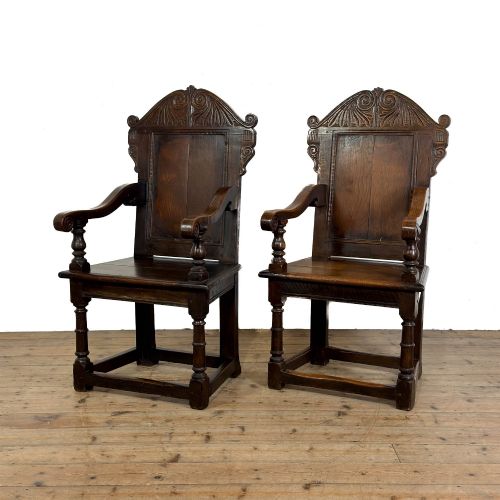
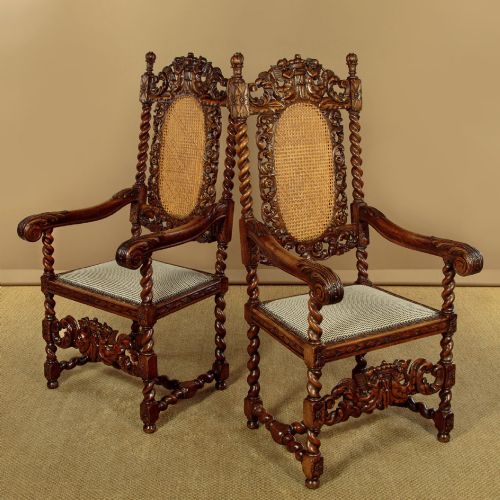
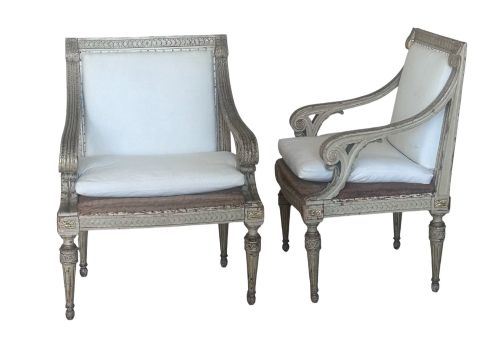
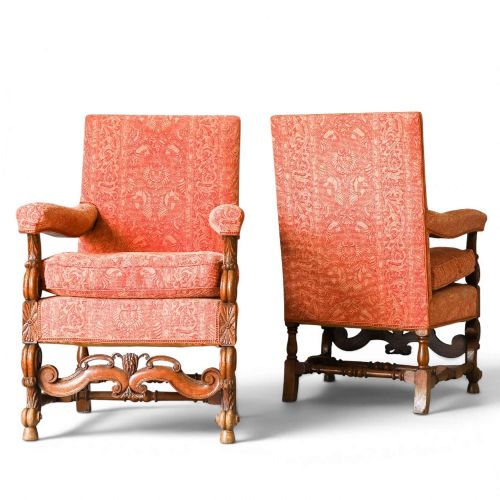
Carved Wooden Armchair Pair
A carved wooden armchair pair offers matched seating in mahogany, walnut or oak, bringing period presence to a room.
Carved Wooden Armchair Pair
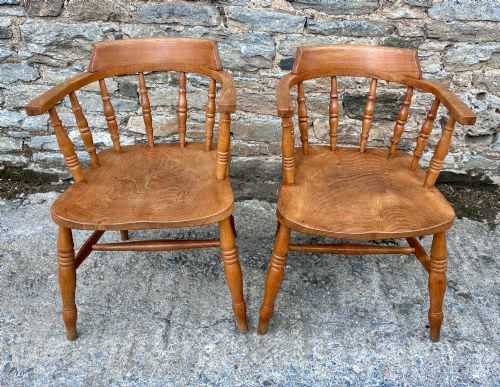
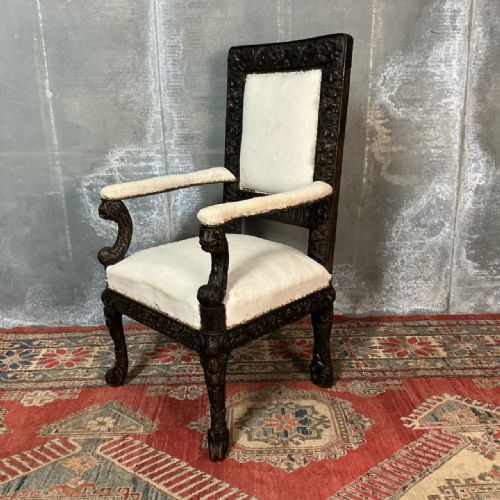
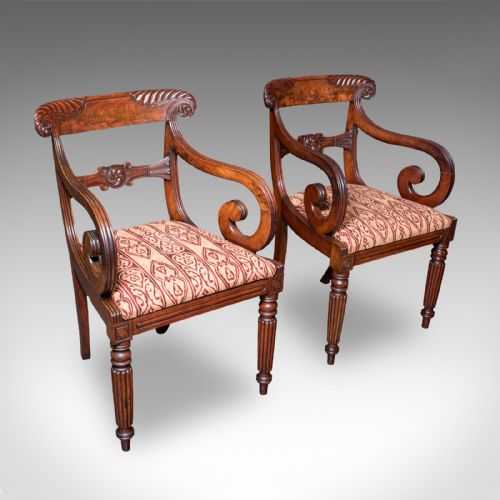
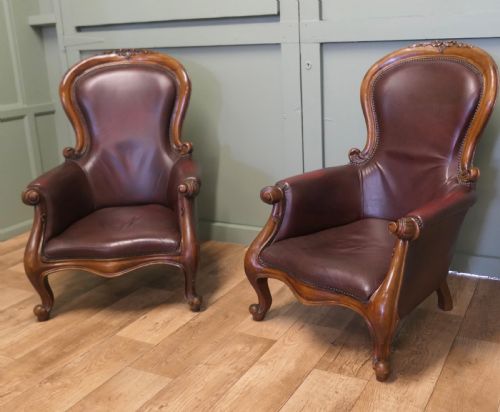
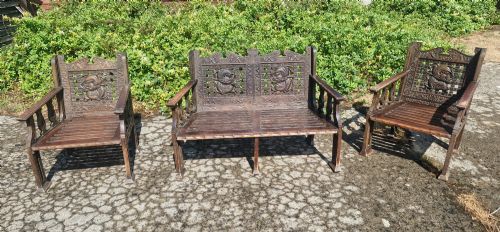
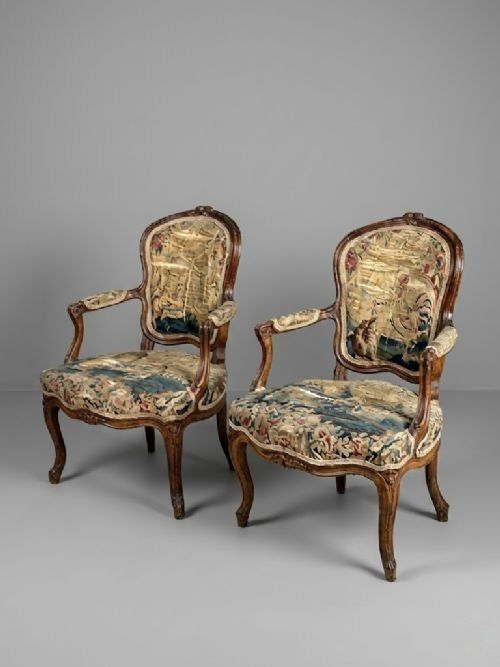
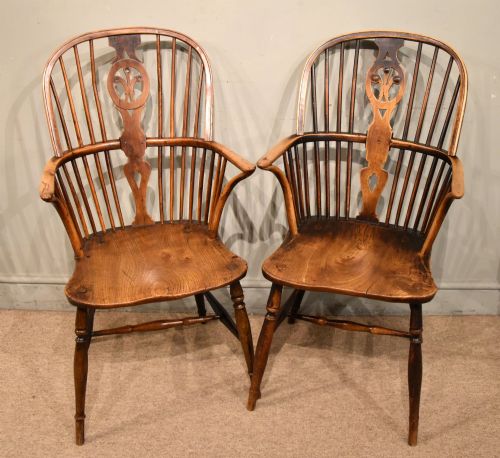
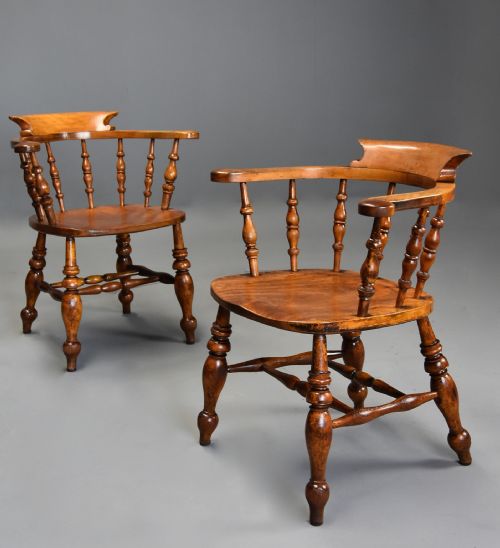
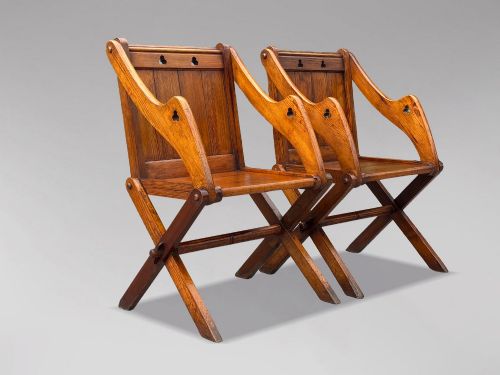
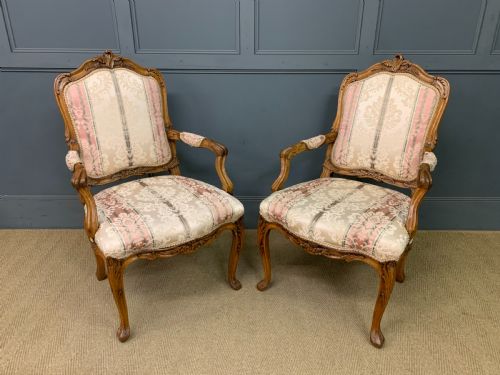
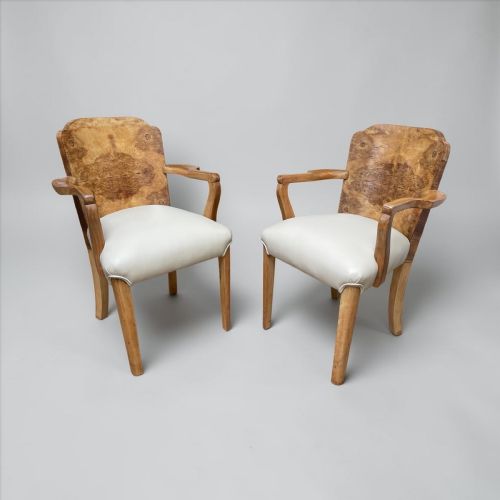
A carved wooden armchair pair brings two matched seating pieces into a space, frequently found in styles ranging from Victorian and Regency to Baroque Revival and Louis XV. These seating options appear in forms such as captain's chairs, hall chairs, elbow chairs, and library armchairs.
The evidence shows examples shaped from timbers like elm, birch, pitch pine, goncalo alves, and Chinese hardwood, alongside upholstered variants covered in fabric or leather. Buyers encounter pieces spanning the nineteenth century, nineteen-hundreds, and nineteen-tens, as well as distinct regional designs from Britain, France, China, and Sweden.
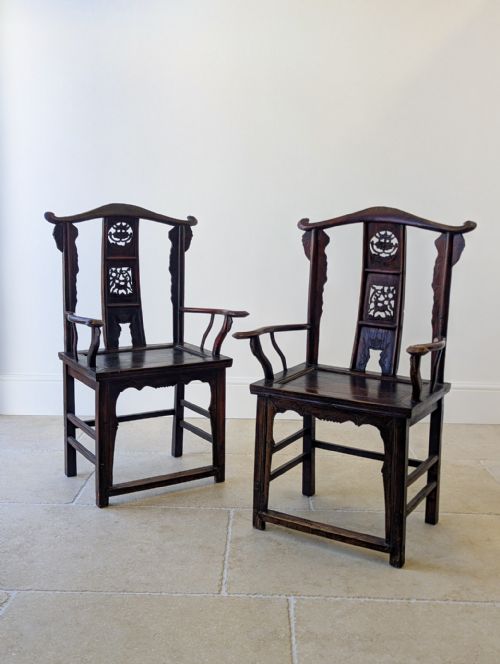
Many items reflect historical revivals, including Renaissance Revival, Gothic Revival, and Neo-Rococo expressions, while others display traditional Chinese forms like yoke-back and horseshoe-back frames. Matching pairs provide balanced placement for drawing rooms, libraries, and large hallways.
Materials and construction methods
Cabinetmakers utilised dense hardwoods such as mahogany, walnut, oak, and exotic woods like goncalo alves to build structural frames capable of supporting intricate hand-carved ornamentation. Joinery relied upon traditional pegged mortise and tenon joints to secure upright posts, arm supports, and seat rails without modern adhesives.
Carvers shaped foliage, scrollwork, and crest rails directly into the solid timber using gouges and chisels, occasionally enhancing surfaces with gilt finishes or retaining original red lacquer. Upholstered variants integrated webbing, springs, and stuffing beneath coverings of leather, Aubusson tapestry, or woven fabric.
Regional workshops employed local timbers suited to specific chair types, utilising flexible elm and birch for Windsor and captain's chairs, or heavier oak and walnut for formal revival throne and salon armchairs.
Listings feature timbers including mahogany, walnut, oak, elm, birch, pitch pine, and goncalo alves across multiple centuries.
Distinguishing quality across pairs
Quality rests upon the crispness and depth of the hand-carved detailing, where sharper definition in acanthus leaves, scrollwork, and crests marks superior craftsmanship. Timber selection also dictates grade, with dense, evenly grained hardwoods and woods retaining a rich, natural patina standing above plain or heavily repaired stock.
The integrity of the frame construction defines durability, separating tightly joined structural timber from pieces suffering from loose joints, excessive shrinkage, or replacement components. Matched pairs maintaining identical proportions, original upholstery materials, and synchronised wear exhibit higher collectible standing.
Subtlety in proportion and balanced symmetry between both chairs separate standard vernacular seating from exceptional salon armchairs produced by skilled cabinetmakers.
The Carved Wooden Armchair Pair Glossary
- Captain's chair
- A sturdy wooden seating form with a rounded spindle or curved backrest originating from traditional shipboard and domestic use. These sturdy seats often utilise elm or mahogany.
- Fauteuil
- An open-arm upholstered French chair featuring exposed wooden framing around the back and seat sides. This classic seating style typically showcases walnut or beech frames.
- Patina
- The deep surface sheen and mellow colour developed on timber through decades of handling, polishing, and natural ageing. A good patina indicates untouched historical surfaces.
- Yoke-back
- A traditional chair design featuring a curved top rail resembling an ox yoke, common in classical Chinese seating. Hardwood versions utilise this structural shape for upper back support.
- Wainscot chair
- An early heavy wooden armchair constructed primarily from panelled oak and joined boards. These solid pieces date back to seventeenth-century domestic interiors.
Carved Wooden Armchair Pair: Frequently Asked Questions
How do I care for antique wooden armchairs?
Maintain timber surfaces by applying appropriate beeswax polish sparingly and buffing gently with a soft cloth to preserve the natural patina. Keep the chairs away from direct heat sources and strong sunlight to prevent wood splitting and fabric fading.
Inspect structural joints periodically to ensure dowels and glue remain secure under normal use. Avoid harsh chemical cleaners on both polished wood and antique fabric coverings.
Where should I place a pair in my home?
Position matched pairs flanking a fireplace, framing a window view, or placed symmetrically at opposite ends of a large reception room. Their balanced proportions create an intentional focal point in studies, libraries, and drawing rooms.
Ensure adequate clearance around the arms and legs so the intricate carvings remain visible and unobstructed by surrounding furniture.
How can I tell the period of my chairs?
Examine the wood species, joinery techniques, and carving styles against historical design revivals recorded in the evidence. Nineteenth-century pieces often display machinery marks mixed with hand work, while earlier examples rely entirely on hand-cut joints.
Compare the specific silhouette, such as a spoon back, shield back, or horseshoe back, to established stylistic eras like the Regency or Victorian periods.
Are these chairs comfortable for daily seating?
Many upholstered variants, including spoon back easy chairs and bergere models, offer supportive padding designed for extended sitting. Wooden captain's chairs and hall chairs provide firmer, upright support intended for occasional use at desks or reception areas.
Evaluate the seat height and arm clearance to ensure the physical dimensions suit your personal seating preferences.