
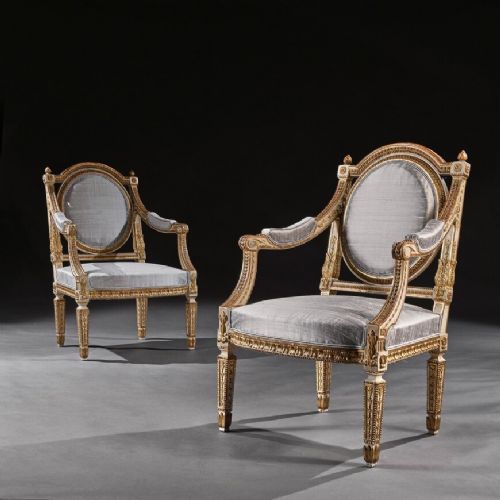
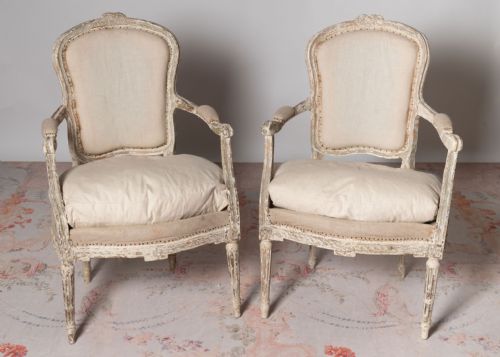
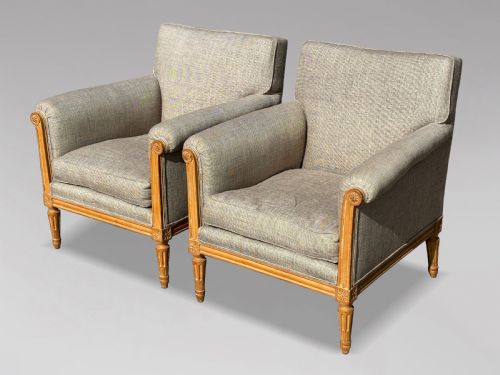


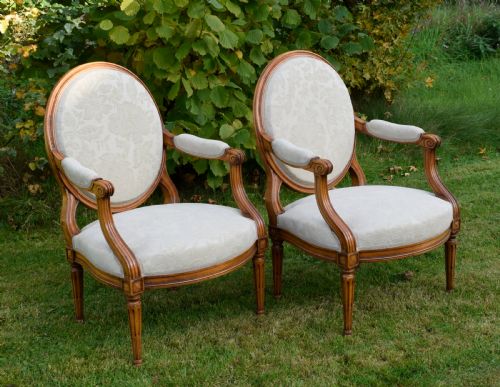

Fluted Leg Armchair Pair
A fluted leg armchair pair brings balanced neoclassical lines and matched seating into a room.
Fluted Leg Armchair Pair
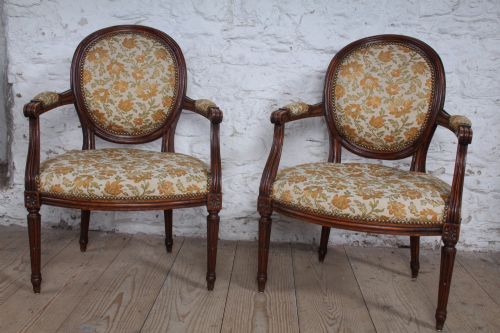
A fluted leg armchair pair comprises matched seating defined by vertical channel carving on the wooden supports. These pieces emerge from periods spanning the eighteenth through the early twentieth century.
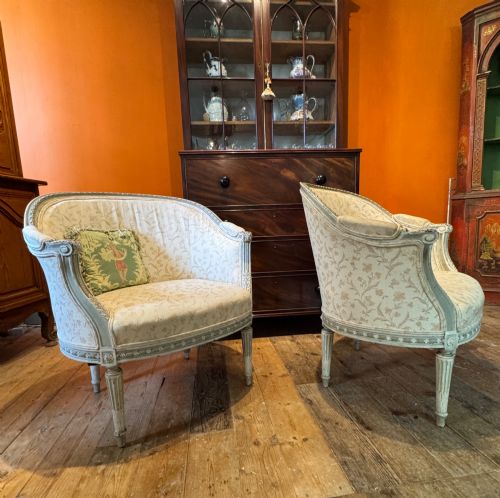
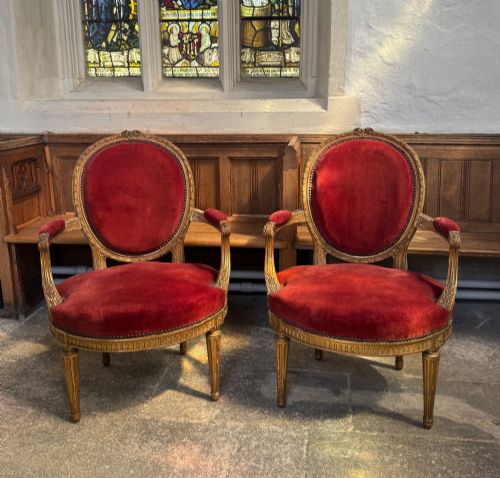
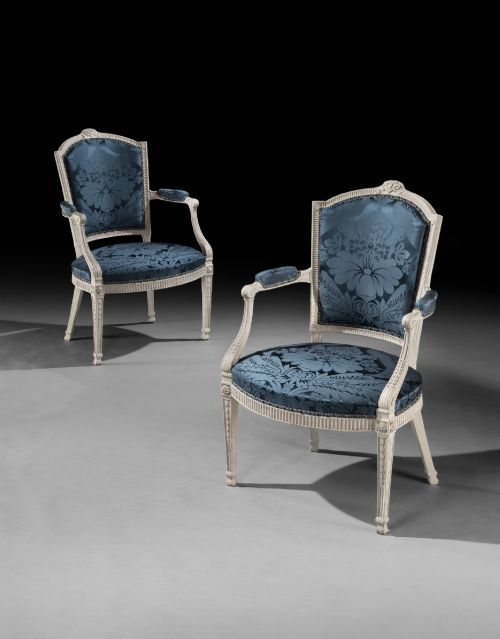
Buyers seeking a fluted leg armchair pair commonly encounter French and English forms rooted in Louis XVI, George III, and neoclassical styles. Salon chairs, bergere armchairs, and painted fauteuils dominate the available selection.
Originating largely from continental workshops and British cabinet makers, these pairs provide symmetrical seating arrangements for drawing rooms and bedrooms. The structural grouping relies upon matching upholstery or complementary painted wooden frames.
How They Were Made
Carpenters shaped frames from solid timbers including beech, walnut, and mahogany, utilising traditional joinery to secure the load-bearing joints. Giltwood and painted finishes were subsequently applied over the prepared wooden surfaces.
Upholstery techniques combined traditional webbing and stuffing with textile coverings such as damask fabric. Metal components like brass frequently appeared in structural hardware or decorative mounts.
Carvers incised the characteristic fluting directly into the upright timber supports by hand. Gilding and parcel gilt treatments added reflective surface detail to the neoclassical frames.
Some nineteenth-century chairs carry the quiet marks of past sitters who leaned too heavily on the left arm.
What Varies in Quality
The crispness of the hand-carved fluting on the wooden legs establishes the primary standard for decorative refinement. Softer lines indicate hurried execution by secondary workshops.
Original surface treatments, whether aged paint or authentic gilding, command greater interest than later overpainting. The integrity of the underlying beech, walnut, or mahogany framing dictates structural longevity.
John Linnell
The Fluted Leg Armchair Pair Glossary
- Fluting
- Vertical parallel grooves carved into the surface of a column or furniture leg. This classical detail provides rhythmic texture to neoclassical woodwork.
- Bergere
- An enclosed upholstered armchair featuring solid sides and a built-in upholstered seat cushion. These French seats offer deeper comfort than standard open armchairs.
- Fauteuil
- An open-arm armchair with exposed wooden framing and upholstered back and seat. The style originated in seventeenth-century France.
- Neoclassical
- A design movement inspired by the classical art and architecture of ancient Greece and Rome. It emphasises symmetry, straight lines, and orderly ornamentation.
- Parcel gilt
- A decorative technique where specific portions of a wooden or metal object are highlighted with gold leaf. The remaining surface displays paint or natural wood.
Fluted Leg Armchair Pair: Frequently Asked Questions
What is a fluted leg armchair pair?
A fluted leg armchair pair consists of two matched seats featuring vertical carved grooves along the wooden legs. These pieces draw primarily from eighteenth and nineteenth-century neoclassical traditions.
Such matching pairs were built to provide symmetrical seating in formal rooms. The shared design ensures visual balance when placed together.
How do I identify Louis XVI style?
Louis XVI style furniture is recognised by straight tapered fluted legs and rectilinear geometric framing. This aesthetic replaced the curved lines of the preceding rococo period.
Pieces from this tradition emphasise classical restraint and architectural symmetry. Carved ornamentation typically includes classical motifs like acanthus leaves and ribbon twists.
Where were these armchairs used?
These armchairs served in formal drawing rooms, parlours, and private bedrooms. Matched pairs allowed hosts to create balanced seating arrangements for conversation.
Salon chairs and bergere variants were positioned around central tables or fireplaces. Their decorative painted or gilt finishes suited reception spaces.
What woods were used for these chairs?
Cabinet makers utilised structural timbers such as beech, walnut, and mahogany for the frames. Beech served frequently for pieces intended to receive painted or gilded finishes.
Mahogany and walnut were often left exposed to highlight the natural grain. These hardwoods provided the necessary strength for carved components like fluted legs.