





Louis XVI Style Bergere
A louis xvi style bergere brings classic French seating into a room, offering enclosed comfort and carved timber frames.
Louis XVI Style Bergere
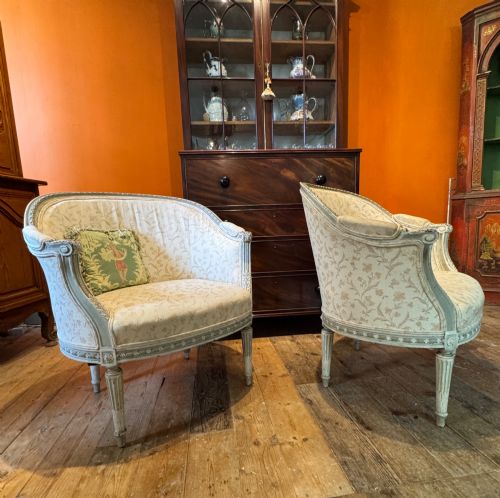
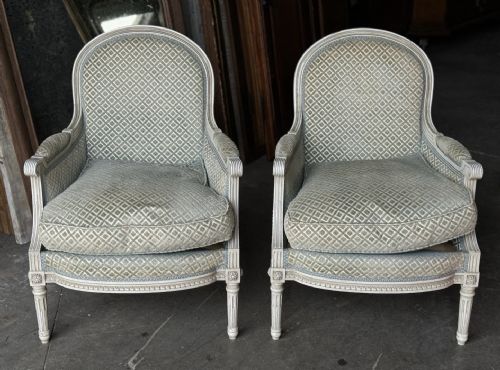
A louis xvi style bergere is an enclosed upholstered armchair designed for comfort, featuring a low seat and padded arms. These pieces appear frequently in nineteenth-century and early twentieth-century iterations, including matched pairs and salon sets.
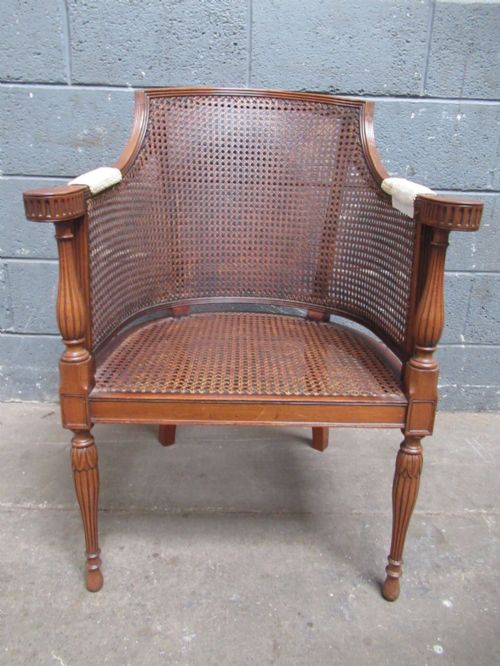
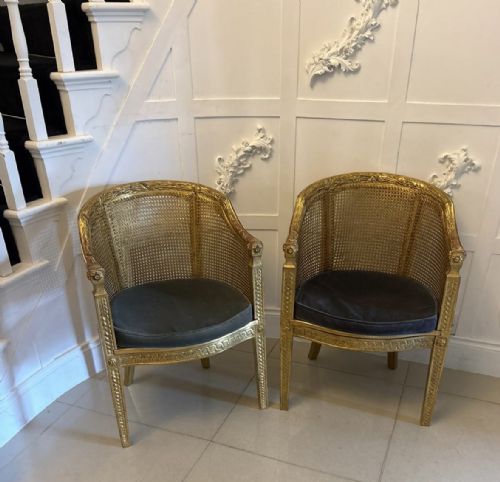
The form typically incorporates carved woodwork in beech, walnut, or giltwood, alongside variations like caned panels and tub shapes. Window seats and beds also emerge within these stylistic parameters, expanding the options beyond standard armchairs.
Materials and Construction
Frames rely on hardwoods such as beech, walnut, and mahogany, shaped through carving and often finished with giltwood, paint, or original surface treatments. Gilt-wood and carved details define the formal examples.
Seating and backrests frequently utilise woven cane or rattan cane panels alongside traditional upholstery covered in damask fabric, velvet, or plain fabric. Some variations incorporate exposed wooden frames with fitted cushions.
Even a child-size armchair received the full bergere treatment with a miniature cane seat and back.
Assessing Quality and Execution
The crispness and depth of the carved woodwork separate standard frames from superior examples. Hand-carved details in walnut and beech display a sharper definition than simpler production pieces.
The survival of original surface finishes, such as early paint or gilding, alters the character of the piece. Intact cane work and well-preserved giltwood indicate careful preservation over time.
The Louis XVI Style Bergere Glossary
- Bergere
- An enclosed upholstered armchair with closed sides padded or panelled in cane. This form originated in France and remains the defining shape of the group.
- Giltwood
- Timber coated with a thin layer of gold leaf. This finish appears frequently on formal nineteenth-century salon chairs.
- Cane
- Material woven from stripped rattan used for seats and back panels. It provides a lightweight yet durable backing for the wooden frame.
- Tub Armchair
- A chair with a rounded, continuous back and armrest structure. This shape offers a more enveloping seat than open armchairs.
Louis XVI Style Bergere: Frequently Asked Questions
What is a bergere chair?
A bergere is a French armchair featuring fully enclosed upholstered sides between the armrests and the seat. This design offers a deeper and more enclosed seat than standard open armchairs.
The style dates back to the eighteenth century, though most available examples stem from nineteenth-century and early twentieth-century revivals.
Are these chairs comfortable for daily use?
These armchairs are designed for relaxed sitting, featuring low profiles and padded seat cushions. The enclosed sides and supportive backs make them suitable for reading or general living spaces.
Upholstery varies from modern fabric replacements to traditional horsehair stuffing beneath damask or velvet covers.
What materials were used for the frames?
Makers utilised native European hardwoods, primarily beech and walnut, alongside mahogany for specific pieces. Frames were then gilded, painted, or left in their natural polished state.
Caning made from rattan appears on many backrests and seats to provide a flexible and breathable surface.