
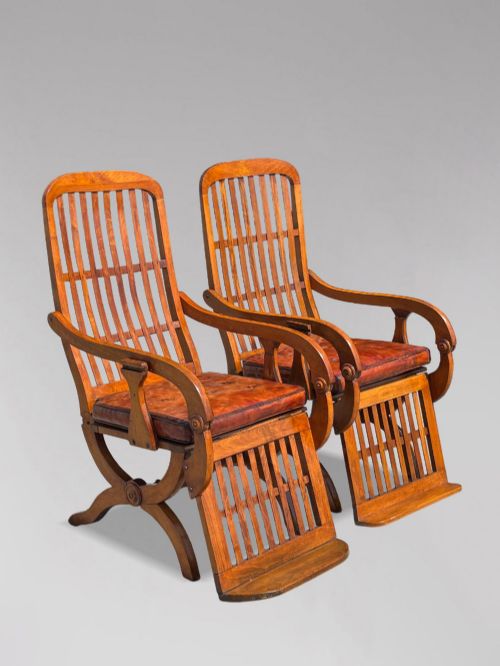
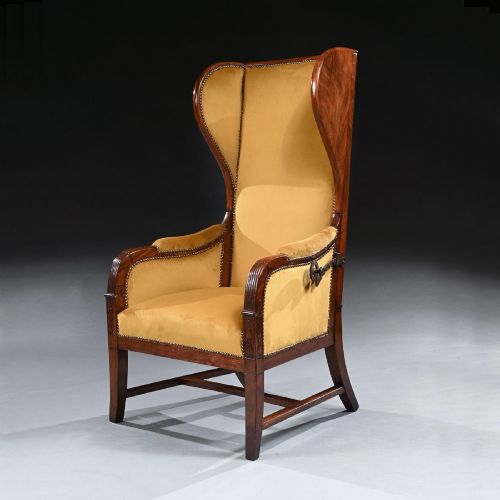
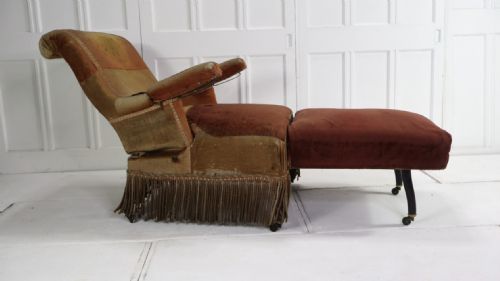
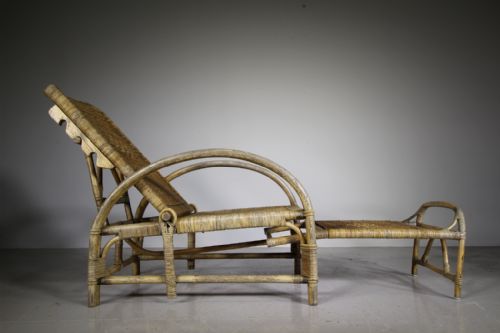


Antique Adjustable Armchair
An antique adjustable armchair offers mechanical comfort, moving from upright seating to a reclined posture through patents and clever framing.
Antique Adjustable Armchair
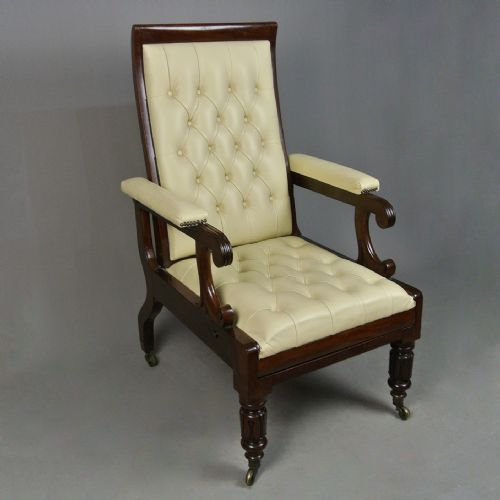
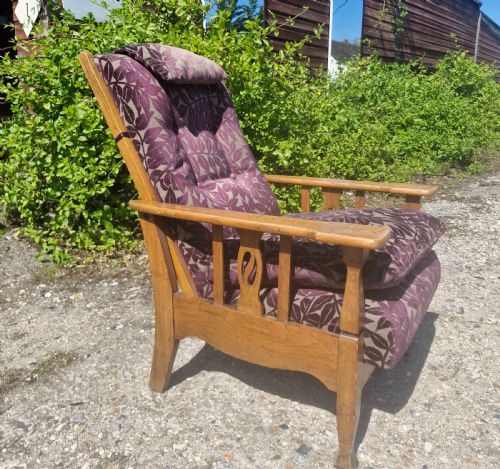
An antique adjustable armchair serves as a seat designed to alter its physical geometry for reading, resting or office work. The pieces matching this phrase span from early nineteenth century library chairs to nineteen-thirties garden wicker.
The most common forms met here include oak reclining armchairs from the early twentieth century and nineteenth century mahogany library models. These examples use pivoting backs, extending footrests or swivel mechanisms to change the user's position.
What Varies in Quality
The sophistication of the internal mechanism dictates much of the distinction between standard production and inventive workshop design. Patented brass ratchets and smooth revolving screws show greater ingenuity than simple wooden peg supports.
Timber selection and cabinet work define the structural integrity of the frame. Solid mahogany, figured walnut and quarter-sawn oak with robust joinery outlast simpler secondary woods and degraded upholstery webbing.
Antique Adjustable Armchair Retail Price Guide 2026
Typical asking prices for adjustable armchair among the pieces listed under this phrase on Sellingantiques today, from the lower quarter to the upper quarter. They describe what is for sale here now, not the wider market.
Listings span from George III oak pieces through Victorian mahogany library chairs to Art Deco wicker and office furniture.
Angraves of Leicester·Heals of London·Foot and Sons
The Antique Adjustable Armchair Glossary
- Patent chair
- A seat manufactured under a registered mechanical design, often featuring complex ratchets or folding footrests for adjustable reclining.
- Campaign chair
- Portable folding furniture built for travel, frequently fitted with brass mounts and collapsible frames for easy transport.
- Recliner
- An armchair with a movable backrest that tilts backward, sometimes paired with an extending footrest or ottoman.
- Swivel desk chair
- An office seat mounted on a central pivot allowing rotation, often raised on a spider base with castors.
Antique Adjustable Armchair: Frequently Asked Questions
How do I operate the reclining mechanism safely?
Most period chairs use a brass ratchet system located behind the armrests or a screw mechanism underneath the seat. Lift or rotate the control gently to engage the notches before applying full weight.
Avoid forcing stiff metal components that have not seen regular oiling. Test the movement slowly to find the designated locking positions.
Were these chairs used in offices or homes?
Adjustable seating served multiple environments depending on the specific form. Swivel models and desk chairs suited libraries and studies, while reclining armchairs and daybeds furnished drawing rooms.
Heavier mahogany and leather library chairs remained stationary for reading, whereas lighter oak or wicker versions moved between indoor and outdoor spaces.
How do I care for the leather and wood?
Feed antique leather periodically with suitable conservation wax or cream to prevent drying and cracking. Dust timber frames regularly with a soft cloth and avoid placing them near direct heat sources.
Protect exposed brass hardware from moisture to prevent tarnishing and check that mechanical joints remain clean of debris.
How can I tell a Victorian chair from an Edwardian one?
Victorian examples often favour dense mahogany or walnut with deep buttoned leather upholstery and ornate carvings. Edwardian and later pieces frequently employ quarter-sawn oak in cleaner Arts and Crafts or simpler commercial styles.
Castors, patent stamps and joining methods also offer clues to the manufacturing decade.