

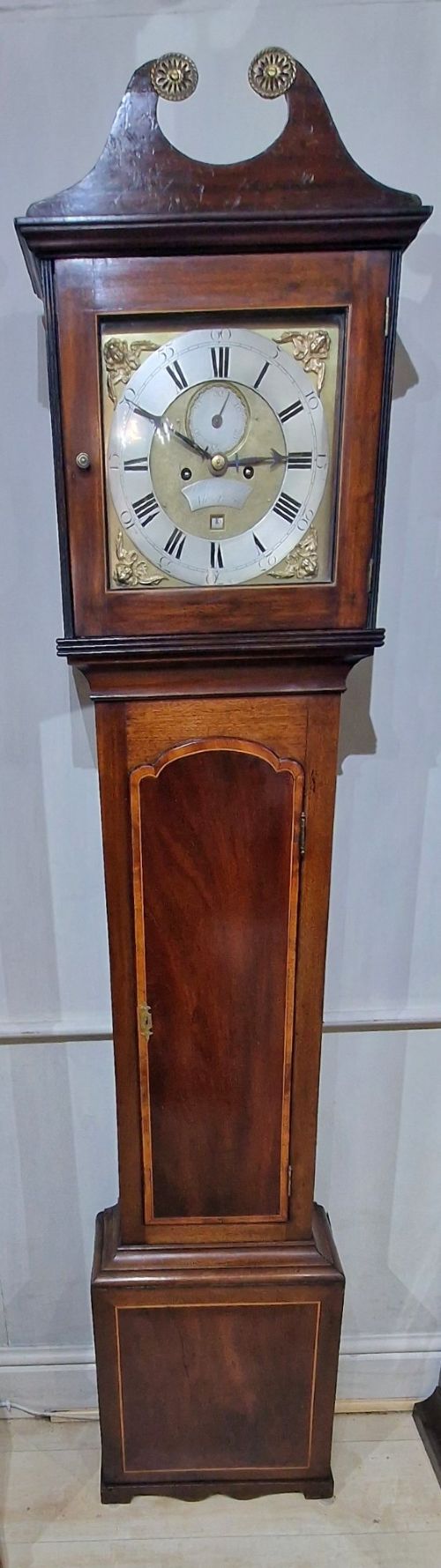
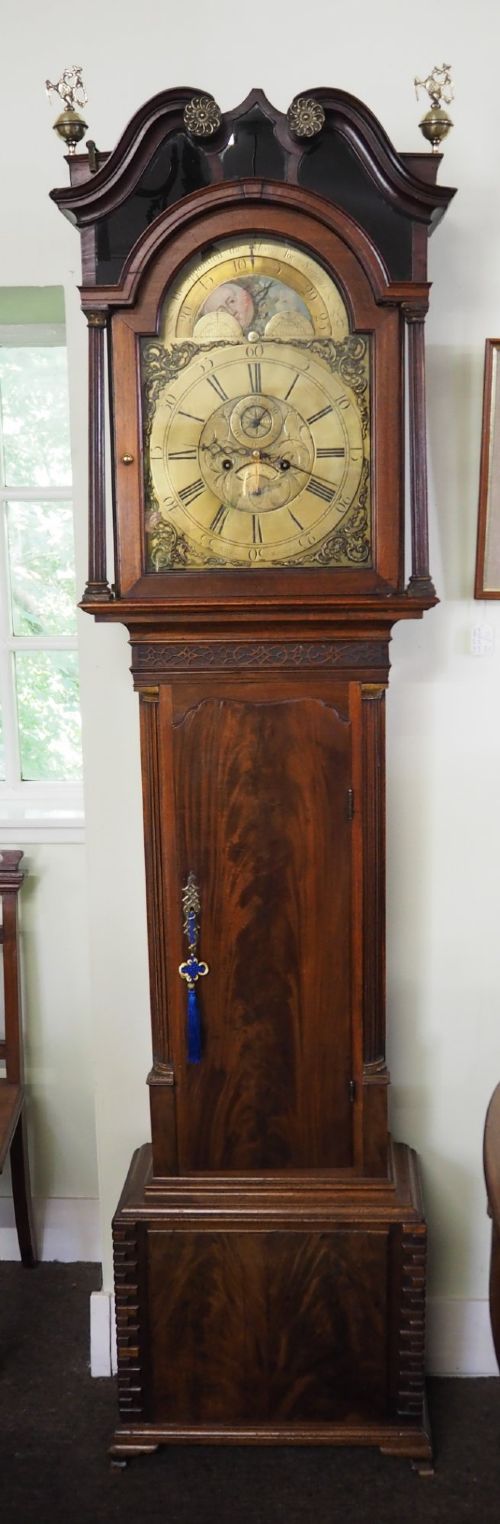
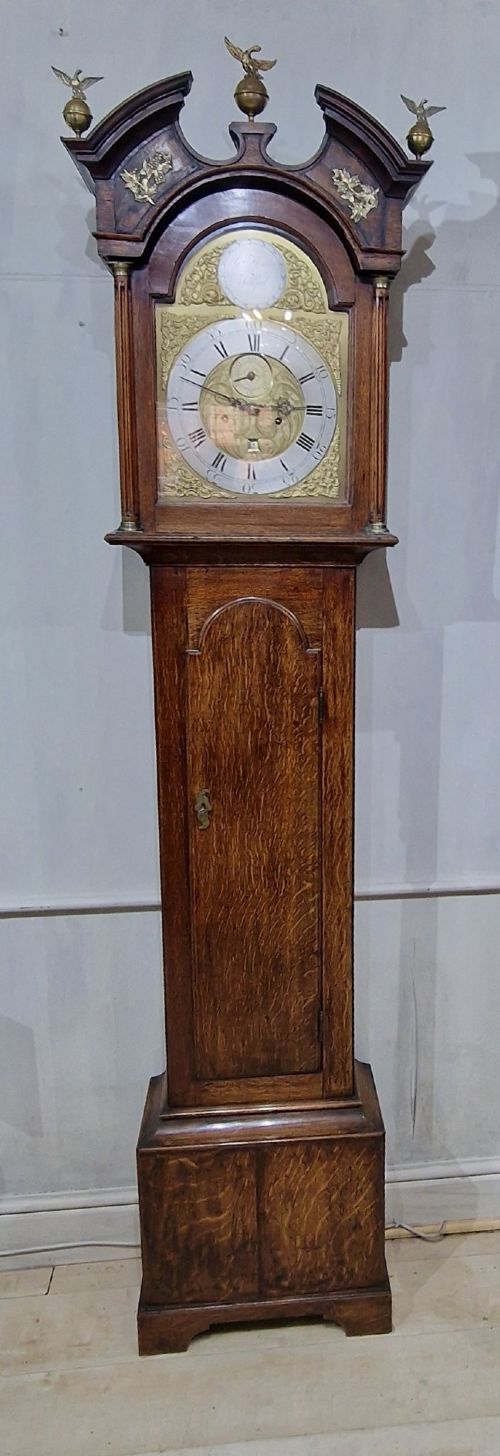
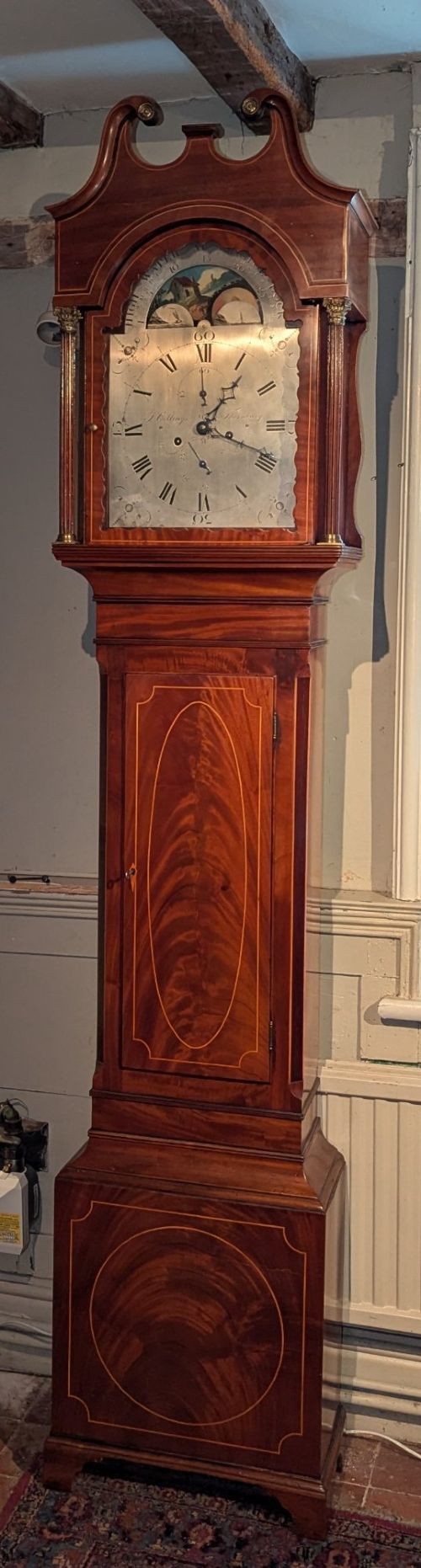
Tallcase Floor Clock
A tallcase floor clock brings mechanical timekeeping into a room with architectural presence, spanning periods from the eighteenth century through the twentieth.

Tallcase Floor Clock
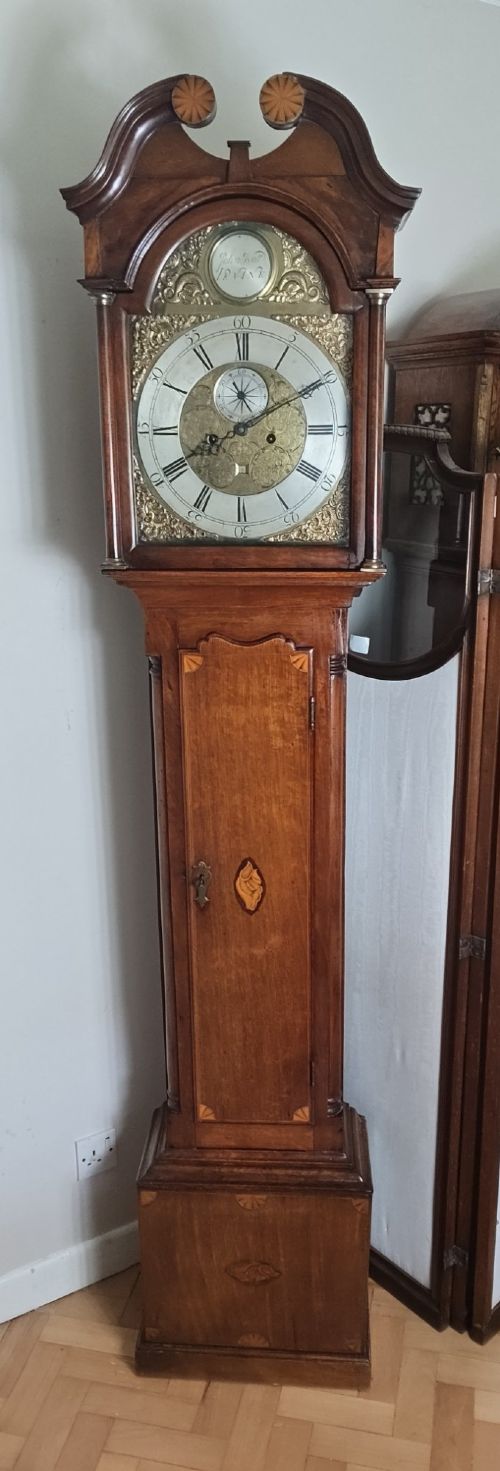
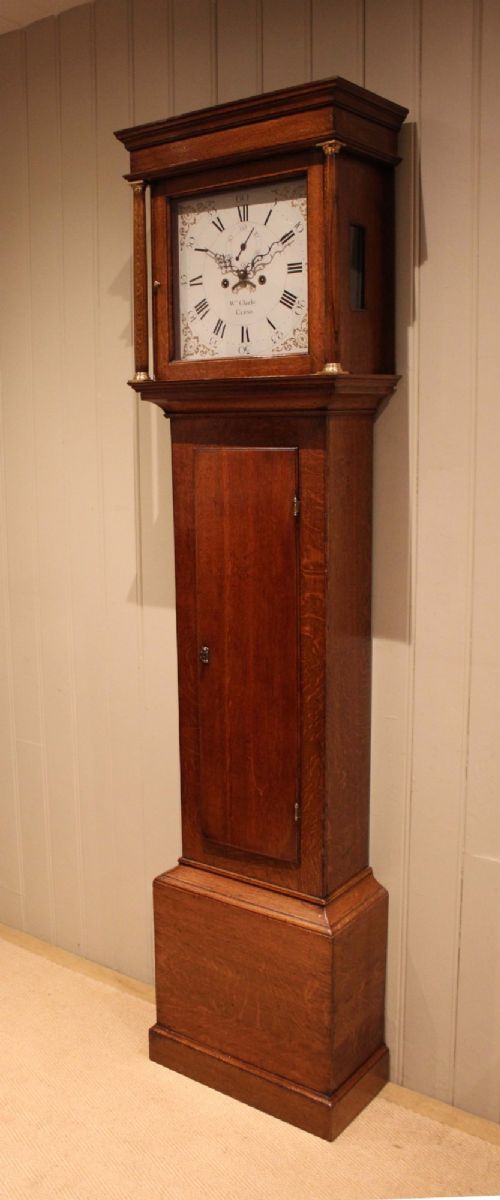
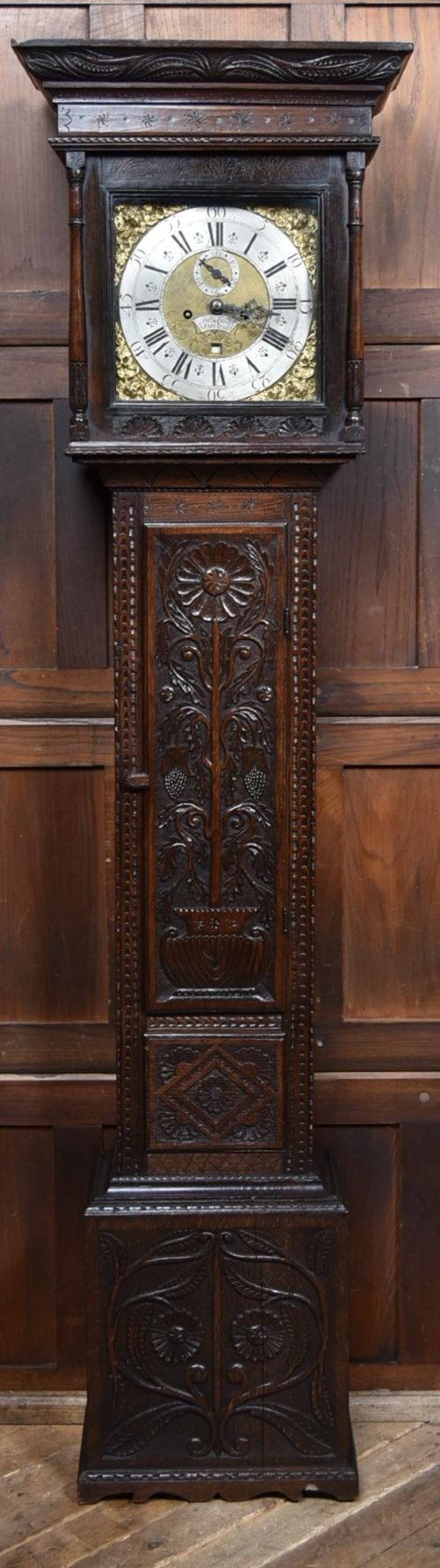
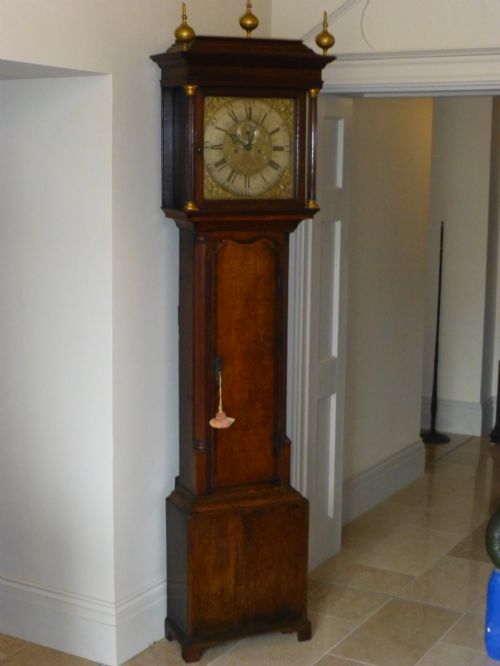
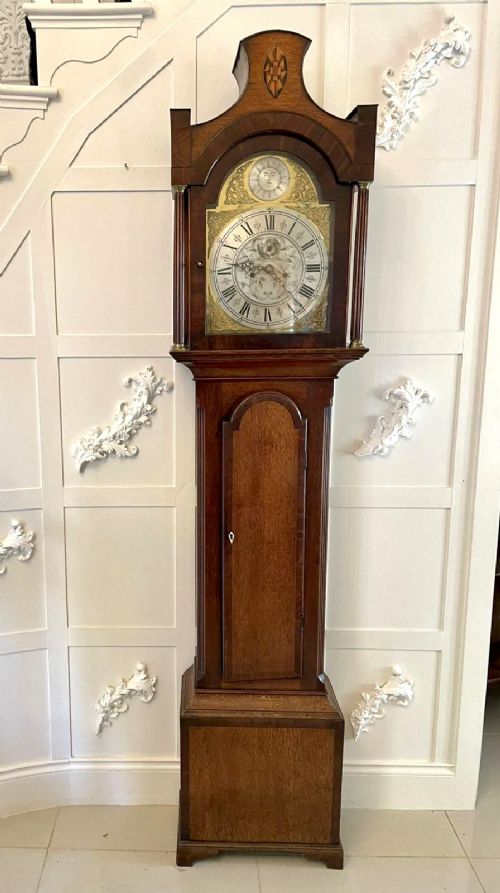
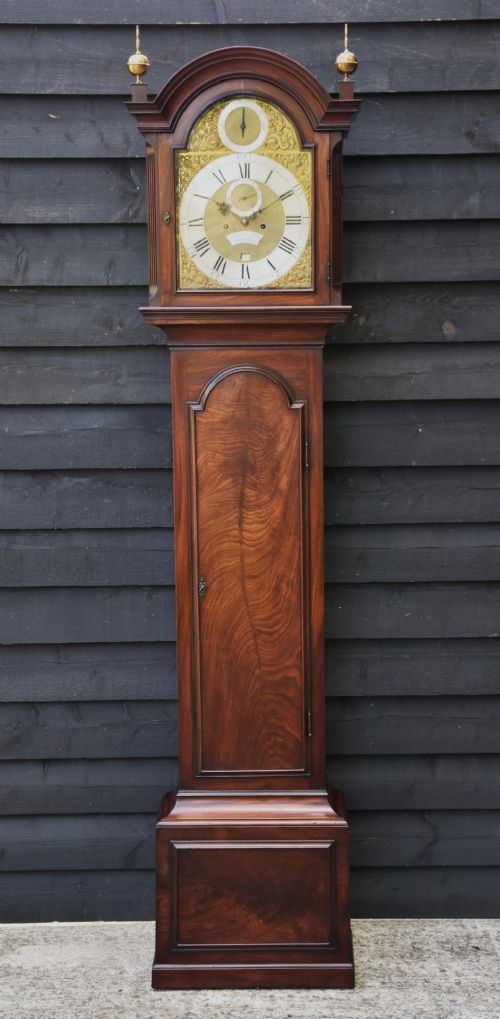
When searching for a tallcase floor clock, you encounter tall, weight-driven timepieces housed in wooden cabinetry that stand directly on the floor. These items appear across Georgian, Victorian, and Edwardian periods, alongside later nineteenth and twentieth-century interpretations.
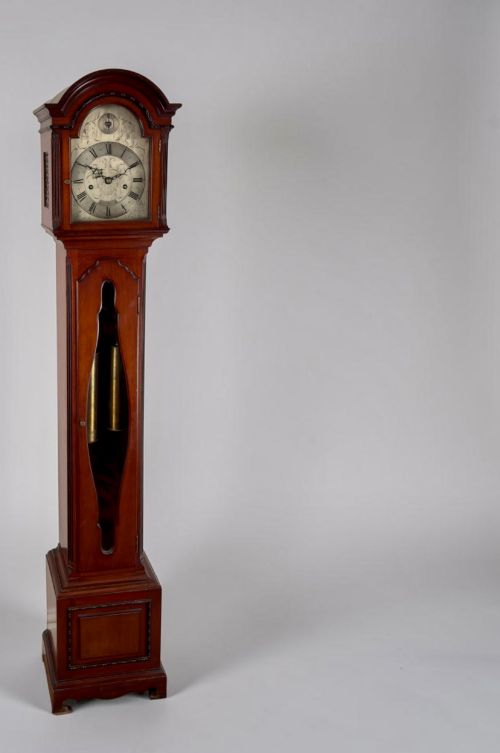
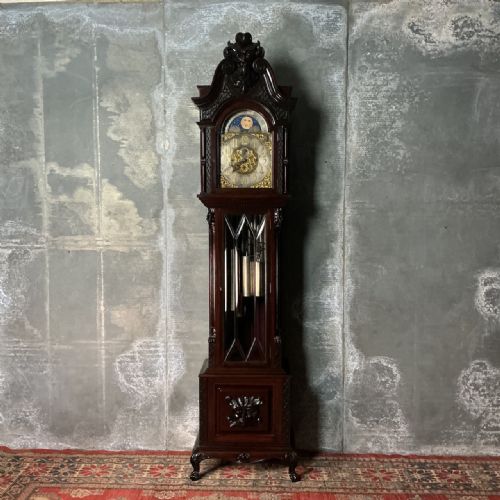
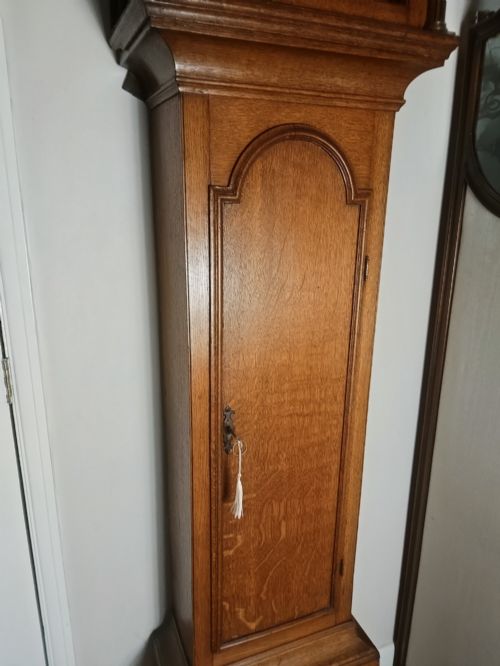
The most common versions on this page are traditional longcase and grandfather clocks, frequently constructed in oak or mahogany. Shorter formats known as grandmother clocks also appear, particularly from the Edwardian and later periods.
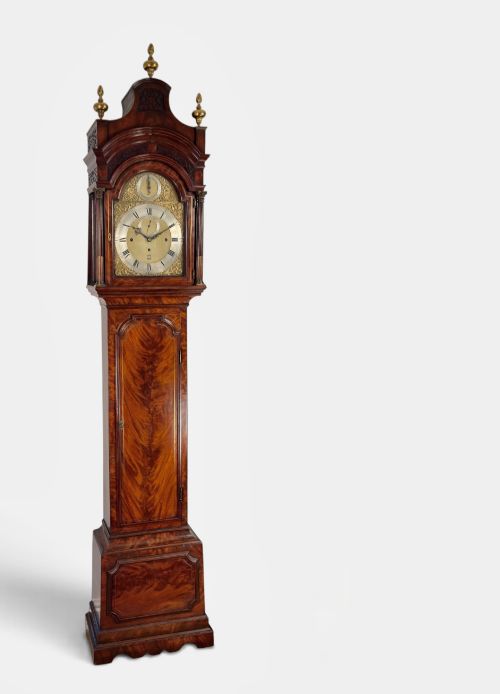
Regional variations span English and Scottish workshops, featuring stylistic influences such as Chinoiserie, Regency, and Queen Anne. Cases range from straightforward country oak housings to elaborate mahogany designs with intricate dial work.
Materials and construction
Cabinet makers utilised native and imported timbers, predominantly oak and mahogany, with occasional examples in walnut, flame mahogany, and burr walnut. These woods formed the trunk, hood, and base to protect the delicate movement within.
Dial faces combined brass, painted iron, and glass components to display the time, often incorporating subsidiary dials for seconds or moon phases. Movements relied on brass and steel gears, driven by weights suspended on lines or chains.
Tallcase Floor Clock Retail Price Guide 2026
Typical asking prices for tallcase floor clock among the pieces listed under this phrase on Sellingantiques today, from the lower quarter to the upper quarter. They describe what is for sale here now, not the wider market.
Some tallcase clocks include musical chimes and moon rollers, ensuring the mechanics work as hard as the cabinet maker.
Determinants of quality
Quality rests in the precision of the mechanical movement and the sophistication of its complications, such as quarter striking, musical chimes, or moon roller displays. Simpler time-and-strike mechanisms contrast with multi-train movements produced by skilled makers.
Cabinet craftsmanship dictates overall excellence, distinguishing plain timber construction from figured mahogany veneers, fine brass dial engravings, and well-proportioned architectural hood designs.
Gillett & Johnston of Croydon·John Ellicott of London·Handley & Moore, London·Samuel Kellett of Bredbury·Winsor Bishop Norwich·Parkinson Bros, Batley·Benjamin Taylor
The Tallcase Floor Clock Glossary
- Longcase clock
- A tall, weight-driven pendulum clock enclosed in a wooden case that stands directly on the floor. This term is often used interchangeably with grandfather clock.
- Grandmother clock
- A smaller, more compact version of the traditional longcase clock, typically produced during the Edwardian period and later. They suit rooms with lower ceilings.
- Moon phase
- A mechanical display on the dial that tracks the lunar cycle through a rotating painted disk. It indicates the phases of the moon alongside the standard time.
- Dial
- The face of the clock where the hours and minutes are shown. These can be made of engraved brass or painted iron.
- Train
- The series of gears and wheels within a clock movement that transmit power. Clocks may feature time, strike, or musical trains.
Tallcase Floor Clock: Frequently Asked Questions
What is a tallcase floor clock?
A tallcase floor clock is a weight-driven pendulum timekeeper housed in a protective wooden enclosure that rests on the floor. These pieces combine cabinet making with mechanical horology.
They range from eighteenth-century oak examples to twentieth-century musical models, serving as both functional timepieces and architectural furniture.
How do I tell an 18th-century clock from a 19th-century one?
Eighteenth-century examples often feature solid oak or mahogany cases with square brass dials and simpler proportions. Cabinet work typically reflects Georgian tastes.
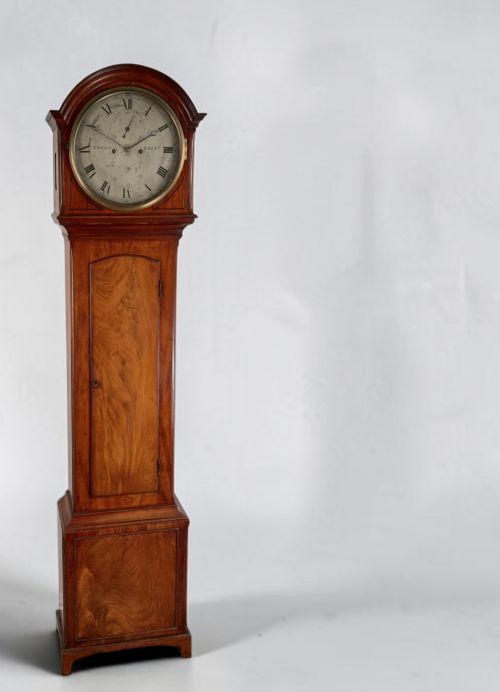
Nineteenth-century pieces frequently introduce painted iron dials, arched hoods, and figured mahogany veneers, reflecting Regency and Victorian stylistic shifts.
Where should I place a tallcase clock at home?
These clocks require a stable, level floor and a secure wall attachment to keep the pendulum swinging evenly. Hallways, landings, and living rooms provide suitable environments.
Keep them away from direct sunlight, draughts, and damp areas to protect the wooden case and internal brass mechanics.
What is the difference between a grandfather and a grandmother clock?
Grandfather clocks are the standard full-size longcase clocks, standing over six feet tall with substantial weight drops. They dominate vertical wall space in a room.
Grandmother clocks are significantly shorter and slimmer versions, developed primarily in the twentieth century to fit smaller domestic spaces.