
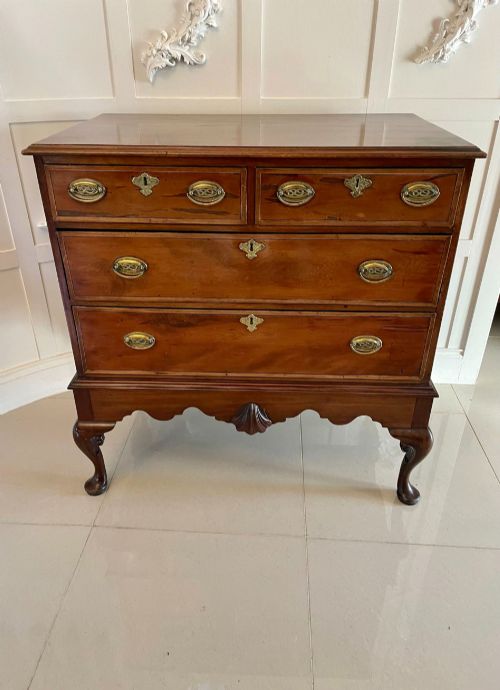
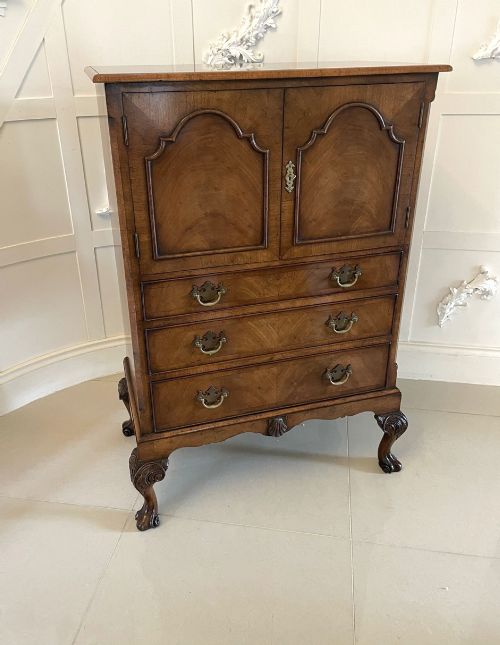

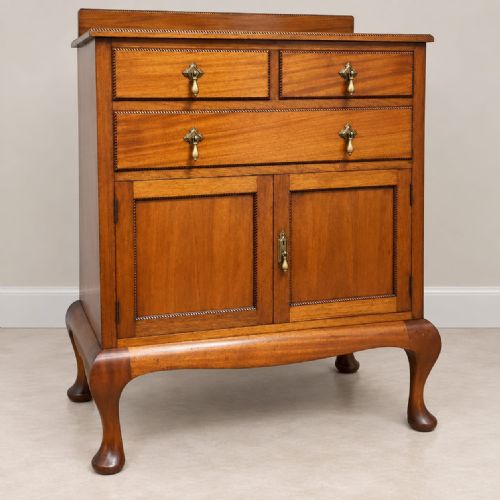
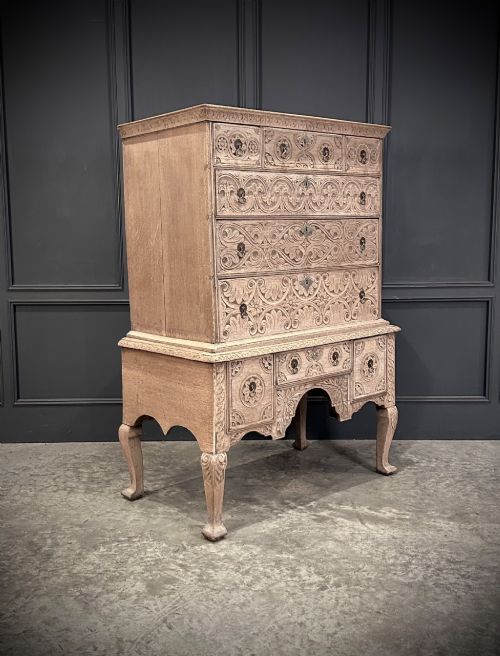
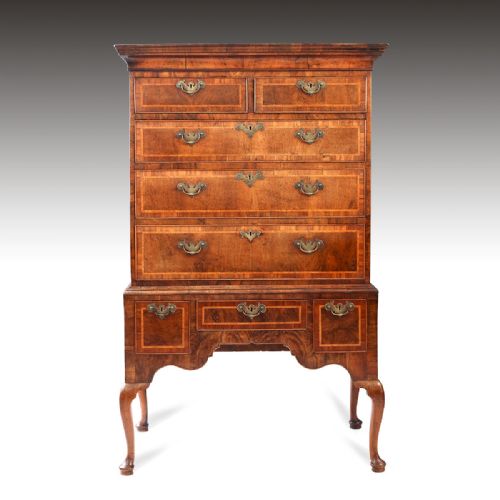
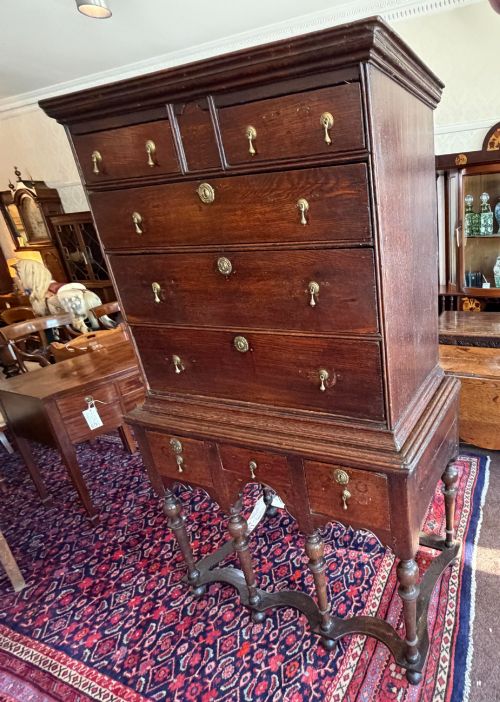
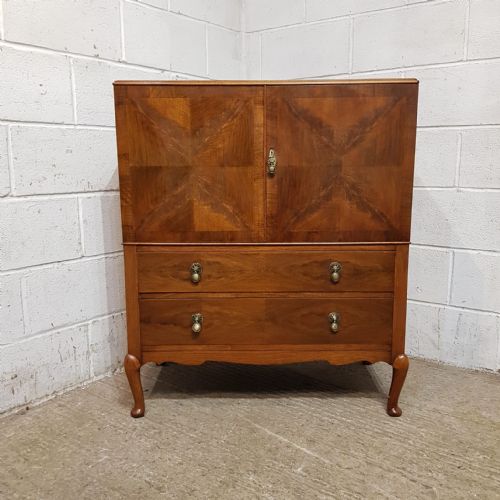
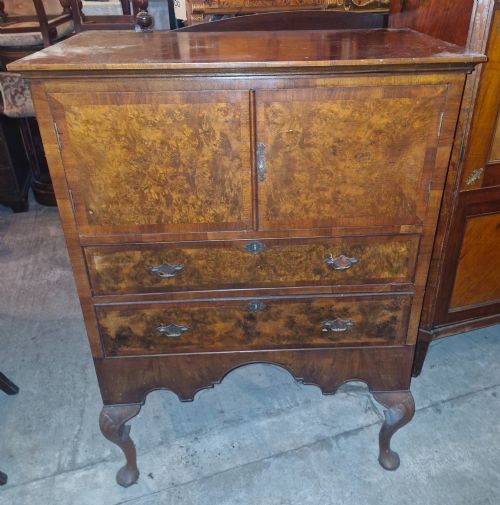
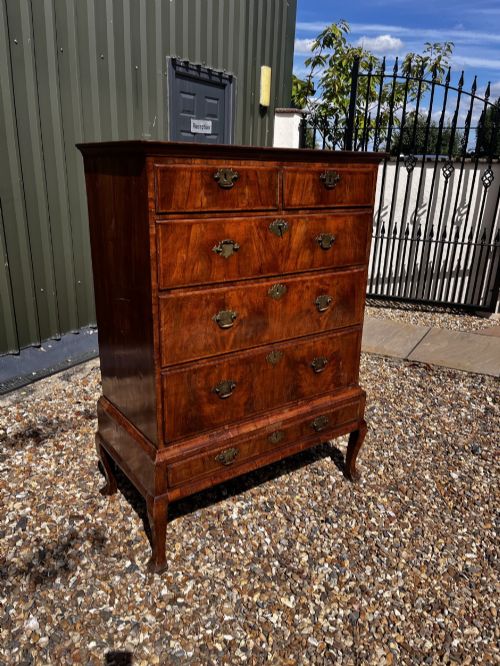
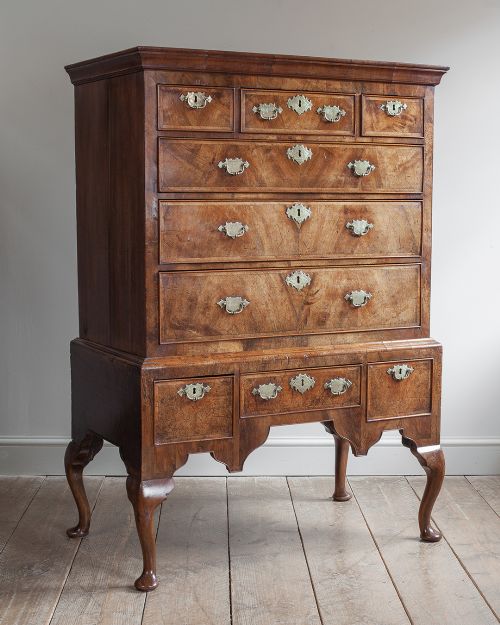
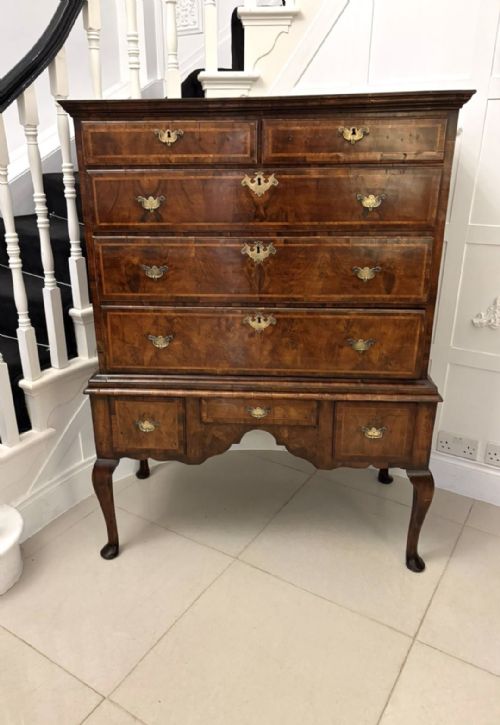
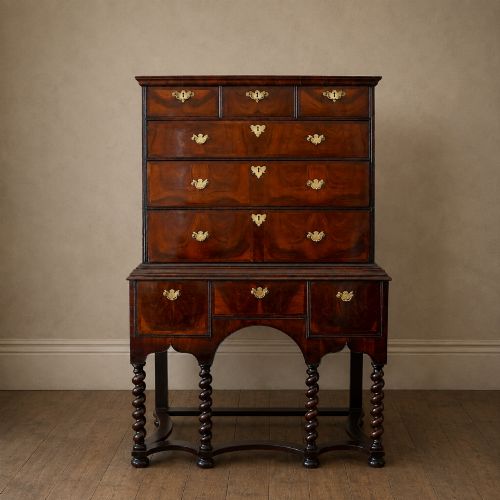
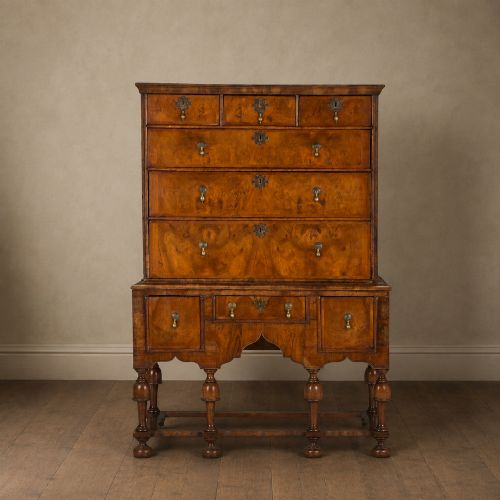
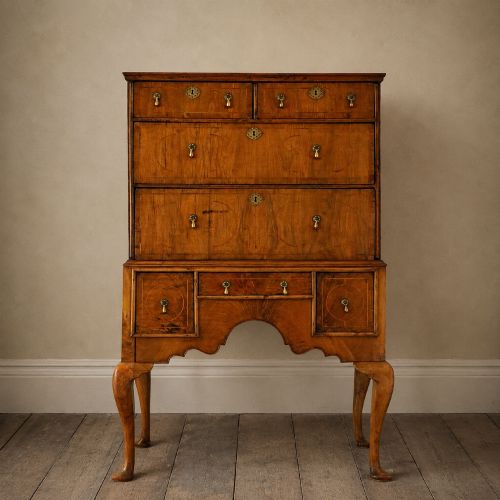
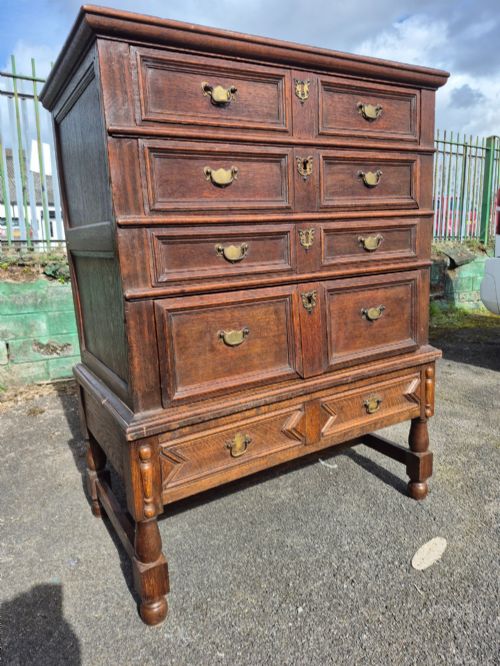
Tallboy on Stand
A tallboy on stand combines the vertical storage of a chest with the elevated grace of a raised base.
Tallboy on Stand
A tallboy on stand is a dual-section storage form consisting of an upper chest of drawers mounted upon a separate, legs-supported lower frame. When searching for a tallboy on stand, a buyer encounters pieces primarily spanning from the late seventeenth century through the Georgian and Queen Anne periods, alongside later revival interpretations.
The format appears in several variations, from early oak and walnut examples to mahogany and burr walnut pieces. Oak and walnut versions often date to the seventeenth and eighteenth centuries, while mahogany interpretations frequently align with Georgian or later periods.
How They Were Made
Cabinetmakers constructed these pieces using dense hardwoods such as oak, walnut and mahogany, frequently applying burr walnut veneers and crossbanding to primary surfaces. Interiors and drawer linings utilised secondary woods, while decorative elements incorporated satinwood inlay, boxwood and brass handles.
Joinery techniques relied on pegged frames, dovetailed drawer construction and precision veneering. Stands frequently featured shaped aprons, cabriole legs or stretchers to support the weight of the upper chest.
Listings feature oak, walnut, mahogany, burr walnut, laburnam oyster, glass, satinwood inlay and boxwood across periods spanning from the seventeenth century to the 1930s.
What Varies in Quality
Quality rests significantly upon the selection and matching of veneers, particularly in burr walnut and figured mahogany pieces where grain symmetry defines the visual impact. The integrity of the underlying structure, including timber thickness and the preservation of original surfaces, separates superior examples from heavily altered ones.
Proportion and the harmony between the upper chest and its supporting stand dictate the overall refinement of the piece. Subtle details such as crisp edge moulding, original brass hardware and untouched drawer construction distinguish master joinery from routine production.
The Tallboy on Stand Glossary
- Tallboy on stand
- A chest of drawers raised on a low-frame base or legs. This form maximises vertical storage while maintaining floor clearance beneath the body.
- Crossbanding
- A narrow strip of veneer laid perpendicularly to the main grain around the border of a panel. This technique frames drawer fronts and tabletops with contrasting timber grain.
- Burr walnut
- Timber sliced from walnut tree growths that display intricate, swirling grain patterns. Cabinetmakers prize this material for highly decorative drawer fronts and cabinet doors.
- Cabriole leg
- A furniture leg that curves outward at the knee and tapers inward toward the foot. This form appeared frequently on eighteenth-century stands and seating.
- Oyster piece
- Small, circular veneer sections cut transversely across small branches. These round or oval segments create distinctive oyster-patterned surfaces on early furniture.
Tallboy on Stand: Frequently Asked Questions
How do I date a tallboy on stand?
Dating relies upon timber choices, construction methods and stylistic details associated with periods like Queen Anne, George I and the broader Georgian era. Early pieces often feature walnut or oak with hand-cut dovetails and solid board backs.
Later revival pieces from the early twentieth century mimic these earlier forms but utilise twentieth-century secondary woods and machine-cut elements alongside period aesthetics.
Where should I place a tallboy on stand?
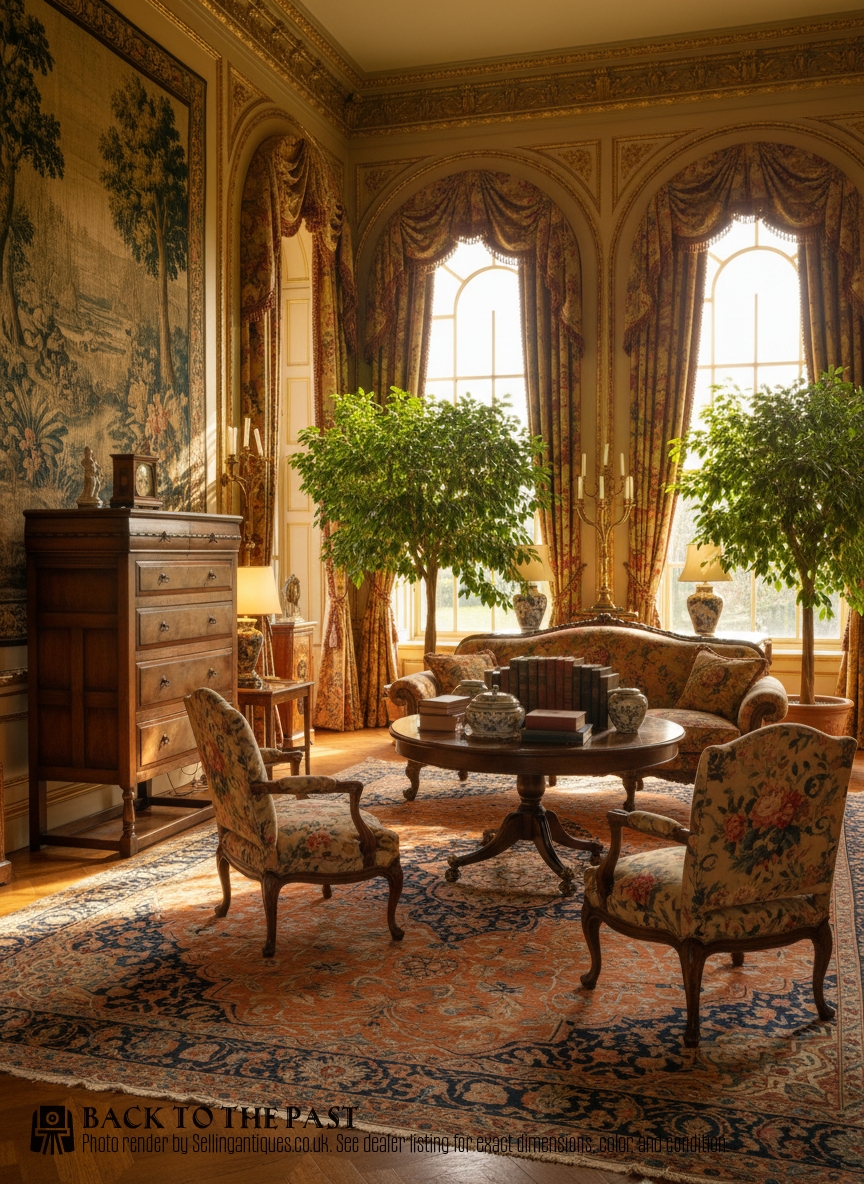
These pieces suit bedrooms, hallways or living spaces where vertical storage is required without occupying excessive floor area. Their elevated stands create an open feel beneath the main body.
Keep them away from direct heat sources and strong sunlight to protect aged wood finishes, veneers and original brass fittings from drying or fading.
Are stands original to the chests?
Many surviving tallboys retain their original stands, though some examples feature associated stands brought together during past centuries. Examining the timber matching, wear patterns and mounting blocks helps determine if the upper chest and lower stand originated together.
Both matching and associated configurations appear in period examples, reflecting centuries of domestic use and adaptation.