
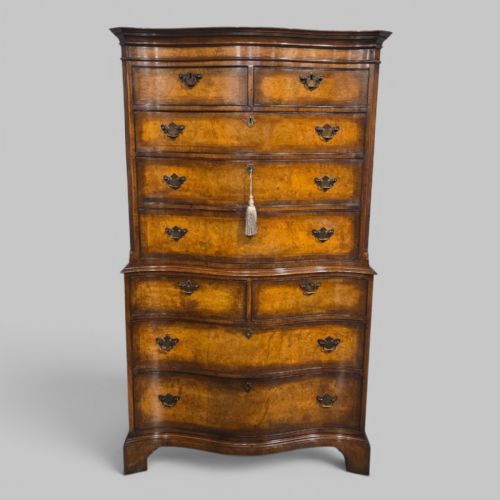
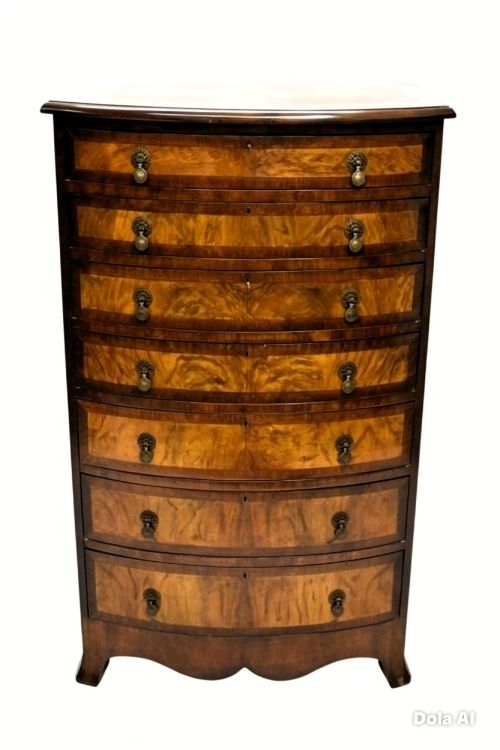


Burr Walnut Tall Chest
A burr walnut tall chest brings height and figured grain into a room, offering generous vertical storage through stacked drawers or compartments.
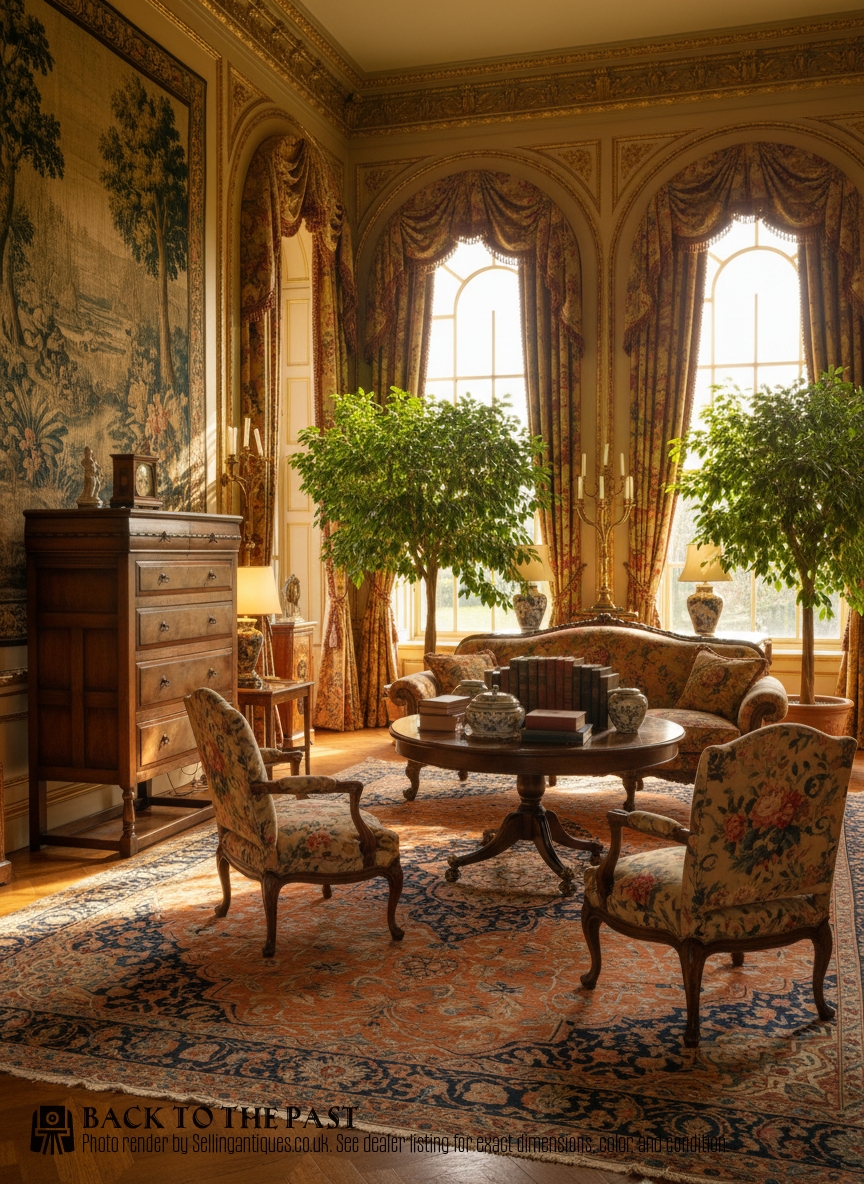
Burr Walnut Tall Chest
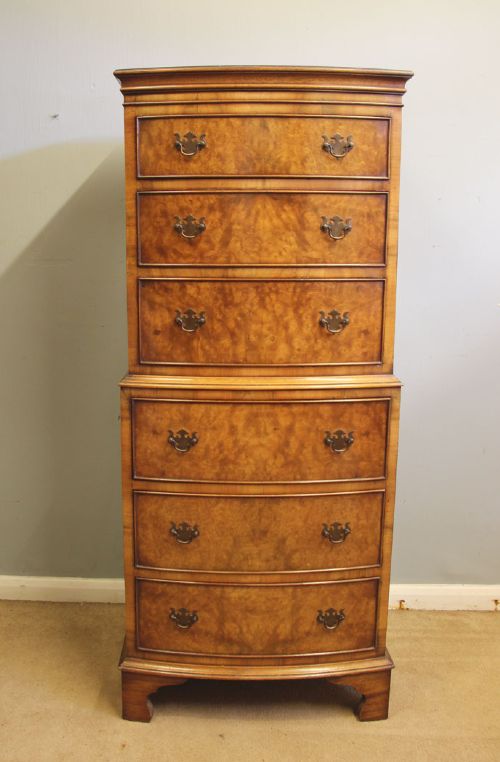
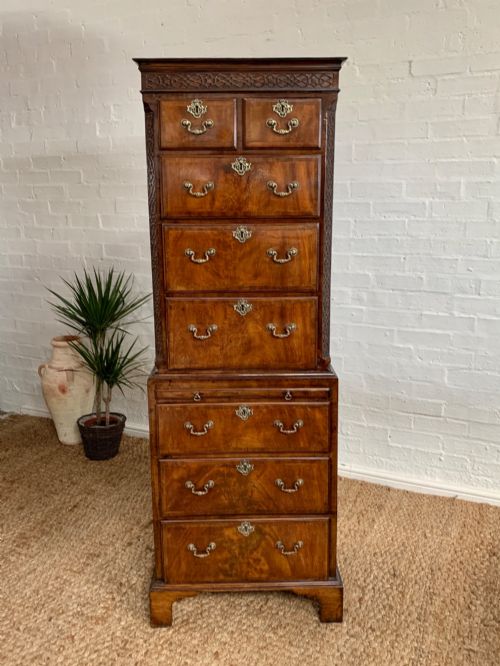
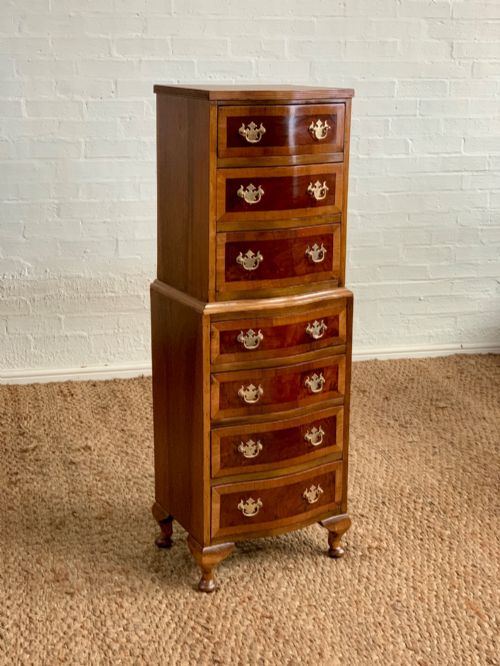
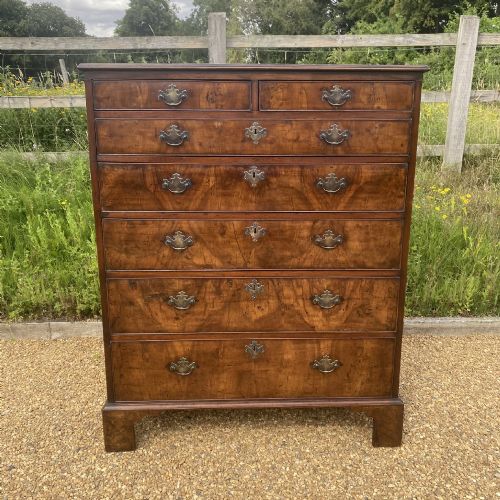
A burr walnut tall chest is fundamentally a vertical storage piece designed to maximise capacity while occupying a compact floor footprint, appearing frequently in forms such as tallboys, chests on chests, and Wellington chests.
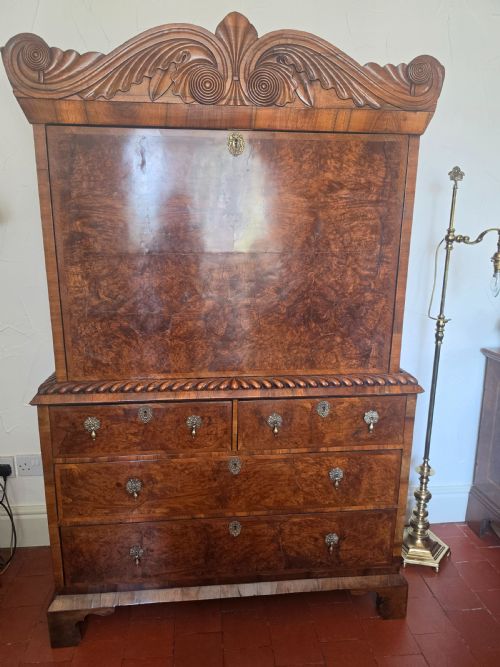
The pieces listed span multiple eras, with strong representation from the 18th century, the Victorian period, and 1930s Art Deco interpretations, alongside Georgian styles and Queen Anne revivals.
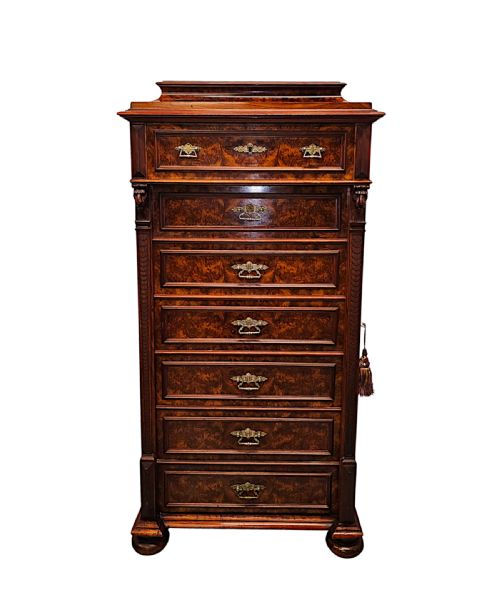
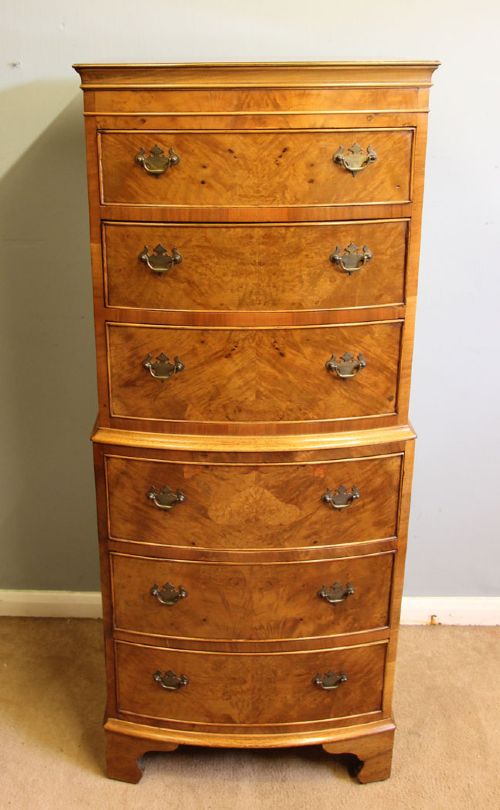
Makers and craftsmen utilised various configurations, including two-piece tallboys, bow-front designs, and semainiers, reflecting changing domestic requirements for linen and clothing storage over three centuries.
Materials and Technique
Cabinetmakers constructed these pieces primarily using solid timbers like oak, pine, and walnut for the foundational carcase, applying figured burr walnut veneer to the primary visible surfaces.
Veneers were carefully matched, bookmatched, and crossbanded to highlight the swirling grain patterns of the wood, occasionally complemented by brass hardware, ormolu mounts, and dovetailed drawer construction.
Listings feature burr walnut tall chests spanning from the 18th century through the Victorian era to 1930s Art Deco designs.
Assessing Craftsmanship
Quality rests upon the selection and symmetry of the burr walnut veneer, where continuous grain flow across drawer fronts denotes superior early planning by the maker.
Holland and Sons
The Burr Walnut Tall Chest Glossary
- Burr walnut
- A veneer taken from the wart-like growths on walnut trees, prized for its swirling, highly figured grain patterns. It creates a decorative surface used on high-status furniture.
- Tallboy
- A tall chest of drawers, often constructed in two distinct sections with a smaller chest sitting atop a larger base. This form became popular in the early 18th century.
- Chest on chest
- A specific tall furniture form consisting of an upper chest of drawers stacked directly onto a slightly deeper lower chest. It provides substantial vertical storage.
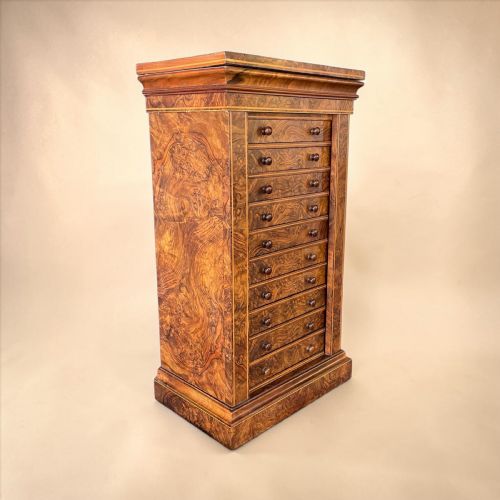
- Wellington chest
- A tall, narrow chest of drawers secured by a hinged vertical locking side bar that fastens with a key. This style originated in the 19th century.
- Crossbanding
- A decorative border technique where thin strips of veneer are laid perpendicular to the main grain of the piece. It frames drawer fronts and tabletops.
Burr Walnut Tall Chest: Frequently Asked Questions
What is a burr walnut tall chest?
A burr walnut tall chest is a vertical storage item featuring drawers stacked high, surfaced with decorative burr walnut veneer. These pieces range from 18th-century tallboys to 1930s Art Deco cabinets.
They provide deep vertical capacity without demanding excessive floor space. The distinctive swirling grain pattern serves as the primary visual decoration.
How do I date a tall chest?
Dating relies on observing construction methods, hardware, and stylistic cues such as bracket feet, cabriole legs, or stepped plinths. 18th-century examples often feature walnut on oak carcases, while Victorian versions incorporate heavier mouldings.
Later 1930s pieces typically display streamlined Art Deco geometry or bow fronts. Comparing the secondary timbers inside the drawers also clarifies the period of manufacture.
Where should I place a tall chest?
These tall chests suit bedrooms, hallways, or dressing rooms where vertical wall space is available. Their modest footprint allows them to fit into narrower gaps while still holding significant quantities of clothing or linens.
Keep them away from direct sunlight and strong heat sources to protect the delicate walnut veneers from drying out or fading over time.
What is the difference between a tallboy and a chest on chest?
A tallboy often refers generally to any tall chest of drawers, though traditionally it describes a chest mounted on a stand with legs. A chest on chest specifically denotes two full-sized drawer sections stacked one directly upon another.
Both forms offer generous storage capacity while introducing architectural height to an interior scheme. The distinction usually lies in how the lower section meets the floor.