
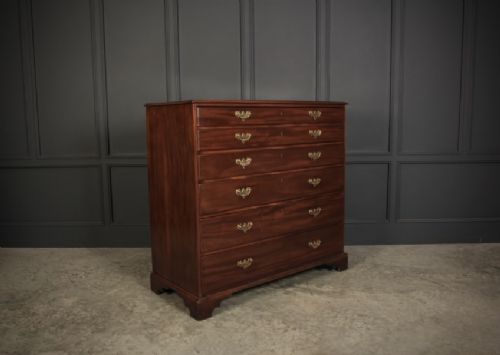


Antique Tall Commode
An antique tall commode brings upright storage and rich timber grain to a room, offering practical depth without a wide footprint.
Antique Tall Commode
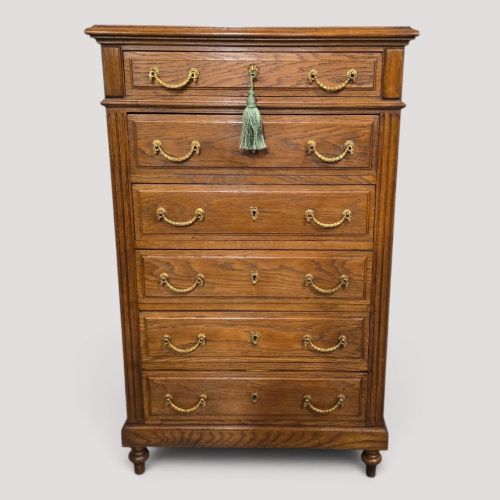
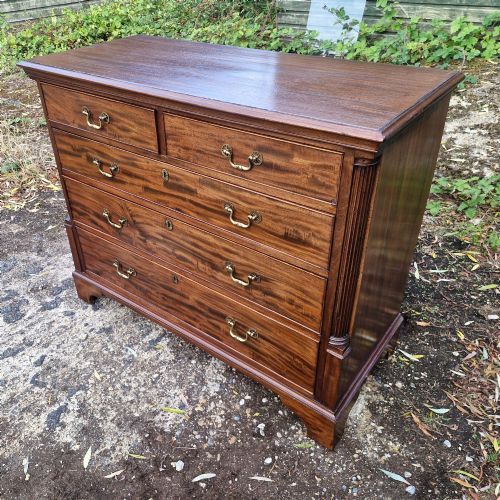
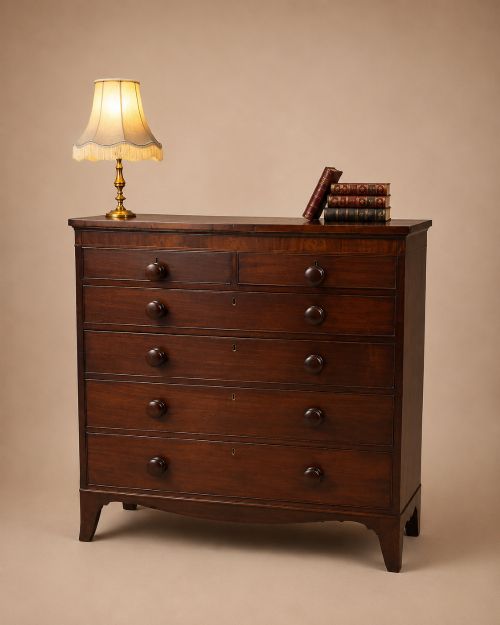
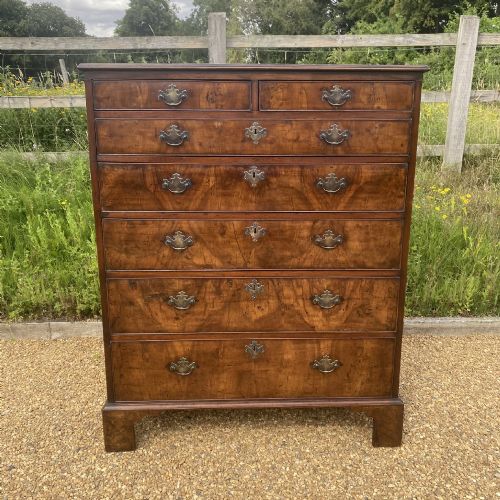
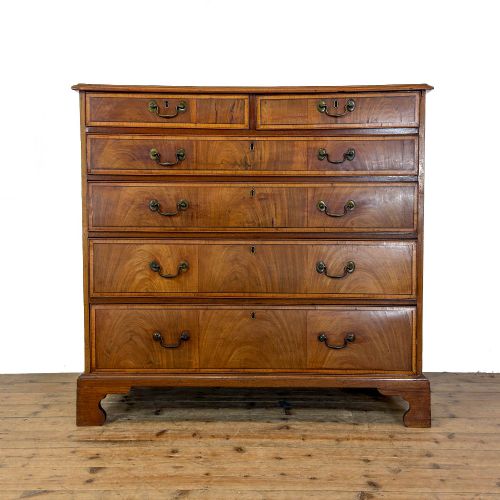
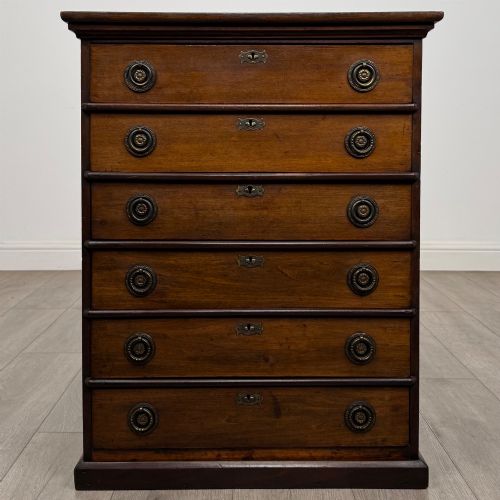
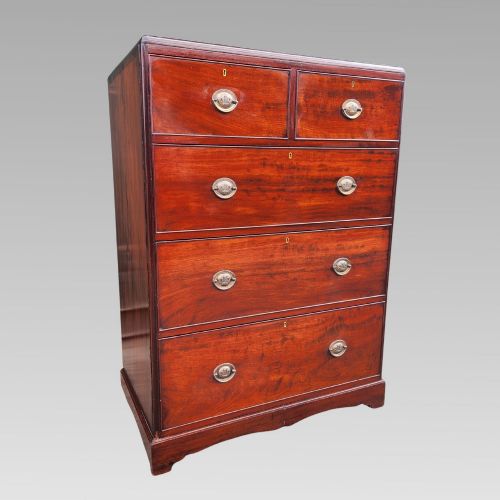
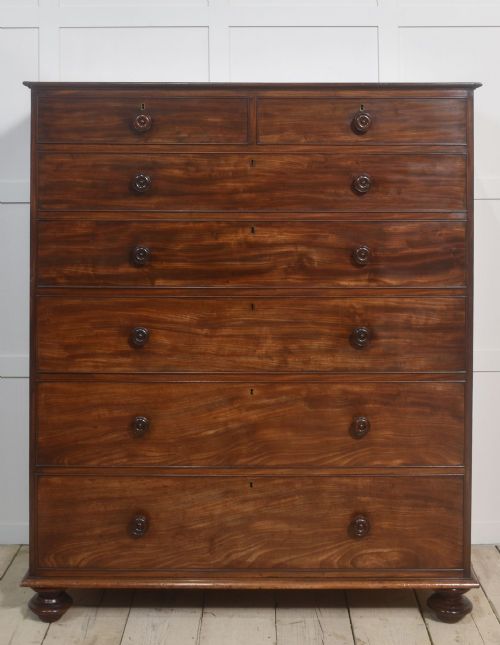
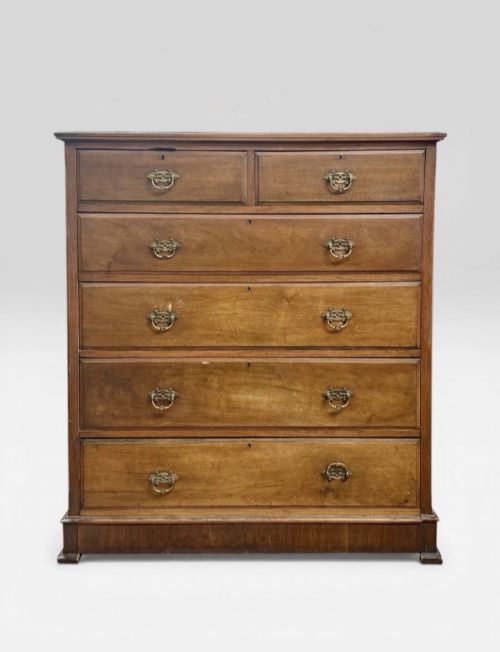
When searching for an antique tall commode, buyers encounter case furniture built to maximise vertical storage. The pieces on this page primarily take the form of tall chests of drawers and bedside cabinets, originating from Georgian, Victorian, Edwardian and early twentieth-century periods.
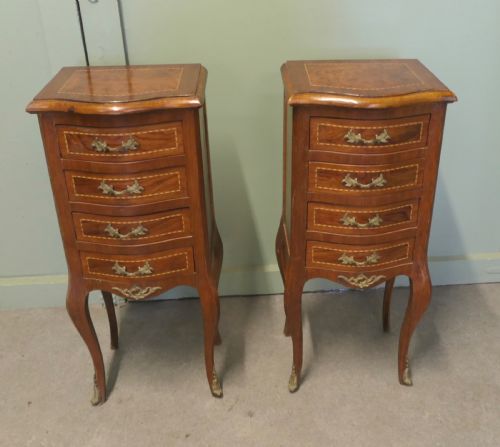
Mahogany dominates the selection, appearing alongside walnut, oak, pine and burr walnut. Forms range from simple five-drawer heights to serpentine fronts and French side lockers fitted with ormolu mounts.
Origin points stretch across English, French, Italian and Dutch workshops. Buyers find both formal Georgian proportions and decorative provincial styles.
How they were made
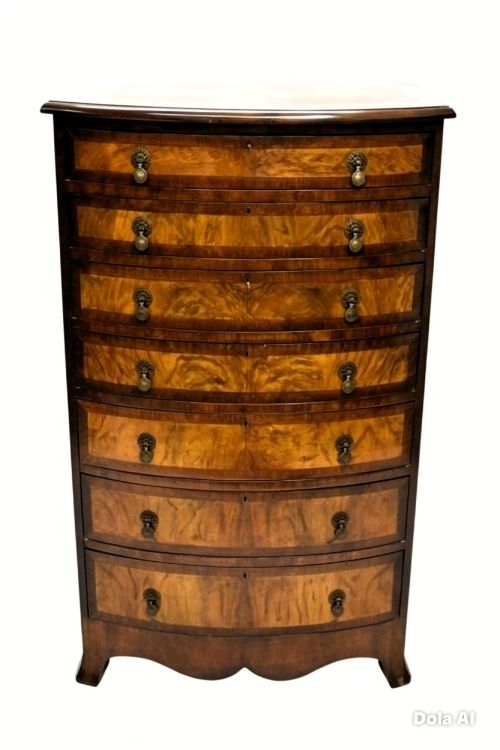
Cabinetmakers utilised solid hardwoods like mahogany, walnut and oak for primary structures, often applying flame mahogany veneer or burr walnut to drawer fronts to create striking grain patterns. Crossbanding and inlay added fine linear detail to the carcase borders.
Metal hardware played a functional and decorative role, featuring brass handles and locks alongside cast ormolu mounts on French pieces. Carved details and serpentine shaping required skilled hand carpentry across the Georgian and Victorian eras.
Listings feature pieces spanning the 18th, 19th and early 20th centuries, constructed in mahogany, walnut, oak, satin birch and pine.
What varies in quality
Quality rests in the selection of timber veneers and the precision of the cabinet construction. Pieces featuring matched flame mahogany or burr walnut crossbanding demonstrate superior workshop selection compared to plain secondary timbers.
The crispness of carved mouldings and the integration of original brass hardware or ormolu mounts separate standard production from high-grade examples. Drawer runners and dovetail joints executed with fine symmetry indicate expert hand joinery.
The Antique Tall Commode Glossary
- Bow front
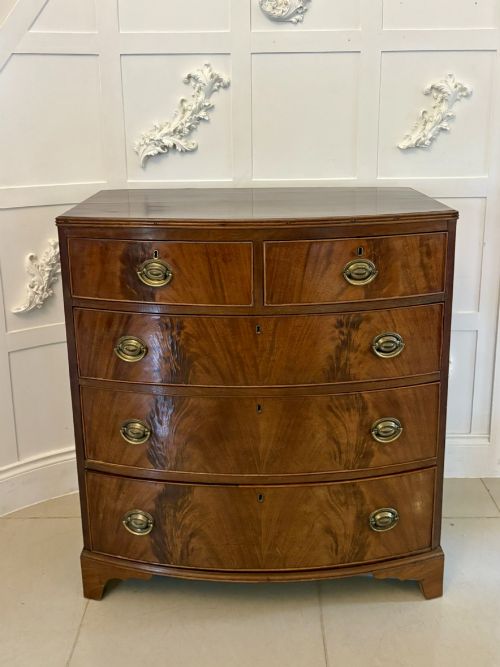
- A convex curved cabinet front that projects outward in the centre. This curved profile requires specialised shaping of both the timber drawers and the frame.
- Crossbanding
- A narrow strip of veneer laid around the border of a drawer front or tabletop so the grain runs perpendicular to the main panel. It creates a neat visual frame.
- Ormolu
- Gilded bronze mounts applied to furniture for decorative accent. This technique appears frequently on French pieces.
- Serpentine
- A front shape featuring a concave centre flanked by convex outer curves. It demands advanced woodworking skill to execute cleanly.
- Flame mahogany
- Timber veneer cut from the branch junction of a mahogany tree, showing a distinctive flickering flame pattern. Cabinetmakers reserved this timber for principal display surfaces.
Antique Tall Commode: Frequently Asked Questions
Where did people use tall commodes?
These pieces served primarily in bedrooms and dressing rooms for storing folded garments and linens. Their tall, narrow proportions made them suitable for rooms with limited floor space.
In larger houses, similar scaled chests also furnished dressing corridors and guest chambers. They provided substantial storage capacity while leaving wall space free for other furnishings.
How do I spot a Georgian piece?
Georgian pieces display classical proportions, often built from dense mahogany with hand-cut dovetail joints and restrained decorative mouldings. Look for graduated drawer depths and original brass drop handles.
Later Victorian interpretations tend to feature heavier flame mahogany veneers and taller five-drawer configurations. Comparing the internal secondary timbers helps clarify the period of construction.
Can I use a tall commode in a hallway?
The slender footprint of a tall chest makes it practical for narrow circulation spaces or landings where depth is restricted. It offers convenient surface space on top for lamps or decorative objects.
Drawers provide concealed storage for everyday items like gloves, post and keys. The rich timber tones add warmth and character to entrance areas.
What is the difference between English and French styles?
English pieces generally rely on architectural lines, timber grains and proportion for their visual appeal. Woods like mahogany and oak dominate the domestic production.
French commodes and side lockers incorporate curved cabriole forms, marquetry, kingwood and decorative ormolu mounts. They lean toward a more ornate decorative finish.