



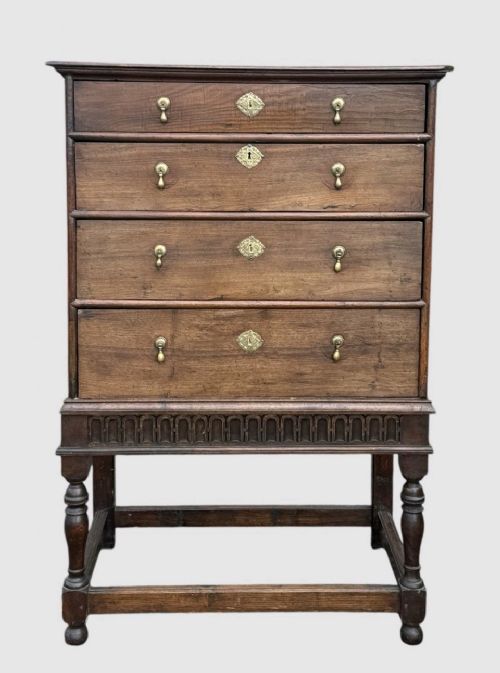

Tall Oak Chest of Drawers
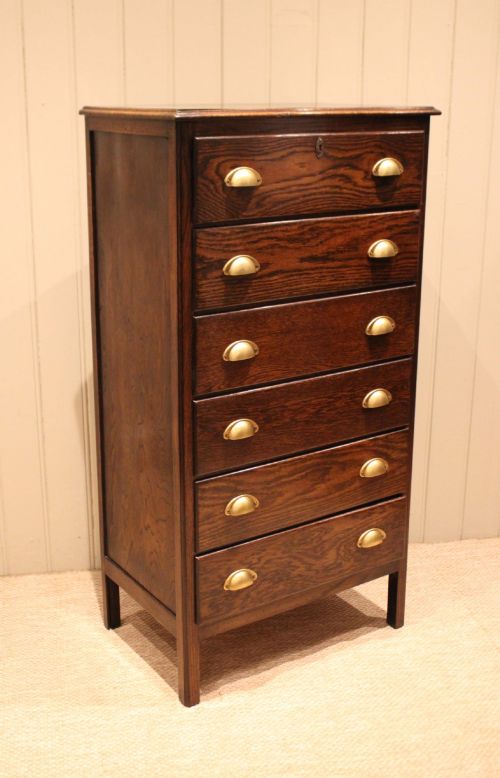
A tall oak chest of drawers provides upright storage for the bedroom, combining sturdy timber with generous vertical capacity.
Tall Oak Chest of Drawers
A tall oak chest of drawers supplies vertical storage without occupying excessive floor space in a bedroom or dressing room. These pieces span centuries of cabinetmaking, moving from early regional vernacular pieces to later modernist designs.
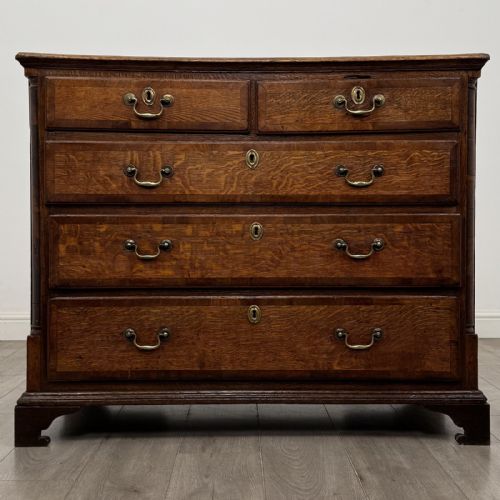
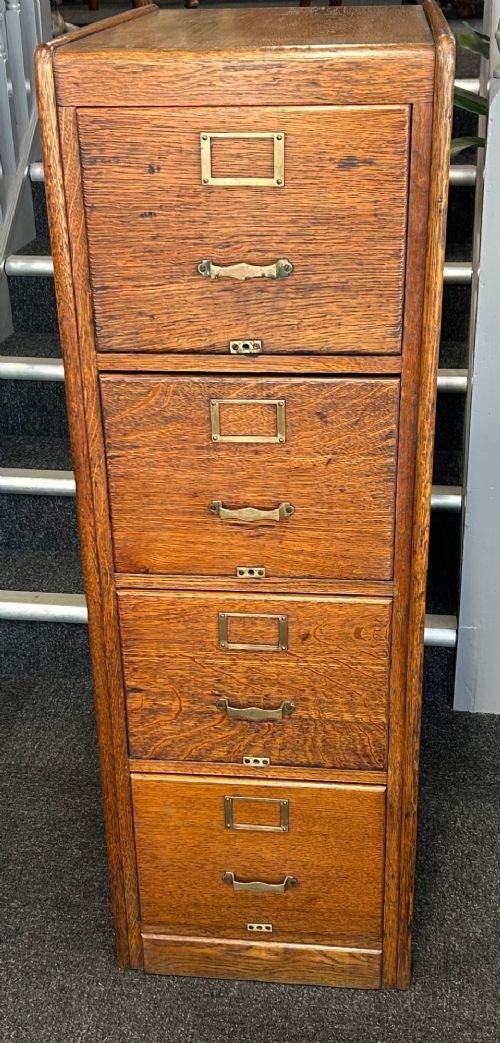
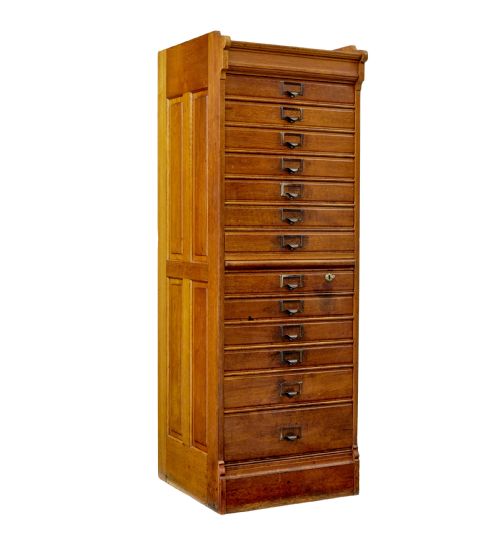
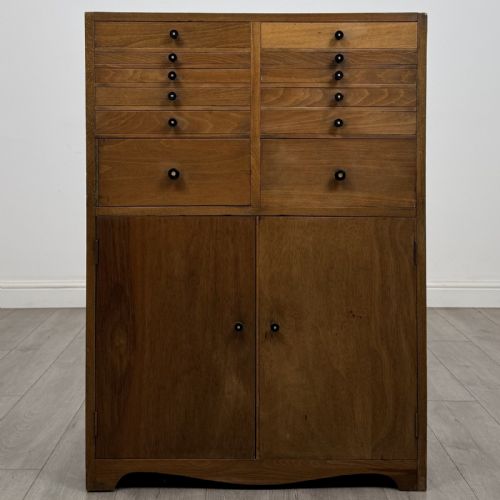
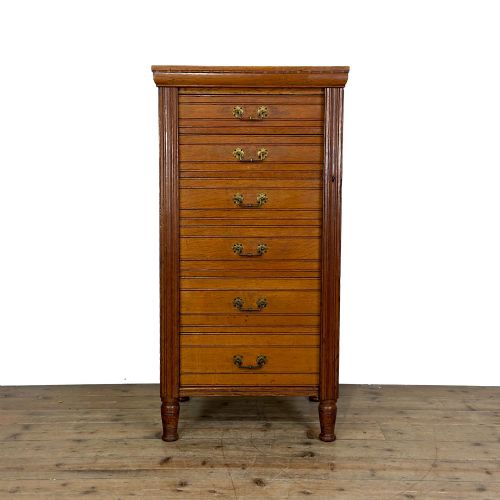
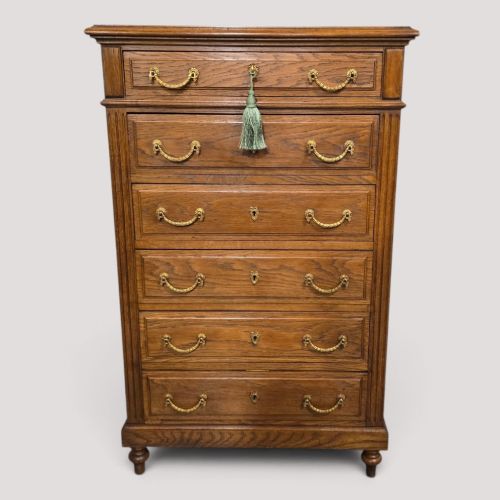
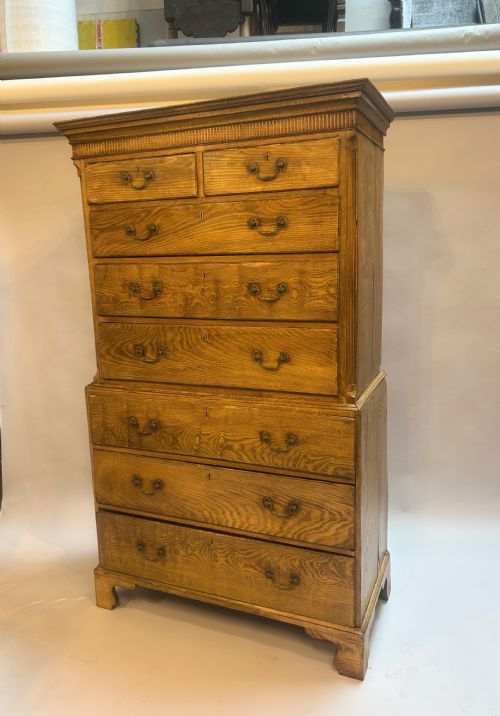
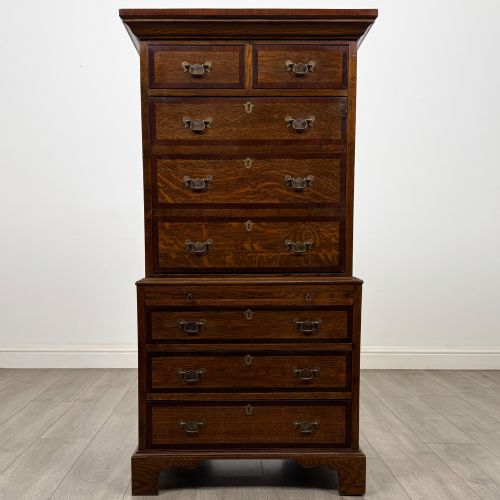
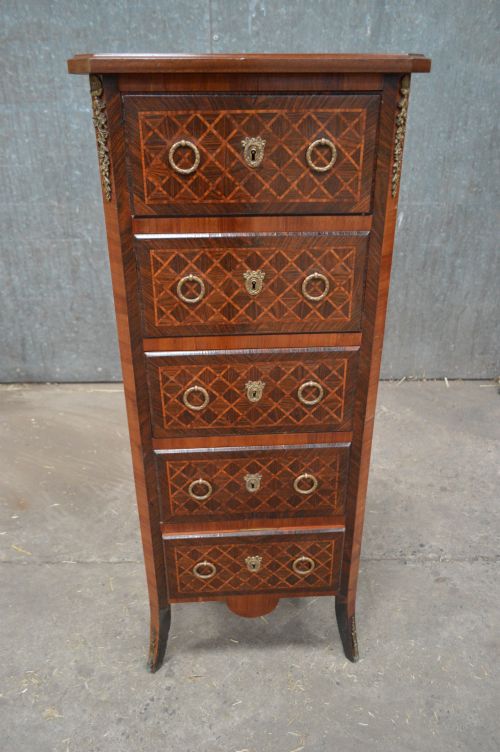
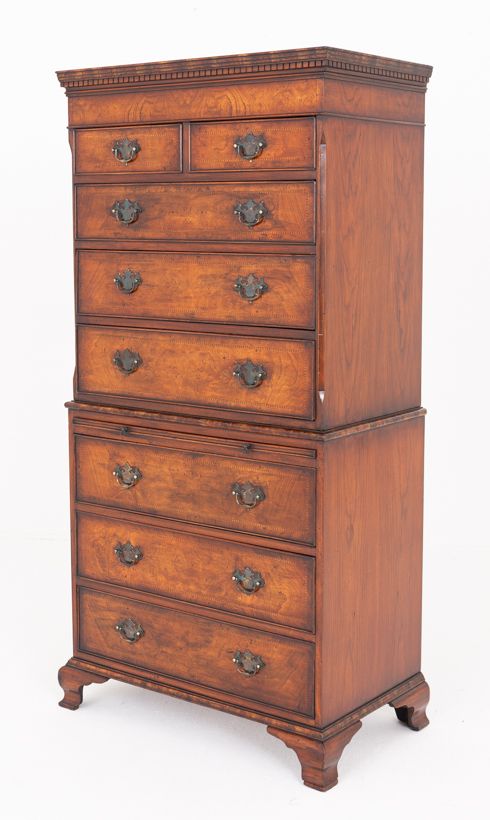
The version most likely to meet you on this page is an English or French tallboy, chest on chest, or upright cabinet dating from the Georgian era to the early twentieth century. Examples range from simple utilitarian office storage to elaborate carved French designs.
Makers and regional joiners utilised dense domestic timber alongside imported hardwoods, shaping forms that vary from narrow cabinets to broad tallboys with multiple graduated drawers.
Materials and construction methods
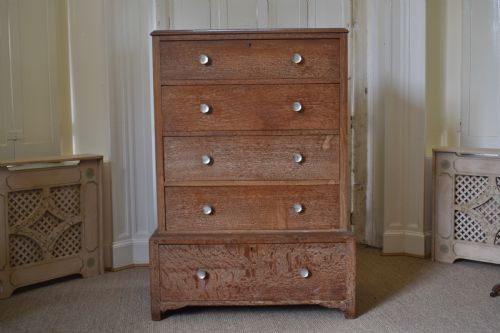
Carpenters constructed these upright chests primarily from solid oak, sometimes applying limed finishes, crossbanding, or secondary woods such as elm, walnut, and maple. Timber selection dictated the structural stability of deep carcases and tall drawer stacks.
Hardware played an essential functional and decorative role, with brass drop handles, printer block pulls, and iron fittings securing the drawers. Dovetailed drawer joints and panelled backs sustained the daily weight of garments and household linens.
Tall Oak Chest of Drawers Retail Price Guide 2026
Typical asking prices for tall oak chest of drawers among the pieces listed under this phrase on Sellingantiques today, from the lower quarter to the upper quarter. They describe what is for sale here now, not the wider market.
Historical sock drawers and specialised gentleman's sporran compartments reveal the specific haberdashery habits of past owners.
Distinctions in craftsmanship
Quality rests in the handling of the timber and the precision of the drawer construction rather than surface ornamentation alone. Superior examples display tight dovetailing, uniform grain matching, and original brass hardware that has remained with the carcase over generations.
Subtleties in proportion and internal depth separate standard utility pieces from sophisticated cabinetwork. Untouched surfaces retain patination that reveals the natural grain of the oak.
Heal and Son·Maple and Co
The Tall Oak Chest of Drawers Glossary
- Tallboy
- A tall chest of drawers, often constructed as one chest sitting atop another or built as a single tall upright carcase. This form maximises vertical storage capacity while maintaining a modest floor footprint.
- Chest on chest
- A two-part storage unit where a slightly smaller upper chest rests directly on a broader lower chest. This configuration provided high-capacity storage during the Georgian period.
- Limed oak
- Timber treated with a specialised finish that leaves a white pigment in the open grain of the wood. This technique gained popularity in the early twentieth century for lighter interior aesthetics.
- Crossbanding
- A decorative border technique where thin strips of veneer are laid across the grain of the primary wood. It frames drawer fronts and top surfaces on finer cabinetry.
- Dovetail
- An interlocking joint used in drawer construction, formed by interlocking wedge-shaped fingers. It remains a primary indicator of traditional cabinetmaking skill.
Tall Oak Chest of Drawers: Frequently Asked Questions
How do I date an oak tallboy?
Dating relies on examining construction techniques, drawer jointing, and handle styles. Earlier pieces display hand-cut dovetails and regional timber characteristics.
Later twentieth-century examples often feature lighter finishes, simpler hardware, and factory-standard machining within the carcase.
What is the difference between a tallboy and a chest on chest?
A tallboy generally refers to any tall upright chest of drawers designed for bedroom storage. A chest on chest specifically denotes a two-part stacked construction.
Both forms offer substantial vertical capacity while utilising minimal floor space in domestic settings.
Where should I place a tall chest in a room?
These upright pieces suit bedrooms, dressing rooms, and hallways where floor space is limited. Their height allows for significant storage without dominating the room.
Ensure the unit is secured to the wall if placed in high-traffic areas to prevent tipping.
Are limed oak chests original?
Limed oak finishes appear frequently on pieces from the early twentieth century, particularly from modernist or Art Deco periods. This treatment lightened the heavy appearance of traditional dark timber.
Careful inspection of the grain reveals whether the finish aligns with the period of the carcase construction.