
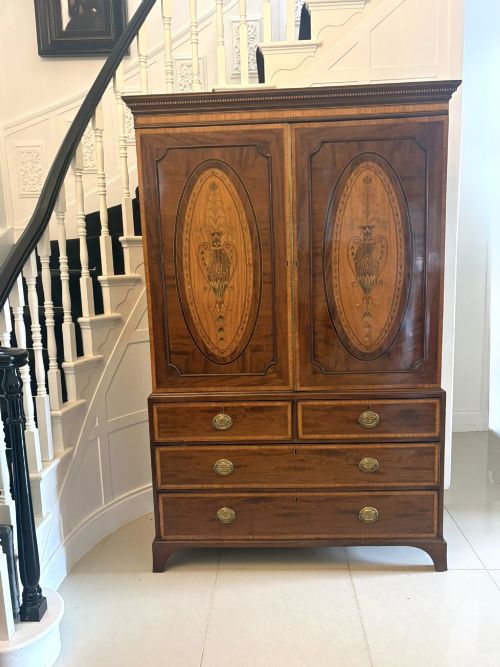

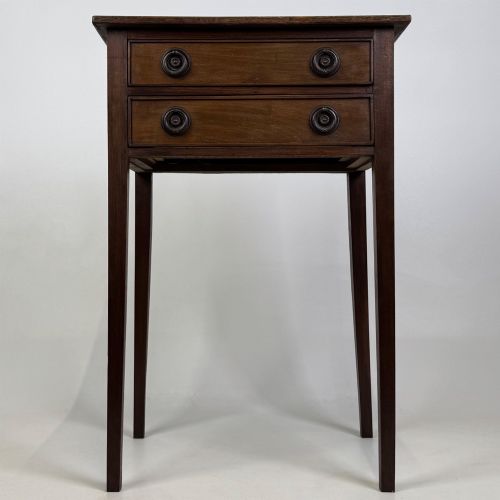
Tall Mahogany Chest
When you search for a tall mahogany chest, you enter a tradition of vertical storage built from rich, dark timber through Georgian, Victorian and Edwardian centuries.

Tall Mahogany Chest
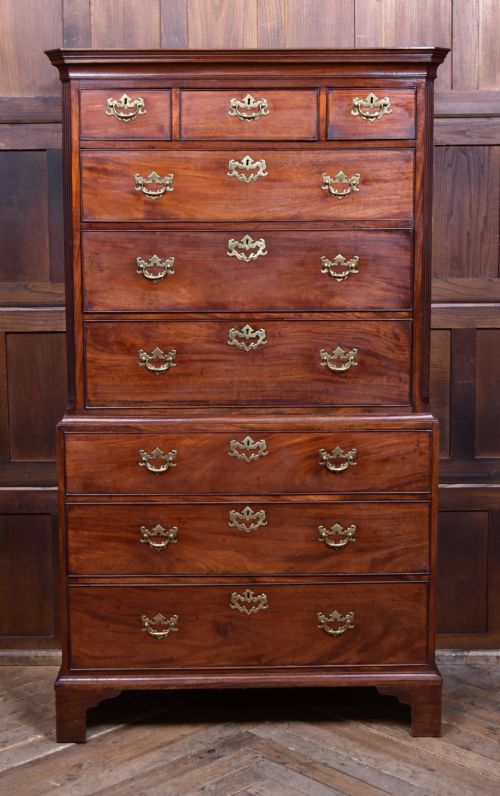
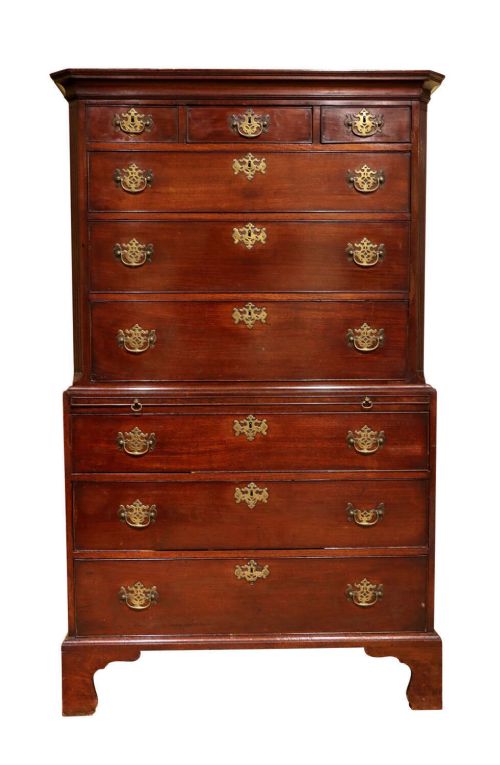
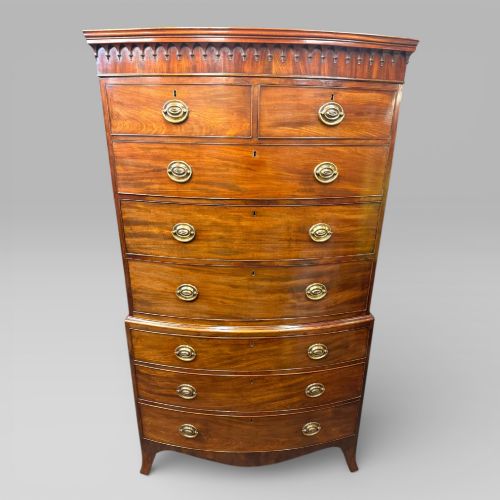
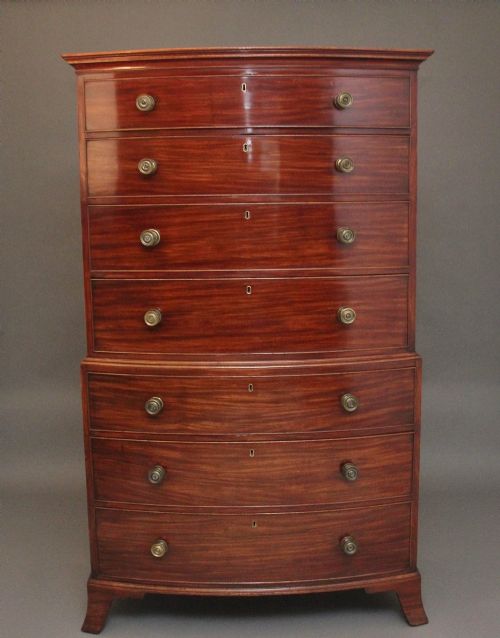
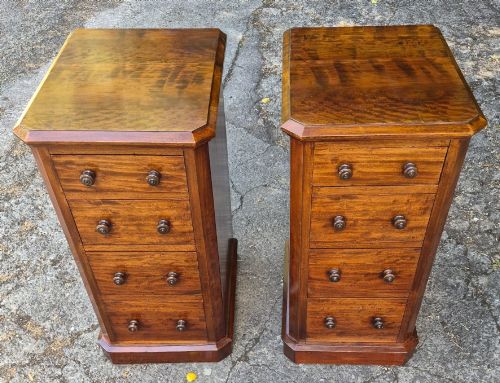
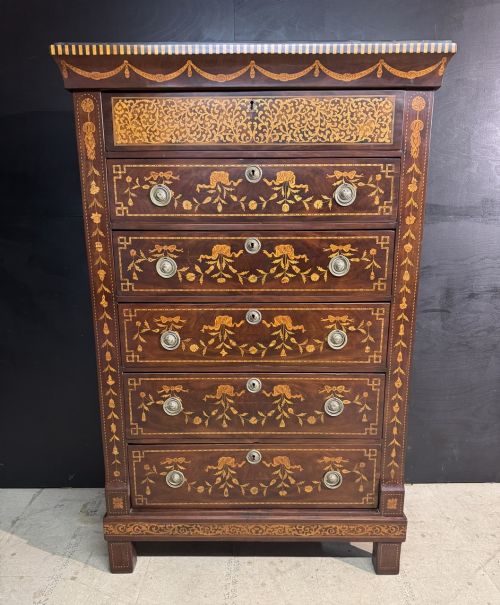
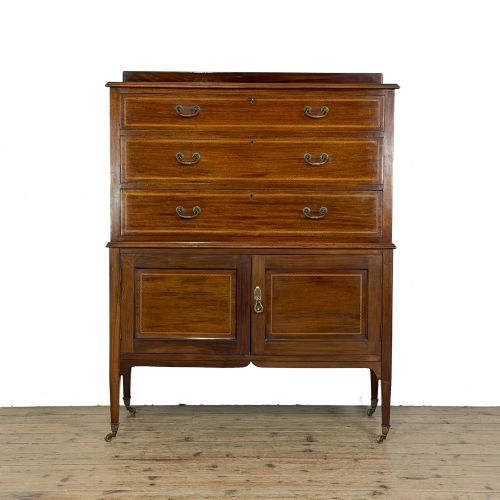
A tall mahogany chest brings together several distinct vertical formats designed for maximum storage within a compact footprint. Buyers searching this phrase most commonly encounter the classic tallboy or chest-on-chest, which stacks one case upon another to create a towering silhouette.
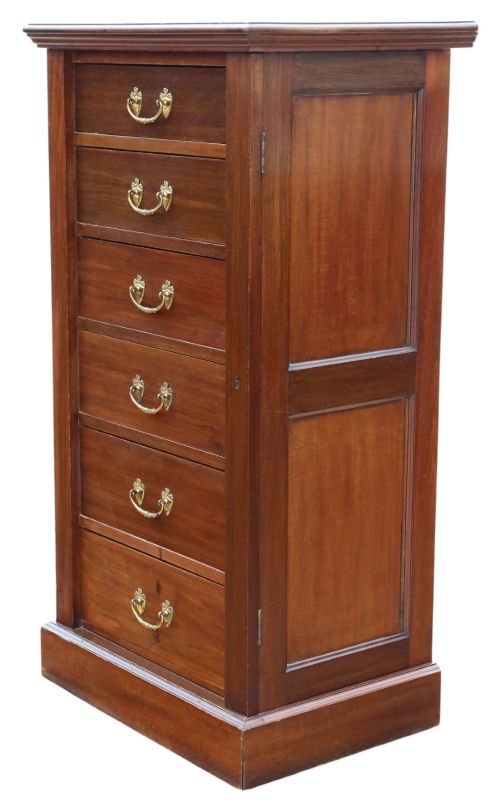
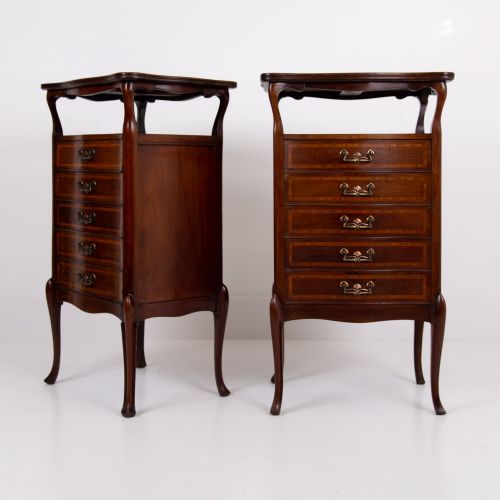
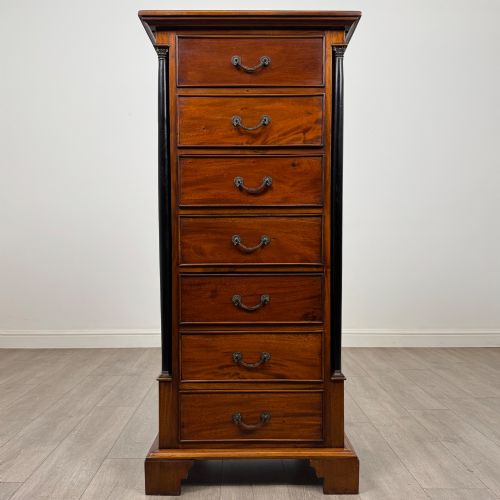
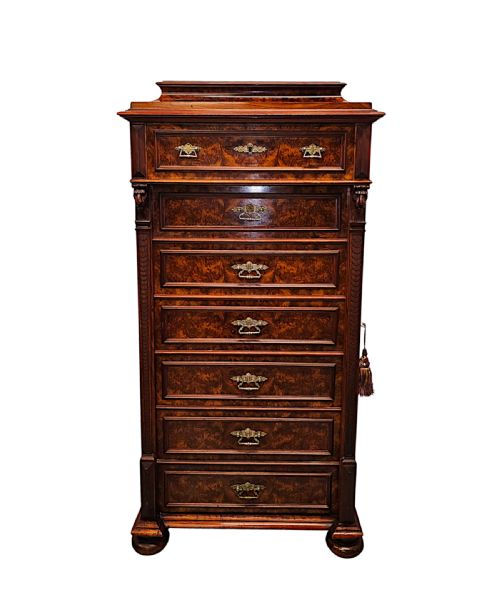
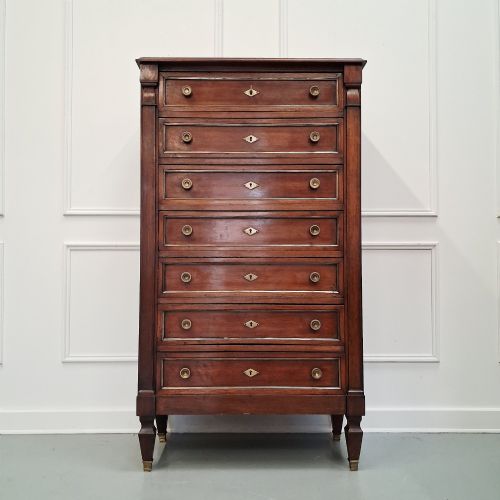
Beyond the traditional two-part tallboy, the selection frequently includes the narrower Wellington chest, fitted with a locking side stile that secures every drawer at once. Edwardian and later twentieth-century iterations often present a slim, upright profile suited to smaller contemporary rooms while retaining the traditional timber.
Originating largely from British workshops spanning the eighteenth, nineteenth and early twentieth centuries, these pieces serve as principal bedroom furniture. They offer deep capacity through graduated rows of drawers without dominating floor space.
Materials and construction
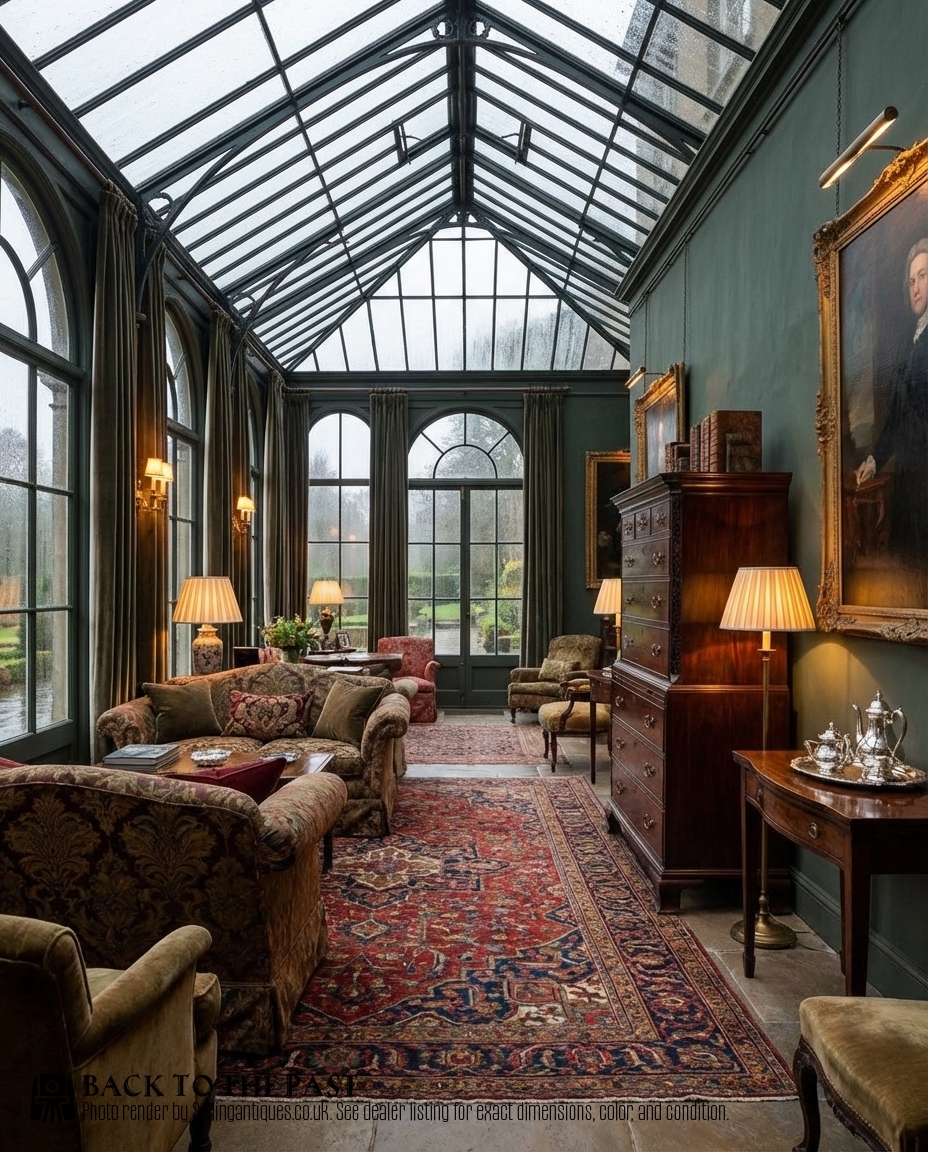
Makers relied primarily upon solid mahogany and figured mahogany veneers applied to secondary structural timbers such as oak and pine. The natural grain was selected for deep flame or ribbon patterns, giving the primary surfaces movement and visual depth.
Drawer construction relied on hand-cut dovetails joining the sides to the fronts and backs, ensuring long-term durability under daily use. Secondary woods like oak frequently lined the interior boxes, while brass hardware such as drop handles and batwing plates completed the assembly.
Tall Mahogany Chest Retail Price Guide 2026
Typical asking prices for tall mahogany chest among the pieces listed under this phrase on Sellingantiques today, from the lower quarter to the upper quarter. They describe what is for sale here now, not the wider market.
Listings feature periods spanning from the eighteenth century through the Edwardian era, constructed in mahogany, brass and satinwood.
Distinctions in quality
Quality rests heavily on the selection of the timber and the coherence of the proportions from top to base. Superior examples display mirrored flame mahogany veneers that continue seamlessly across multiple drawer fronts, paired with crisp, hand-carved cornices and original brass pulls.
The integrity of the internal structure dictates longevity, separating master cabinet-making from standard commercial output. Tighter dovetailing, smooth drawer runners that operate without binding, and minimal restoration to the original polish denote the higher tiers of surviving pieces.
J Shoolbred·Thomas Chippendale·Gillows·J Maple
The Tall Mahogany Chest Glossary
- Tallboy
- A chest of drawers built vertically, typically taking the form of a chest-on-chest where a smaller upper case rests upon a larger lower section. This configuration maximises storage capacity while maintaining a modest floor footprint.
- Wellington chest
- A tall, slender chest of drawers featuring a hinged locking flap down one side that secures all the drawers simultaneously. Originating in the nineteenth century, it provides a compact vertical storage solution.
- Chest-on-chest
- A two-part storage unit where an upper chest sits directly on top of a slightly deeper lower chest. The division allows easier transport of large case furniture up narrow staircases.
- Satinwood
- A lustrous, yellow-brown exotic timber frequently utilised for decorative stringing, banding and inlay work on fine case pieces. It provides a sharp visual contrast against dark mahogany surfaces.
Tall Mahogany Chest: Frequently Asked Questions
What is a tallboy chest?
A tallboy is a vertical storage unit, most commonly built as a chest-on-chest, combining two distinct sections to create heightened drawer capacity.
This format allows considerable storage without requiring extra floor space in a bedroom.
How do I date a mahogany chest?
Dating relies on examining construction methods, timber choice, handle styles and drawer dovetailing techniques across the piece.
Earlier eighteenth-century examples display hand-cut dovetails and secondary woods like oak, while later Victorian and Edwardian items often incorporate machine assistance.
Where were tall chests used?
These pieces served primarily as principal bedroom storage furniture for linens, garments and personal items throughout Georgian and Victorian homes.
Their vertical build made them practical for rooms with limited wall space.
What is a Wellington chest?
A Wellington chest is a narrow, tall case of drawers characterised by a hinged vertical locking bar secured with a key.
This mechanism locks every drawer in place at the same time to protect valuables.