




Tall Glazed Vitrine
These tall glazed vitrine selections offer upright display storage across periods from the nineteenth century to the nineteen-thirties.

Tall Glazed Vitrine
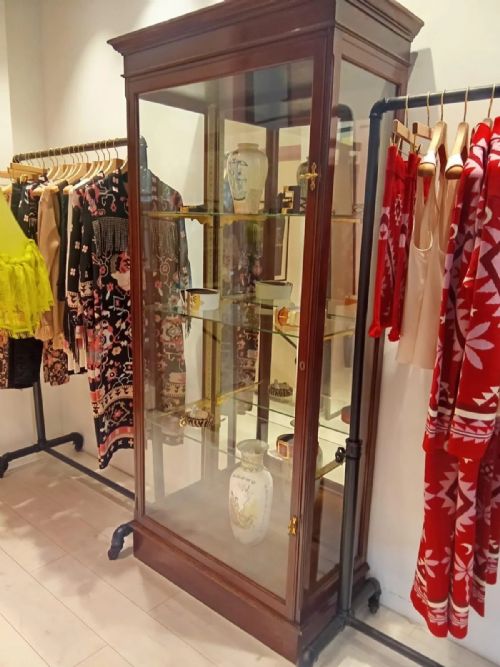
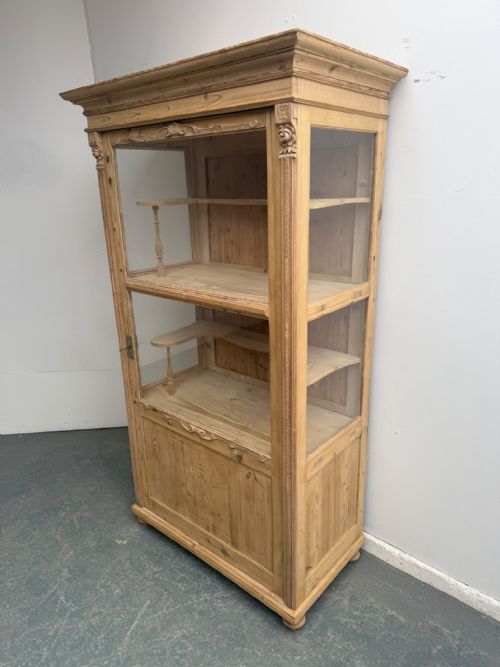
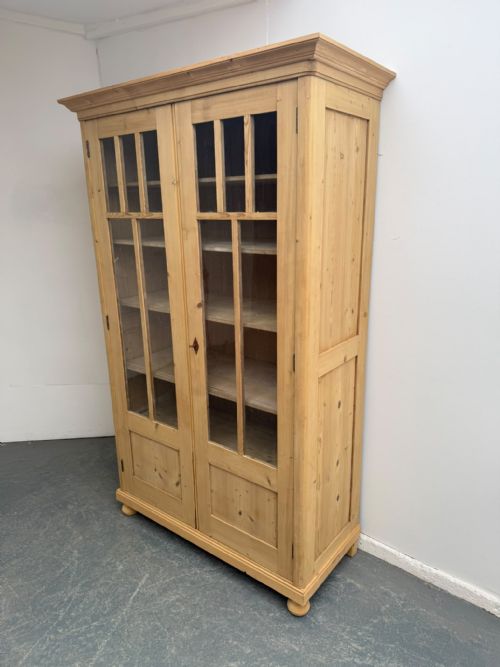
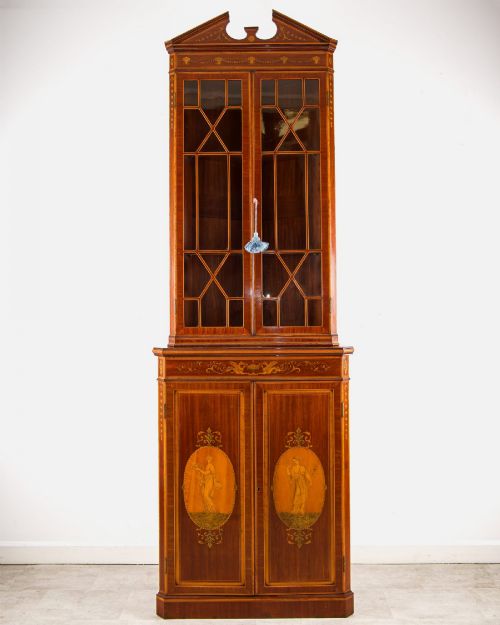
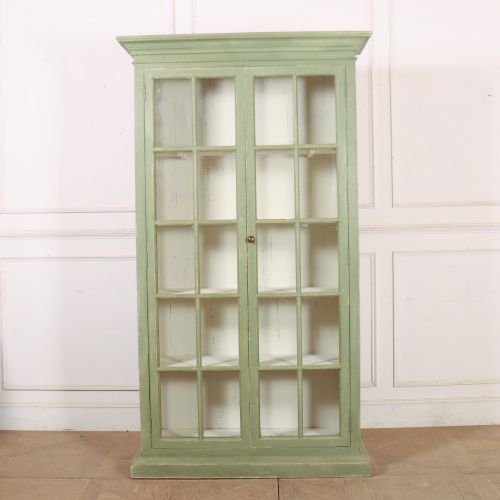
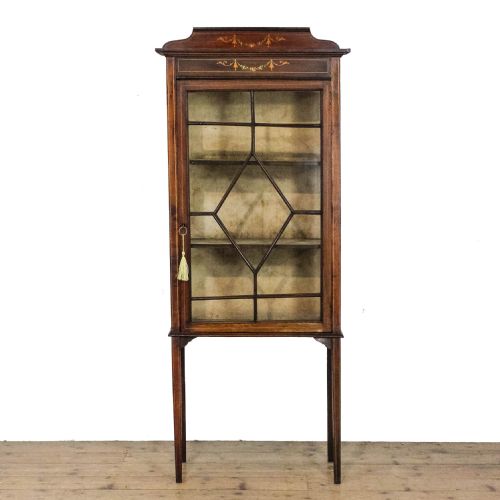
When you search for a tall glazed vitrine, you are looking at upright furniture designed specifically to exhibit objects behind glass panels. The selection spans several forms including display cabinets, bookcases, corner cabinets, and shop display towers.
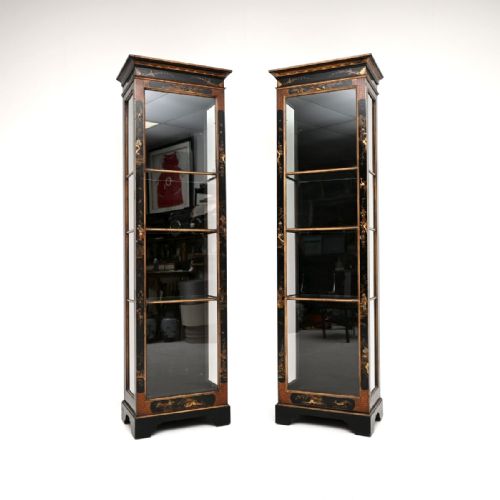
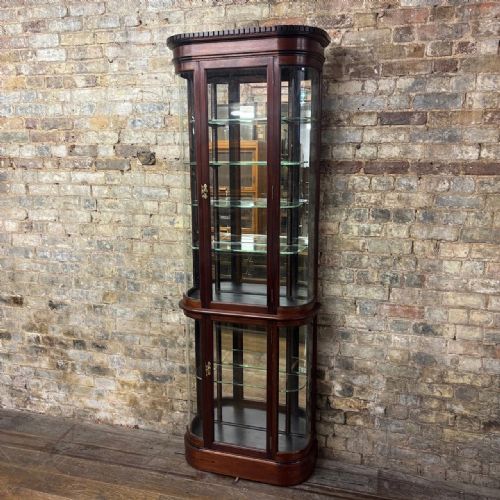
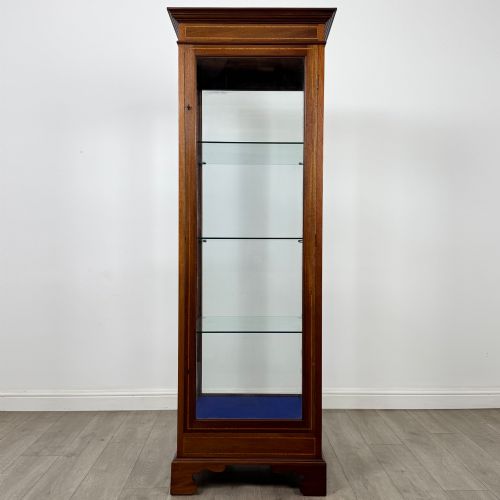
The pieces appearing here include Edwardian mahogany versions, Victorian pine and walnut examples, and twentieth-century commercial shop fittings. Mahogany and ebonised wood dominate the selection, often arranged in narrow freestanding formats suited to smaller floor spaces.
How tall glazed vitrine cabinets were constructed
Cabinet makers utilised solid timber frames in mahogany, oak, pine, and walnut, frequently applying satinwood crossbanding, marquetry inlay, or painted finishes to the exterior surfaces. Glass panels were fitted into wooden doors, sometimes secured with astragal glazing bars.
Interior structures incorporated adjustable glass shelves and fabric linings, while hardware such as brass hinges and locks completed the construction. Commercial shop display variants incorporated steel, leather, and larger plate glass panes to maximise visibility.
Materials recorded across the inventory include mahogany, oak, walnut, pine, satinwood, ebonised wood, glass, brass, steel, leather, and fabric.
What varies in quality across these cabinets
The standard of timber selection and cabinetmaking marks the distinction between standard utility pieces and finer examples. Superior specimens feature carefully matched mahogany grain, intricate inlay work, and precise joinery in the door frames.
Original glass panels, well-fitted brass hardware, and intact internal shelving also elevate the status of a piece. Commercial shop fittings rely on robust framing and heavy-duty glass to withstand continuous use.
E. Pollard and Co. Ltd.
The Tall Glazed Vitrine Glossary
- Vitrine
- A glass-fronted cabinet designed for displaying fine objects or collections. Such pieces originated in France and gained popularity across British and European drawing rooms.
- Astragal glazing
- Narrow timber mouldings that divide a glass window into smaller panes within a cabinet door. These strips create a decorative grid pattern across the front.
- Bijouterie cabinet
- A shallow glass-topped or glass-sided display table or cabinet created for small valuables and jewellery. They often feature fabric-lined interiors.
- Crossbanding
- A decorative border of veneer laid with the grain running perpendicular to the main surface. This technique frames the drawer fronts or top panels.
- Marquetry
- Elaborate patterns created by fitting together different pieces of wood veneer onto a solid ground. Cabinet makers used this method to adorn the doors and friezes.
Tall Glazed Vitrine: Frequently Asked Questions
What is a tall glazed vitrine used for?
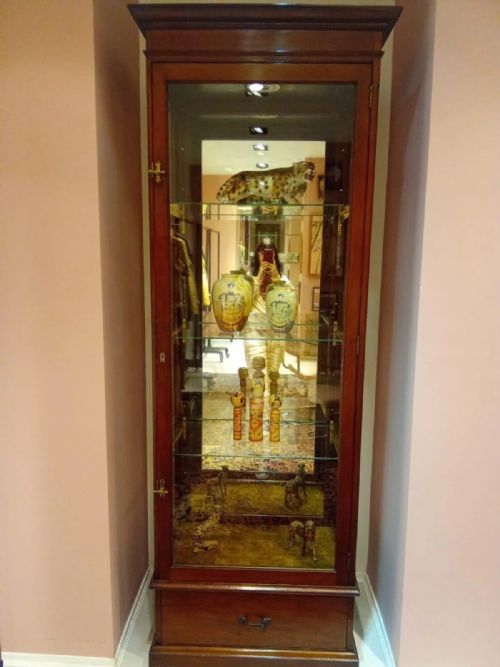
These cabinets serve to display porcelain, glassware, books, or collections while protecting the contents from dust. Domestic examples typically stand in drawing rooms or dining spaces.
Commercial variants were built for retail shops to exhibit goods securely to passing customers.
How do I date an Edwardian display cabinet?
Edwardian pieces date from the reign of King Edward VII between nineteen hundred and nineteen ten. They frequently employ light mahogany framing with inlaid satinwood stringing.
Many incorporate astragal glazing bars and satinwood crossbanding typical of revival styles from that decade.
Are shop display cabinets suitable for homes?
Freestanding shop display towers and counter cabinets integrate well into modern interiors. Their narrow footprints and extensive glass panels maximise display space without dominating a room.
Industrial models often combine steel and timber frames to provide robust storage.
What is an ebonised tower cabinet?
An ebonised tower cabinet is an upright display piece finished in a dark black coating designed to imitate ebony wood. These items often date from the late nineteenth or early twentieth century.
The dark finish provides a strong visual contrast against light-coloured interior walls and displayed items.