
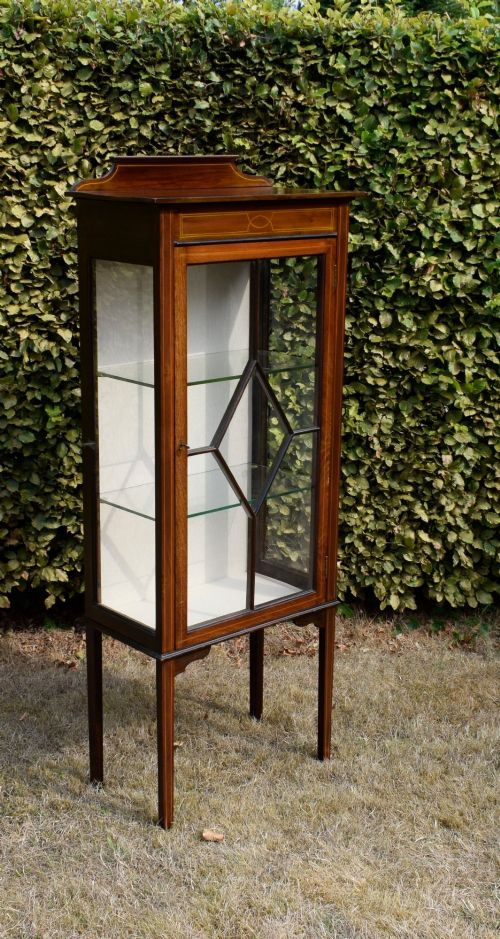
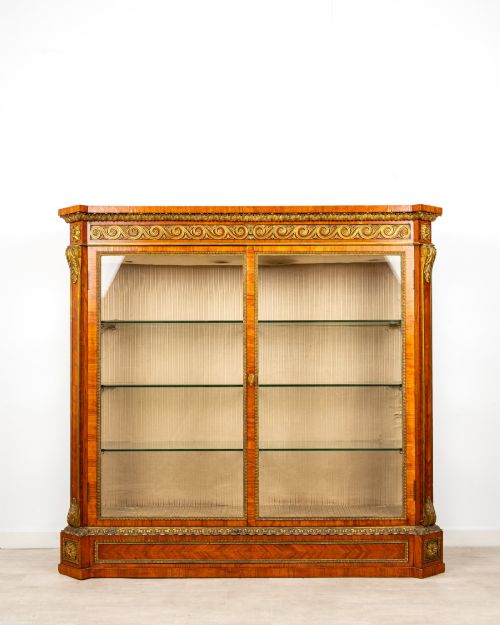
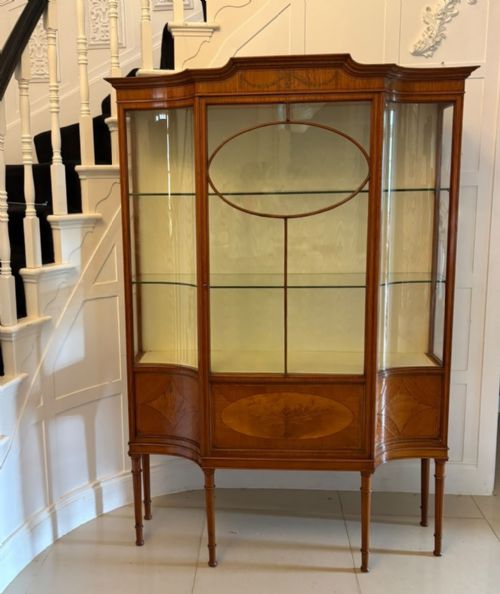
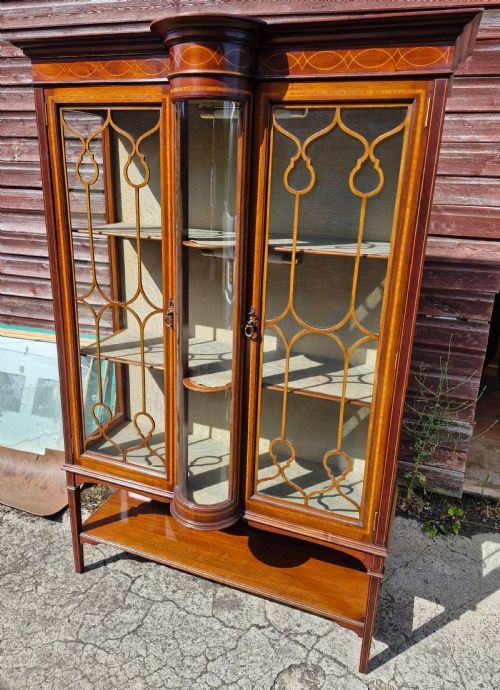


Satinwood Curio Cabinet
These satinwood curio cabinet pieces bring refined display space to a room, catching the light and framing small treasures.

Satinwood Curio Cabinet
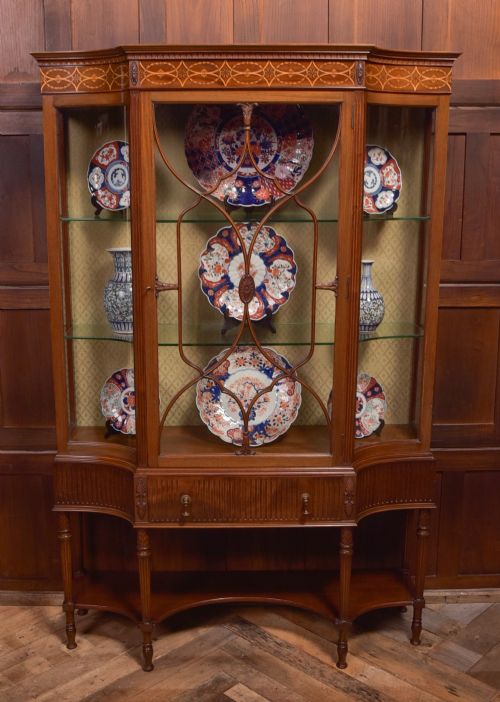
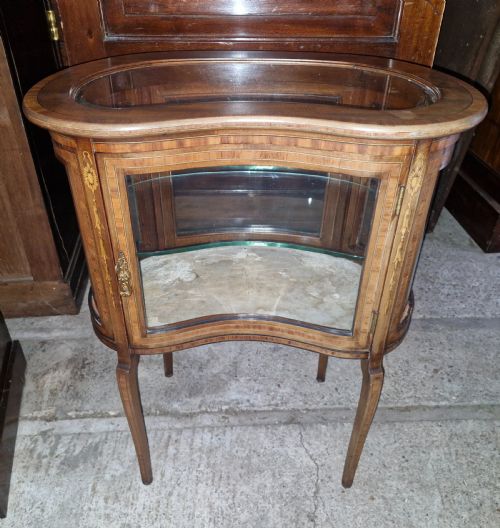
A satinwood curio cabinet offers a dedicated glazed showcase for precious objects, taking forms such as freestanding display cabinets, kidney-shaped tables, and wall-hung vitrines. The Edwardian period and the late Victorian era supply the majority of these examples, often reflecting Sheraton Revival and Louis XVI Revival tastes.
Buyers meet both tall single-door cabinets and low bijouterie tables designed for tabletop viewing. These pieces combine functional glass enclosure with decorative woodwork suited to period interiors.
How they were made
Cabinetmakers constructed these pieces primarily using mahogany and satinwood, frequently applying detailed fruitwood inlay and satinwood crossbanding across the exterior surfaces. Glass panels formed the doors and sides, while interior spaces often featured fabric or velvet linings.
Structural hardware relied on brass fittings, and high-end examples incorporated gilt bronze mounts. Workshops also utilised painted decoration alongside marquetry and parquetry techniques to enrich the timber.
Listings span from the 1860s through the Edwardian decade, featuring mahogany, satinwood, gilt bronze, and velvet.
What varies in quality
The standard of timber selection and the precision of the inlay work largely determine the quality of a piece. Finer cabinets display crisp fruitwood marquetry, balanced proportions, and careful integration of satinwood crossbanding.
The presence of specialised mounts, such as gilt bronze, or maker attribution elevates an item above standard production. The joinery of curved glass doors and the refinement of the painted or polished finish further separate the tiers of manufacture.
H. J. Hatfield & Sons·Waring & Gillow·Edwards and Roberts
The Satinwood Curio Cabinet Glossary
- Satinwood
- A hard, yellow-toned timber prized for its lustrous grain and smooth finish. It was frequently used for veneers and decorative banding.
- Bijouterie cabinet
- A display table or cabinet designed specifically for small valuables, jewellery, and curiosities. These often feature glazed tops or sides for downward viewing.
- Vitrine
- A glass-fronted display cabinet used for showing porcelain, glassware, and ornaments. The term derives from the French word for glass.
- Marquetry
- Decorative veneer work formed by fitted pieces of wood, shell, or ivory to create pictorial or geometric patterns on furniture surfaces.
- Crossbanding
- A border veneer applied around the edges of a panel where the wood grain runs perpendicular to the centre.
Satinwood Curio Cabinet: Frequently Asked Questions
What is a curio cabinet used for?
These cabinets serve to display collections of small antiques, porcelain, and precious objects behind protective glass panels. They keep delicate items free from dust while allowing full visibility.
Historically, they occupied drawing rooms and parlours where hosts exhibited their gathered curiosities to guests.
How do I date a satinwood cabinet?
Dating relies on stylistic clues, timber combinations, and construction methods. Pieces from the Edwardian era often show Sheraton Revival lightness and refined mahogany carcases with satinwood inlay.
Late Victorian examples tend to be heavier in proportion, utilising dense fruitwood marquetry and rich polished finishes.
What is the difference between a vitrine and a curio cabinet?
A vitrine typically refers to an entirely glass-panelled display case, often inspired by French cabinet-making traditions. A curio cabinet is a broader term encompassing wall-hung, tabletop, and floor-standing display furniture.
Both types share the primary function of showcasing decorative items.
How should I care for satinwood furniture?
Satinwood benefits from placement away from direct sunlight and sudden temperature changes, which can dry out the timber and veneer. Regular dusting with a soft, dry cloth preserves the polished finish.
Avoid applying modern silicone sprays or heavy waxes that build up on antique surfaces.