




Standing Curio Showcase
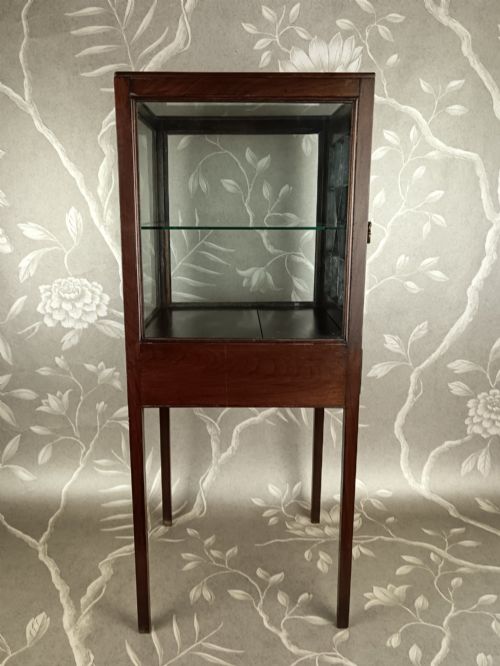
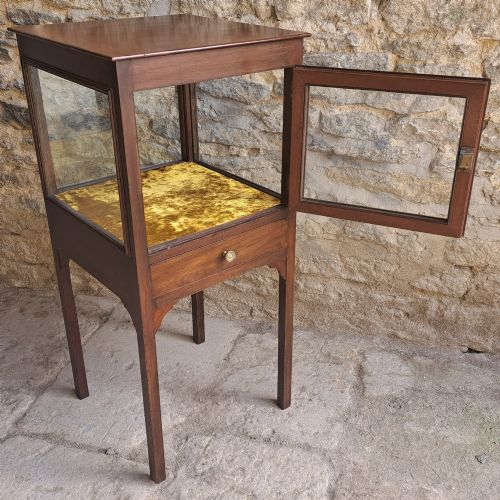
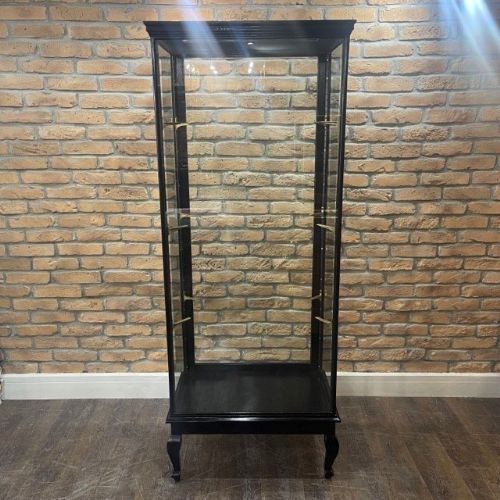
These standing curio showcase pieces present your collection behind glass panels, offering a clear view from all sides.

Standing Curio Showcase
When you search for a standing curio showcase, you are looking at tall cabinets designed to exhibit small treasures, porcelain, and objects of vertu. The versions you are most likely to meet on this page date from the Georgian period through to the Edwardian era and the nineteen-twenties.
These display cabinets and vitrines take various forms, including cylindrical pedestals, tall towers, demi-lune shapes, and oval freestanding cabinets. They utilise glass panels extensively to let light fall across the shelves and interior linings.
Makers shaped these display pieces in stylistic idioms such as Sheraton Revival, Art Nouveau, French Louis XVI style, and French Empire. Each style brings distinct decorative flourishes to the framework surrounding the glass.
Materials and construction
Carpenters built these cabinets predominantly using mahogany, often incorporating satinwood crossbanding and ebonised wood for contrast and visual depth. Inlaid details define many of the surfaces, showing careful woodworking techniques from the eighteenth, nineteenth, and early twentieth centuries.
Makers mounted glass within wooden or giltwood frames to enclose the display space securely. Brass hardware and ormolu mounts provide structural accents and decorative borders on French and English examples alike.
Interiors frequently feature fabric or velvet linings to cushion displayed items and create a soft background texture. Freestanding designs rely on stable legs, pedestals, or circular bases to support the weight of the timber and glass.
Some cabinets are curved into full cylinders or half-moons, ensuring your curiosities get dizzying circular views.
Distinctions in quality
The sophistication of the timber work and inlay sets the standard for these cabinets. Pieces featuring delicate satinwood crossbanding or meticulous marquetry sit above plain timber constructions.
The handling of glass and framing also marks the difference between standard production and finer examples. Curved glass panels, cylindrical forms, and crisp ormolu mounts demand greater skill from the cabinetmaker than flat panels and simple brass hinges.
Proportion and silhouette dictate the overall elegance of each piece. Taller tower formats, demi-lune shapes, and oval freestanding cabinets show a deliberate balance between wood surface and glass viewing area.
The Standing Curio Showcase Glossary
- Vitrine
- A glass-fronted cabinet designed specifically for displaying fine china, curiosities, or small collectibles. This term often appears in descriptions of French and Georgian display pieces.
- Bijouterie cabinet
- A low or tall display table or cabinet featuring a glass top or glass sides meant for jewellery and trinkets. These pieces frequently include fabric-lined interior trays.
- Satinwood
- A durable, lustrous wood with a yellowish sheen used for decorative crossbanding and inlay work on mahogany furniture. It creates bright contrast against darker timbers.
- Ormolu
- Gilded bronze applied as decorative mounts and feet on nineteenth-century furniture. This technique adds metallic highlights to wood and glass cabinets.
- Demi-lune
- Half-moon shaped furniture designed to fit flush against a wall or stand freely in a room. This curved form softens the room layout compared to sharp rectangular corners.
Standing Curio Showcase: Frequently Asked Questions
What is a standing curio showcase used for?
These cabinets were historically designed to house and display collections of small precious objects, porcelain, and curiosities safely out of reach of dust and handling. The enclosed glass allows owners to view their items from multiple angles.
Today, they serve the exact same purpose in modern rooms. They turn private collections into visible focal points within a living space or study.
How do I date a display cabinet?
Dating relies on observing the primary woods, the style of inlay, and the structural design of the piece. Georgian and eighteenth-century examples often display simpler architectural lines or precise mahogany carving, whereas Edwardian pieces frequently utilise satinwood crossbanding and lighter overall proportions.
Art Nouveau examples from around nineteen-hundred show characteristic flowing organic lines, while nineteen-twenties pieces lean towards ebonised finishes and geometric tower shapes.
Are these cabinets freestanding?
Yes, the pieces listed here are designed to stand independently on their own bases, legs, or pedestals without requiring wall attachment. This allows them to be placed in the centre of a room or positioned against a wall as desired.
Their freestanding nature means they often feature finished woodwork and glass on multiple sides so light can pass through the cabinet.
What is the difference between a vitrine and a bijouterie cabinet?
A vitrine is typically a taller vertical cabinet with glass doors and shelves intended for standing objects like porcelain figures or glassware. A bijouterie cabinet often focuses on flat or shallow display space under a glass top for items like jewellery, medals, and small trinkets.
Both serve to exhibit items securely, but their internal volumes cater to different dimensions of collectibles.
How do I care for wood and glass furniture?
Maintenance involves keeping the timber nourished with appropriate furniture wax and cleaning the glass panels with standard non-abrasive glass cleaner. Avoid placing these cabinets in direct sunlight to protect the wood finish and any fabric or velvet interior linings.
Checking the stability of the legs and doors periodically ensures the hardware remains secure and aligned.