
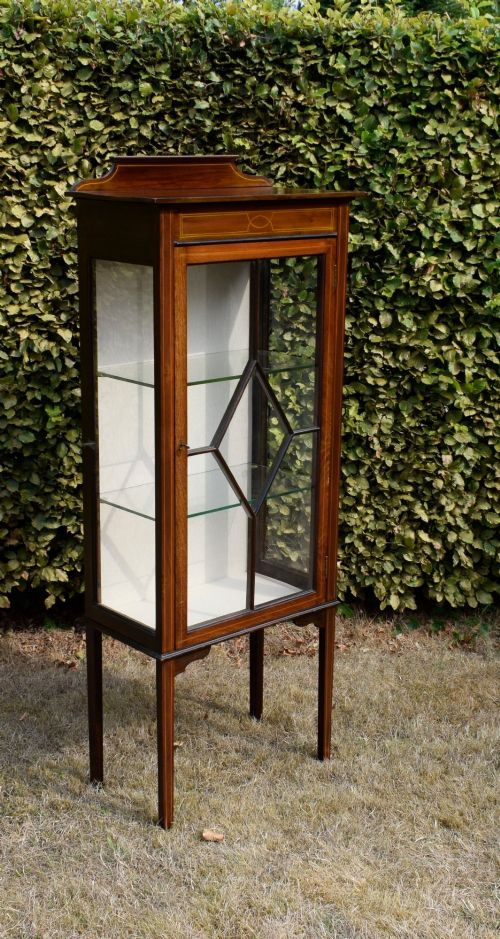
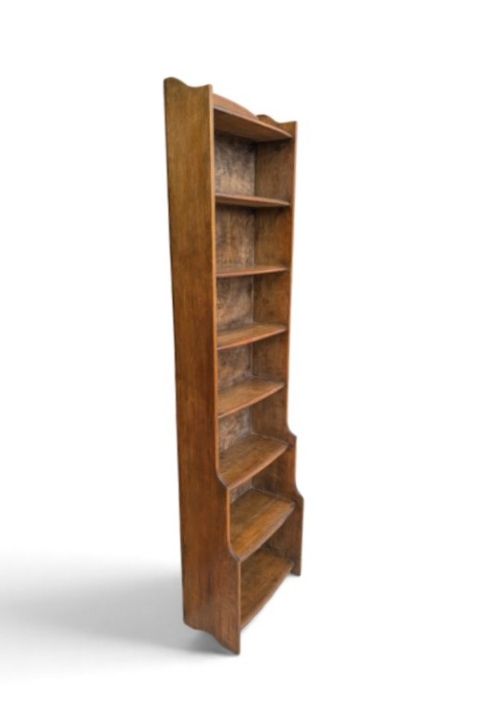
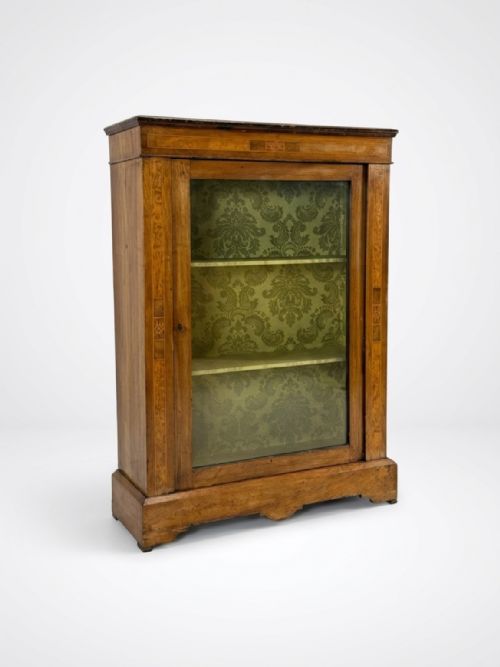
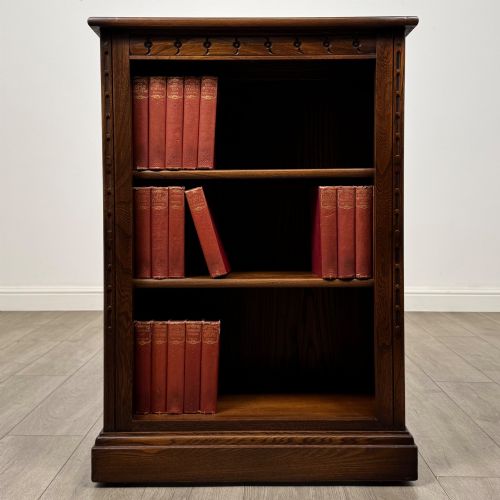
Narrow Display Cabinet
When you search for a narrow display cabinet, you are looking at upright timber furniture designed to show and store objects within limited floor space.
Narrow Display Cabinet
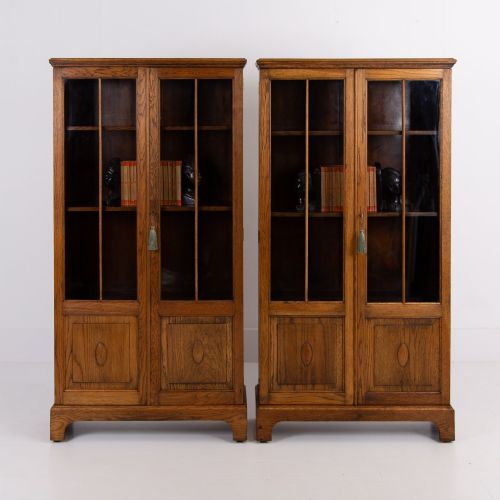
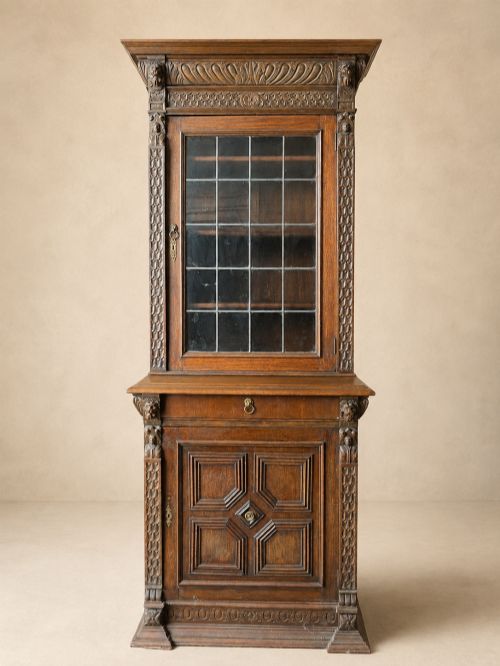
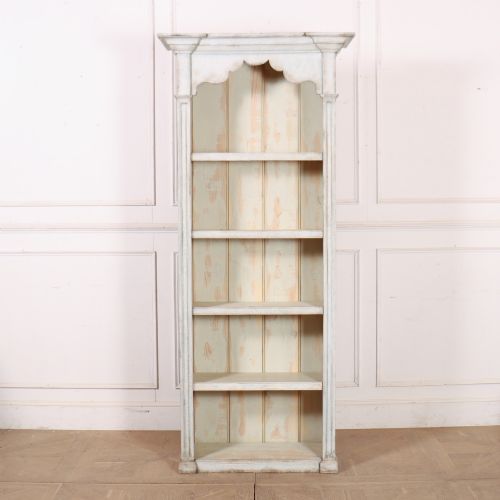
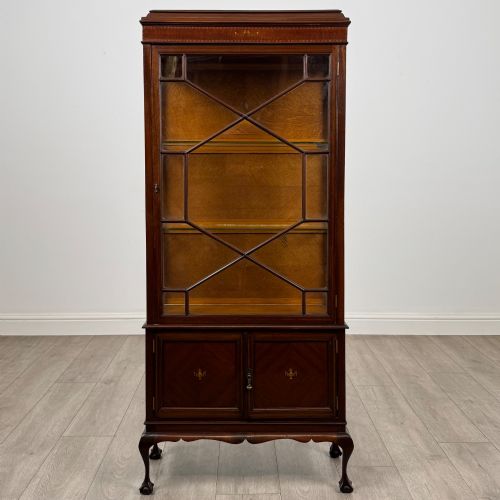
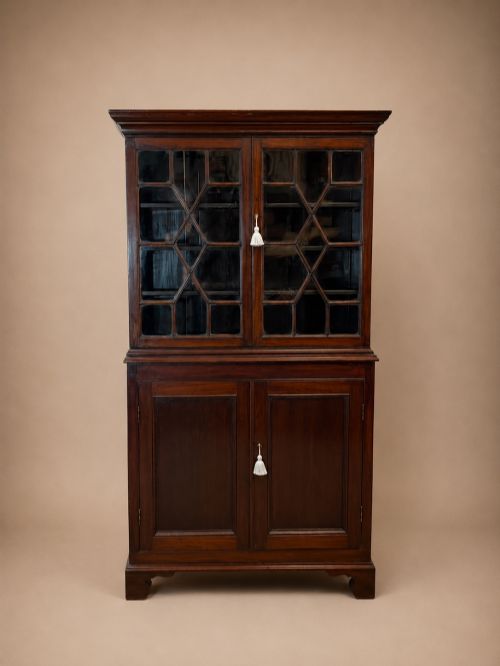
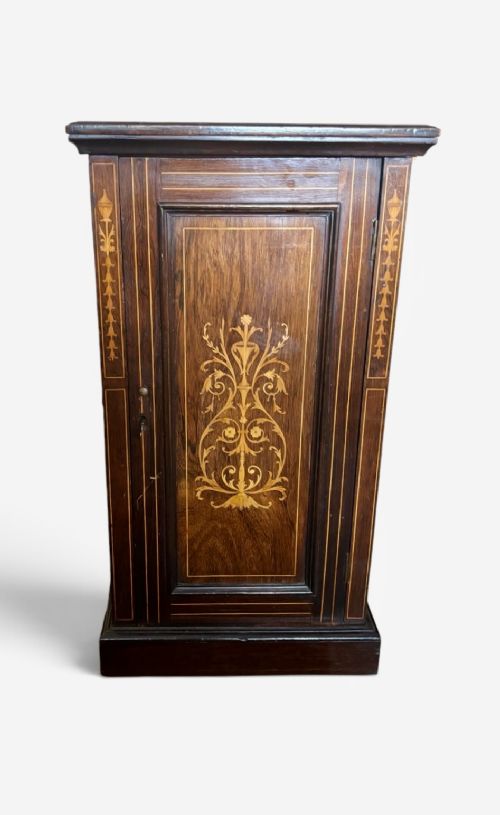
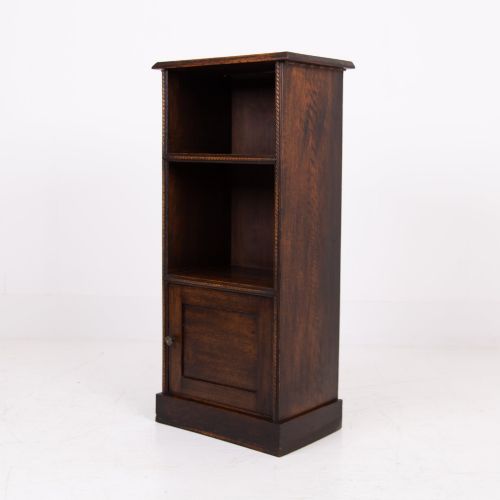
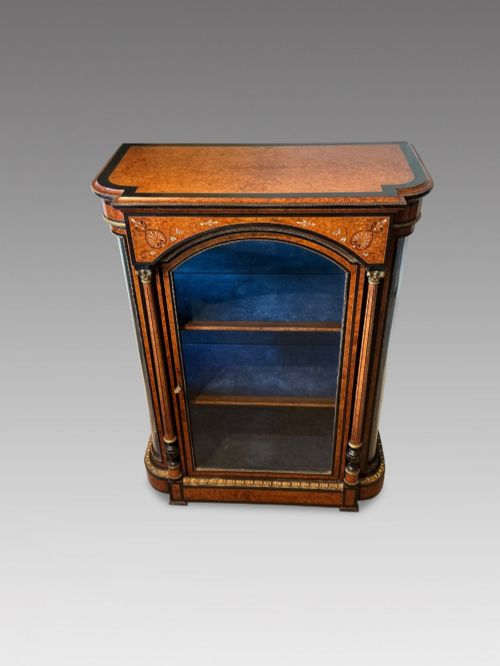
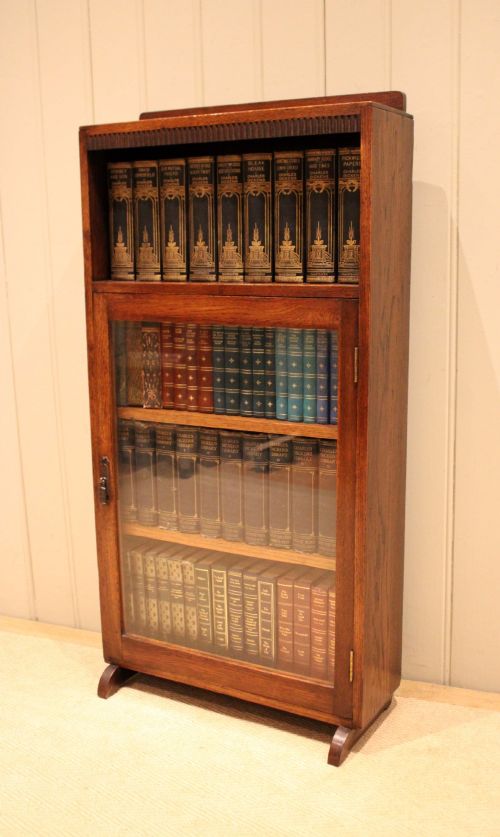
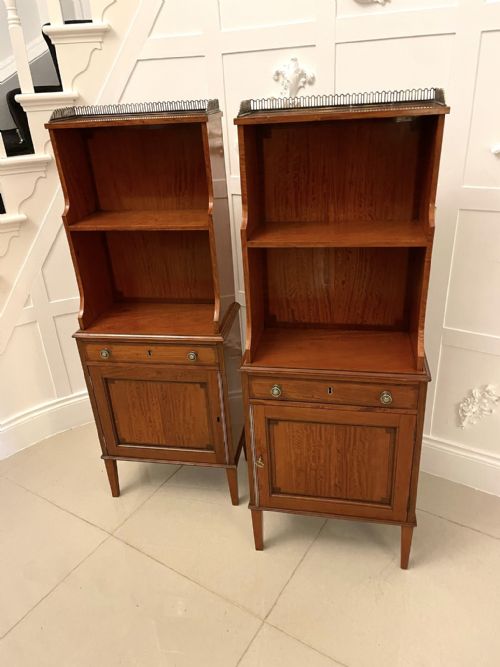
A narrow display cabinet takes the form of tall bookcases, pier cabinets, side cabinets, and glazed vitrines that make efficient use of compact spaces. These pieces span the nineteenth and twentieth centuries, encompassing Victorian, Edwardian, and Art Deco periods, alongside Georgian and French revival styles.
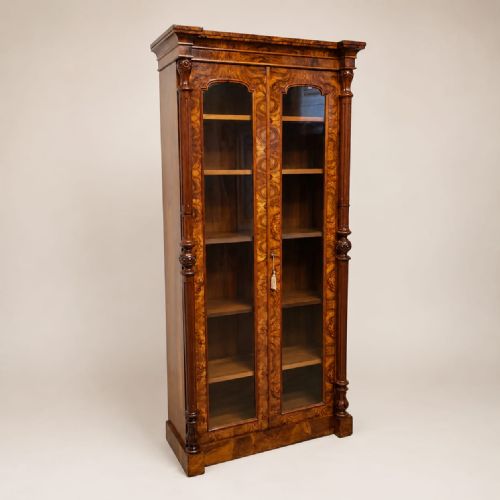
You will frequently meet Edwardian mahogany and oak versions alongside Victorian walnut and burr walnut pier cabinets on this page. The construction ranges from glazed single doors and open shelving to mirrored backs and cupboard bases.
Makers such as Gillows and James Winter appear in the archive alongside standard cabinetmaker productions. Forms vary from freestanding shop display cases and slim corner cabinets to wall-hanging units and pedestal vitrines.
How They Were Made
Timbers like mahogany, oak, walnut, and rosewood form the primary carcass structures, often enhanced by satinwood, ebony, and marquetry inlays. Glazing utilises framed glass panels, while brass and ormolu mountings provide decorative hardware.
Surface treatments include French polishing, wax finishes, and painted or ebonised coatings. Carving, astragal glazing bars, and burr walnut veneers demonstrate traditional cabinetmaking techniques from the eighteenth to the twentieth centuries.
The listings on this page span the 19th and 20th centuries, featuring oak, mahogany, walnut, and rosewood across bookcase and display cabinet forms.
What Varies in Quality
The refinement of timber selection dictates visual success, particularly where figured veneers like burr walnut or detailed satinwood and ebony stringing are employed. Master workshops demonstrate superior precision in joint work, marquetry alignment, and door closure.
Proportion and decorative restraint elevate certain examples above standard production pieces, especially when matched with high-grade brass mounts and finely cast ormolu details.
Gillows·James Winter·Minty
The Narrow Display Cabinet Glossary
- Pier cabinet
- A low or tall cabinet designed to stand against the narrow wall space between windows. These Victorian pieces frequently feature glazed doors and elaborate inlay.
- Vitrine
- A glass-sided display cabinet intended for the exhibition of porcelain and small artefacts. Many examples incorporate mirrored backs to reflect light through the stored objects.
- Astragal
- Moulding profiles used to hold panes of glass within a glazed door frame. They form geometric grid patterns across the surface.
- Marquetry
- Decorative veneer work arranged in pictorial or geometric patterns using various coloured woods. This technique requires considerable skill to fit the pieces precisely.
- Ormolu
- Gilded bronze mounts applied to the corners and panels of nineteenth-century furniture. The metalwork provides both structural protection and ornate detailing.
Narrow Display Cabinet: Frequently Asked Questions
How do I distinguish Victorian from Edwardian cabinets?
Victorian pieces tend to employ heavier timbers like rosewood, walnut, and mahogany, often featuring rich burr veneers and elaborate marquetry. They frequently date from the mid to late nineteenth century.
Edwardian examples often display lighter satinwood inlays, brighter mahogany, or simpler oak construction reflecting the turn of the twentieth-century shift toward airier interiors.
Can these cabinets support heavy book collections?
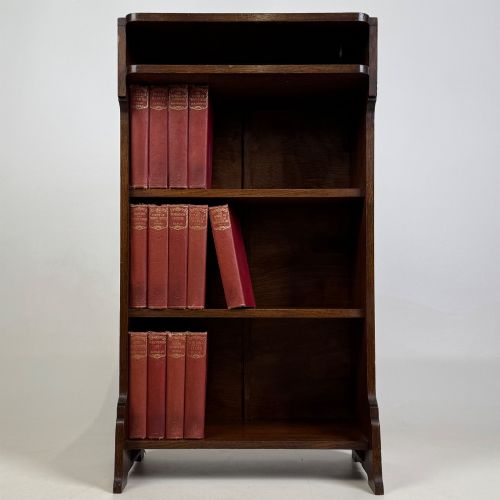
Many variants function as slim bookcases equipped with adjustable wooden shelving to accommodate volumes of varying heights. Solid oak and mahogany iterations provide robust support for heavy book collections.
It remains wise to verify shelf thickness and internal bracket support before loading deep shelves with extensive libraries.
How should I clean the wood and glass?
Polished timber surfaces respond best to traditional beeswax applied sparingly and buffed with a soft cloth. Avoid modern silicone sprays that can damage historic polishes over time.
Glass panels and mirrored interiors require standard glass cleaner applied to a cloth rather than sprayed directly, preventing moisture from reaching fragile wooden frames.