


Tall Floor Candlesticks
Tall floor candlesticks are substantial vertical lighting fixtures that lift candlelight to eye level, bringing dramatic presence and historic character to any interior.
Tall Floor Candlesticks
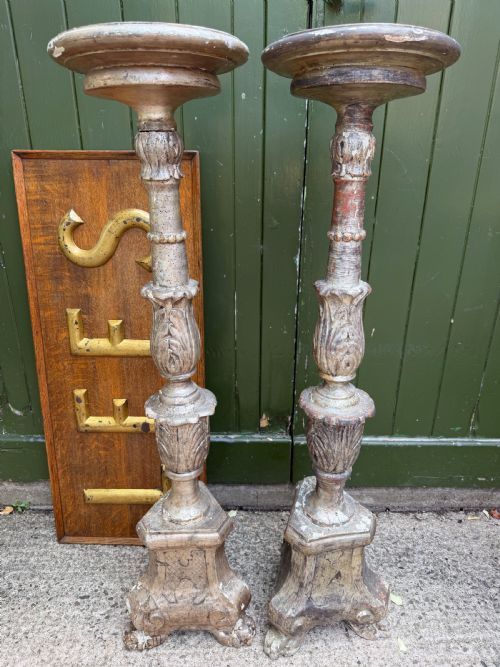
When searching for tall floor candlesticks, buyers encounter substantial lighting supports designed to stand directly upon the floor rather than on tables or mantelpieces. These pieces often originate from ecclesiastical or grand domestic settings, functioning as major decorative focal points within a room.
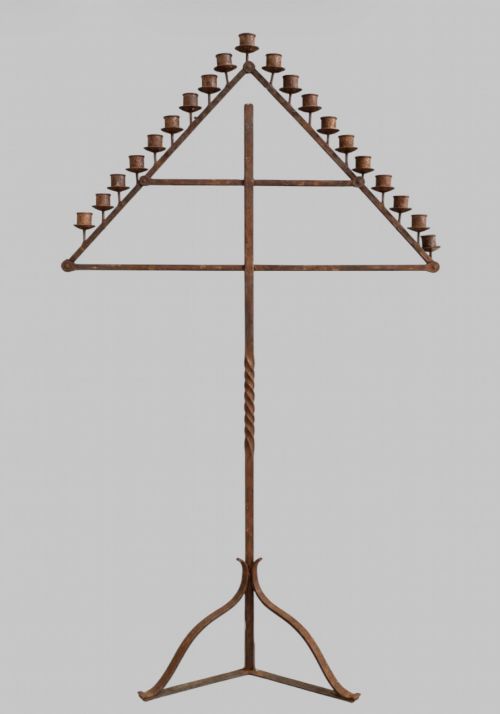
The selections available here span several centuries and geographic origins, featuring heavily in Italian Baroque, French Chateau, and Gothic Revival aesthetics. Forms range from single pricket sticks and altar-type candle-holders to multi-candle floor candelabra and converted standard lamps.
Dating primarily from the eighteenth and nineteenth centuries, these objects demonstrate considerable variety in scale and silhouette. Architectural proportions dominate, utilising turned columns, Corinthian capitals, and tripod or stepped bases to support heavy candles or electrical fittings.
How they were made
Wood serves as the primary structural material, utilising carved pinewood, giltwood, and gesso to achieve elaborate decorative surfaces. Artisans applied polychrome paint, silvering, and mecca finishes over carved wooden foundations to imitate more costly metals or create rich patinas.
Metalworking forms the other major manufacturing tradition, employing forged wrought iron, cast brass, and continental metal alloys. Iron examples rely on structural forging and architectural assembly, while brass pieces frequently incorporate detailed casting and classical column designs.
The listings here feature pieces spanning the eighteenth century through the 1930s, utilising materials including wrought iron, giltwood, brass, and painted gesso.
What varies in quality
The distinction between ordinary and exceptional examples rests upon the crispness of the carving and the integrity of the surface finish. Superior pieces exhibit deeply undercut woodwork and finely burnished gilding or silvering that interacts gracefully with ambient light.
Proportion and architectural balance dictate the overall success of the piece, with finer examples maintaining harmonious relationships between base, shaft, and drip pan. The survival of original polychrome, giltwood, or mecca surfaces significantly enhances the integrity of antique lighting fixtures.
The Tall Floor Candlesticks Glossary
- Pricket stick
- A candlestick featuring a sharp metal spike at the top designed to secure the base of a large candle. These often derive from church altars.
- Torchere
- An ornate tall stand or candlestick designed to carry a single light source. They frequently feature decorative wooden carving and classical columns.
- Giltwood
- Wood that has been coated with a thin layer of gold leaf or powder. This technique provides a brilliant reflective surface for candlelight.
- Gesso
- A plaster-like mixture applied to wood surfaces as a base for gilding or painting. It allows craftsmen to model intricate low-relief ornamentation.
- Mecca
- A transparent golden varnish applied over silver leaf or tin to simulate the warm tone of gold. It creates a distinctive aged metallic lustre.
Tall Floor Candlesticks: Frequently Asked Questions
Where were tall floor candlesticks originally used?
These imposing fixtures traditionally stood in large churches, cathedrals, and wealthy private residences. They illuminated ecclesiastical altars, grand hallways, and state rooms.
Their substantial height ensured that candlelight carried across large spaces before the advent of modern electric lighting.
Can tall floor candlesticks be used for electricity?
Many surviving examples have been adapted over time to function as standard lamps while retaining their historic wooden or metal bases.
Conversion methods vary, but careful wiring allows these architectural supports to provide ambient room illumination without destroying their antique character.
How do I care for giltwood and painted surfaces?
Historic finishes require gentle maintenance using a soft, dry cloth to remove dust without disturbing fragile layers of gold leaf or gesso.
Avoid liquid cleaners, polishes, and direct sunlight, which can cause nineteenth-century polychrome and silvered surfaces to flake or fade.
How are eighteenth and nineteenth century pieces told apart?
Eighteenth-century examples frequently display deeper hand-carved details and heavier proportions associated with Baroque and Neoclassical altar furnishings.
Nineteenth-century pieces often reflect revivalist movements, utilising industrial brass casting or incorporating machine-tooled elements alongside traditional woodwork.