



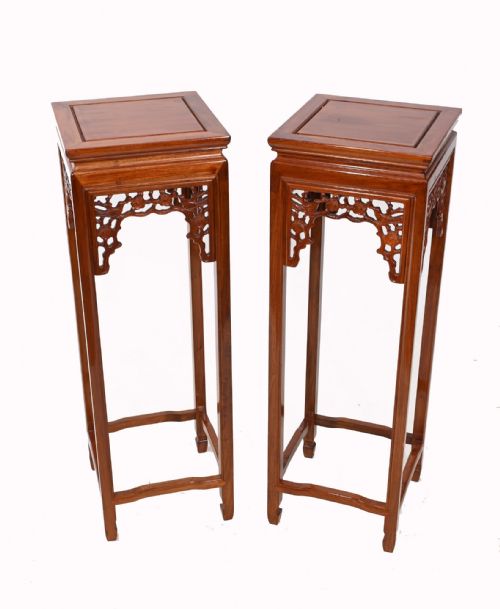
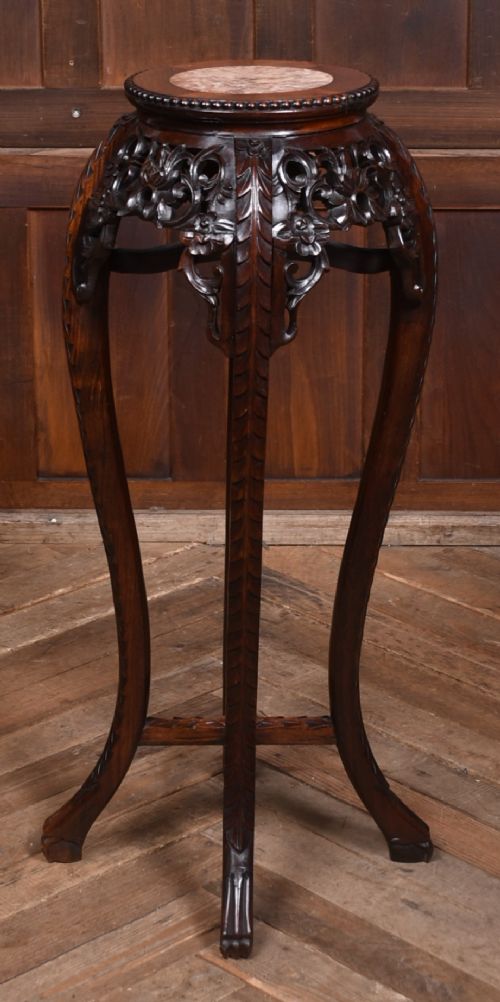


Tall Chinese Display Stand
A tall chinese display stand is a striking piece of furniture designed to elevate porcelain, plants, or decorative objects within a room.

Tall Chinese Display Stand
When you search for a tall chinese display stand, you are looking at substantial pedestal furniture built to elevate vases, plants, lanterns, and decorative objects.
The versions you are most likely to meet on this page hail from the nineteenth century, including Victorian periods, and span styles such as Chinese export and Qing dynasty traditions.
These forms manifest as plant stands, pedestal stands, lantern stands, vase tables, and occasionally floor clocks or tall side display lamp stands.
How they were made
Maker construction relies heavily on dense hardwoods like rosewood and elm, shaped through intricate carving techniques.
Many surfaces incorporate inset marble tops, while decorative details frequently utilise mother-of-pearl embellishments alongside traditional joinery.
Tall Chinese Display Stand Retail Price Guide 2026
Typical asking prices for tall chinese display stand among the pieces listed under this phrase on Sellingantiques today, from the lower quarter to the upper quarter. They describe what is for sale here now, not the wider market.
Listings show nineteenth century pieces utilising hardwood, marble, rosewood, and mother-of-pearl across Qing dynasty and export styles.
What varies in quality
The distinction between tiers rests upon the crispness of the woodcarving and the natural figuring within the inset marble top.
Proportion and structural integrity separate standard utility pieces from masterworks designed with complex dragon motifs or balanced floor-standing stature.
The Tall Chinese Display Stand Glossary
- Hardwood
- Dense timber used for structural stability and fine carving. It provides the heavy foundation characteristic of these Asian furnishings.
- Jardiniere
- A large ornamental pot or planter stand. These items were built sturdy to support heavy ceramic vessels filled with plants.
- Qing Dynasty
- The final imperial dynasty of China, spanning from the seventeenth to the early twentieth century. Pieces from this era often feature traditional motifs and dense woods.
- Mother-of-Pearl
- Iridescent inner shell layer used for delicate inlay work. Craftsmen set these gleaming pieces into dark timber surfaces to create contrasting floral or geometric patterns.
Tall Chinese Display Stand: Frequently Asked Questions
What were tall chinese display stands used for?
These tall stands served primarily to elevate decorative items such as large porcelain vases, ornamental plants, and hanging lanterns.
By raising these objects off the floor, the furniture allowed owners to display prized possessions at eye level within traditional interiors.
How do I style a tall chinese display stand today?
You can place one in an empty corner as a standalone sculptural element or use it beside seating to hold a lamp.
The rich timber tones and marble insets pair well with neutral modern decors as well as traditional period rooms.
How can I tell the period of a stand?
Dating relies on examining the depth of the woodcarving, the type of timber used, and overall construction wear.
Nineteenth-century examples often display the heavier hardwood builds and specific Qing dynasty stylistic influences recorded across our archive.
What is the difference between a plant stand and a vase stand?
While both terms describe elevated pedestal furniture, plant stands traditionally accommodated moisture and soil from pots.
Vase stands often featured tighter dimensions and flat marble tops specifically chosen to support the flat base of a porcelain vessel.