


Tabletop Oak Chest Drawers
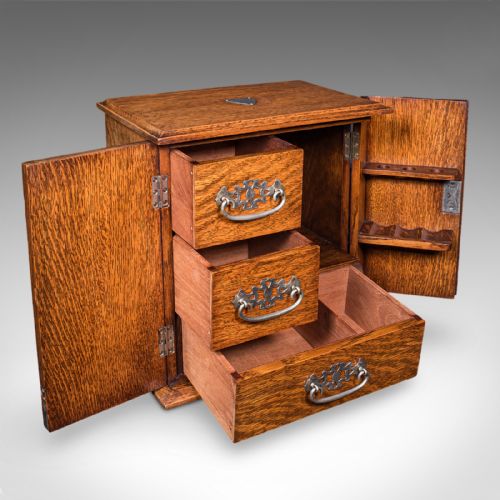
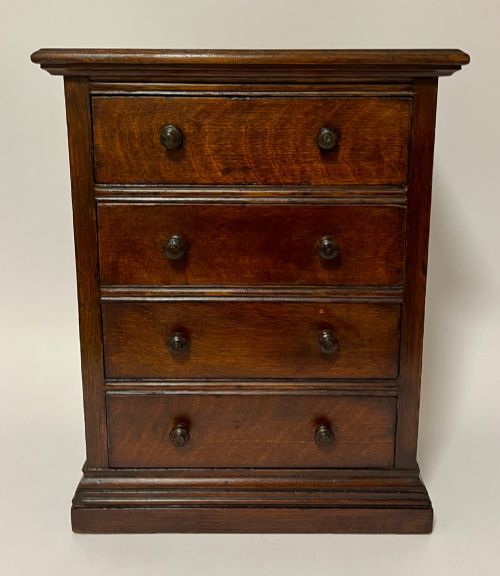
These tabletop oak chest drawers are compact wooden containers built to hold small valuables, spices, or samples, combining utility with fine cabinetmaking.
Tabletop Oak Chest Drawers
Tabletop oak chest drawers serve as miniature versions of full-sized furniture, ranging from simple spice cabinets to elaborate collector pieces. When searching for tabletop oak chest drawers, buyers encounter forms spanning from the seventeenth century through the Edwardian era and interwar years.
The selection includes specific regional pieces like Welsh coffor bach alongside Georgian spice cabinets and Victorian miniature chests. These items sit comfortably on desks or counters, offering practical storage disguised as decorative craftsmanship.
Makers produced these works in various regional styles including Georgian, Victorian, Dutch Rococo, and French Provincial. Oak serves as the primary timber, often complemented by brass handles or glass panels depending on the intended use.
What varies in quality
Quality in these miniature pieces rests on the precision of the joinery and the selection of figured timber by the maker. Superior examples display careful attention to drawer linings and backboards that remain intact over generations.
The sophistication of the hardware, from cast brass handles to working locks with original keys, separates standard commercial items from finer workshop commissions.
Listings feature oak alongside mahogany and ebonised wood, spanning periods from 1700 through the Edwardian era and 1920s.
The Tabletop Oak Chest Drawers Glossary
- Coffor Bach
- A small Welsh chest or coffer, often featuring a drawer beneath the main compartment. These miniature pieces were traditionally created as wedding gifts or presentation items.
- Spice Cabinet
- A small wall-hanging or tabletop cabinet containing multiple small internal drawers. They were designed for storing costly culinary spices in domestic kitchens.
- Collector's Cabinet
- A specialised piece featuring numerous shallow drawers for organising specimens or small artefacts. These cabinets prioritize internal compartmentalisation over large open storage.
- Apprentice Piece
- An item constructed by a craftsman in training to demonstrate mastery of joinery techniques. Such pieces replicate full-scale furniture on a reduced scale.
- Kneehole Desk
- A compact desk featuring a recessed central space for the user's legs, flanked by pedestals of small drawers. This form translates domestic workspace furniture into a tabletop format.
Tabletop Oak Chest Drawers: Frequently Asked Questions
What were tabletop oak chest drawers used for?
These small chests served diverse domestic and professional purposes, including the storage of precious spices, medical supplies, and personal collections. Their compact size allowed owners to keep valuable items secure and organised close at hand.
Craftsmen built them for specific trades and households, resulting in specialised forms like doctor's cabinets, draper's drawer units, and miniature blanket chests.
How do I identify an 18th century piece?
Eighteenth-century examples typically display hand-cut dovetails, pegged joints, and timber selection that shows distinct medullary rays in the oak. The construction methods reflect manual woodworking traditions before industrial standardisation.
Hardware on these earlier pieces often includes handmade brass pulls and plates that match the period's prevailing decorative style.
Where should I place one in my home?
These compact chests suit placement on top of sideboards, desks, or dressing tables where their detailed craftsmanship remains visible. They provide practical storage for small modern items like stationery, keys, or jewellery without occupying significant floor space.
Keeping them away from direct heat sources helps preserve the antique oak and prevents the timber from splitting.
What is a coffor bach?
A coffor bach is a traditional Welsh miniature coffer or chest, usually elevated on short feet and fitted with a lower drawer. Originating in Wales, these pieces served as significant gift items during the eighteenth and nineteenth centuries.
Their construction combines traditional chest storage with the drawer configuration typical of regional vernacular furniture.