




Georgian Oak Spice Chest
A georgian oak spice chest is a small, functional storage piece prized for its rich timber and period craftsmanship.
Georgian Oak Spice Chest
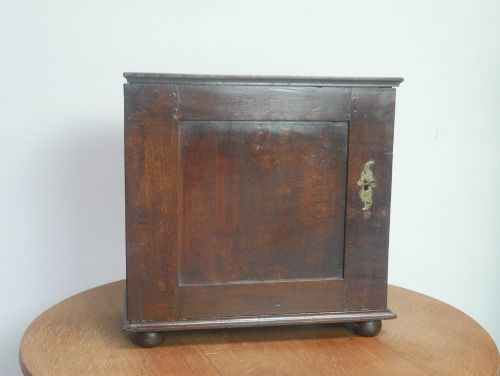
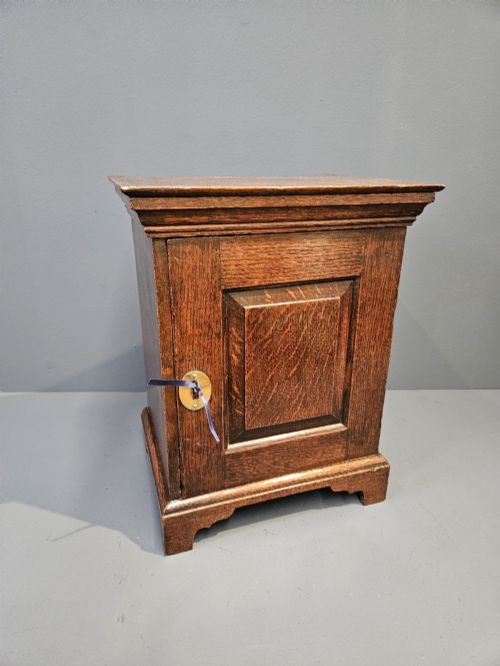
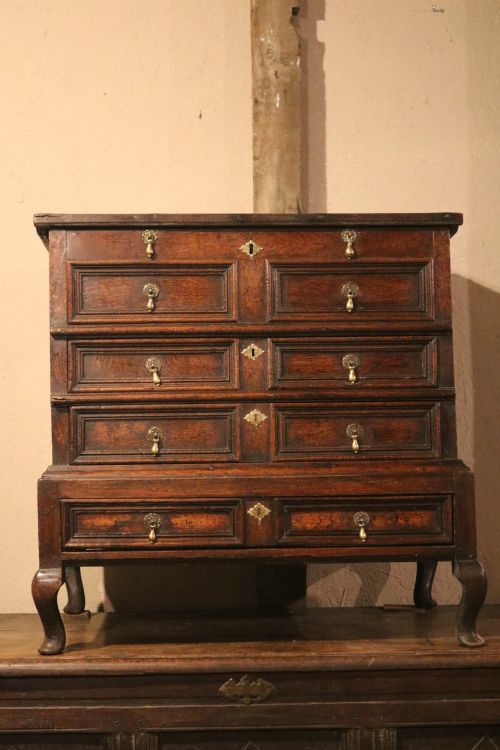
A georgian oak spice chest is typically encountered as a wall-hanging cabinet, a small desktop box, or a miniature chest of drawers designed to hold valuable household provisions.
The pieces appearing on this page span the 1700s, the 18th century, and the 19th century, reflecting domestic storage needs across Georgian and Victorian country styles.
Forms include spice cupboards, spice cabinets, wall cupboards, and miniature tallboy chests originating from regional traditions such as Welsh vernacular woodworking.
How they were made
These chests and cupboards rely primarily on sturdy oak construction, often supplemented with secondary timbers like pine in internal elements and carcass backs.
Metalwork played a structural and decorative role, with brass and iron utilised for hinges, escutcheons, and latches on doors and small drawers.
Finer examples incorporate mixed wood inlay or bone details to ornament the surfaces of these compact wall-hanging and desktop storage forms.
Materials documented across these items range from solid oak and pine to brass, iron, bone, and mixed wood inlay.
What varies in quality
Quality in a georgian oak spice chest is determined by the crispness of the timber grain, the depth of the patination accumulated over centuries, and the integrity of the original construction.
The refinement of regional details, such as Welsh vernacular flourishes or mixed wood inlay work, distinguishes standard utilitarian boxes from more ambitious miniature forms.
The Georgian Oak Spice Chest Glossary
- Escutcheon
- A protective plate surrounding a keyhole, usually fashioned from brass or iron on period cabinet doors.
- Vernacular
- Regional furniture styles built by local makers using traditional domestic timbers rather than following strict urban metropolitan fashions.
- Patina
- The deep, lustrous surface sheen developed on oak timbers through decades of handling, polishing, and natural ageing.
Georgian Oak Spice Chest: Frequently Asked Questions
What is a georgian oak spice chest?
A georgian oak spice chest is a compact storage cabinet or box made during the eighteenth century to safely house valuable culinary spices and provisions.
These pieces were built to hang on walls or sit upon desks, featuring small internal drawers or compartments enclosed by a single panelled door.
How were spice cupboards used historically?
In period homes, these cupboards stored exotic and expensive spices such as nutmeg, cinnamon, and pepper, which needed protection from damp air and pilfering.
Because spices represented significant wealth, the miniature chests and wall cabinets often included small working locks and brass keys.
Are these chests always wall hanging?
Not all pieces designed for this purpose hung on walls, as surviving examples include desktop spice cabinets and miniature chests of drawers.
Makers built various small-scale formats to suit different domestic spaces, ranging from flat-backed wall cupboards to freestanding miniature tallboy chests.
What materials are typical for these cabinets?
Oak serves as the primary structural and visual timber for the vast majority of these pieces, complemented by secondary woods like pine found inside.
Metal fittings in brass and iron secure the doors, while decorative highlights occasionally feature mixed wood inlay or bone elements.