
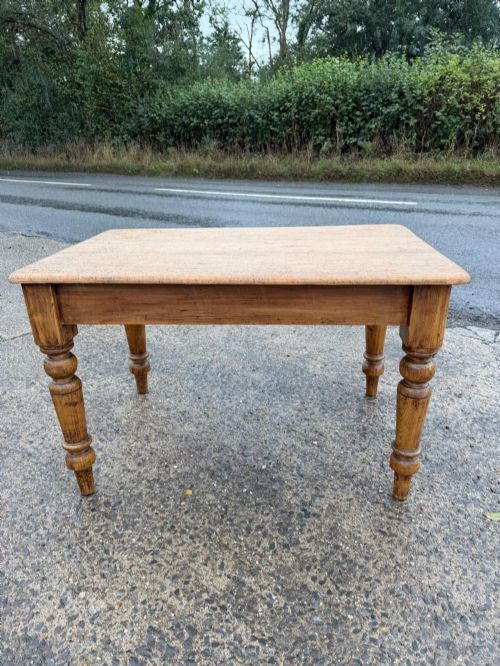
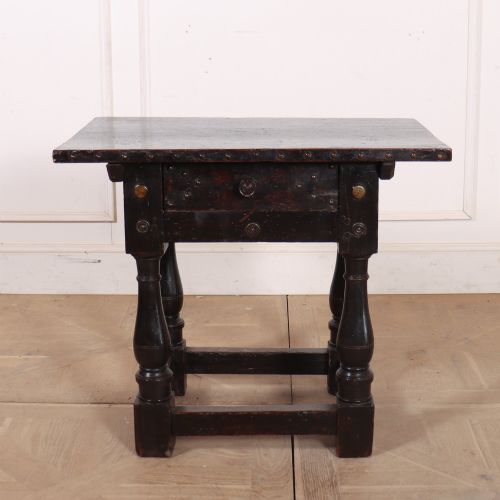
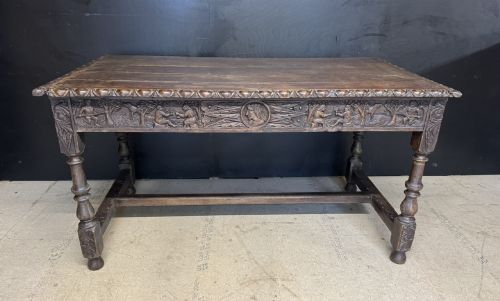
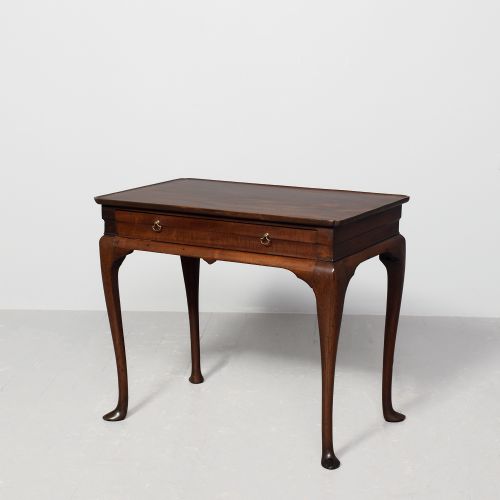

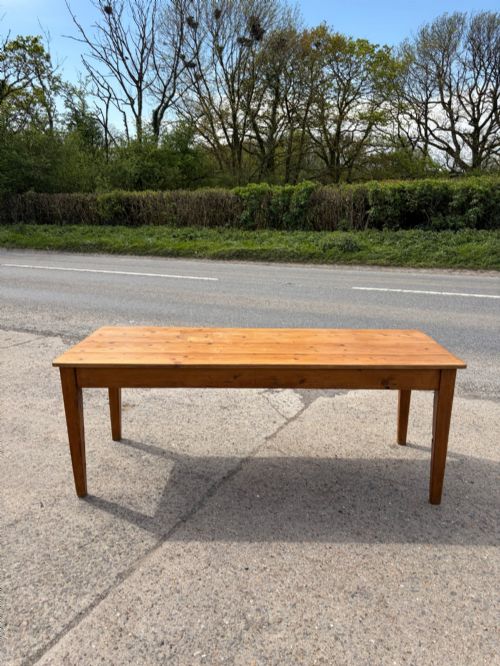
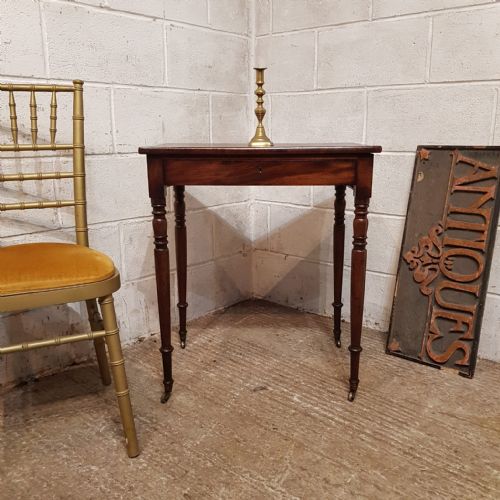

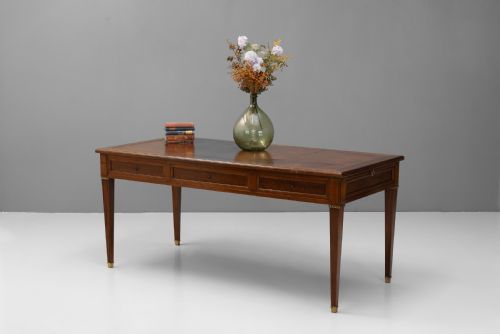
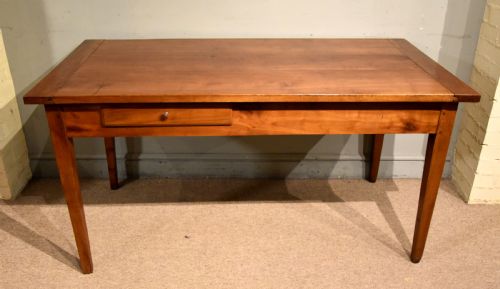


Table with Frieze Drawer
A table with frieze drawer is a utilitarian classic built to serve as a desk, side table or writing surface while keeping essentials tucked neatly out of sight.
Table with Frieze Drawer
A table with frieze drawer combines a smooth top surface for daily tasks with one or more shallow compartments integrated directly into the framing beneath. You will frequently encounter Victorian and Georgian examples built from sturdy oak, mahogany or pine.
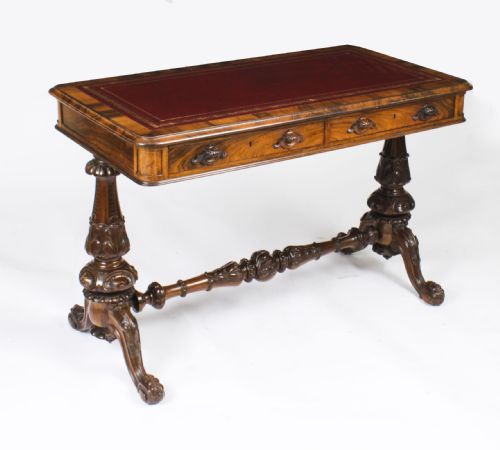
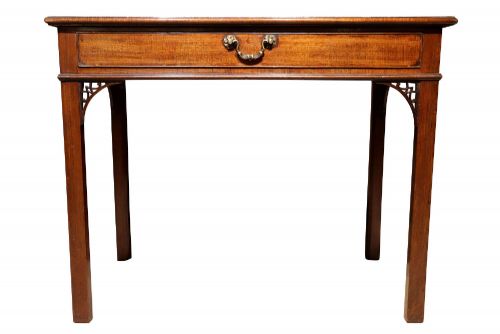
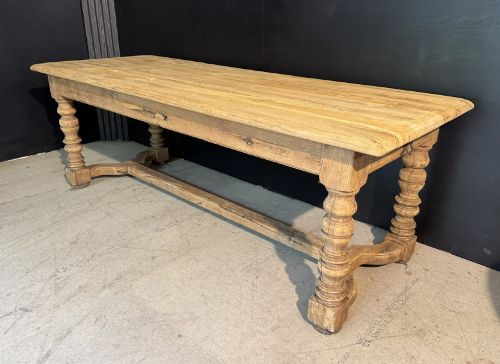
The form spans diverse domestic functions, appearing on this page as compact writing tables, side tables, console tables, and kitchen or farmhouse tables. These pieces served generations of households as functional workspaces or hallway surfaces.
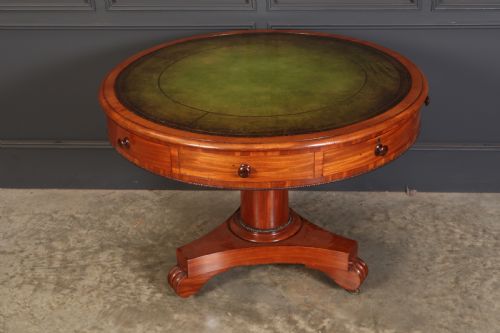
Makers adapted the basic carcass across various eras, adding single front drawers or multiple compartments alongside turned legs, Gothic brackets or pedestal bases. The unifying feature remains the concealed storage set flush within the apron.
How they were made
Cabinetmakers built these tables primarily from solid hardwoods like mahogany, oak, and rosewood, alongside durable softwood pine for internal framing and secondary elements. Selected timber grains provided natural decorative appeal on top surfaces and drawer fronts.
Construction techniques relied on sturdy joinery to support daily use, occasionally enhanced with brass hardware, leather writing inserts, or carved architectural details. Drawers were fitted precisely into the frieze frame to ensure smooth operation over centuries of opening and closing.
Materials documented across these listings include solid mahogany, oak, pine, rosewood, cherry, and brass hardware.
What varies in quality
The calibre of a table with frieze drawer depends heavily on the selection of timber and the crispness of its construction details. Finer pieces display carefully figured wood veneers, well-executed hand carving, and tight dovetail joints on the drawer construction.
Proportion and hardware also distinguish finer examples from plain utility pieces. Elements such as original brass fittings, well-turned legs, and harmonious overall dimensions elevate a simple functional item into a distinguished example of period cabinetmaking.
William Trotter
The Table with Frieze Drawer Glossary
- Frieze
- The horizontal architectural band directly beneath the tabletop that houses the built-in drawer. This structural member conceals the storage space while supporting the upper surface.
- Pembroke table
- A drop-leaf table featuring hinged flaps on either side and a frieze drawer. It offered versatile surface area in smaller period rooms.
- Drum table
- A circular library or writing table featuring a deep frieze containing multiple drawers around its circumference. It typically stands on a central column and pedestal base.
- Console table
- A wall-mounted or freestanding table designed to stand against a vertical surface, frequently incorporating frieze drawers for hallway storage.
- Bracket
- A supporting architectural brace beneath the tabletop, sometimes pierced with Gothic tracery or carved designs to ornament the frieze.
Table with Frieze Drawer: Frequently Asked Questions
What is a frieze drawer?
A frieze drawer is a shallow compartment built directly into the horizontal band underneath the tabletop. It remains flush with the frame to keep the exterior lines clean.
Cabinetmakers designed these drawers to hold writing materials, cutlery, or small household documents without disturbing the surface above.
How do I date these tables?
Dating relies on examining the timber species, construction methods, and stylistic details such as leg turnings or hardware. Georgian and Regency pieces often feature finely figured mahogany and delicate brass fittings.
Victorian and later examples frequently utilise heavier oak, pine, or walnut with bolder carved decoration and simpler internal drawer construction.
Where were these tables used?
These versatile pieces functioned across many rooms in period homes, from formal libraries and drawing rooms to hallways and kitchens. Writing tables served studies, while side and console tables stood in reception spaces.
Their concealed storage made them practical wherever small items needed stowing near a surface.
Are the drawers usually locked?
Many period examples originally featured small brass key escutcheons set into the drawer front to secure private documents or valuables. Over time, original keys were frequently lost, though the locking mechanism often remains inside the frieze.
Today, most drawers open freely without a functional key.