
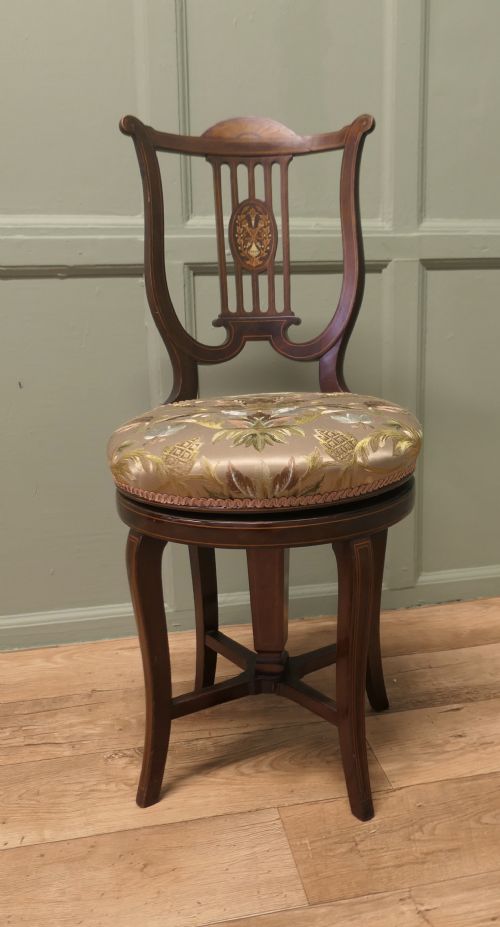
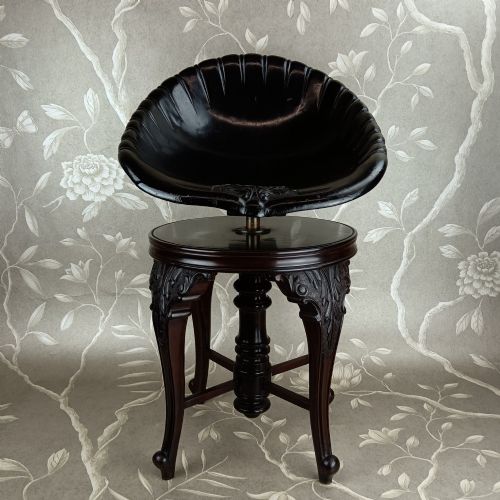
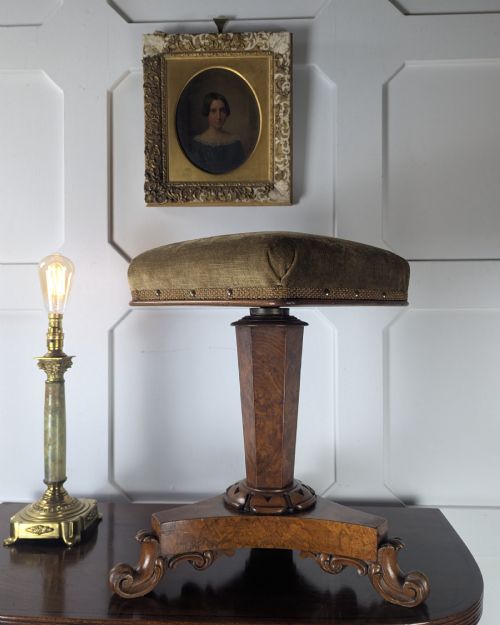
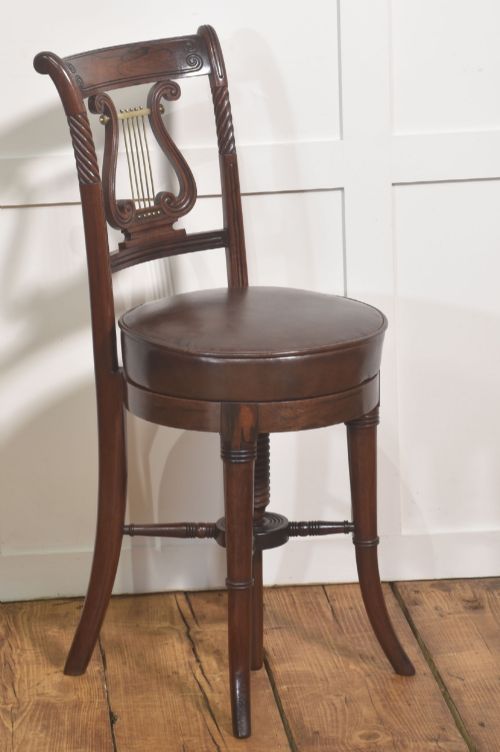



Swivel Piano Seat
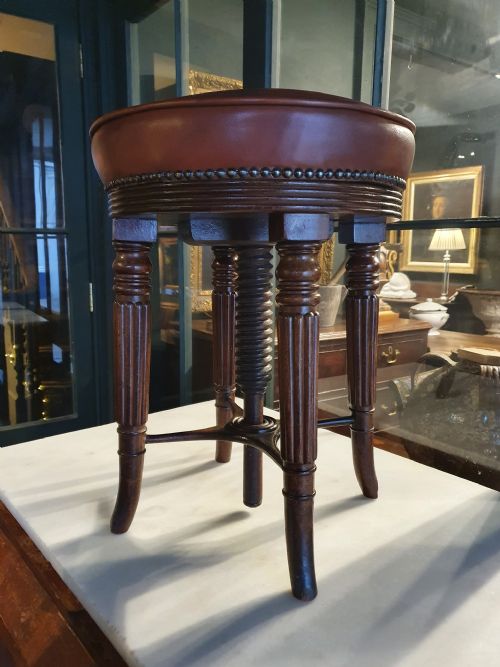
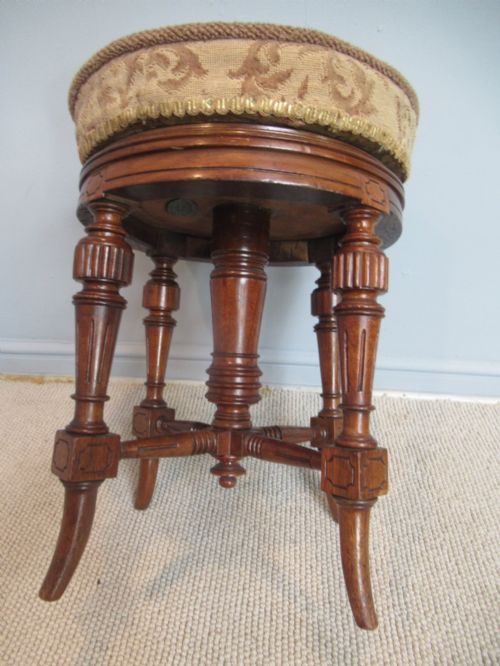
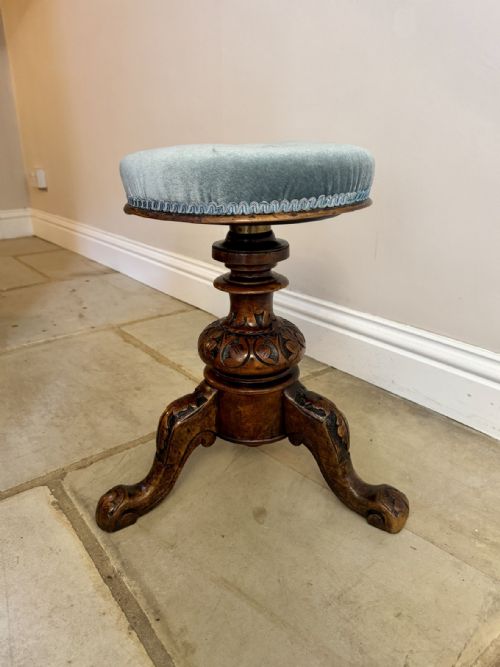
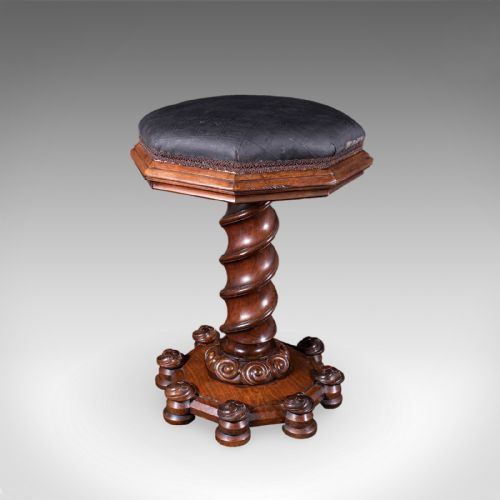
A swivel piano seat gives the player height adjustment and rotational ease, combining practical music-making utility with period cabinet-making.
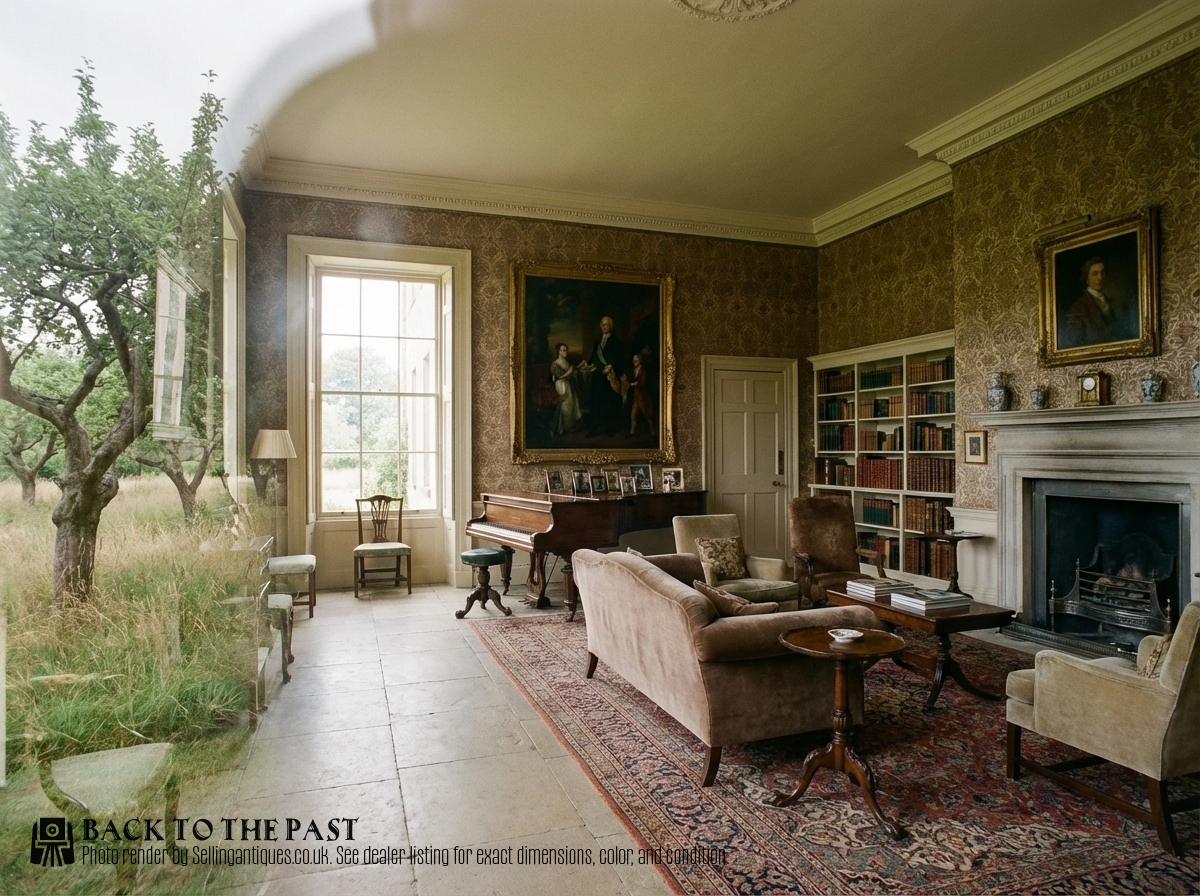
Swivel Piano Seat
A swivel piano seat serves musicians by providing a stable yet mobile perch at the keyboard, appearing frequently in Victorian, William IV, and Regency guises across this selection.
These forms span standard piano stools, music stools, music chairs, and dressing chairs, often incorporating rotating tops or rise-and-fall mechanisms.
Origins stretch across the nineteenth century into the Edwardian period, alongside regional variations such as Canadian and Burmese examples.
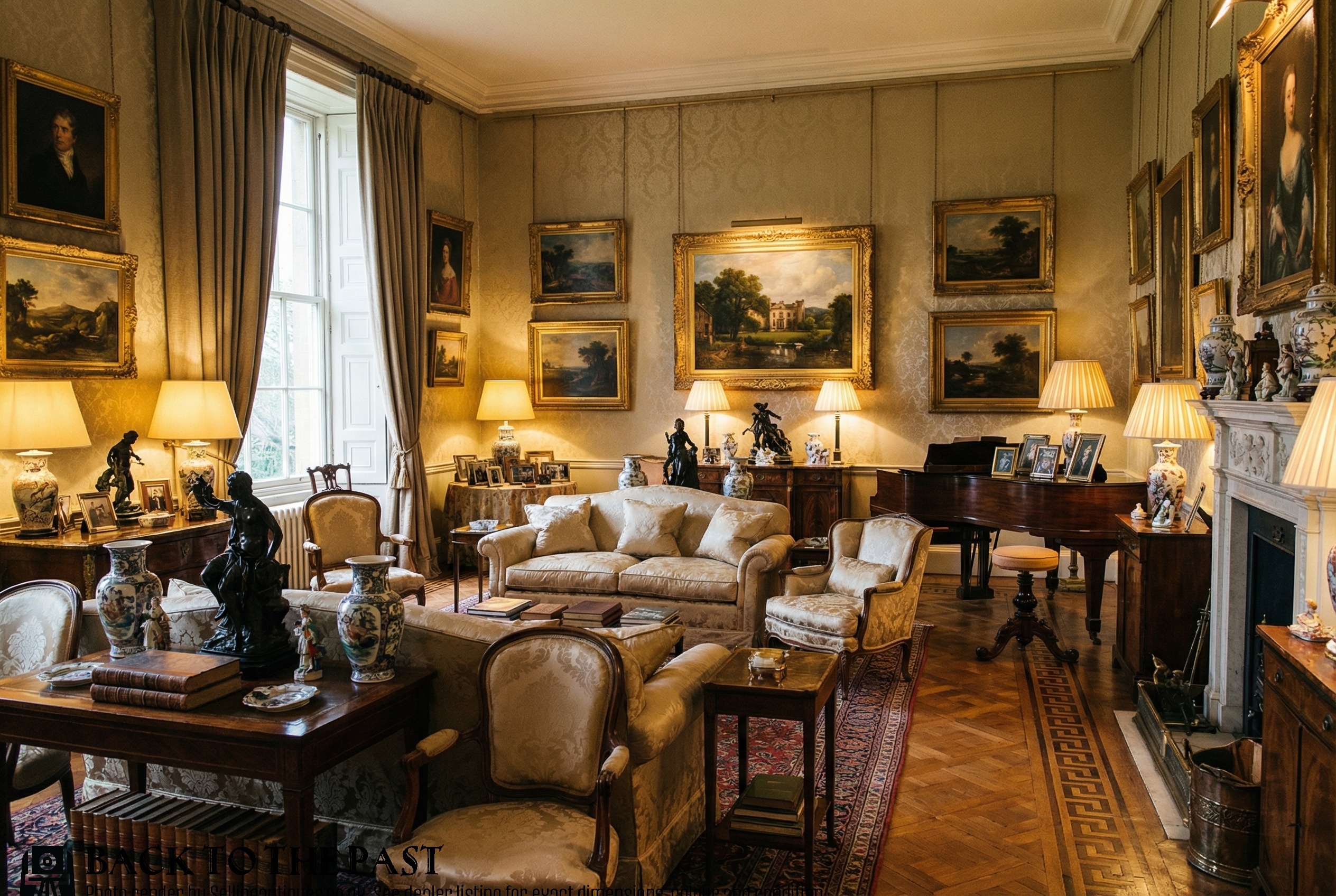
Materials and Construction
Cabinet makers built these seats predominantly in hardwoods like mahogany, walnut, and rosewood, occasionally utilising exotic woods such as padouk or decorative papier-mâché.
The mechanical swivel and rise-and-fall actions relied heavily on brass fittings, whilst industrial variants incorporated cast iron.
Upholstery consisted of traditional fabric, velvet, leather, or original woven textiles fitted to the revolving tops.
Swivel Piano Seat Retail Price Guide 2026
Typical asking prices for swivel piano seat among the pieces listed under this phrase on Sellingantiques today, from the lower quarter to the upper quarter. They describe what is for sale here now, not the wider market.
Mahogany and walnut dominate the timber choices across these listings, accompanied by brass and cast iron mechanics.
Evaluating Craftsmanship and Mechanics
Superior examples display crisp carving, particularly on walnut or rosewood frames, alongside refined joinery in the revolving column and leg assemblies.
The precision of the mechanical height adjustment dictates much of the merit, distinguishing smooth operating screws from stiff or loose actions.
Maker attribution and the retention of original upholstery or secondary seating materials elevate individual pieces.
Jennens and Bettridge·Gillows·James Shoolbred
The Swivel Piano Seat Glossary
- Rise and fall
- A mechanical mechanism allowing the seat height to be adjusted by turning the top. This system uses an internal threaded spindle.
- Revolving
- A top designed to rotate fully on a central pivot without altering seat height. It allows the seated player lateral movement.
- Papier-mâché
- A composite material made of paper pulp reinforced with glue, moulded and lacquered. Jennens and Bettridge excelled in this technique.
- Brass inlaid
- Metal strips or motifs embedded directly into the wooden surface for decoration. It appears frequently on Regency rosewood pieces.
Swivel Piano Seat: Frequently Asked Questions
How do I adjust the height on these seats?
Most models feature a threaded wooden or metal screw pillar hidden beneath the upholstery. Turning the seat clockwise or anticlockwise raises or lowers the sitting platform.
Older mechanisms may lock via a side screw or rely entirely on friction within the central column.
Can I use a music stool at a desk?
Many nineteenth-century music stools and revolving piano chairs translate easily to modern desk use. Their adjustable height matches standard table clearances.
Check the base diameter and swivel action to ensure stable seating during prolonged writing work.
How do I distinguish a Regency model from a Victorian one?
Regency and William IV models often feature heavier rosewood timbers, brass inlay, and formal classical proportions. Victorian versions frequently showcase carved walnut, papier-mâché, or industrial cast iron elements.
Stool turning patterns and leg shapes also help indicate the manufacturing decade.
What maintenance do the swivel mechanisms need?
Metal screws and pivot points benefit from light cleaning and occasional lubrication with appropriate wax or oil. Avoid forcing stiff wooden threads to prevent splitting the internal box.
Upholstered tops require standard textile care depending on whether the fabric is leather, velvet, or woven cloth.