


Swiss Wood Carving Bear
These carved wooden animals bring character and function into a room, capturing the lively spirit of the nineteenth century Swiss wood carving bear tradition.
Swiss Wood Carving Bear
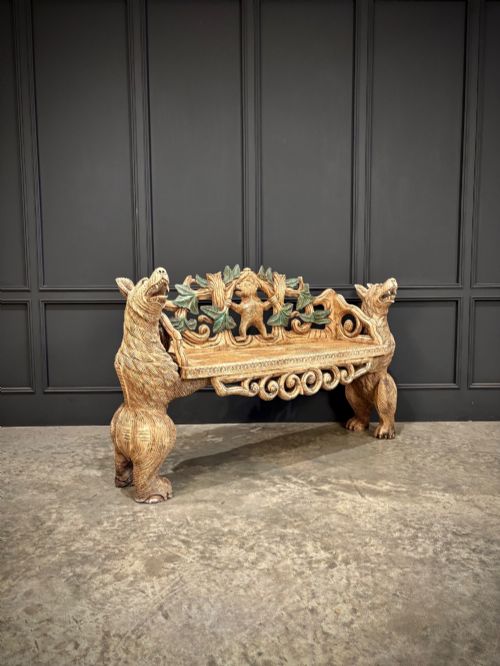
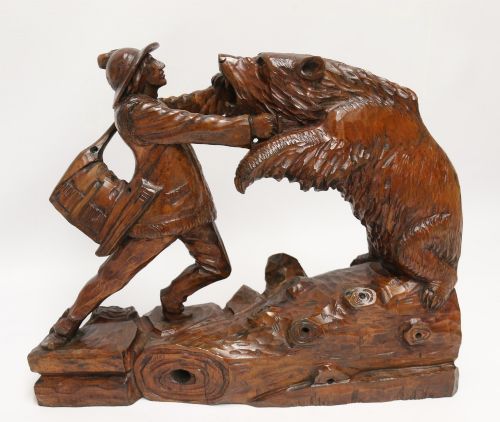
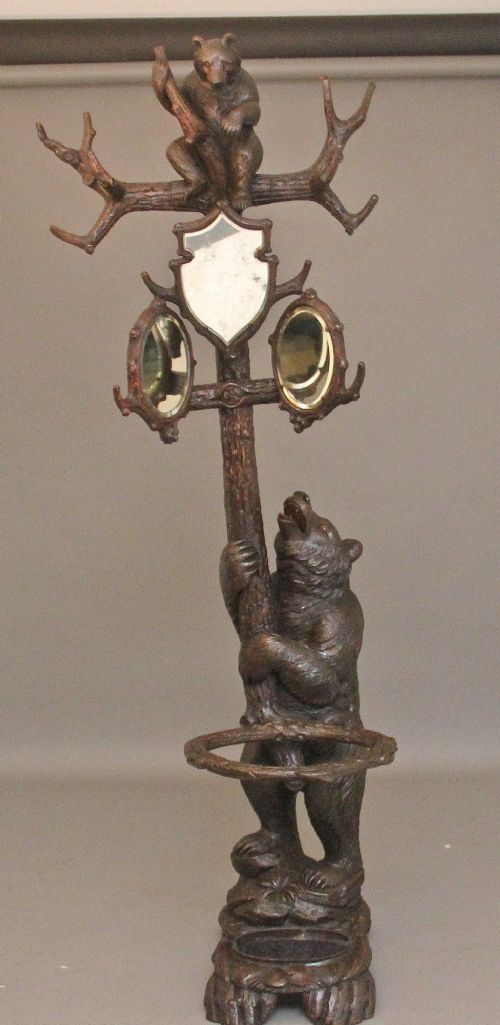
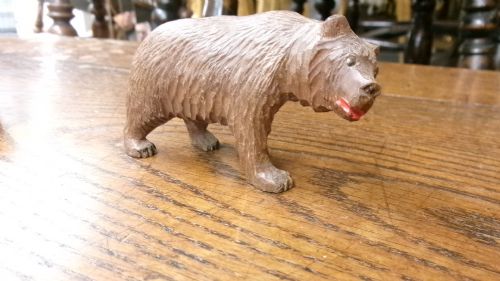
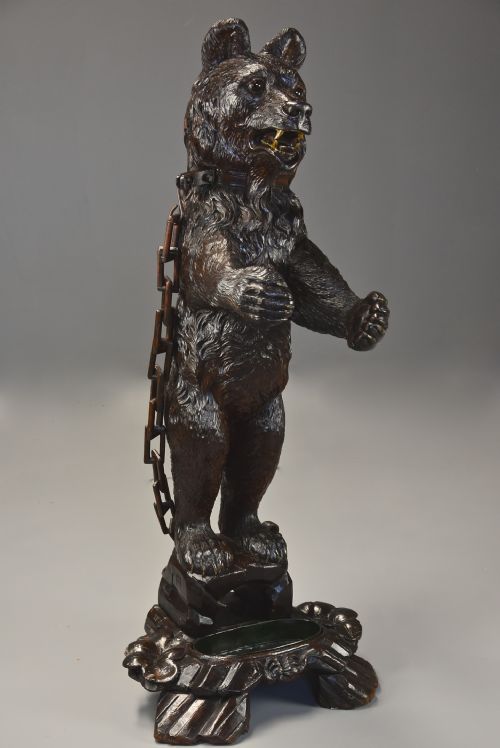
When you search for a swiss wood carving bear, you encounter domestic items and sculptures created in the nineteenth and early twentieth centuries, primarily within the Black Forest tradition and Swiss folk art style. These pieces range from small tabletop novelties and inkwells to substantial hall stands, benches, and umbrella stands.
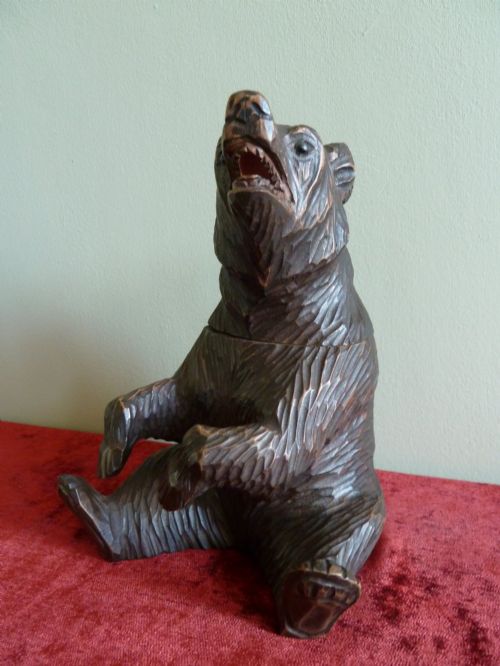
The most common forms on this page include practical furniture items such as stick stands, hall seats, and tobacco jars, alongside sculptural figures, bookends, and table lamps. They depict bears engaged in human activities or rendered with naturalistic poses, often holding objects like logs or jars.
How they were made
Carvers predominantly utilised linden wood and walnut, choosing timber that allowed for deep, expressive texturing of fur and muscular form. These woods were shaped using specialised chisels and gouges to render realistic coats and anatomical details.
One tiny bear sits holding an inkwell while another dances on the back of a chair.
What varies in quality
The distinction between standard examples and exhibition pieces lies in the anatomical precision of the carving and the depth of the fur texturing. Finer sculptures display complex poses, careful proportion, and intricate detailing around the paws and facial expressions.
Scale and ambition also define the hierarchy, moving from small miniature figures to large architectural hall stands and benches integrated with naturalistic tree forms. The integration of functional elements, such as hinged lids on tobacco boxes or robust umbrella wells, further distinguishes superior craftsmanship.
The Swiss Wood Carving Bear Glossary
- Black Forest
- A regional style of nineteenth century wood carving originating from the border areas of Switzerland and Germany, renowned for animal figures and furniture. Pieces often feature bears, deer, and foliage rendered in rich brown woods.
- Linden wood
- A pale, fine-grained timber frequently utilised by carvers for its cooperative texture and lack of prominent grain, allowing intricate detail. It accepts stains and polishes evenly.
- Humidor
- A specialised box or jar designed to keep tobacco moist, often carved in the form of a seated bear holding a log or barrel in these collections. These containers feature fitted lids.
- Hall stand
- A large piece of entrance hall furniture incorporating hooks, mirror frames, and a lower drip tray for umbrellas, frequently framed by carved bears in this genre. They combine domestic utility with striking sculpture.
- Swiss folk art
- A regional decorative tradition emphasising handmade domestic objects with local cultural motifs and vernacular charm. It forms a primary stylistic root for these animal carvings.
Swiss Wood Carving Bear: Frequently Asked Questions
How were these carved bears used originally?
Many of these pieces served practical domestic functions in grand entrance halls and reception rooms, holding walking sticks, umbrellas, and hats.
Smaller examples functioned as desktop accessories, holding ink, pens, or tobacco while adding whimsical decoration to a study.
What woods appear most often in these carvings?
Linden wood and walnut dominate the surviving pieces, chosen for their stability and suitability for detailed hand carving.
Carvers valued these timbers because they allowed deep undercutting for realistic fur texture without splintering.
How do I care for a wooden bear carving?
Keep the wood away from direct heat sources and strong sunlight to prevent the timber from drying out and cracking.
Apply a light application of traditional beeswax occasionally and buff gently with a soft cloth to maintain the surface sheen.
How can I tell the period of a carving?
Dating relies on stylistic markers, construction methods, and the presence of original components like glass eyes and metal hardware.
Nineteenth century pieces often display deep hand-tool marks and heavier structural timber compared to later twentieth century variations.