




Carved Wood Figure Group
A carved wood figure group brings multiple carved subjects together in one piece, offering dynamic narrative scenes crafted from timber.
Carved Wood Figure Group
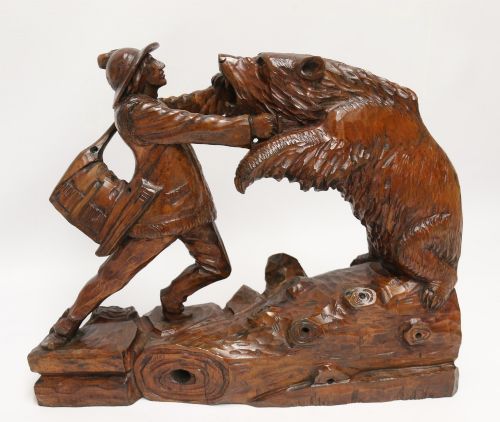
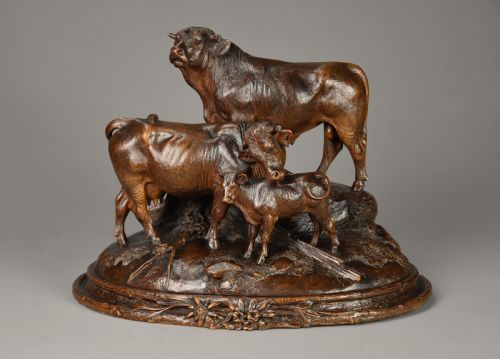
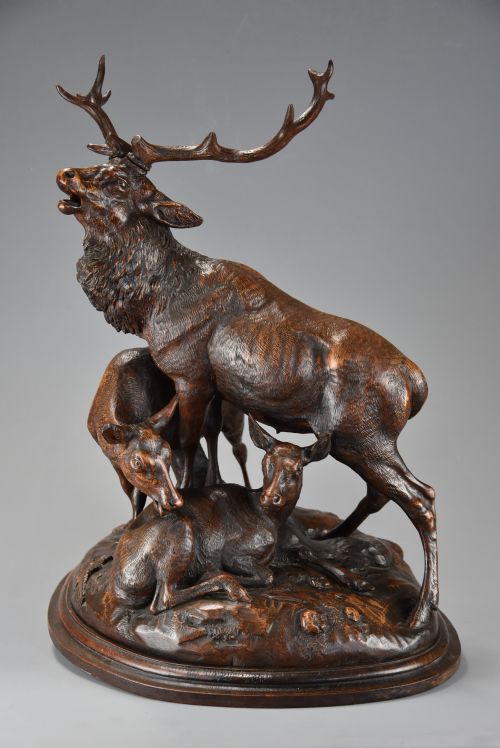
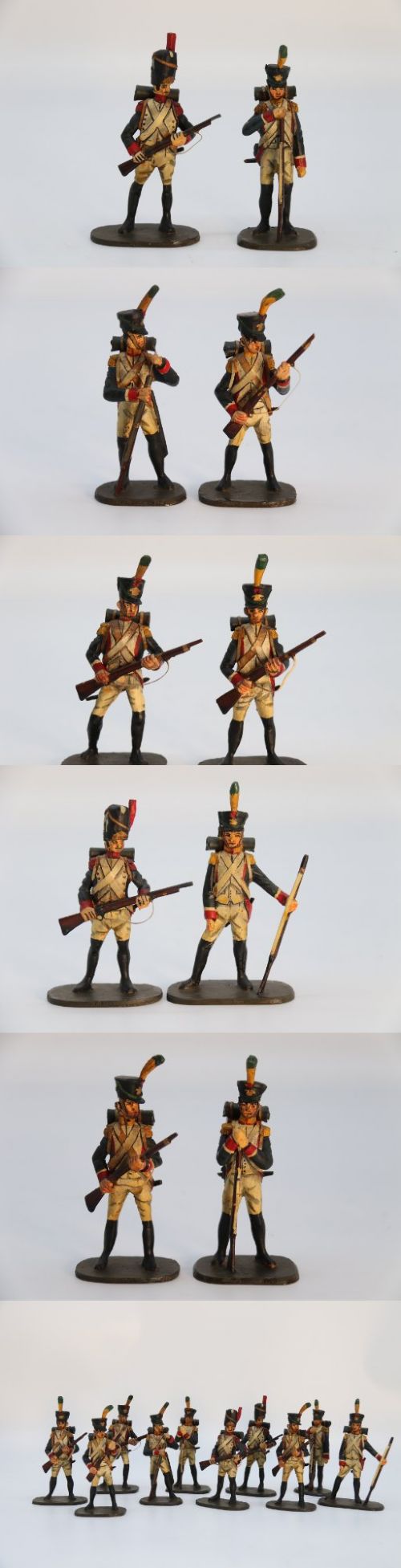
A carved wood figure group unites several subjects within a single composition, capturing interactions between people, animals, or religious figures. When you search for a carved wood figure group, you encounter diverse regional traditions ranging from European Black Forest animal studies to Chinese hardwood carvings and folk art soldier sets.
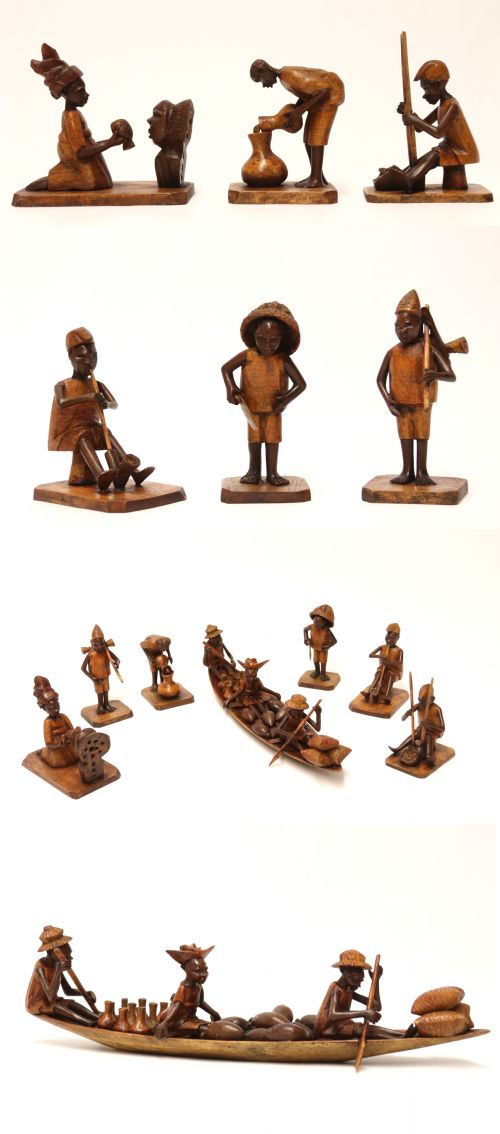
The objects span from the sixteenth century to the twentieth century, appearing as sculptural groups, religious depictions, and narrative scenes. Domestic styles such as Black Forest linden wood cattle or deer groups sit alongside ecclesiastical Italian olive wood pieces and African hardwood carvings.
Origin and period heavily dictate the visual character of each group, connecting specific regional aesthetics with the carver's choice of subject matter. European works frequently employ linden wood or walnut, while Asian and African examples utilise dense hardwoods or bamboo.
Materials and construction methods
Carvers select specific timbers according to the regional tradition and the level of detail required, frequently utilising linden wood, walnut, maple, olive wood, and various dense hardwoods. Linden wood offers a fine grain suited to intricate European animal carvings, whereas hardwoods provide durability for larger narrative compositions.
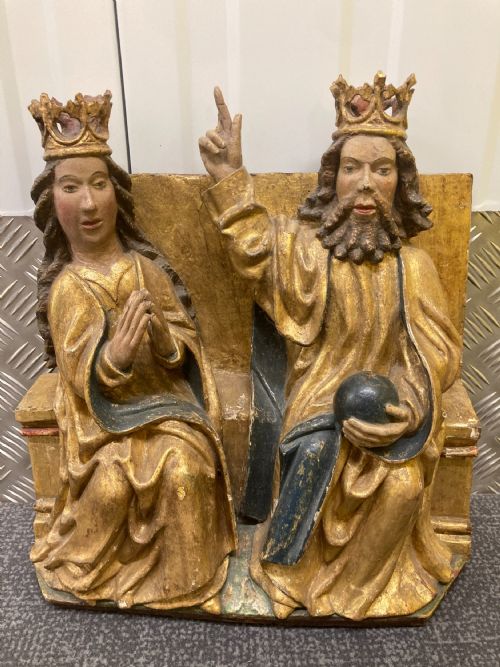
Many examples incorporate surface decoration alongside the carved timber, utilising polychrome paint and gold leaf to accent garments, architectural elements, or religious iconography. Unpainted surfaces rely entirely upon tool marks, staining, and polished finishes to create texture and depth across the multiple figures.
The inventory records diverse stylistic traditions including Black Forest, Renaissance, Qing Dynasty, and American Folk Art.
Assessing quality in carved groups
Mastery of proportion and anatomical accuracy distinguishes superior carving from simpler work, particularly when rendering complex interactions between multiple human or animal figures. The crispness of the tool work and the depth of undercut details reveal the carver's technical capability.
The preservation of original surface finishes, whether unpolished timber, historical paint, or gold leaf, heavily influences the integrity of the piece. Integrated compositions where individual figures relate physically and narratively to one another achieve greater visual cohesion than assembled groupings.
J Huggler·Andy Anderson
The Carved Wood Figure Group Glossary
- Linden wood
- A pale, fine-grained timber frequently utilised by European carvers for detailed figurative and animal sculptures because it resists splitting.
- Giltwood
- Timber treated with gold leaf or gold powder applied over a prepared ground layer to create a brilliant metallic surface.
- Black Forest
- A regional style of nineteenth-century wood carving originating from central Europe, well known for realistic depictions of forest animals and cattle.
- Ecclesiastical
- Pertaining to the Christian church, describing devotional art and religious figure groups carved for church or domestic prayer settings.
Carved Wood Figure Group: Frequently Asked Questions
How are carved wood figure groups displayed?
These sculptures suit placement on flat surfaces such as tables, sideboards, or dedicated cabinets where viewers can observe the composition from multiple angles.
Because many examples feature delicate projecting elements or painted surfaces, positioning them away from direct sunlight and extreme temperature fluctuations protects the timber.
What subjects appear in these groups?
Subjects range widely depending on the cultural origin and period, including European wildlife studies, religious scenes of saints, and folk art depictions of soldiers or daily life.
Multi-figure compositions often tell a story or capture a specific moment of interaction between the carved subjects.
How do I identify Black Forest carvings?
Black Forest carvings typically date to the late nineteenth century and focus on naturalistic representations of animals, particularly deer, bears, and cattle executed in linden wood or walnut.
Some pieces bear workshop stamps or signatures, while others reflect the distinctive regional style through deep undercutting and realistic anatomical detail.
Are painted finishes original on these figures?
Many historical figure groups retain their original polychrome paint or giltwood layers, which were applied to enhance the realism or ceremonial value of the sculpture.
Examining the wear patterns and adherence of the pigment helps confirm whether the surface decoration belongs to the period of manufacture.