


Chinese Figural Carving
Chinese figural carving brings together bamboo, wood, soapstone, and coral shaped into figures, creating tactile pieces that anchor a room.
Chinese Figural Carving
When you search for chinese figural carving, you encounter objects shaped from organic materials like bamboo, root wood, red coral, and soapstone. These pieces capture figures ranging from Budai to luohan heads, reflecting long-standing sculptural traditions.
The versions most commonly met on this page include desk accessories such as brush pots and head rests, alongside larger sculptures, table lamps, and lidded boxes. Many pieces originate from the nineteenth century, though seventeenth-century corbels and twentieth-century lamps also appear.
These items frequently display the influence of the Qing dynasty or traditional scholarly aesthetics. A buyer finds both intimate personal items like necklaces and substantial architectural salvage or furniture elements.
Materials and methods
Carvers utilised organic substances including bamboo, root wood, and red coral, working closely with the natural contours of the raw material. Root wood and bamboo required patient shaping to integrate the grain and hollows into the final human form.
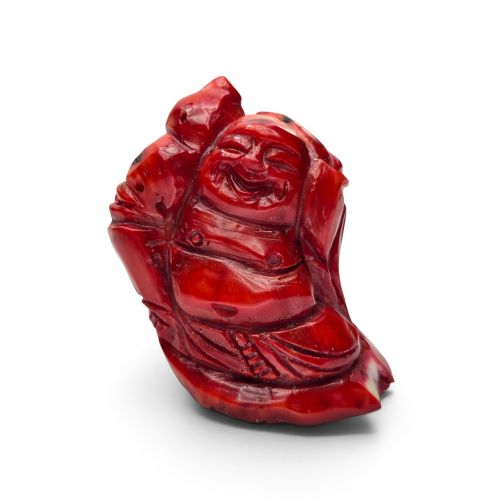
A smiling monk carved into deep red coral proves that even strict ascetics occasionally enjoyed a remarkably vibrant portrait.
Distinguishing quality
The upper tier of pieces displays a confident handling of the material, where the carving follows the natural growth and grain of the bamboo or root wood. Depth of relief and clarity of facial expression separate finer sculptures from simpler production.
Condition and integrity of the surface finish dictate the standing of an object, particularly with lacquer, coral, and delicate bamboo. Well-preserved patina and minimal disruption to high-relief elements maintain the visual impact of the work.
The Chinese Figural Carving Glossary
- Budai
- A representation of the laughing monk, often depicted as a stout, jovial figure associated with contentment. This subject appears frequently in coral and wood carvings.
- Cinnabar
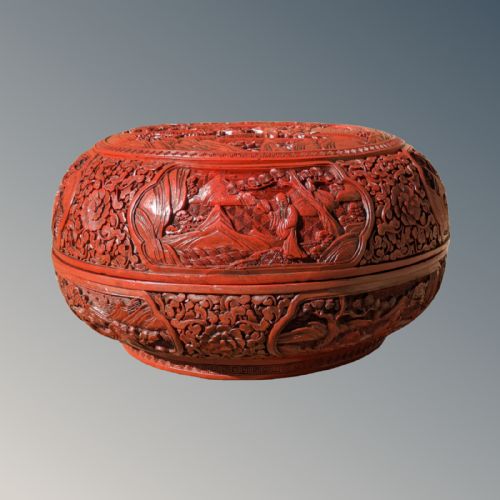
- A bright scarlet mineral form of mercurial sulphide used to colour lacquer. Thick layers of this material were applied to wooden bases before being deeply carved.
- Corbel
- A structural piece of stone or wood projecting from a wall to support a weight. Antique architectural examples retain vigorous figural carving suited to load-bearing contexts.
Chinese Figural Carving: Frequently Asked Questions
What are brush pots used for?
Brush pots served as utilitarian containers for scholar's writing brushes on a desk. They kept long-handled implements upright and organised within a traditional study.
Today, collectors appreciate them primarily as sculptural bamboo cylinders that showcase intricate landscape and figural carving in the round.
How do I care for bamboo carvings?
Bamboo responds poorly to dry air and direct sunlight, which can cause the natural material to split over time. Keeping them away from heat sources preserves the structural integrity of the carved walls.
Dusting with a soft, dry brush maintains the surface without introducing moisture that could damage aged finishes.
What is root wood?
Root wood involves utilising the gnarled underground growth of a tree, retaining organic twists and knots. Artisans incorporated these natural shapes directly into the anatomy of figures or lamp bases.
Each root wood piece remains entirely individual because the carver followed the erratic path of the original timber.
How do I identify Qing dynasty pieces?
Qing dynasty items align with traditional imperial or scholarly motifs, utilising materials like bamboo, coral, and cinnabar lacquer. Stylistic cues include deep undercutting and expressive facial details characteristic of nineteenth-century workshops.
Comparing the handling of the material against established period pieces helps confirm the date of execution.