


19th Century Walnut Carving
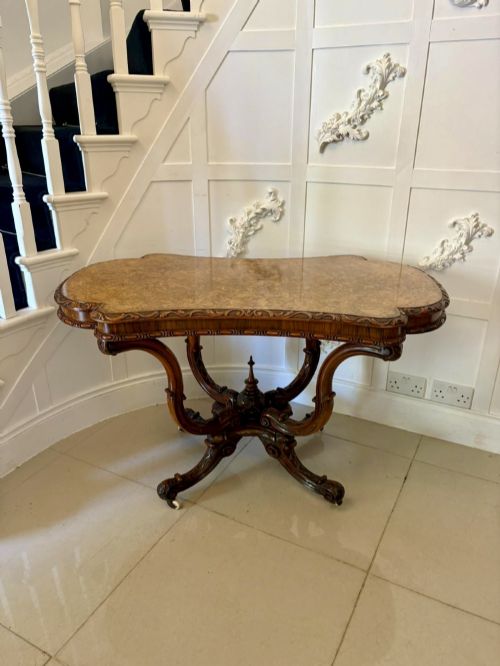
These pieces of 19th century walnut carving bring deep timber grain and intricate sculptural form into a room.
19th Century Walnut Carving
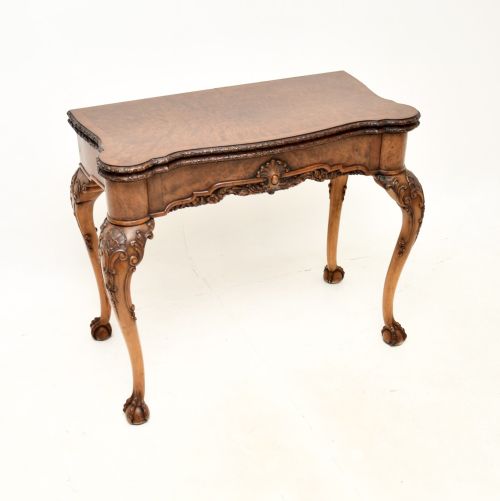
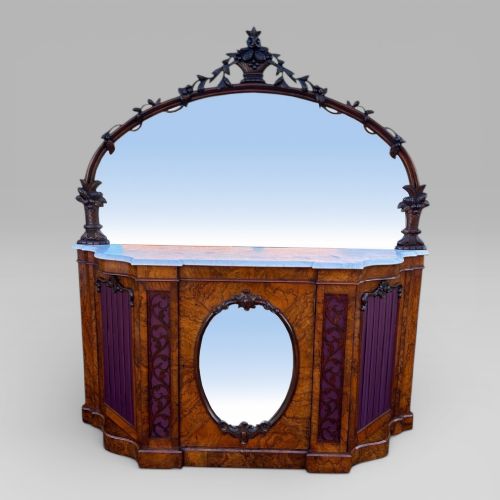
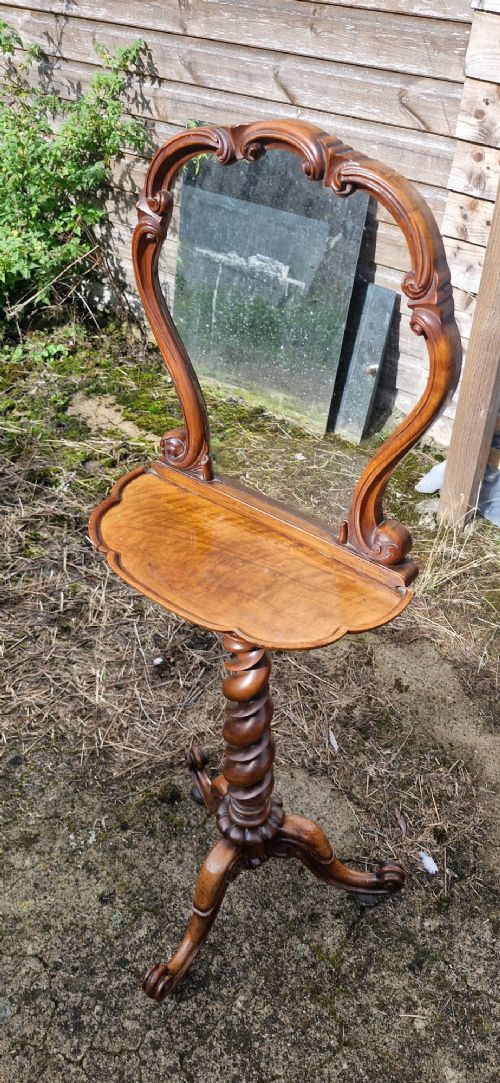
When you search for 19th century walnut carving, you encounter a diverse array of sculptural objects, furniture and architectural fragments spanning the Victorian era and continental workshops. The selection ranges from Black Forest animal groups and grotesque panels to intricately carved mirror backs, card tables and occasional furniture.
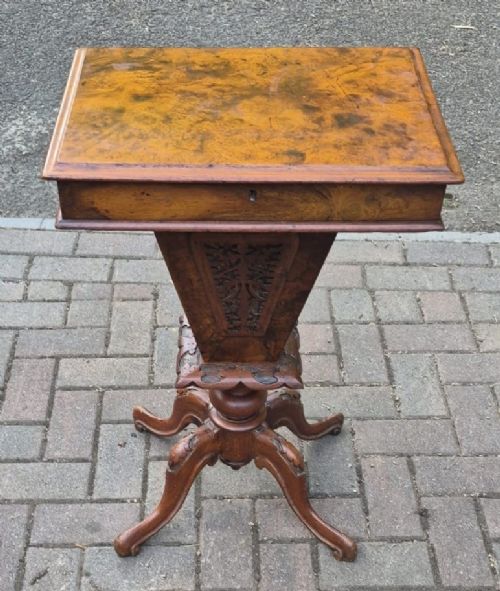
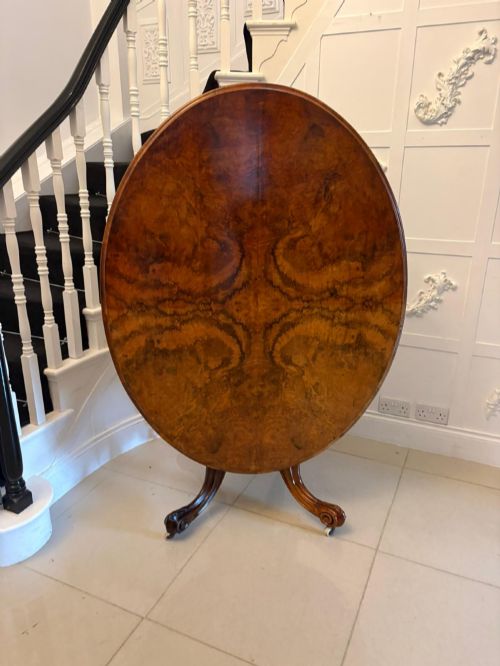
The Victorian iteration dominates the available pieces, frequently appearing as burr walnut centre tables, sewing tables, and balloon back dining chairs featuring carved flourishes. Alongside domestic furniture, archive records show figurative works including saint heads, dogs, and Green Man architectural panels.
Continental pieces introduce distinct regional characteristics, such as French Louis XV style seating and French Provincial dressers, alongside Swiss or German Black Forest items like whip hooks and figural groups. These objects combine utilitarian function with ornate woodwork, serving as both practical furnishings and focal decorative items.
Materials and construction methods
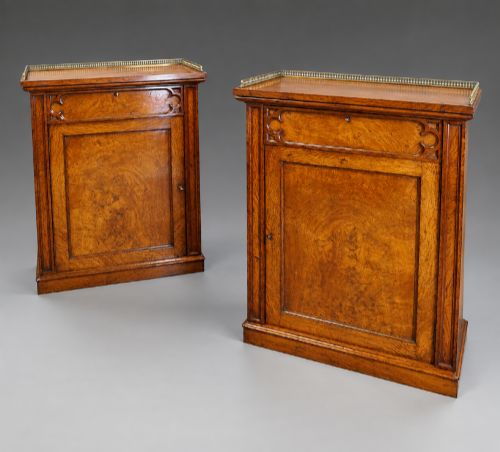
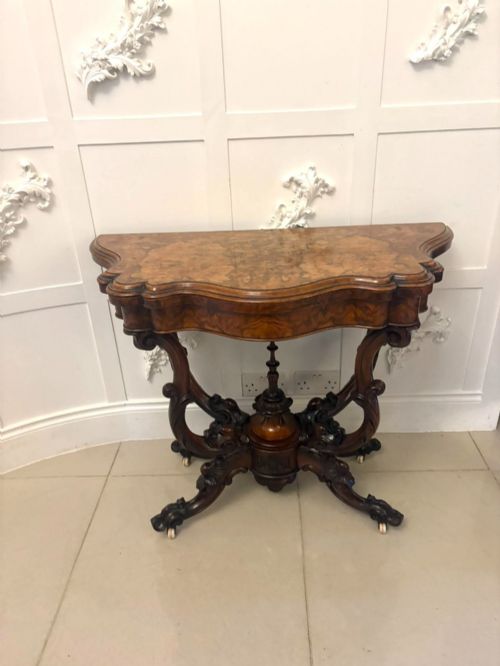
Solid walnut and burr walnut veneer provide the primary material foundation, selected for rich grain patterns and suitability for detailed shaping. Artisans often applied burr veneers over secondary timbers on table tops, games boards and cabinet doors to create striking visual movement.
Carving was executed by hand using gouges and chisels to produce high-relief foliage, scrollwork, and figurative subjects such as animals and grotesque masks. Marquetry inlay, brass mounts, marble tops, and ceramic components frequently accompany the carved wooden elements on larger case pieces and tables.
The listings show walnut furniture and decorative carvings spanning from the early 19th century through the late Victorian period, incorporating French, English, and continental styles.
Distinctions in craftsmanship
The depth and crispness of the chisel work distinguish superior execution from routine production. Finer examples display undercut foliage and expressive figurative details with clean lines, whereas lesser pieces exhibit shallow, rounded incisions.
The selection of the timber grain also determines standing, particularly in burr walnut pieces where symmetrical patterning across a table top or cabinet front requires expert veneer matching. Structural integrity in joints, stability in tilt-top mechanisms, and the retention of original brass or ceramic castors further separate standard utility items from exceptional workshop output.
Gabriel Viardot
The 19th Century Walnut Carving Glossary
- Burr walnut
- A veneer taken from the warted excrescence on a walnut tree, prized for its swirling and highly figured grain patterns. It frequently covers the tops of mid-Victorian centre tables and games boards.
- Black Forest
- A regional style of 19th-century woodcarving originating in Switzerland and Germany, characterised by naturalistic depictions of animals, foliage, and figures such as gnomes or saints.
- Marquetry
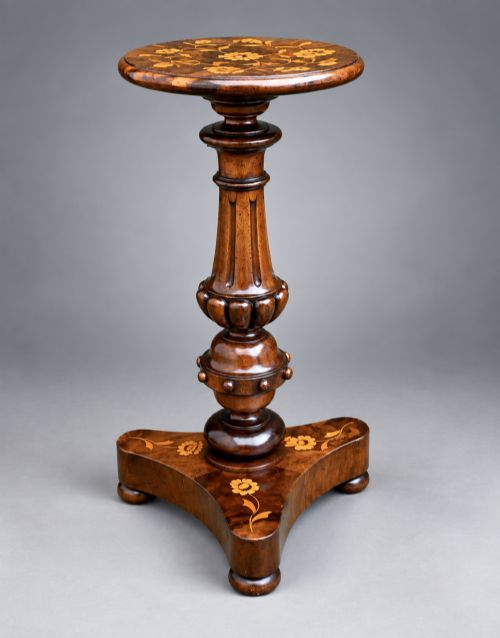
- The art of applying pieces of veneer to a structure to form decorative patterns and pictures. It appears on Victorian lamp tables and cabinet doors.
- Canterbury
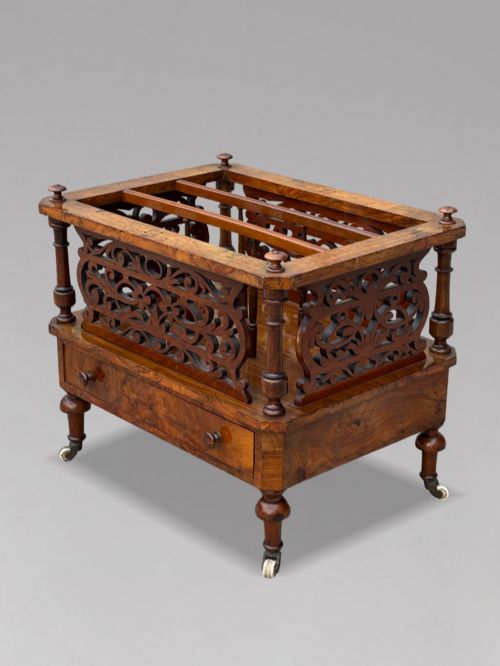
- A small piece of furniture fitted with upright partitions for holding sheet music, folios, or newspapers, often supported on turned legs with carved details.
- Green Man
- A sculptural architectural ornament depicting a face carved from or entwined with leaves and vines. These carvings appear frequently on 19th-century panels and furniture.
19th Century Walnut Carving: Frequently Asked Questions
How do I identify burr walnut?
Burr walnut is recognisable by its dense, swirling grain full of small knots and circular patterns, unlike straight-grained timber. It creates a highly decorative surface often found on the top panels of Victorian tables and cabinets.
Cabinet makers used thin slices of this figured wood as a veneer over stable secondary timbers to achieve a luxurious appearance without risking the structural movement of solid burr wood.
How were centre tables used?
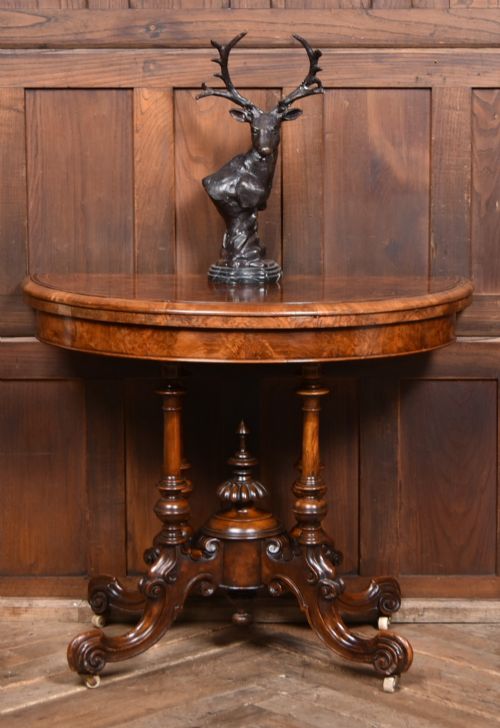
Centre tables stood freestanding in the middle of Victorian drawing rooms rather than pushed against a wall, serving as a display surface for books, lamps, and decorative objects. They often featured tilt-top mechanisms or carved pedestal bases with ornate feet.
Families gathered around them for games, sewing, or evening illumination, making them both a social hub and a display of household wealth.
How do I care for carved walnut furniture?
Maintain carved walnut by keeping it away from direct heat sources and strong sunlight, which can dry out the timber and crack veneers. Dust the intricate carved recesses regularly with a soft brush and apply appropriate wax polish sparingly.
Avoid using silicone-based sprays, as they build up over time and dull the natural lustre of the French polish or waxed finish.