
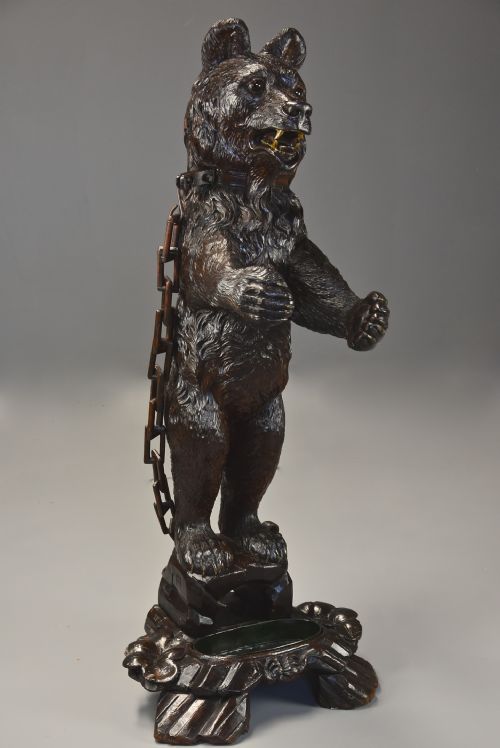


Victorian Black Forest Bear
Victorian black forest bear carvings bring the timber forest into the hallway as umbrella stands, figures, and furniture.
Victorian Black Forest Bear
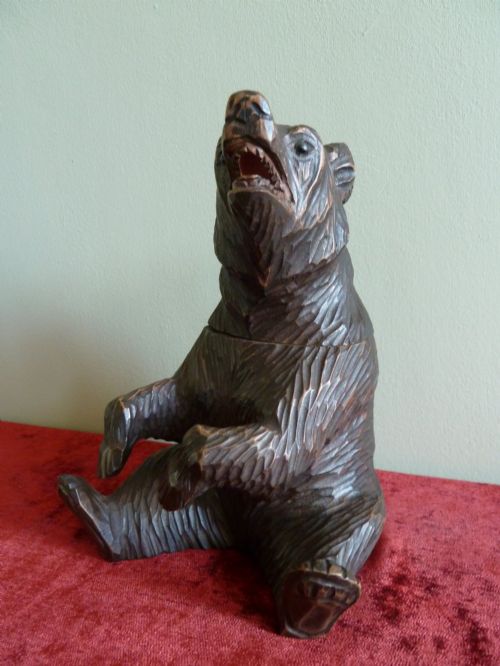
When you search for victorian black forest bear carvings, you are looking at nineteenth-century European woodcarvings depicting bears in various practical and decorative forms. These pieces range from small desk accessories like inkstands and tobacco jars to large hall stands and benches.
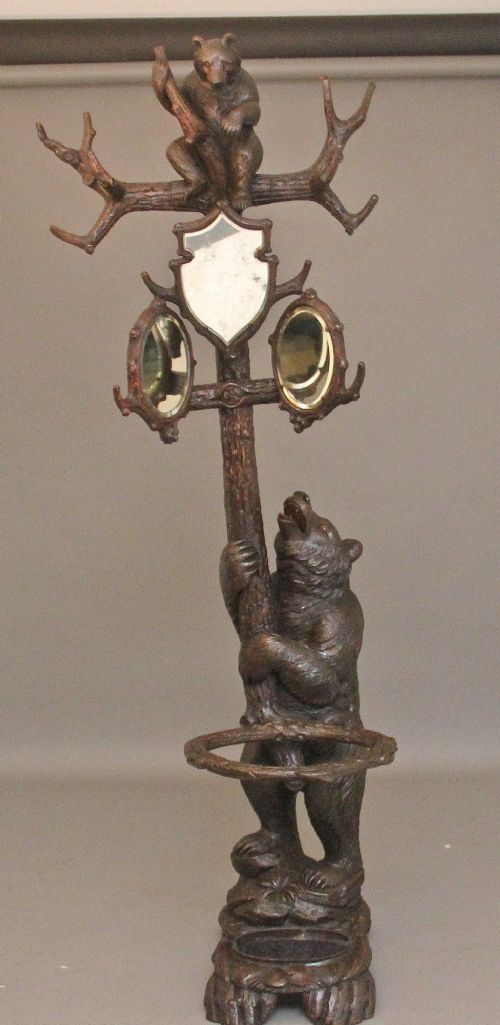
The most common forms you will meet on this page are stick and umbrella stands, along with freestanding sculptures and seating. Many date from the latter half of the nineteenth century and display the characteristic naturalistic styling associated with the movement.
How victorian black forest bear carvings were made
Carvers shaped these figures primarily from linden wood and walnut, employing hand-carving techniques to render detailed fur, anatomy, and expressions. The timber was often selected for its grain and workability before being finished with wax or polish.
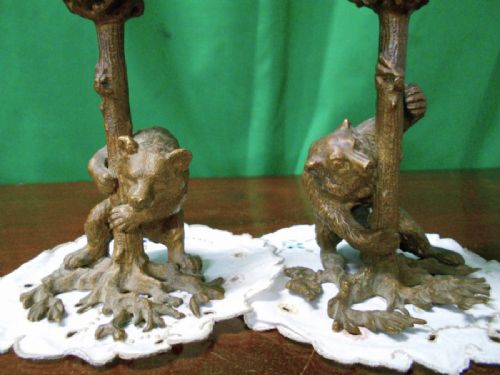
In some examples, carved wooden elements incorporate glass eyes or metal components such as brass fittings and candlesticks, combining organic timber with manufactured details.
Listings feature items spanning the nineteenth century into the early twentieth century, utilising linden wood, walnut, brass, and glass.
What varies in quality
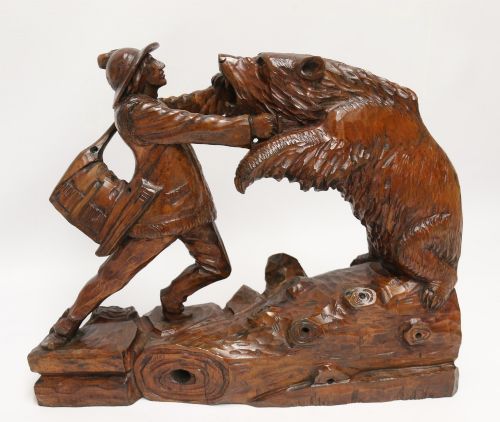
The distinction between ordinary and exceptional pieces lies in the depth and realism of the carving. Superior items show careful attention to the muscular structure of the bear and the texture of the fur rather than generalized blocking.
Scale also dictates quality, as larger and more ambitious forms like exhibition hall stands and multi-figure groups require greater technical skill to execute successfully than standard desk trinkets.
The Victorian Black Forest Bear Glossary
- Black Forest
- A style of nineteenth-century woodcarving originating from the mountainous region of central Europe, famous for animal figures and rustic furniture. These objects typically portray bears, deer, and dogs engaged in human activities or standing in natural poses.
- Hall stand
- A piece of entrance hall furniture designed to hold coats, hats, sticks, and umbrellas, often incorporating a mirror or bench. In this category, bears serve as structural supports or holding figures.
- Humidor
- A specialised container designed to keep tobacco moist, frequently fashioned here as a carved bear holding a jar or log. These desktop items often feature hinged compartments.
- Inkstand
- A desk accessory holding an inkwell, sander, and pens, sometimes styled as a bear with a log or natural base. They represent the smaller, portable side of nineteenth-century animal carving.
Victorian Black Forest Bear: Frequently Asked Questions
What is a black forest bear?
A black forest bear is a nineteenth-century carved wooden figure or furniture piece depicting a bear, originating from the European carving tradition. These items range from small desk ornaments to large hall furniture.
They were produced mainly during the Victorian era and are recognised by their detailed, naturalistic wood carving.
How were these bear carvings used?
Many of these pieces served practical domestic functions in Victorian entrance halls and studies, holding walking sticks, umbrellas, coats, and hats. Others functioned as desktop accessories like inkwells and tobacco jars.
Larger versions included benches and seats where the carved bears formed part of the structural woodwork.
How do I date a black forest carving?
Dating relies on stylistic clues, materials, and documented production periods from the nineteenth century, extending into the early twentieth century. Pieces often reflect the Victorian aesthetic of naturalism and animal subjects.
Examining the construction methods, wear patterns, and accompanying hardware helps place an object within its proper era.