


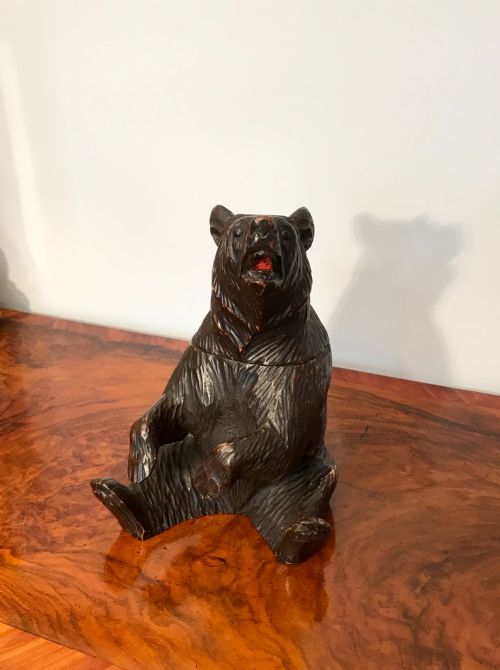
Hand Carved Bear Figurine
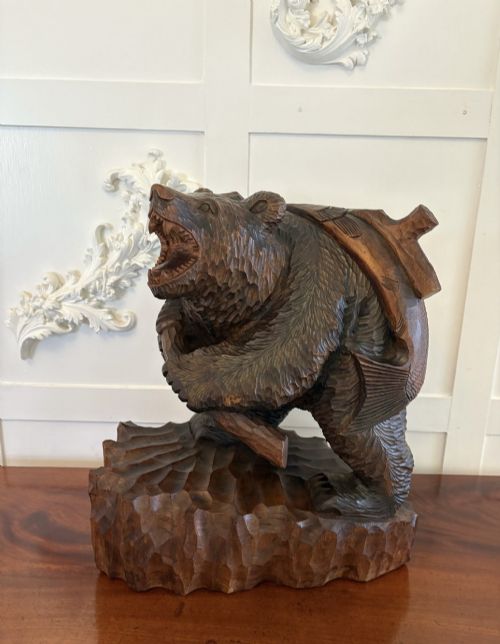
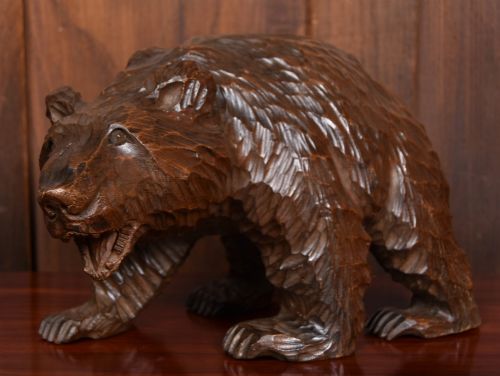
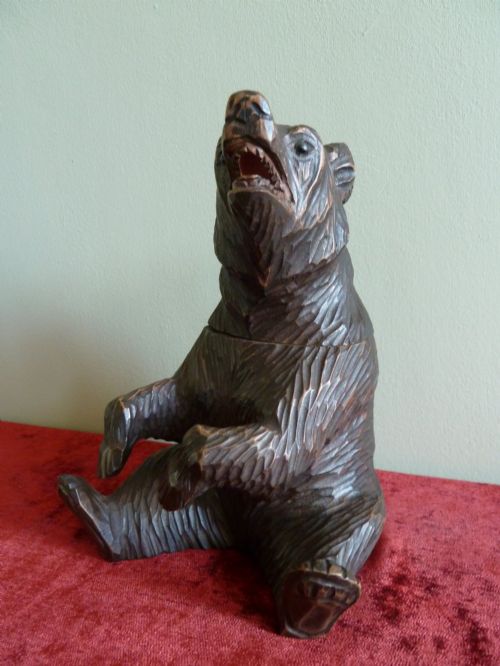
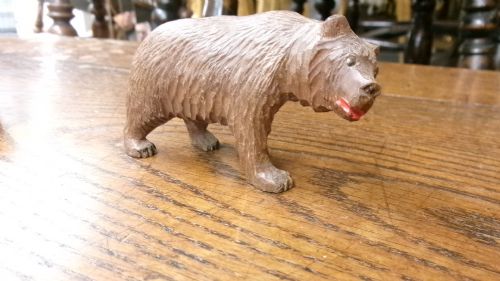
These hand carved bear figurine pieces bring carved wooden character to a room, ranging from small desk objects to substantial tobacco holders.
Hand Carved Bear Figurine
A hand carved bear figurine represents a tradition of animal carving seen across various periods including the nineteenth century and the Edwardian era. Collectors encounter these pieces in forms ranging from standalone sculptures and miniature figurines to functional tobacco holders and jars.
The objects on this page emerge from distinct regional traditions, specifically Black Forest carving and Japanese folk art. Buyers most frequently meet Linden wood examples, alongside other carved wood forms finished with glass stud eyes or paint.
The selection includes both singular large figures and grouped sets, demonstrating the variety within these sculptural animal objects. Each piece shows the artisan's hand through distinct carving marks and naturalistic or stylised postures.
Materials and methods
Carvers predominantly worked in Linden wood and various hardwoods, shaping the material with hand tools to establish the fur texture and anatomy of the bear. Artisans frequently utilised soft woods that allowed for deep, detailed incision and relief work.
Detailing often included the insertion of glass stud eyes to bring realism to the wooden faces, sometimes paired with minimal paintwork or wax finishes to protect the timber. The construction ranges from single solid blocks to joined elements, particularly in larger sculptural forms.
Listings feature Linden wood and various hardwoods across Victorian, Edwardian, and nineteenth-century periods.
Distinctions in quality
The integration of functional elements, such as hinged lids on tobacco containers, alongside the survival of original glass eyes and wax treatments, influences how successfully a piece represents its period and regional workshop.
The Hand Carved Bear Figurine Glossary
- Black Forest
- A style of wood carving originating from the European mountain region, renowned for realistic animal sculptures and household objects. These pieces often depict bears engaged in human activities or standing naturally.
- Linden wood
- A pale timber commonly utilised by carvers for its soft, even grain and suitability for intricate detail. This wood accepts deep tool marks without splitting.
- Kibori Kuma
- A traditional style of Japanese wood-carved bear originating from Hokkaido folk art. These figures often hold fish or adopt characteristic poses.
- Stud eyes
- Small glass inserts used to represent animal eyes in carved figures. They provide a reflective, lifelike focal point in the wooden head.
Hand Carved Bear Figurine: Frequently Asked Questions
What are these carved bears made from?
The pieces are primarily shaped from Linden wood and various hardwoods, chosen for their grain and response to hand tools.
Additional materials sometimes include glass for inset eyes and surface wax or paint.
How do I identify Black Forest bears?
Black Forest carvings typically originate from the nineteenth or early twentieth century and show distinct European woodland motifs.
They often feature detailed fur texturing and realistic anatomical proportions in solid wood.
What is Japanese folk art bear carving?
Known as Kibori Kuma, these Japanese carvings often depict bears from the Hokkaido region, frequently shown carrying fish.
They represent a distinct regional carving tradition separate from European workshops.
How were these carved figures used?
While many served purely as decorative sculptures or miniature figurines, others had practical household functions.
Examples include tobacco jars and lidded holders designed for desktop or mantel use.
How do I care for wooden bear carvings?
Keep the wooden pieces away from direct heat sources and strong sunlight to prevent the timber from drying out.
Dust gently with a soft brush and avoid applying modern liquid polishes to the historic surface.