
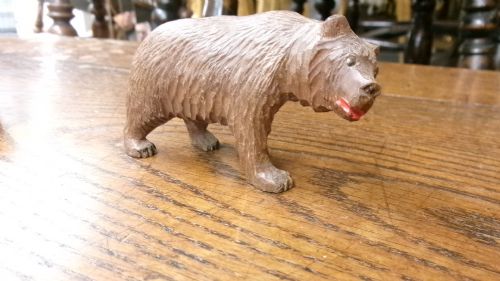


Swiss Carved Bear
These Swiss carved bear carvings bring the timber woods indoors through wonderfully expressive animal forms that catch the eye in any entrance hall or study.
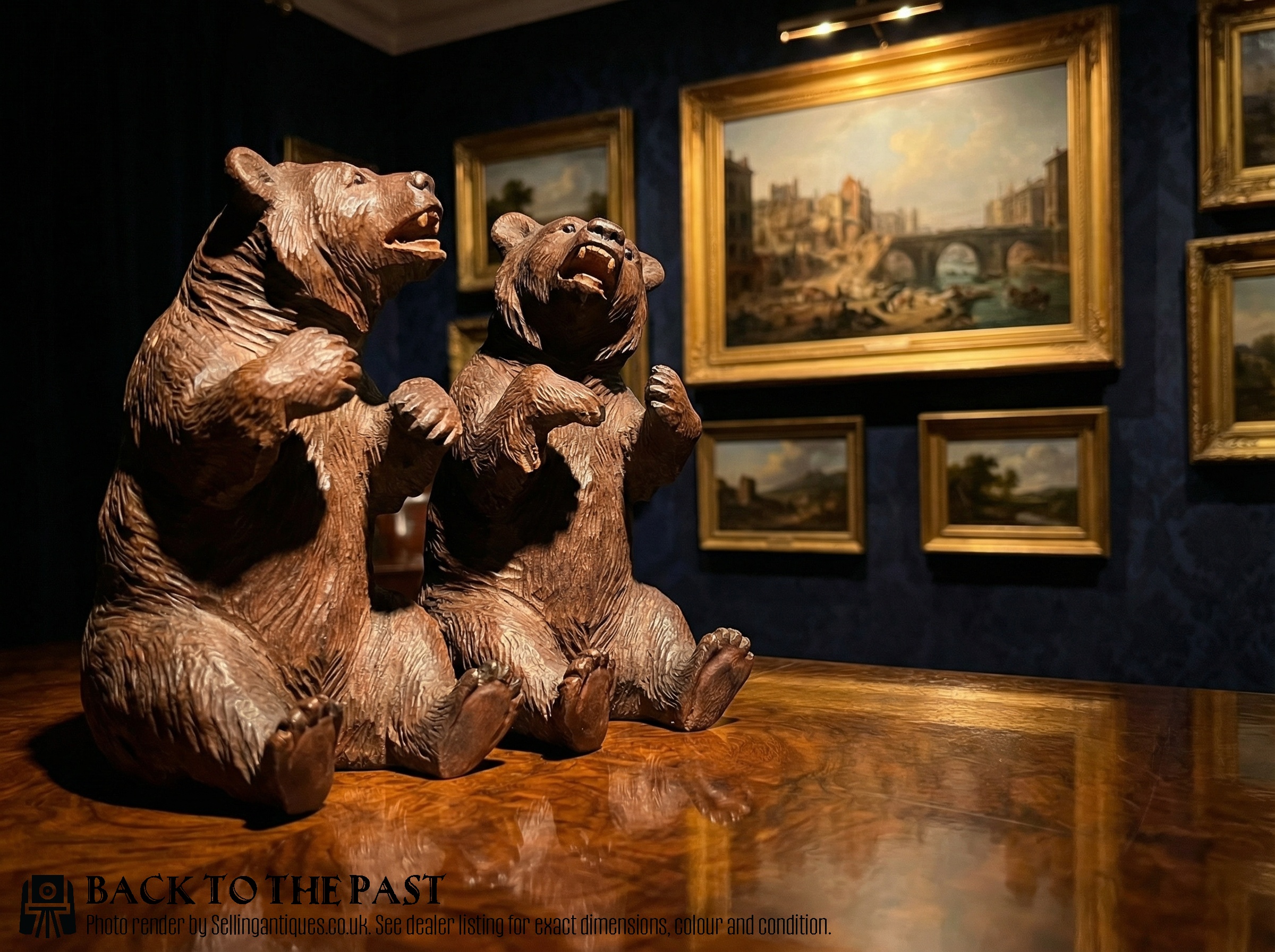
Swiss Carved Bear
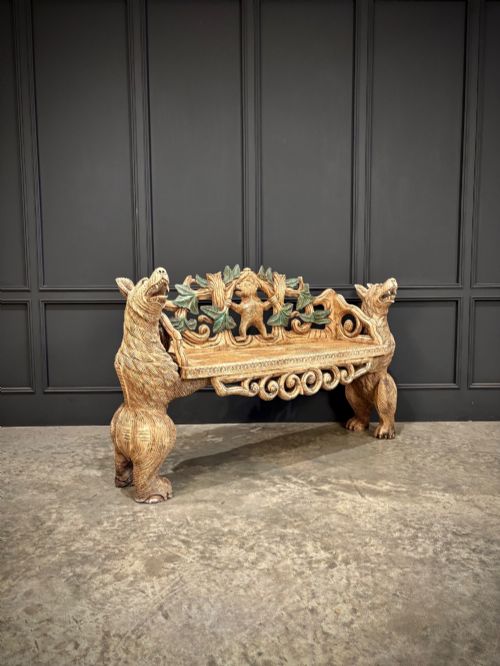
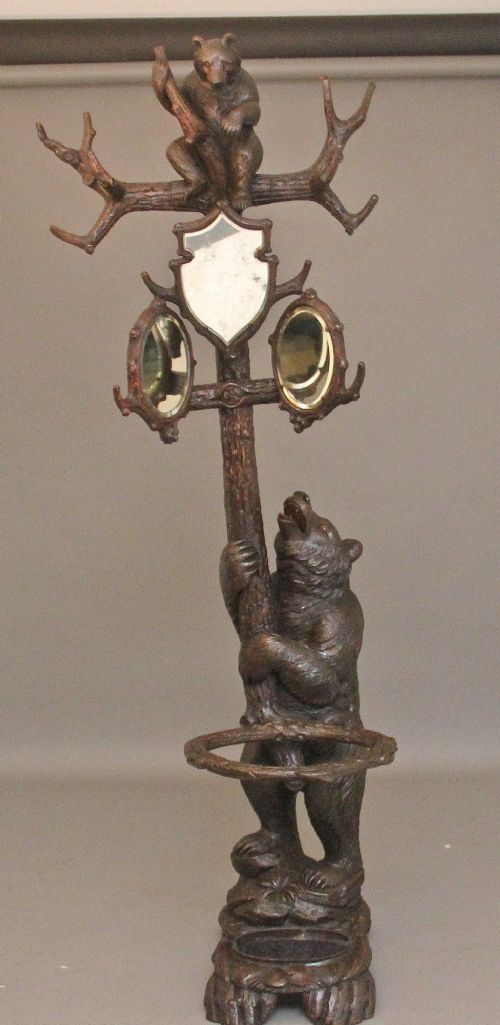
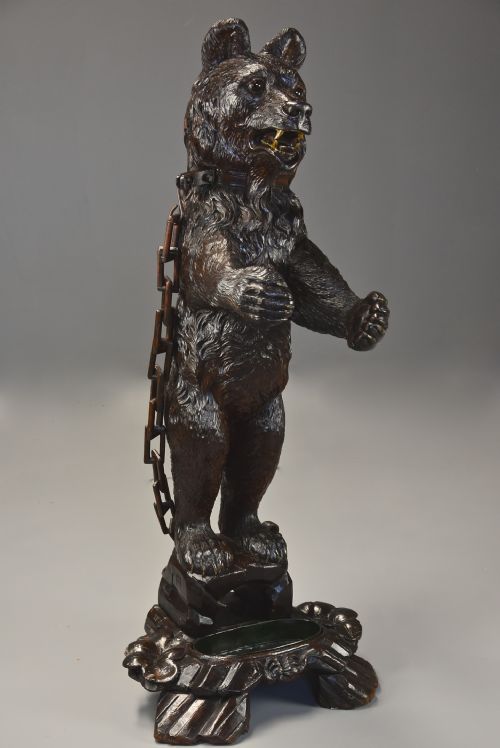
A swiss carved bear takes many functional and decorative shapes across the centuries, ranging from practical hall stands and umbrella holders to small desk accessories like inkstands and nutcrackers. Buyers searching for a swiss carved bear will encounter substantial hall seats and benches alongside smaller figures and table lamps.
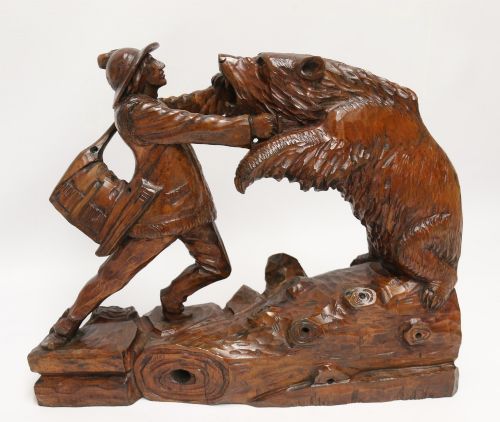
The objects span the nineteenth century through the Edwardian period and into the early twentieth century. Most examples belong to the Black Forest style and Swiss folk art tradition, carved in realistic or characterful poses such as prowling, holding logs, or standing upright.
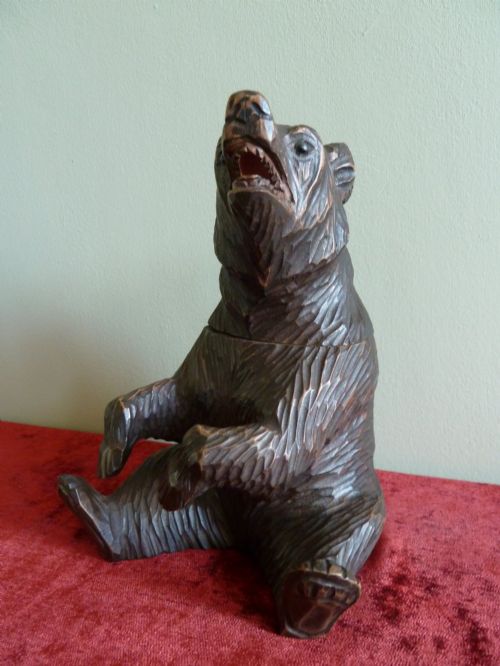
Domestic items dominate the selection, including tobacco jars, humidor boxes, condiment figures, and bookends. Larger pieces often double as furniture, providing seating or umbrella storage while serving as striking sculptural works.
Materials and carving techniques
Carvers predominantly utilised linden wood, lime wood, walnut, and general carved wood, taking advantage of timber with fine grain that allows for intricate detailing. The natural grain of the wood provides the foundational texture for the fur and musculature of the animals.
One tiny bear holds a log while another dances across a chair back, proving that nineteenth-century carvers had a wonderful sense of humour.
Judging the work
Quality rests entirely in the anatomical accuracy and the depth of the hand carving, distinguishing lively animal studies from stiff or flat renditions. The expression in the face and the definition of the fur show the carver's skill.
Scale and ambition separate standard decorative items from exhibition pieces, particularly when a bear supports heavy furniture like a bench or a tall hall stand. Complex groupings involving multiple figures or architectural elements require greater mastery of the medium.
The Swiss Carved Bear Glossary
- Black Forest
- A regional style of wood carving originating in central Europe during the nineteenth century, known for naturalistic animal and plant motifs. It is the dominant style associated with these wooden figures.
- Hall stand
- A piece of hallway furniture combining hooks, mirrors, and umbrella trays. In this category, the structure incorporates carved bears into the timber framework.
- Humidor
- A specialised box designed to keep tobacco moist. These containers often feature a carved bear forming the lid or body of the vessel.
- Stud eyes
- Small glass or metal pins inserted into the carved head to represent the eyes of the animal. They add a glint of realism to the wooden expression.
Swiss Carved Bear: Frequently Asked Questions
What rooms suit a swiss carved bear?
These pieces fit naturally into entrance halls, studies, and living rooms where wooden furniture and animal carvings complement traditional interior decor. Larger hall stands and benches provide functional seating and storage for daily use.
Smaller objects like bookends, inkstands, and table lamps sit easily on desks, sideboards, and mantelpieces. Their dark wood tones blend well with both antique and eclectic modern furnishings.
How are umbrella stands constructed?
Umbrella and stick stands integrate hollowed logs, tree trunks, or architectural timber elements beneath the carved bear's arms or feet. Metal drip pans are typically fitted at the base to catch water from wet walking sticks.
The sturdy weight of the timber ensures the stand remains stable when loaded with heavy umbrellas and canes.
Are these carvings signed by makers?
Signatures or maker's marks are unusual on nineteenth and early twentieth century carvings from this tradition. Most workshops produced anonymous work intended for the tourist and export markets.
Attribution relies instead on the specific regional style, choice of linden wood, and the distinct carving characteristics associated with Swiss and Black Forest workshops.
How do I date a carving?
Dating relies on stylistic clues, the type of wood used, and associated hardware like metal pins or glass eyes. Pieces range from mid-nineteenth century Victorian examples to Edwardian and early twentieth-century items.
Furniture forms such as hall seats and benches often reflect the prevailing domestic design trends of their specific decade of manufacture.