



Dark Wood Inkwell
These dark wood inkwell pieces bring desk accessories of the nineteenth century into modern studies, offering carved forms and fitted glass reservoirs.
Dark Wood Inkwell
A dark wood inkwell is a desk accessory designed to hold writing fluid securely while providing a stable base for pens. When you search for a dark wood inkwell, you encounter desk stands, pounce pots, and figural carvings intended for nineteenth-century writing desks.
The selections on this page span the Victorian era, the mid-nineteenth century, and the year 1900. They include stationary stands, inkstands, and novelty pieces from distinct stylistic traditions.
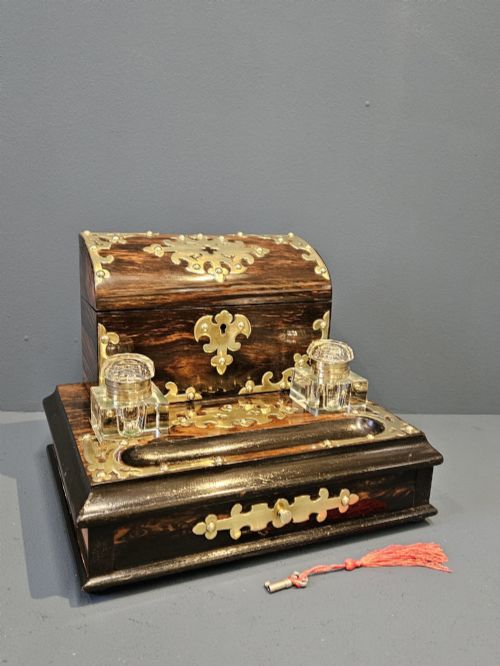
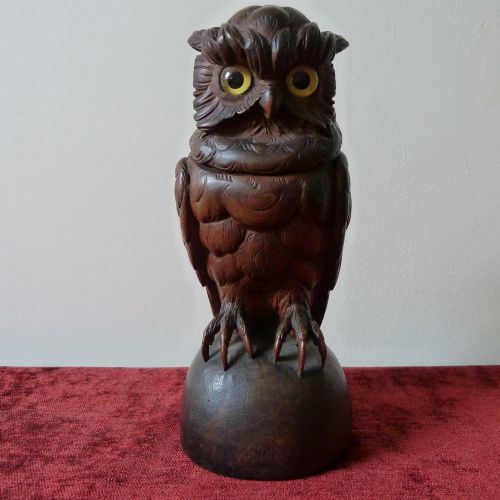
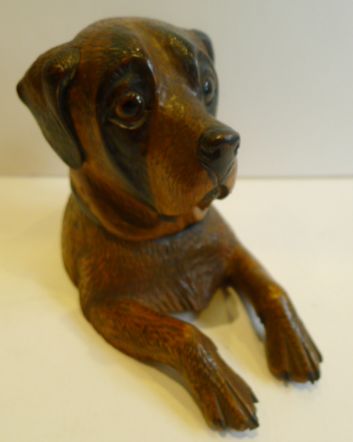
Black Forest carvings and Victorian Gothic Revival designs dominate the offerings, alongside Irish hand-carved oak pieces and English coromandel and ormolu mounts. Buyers frequently meet animal figures such as owls, bears, cats in boots, eagles, and dogs serving as the primary housing for the glass ink inserts.
How they were made
Carpenters and carvers shaped these pieces using coromandel wood, linden wood, fruitwood, and oak. Artisans employed hand-carving techniques to render detailed animal fur, feathers, and architectural motifs.
Metal components such as brass, ormolu mounts, and other metals combined with fitted glass inserts to complete the functional ink receptacles. Mother-of-pearl inlay further embellished select coromandel desk stands to contrast against the dark timber.
What varies in quality
The standard of carving defines the upper tier of these pieces, particularly in Black Forest novelty models where anatomical proportion and expression in animals like owls, bears, and dogs display superior sculptural skill. Timber selection also dictates value, with dense coromandel and figured oak providing greater durability and visual depth than simpler fruitwoods.
Completeness alters the integrity of an inkstand, as matching glass inserts, original brass or ormolu mounts, and intact hinged lids retain the maker's original design. Desk sets incorporating multiple matching components, such as stationary racks and pounce pots alongside the central inkwell, demonstrate higher ambition from the period.
The Dark Wood Inkwell Glossary
- Coromandel wood
- A dense, heavily figured timber native to Asia, prized in the nineteenth century for its dark brown grain and contrasting golden stripes used on fine desk accessories.
- Pounce pot
- A small perforated shaker container used to sprinkle sand or gum sandarac over wet ink to speed up drying and prevent blotting.
- Black Forest style
- Nineteenth-century wood carving originating from the mountainous region of Central Europe, characterised by realistic depictions of animals, foliage, and naturalistic scenes.
- Inkstand
- A comprehensive desk tray or stand incorporating one or more inkwells, pen holders, and sometimes a pounce pot or bell.
- Ormolu
- Gilded bronze applied as decorative mounts, feet, or hinges on nineteenth-century wooden desk boxes and stands.
Dark Wood Inkwell: Frequently Asked Questions
How were inkwells used on old desks?
Writers dipped quill or steel nib pens into the glass reservoir housed within the wooden body to replenish ink while writing letters.
Desk stands often included channels for resting pens and auxiliary containers for sand or sealing wax.
How do I date a wooden inkwell?
Dating relies on stylistic markers such as Victorian Gothic Revival motifs, the presence of specific wood types like coromandel, and nineteenth-century construction methods.
Novelty animal carvings frequently align with the production periods of the late nineteenth century around eighteen-ninety.
What materials are paired with the wood?
Makers combined dark timber with fitted glass ink inserts, brass hinges, ormolu mounts, and occasional mother-of-pearl inlay.
Metal components provided structural reinforcement and secure framing for the hinged lids that protected the ink.
Where did Black Forest inkwells originate?
Black Forest carved wooden items originated in the wooded mountain region of Central Europe during the nineteenth century.
Local woodcarvers specialised in realistic animal sculptures, including dogs, bears, and owls, adapted to function as novelty desk accessories.