
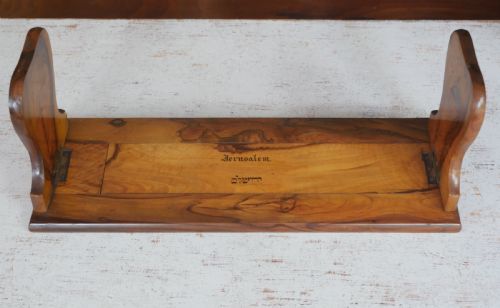


Carved Wooden Desktop Accessory
These carved wooden desktop accessories organise working spaces with the character of Victorian and Edwardian studies.
Carved Wooden Desktop Accessory
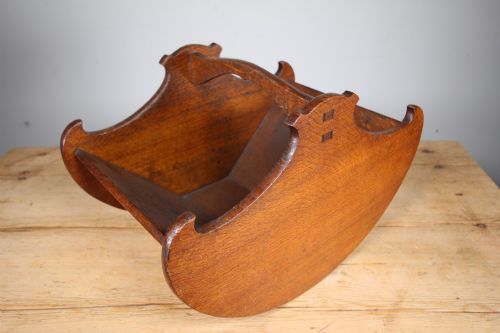
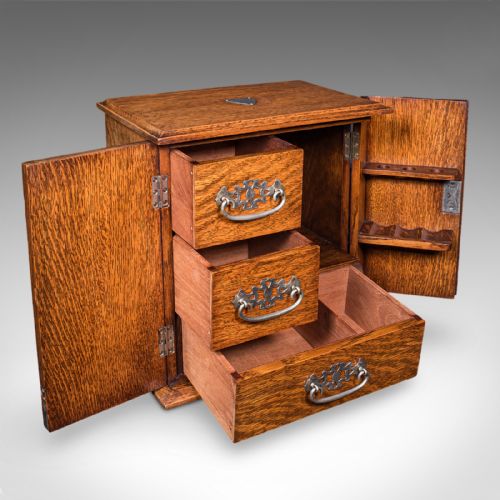
A carved wooden desktop accessory brings functional design to the writing table, taking the form of book slides, inkstands, letter racks, and smoking cabinets. These pieces keep working surfaces orderly while displaying the decorative tastes of the nineteenth and early twentieth centuries.
Most examples found here date from the Victorian and Edwardian periods, stretching from eighteen eighty to nineteen twenty. The selection ranges from English oak and pine items to Black Forest carvings and Anglo-Indian teak work.
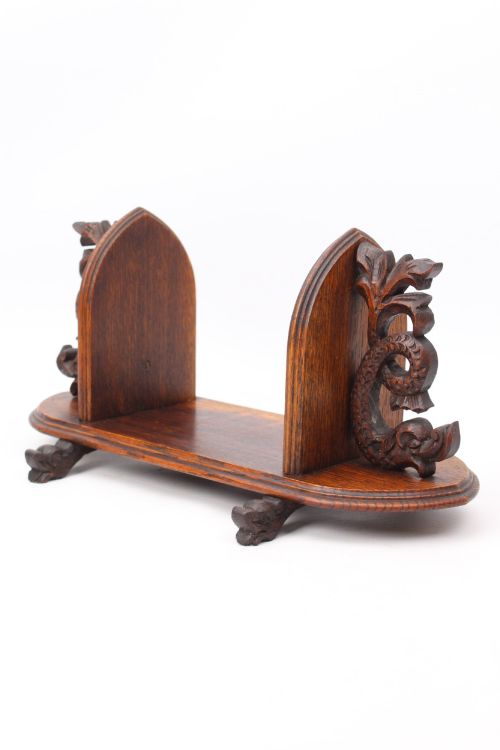
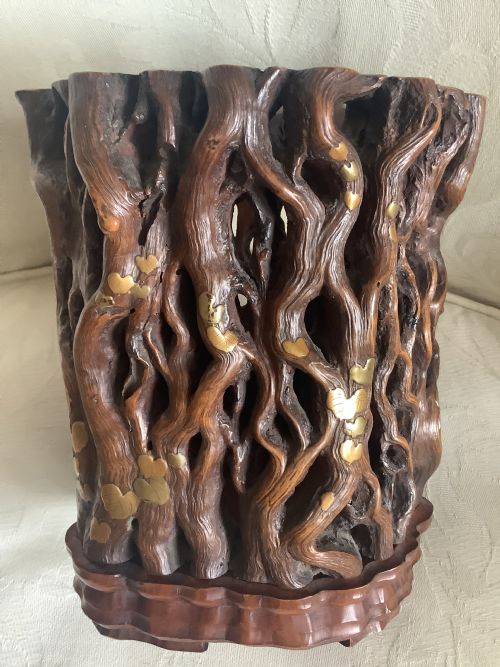
Extending book slides and brush pots dominate the forms available, often incorporating brass or glass elements. Buyers encounter everything from utilitarian desk tidies to elaborate carved animal studies.
How they were made
Makers utilised a variety of regional timbers, predominantly oak, pine, and mahogany, alongside exotic woods such as olive wood and teak. These materials were shaped using traditional hand-carving techniques, resulting in detailed foliage, animals, and architectural motifs.
Metal hinges, brass mounts, and glass inkwells were integrated into the wooden structures to serve specific desktop functions. Ebonising and staining techniques were frequently applied to alter the appearance of cheaper woods to resemble more costly materials.
Periods represented span from the Victorian era through the Edwardian period and into nineteen twenty.
What varies in quality
The distinction between ordinary and superior pieces lies in the depth and crispness of the carving. Items executed with sharp, undercut details display a higher level of artisanal skill than those with shallow, mechanical incision.
Construction methods also set pieces apart, particularly in extending mechanisms for book slides and the dovetailing of drawers. Original glass inserts, matching brass hardware, and intact maker labels elevate the integrity of a desk accessory.
Arthur Simpson
The Carved Wooden Desktop Accessory Glossary
- Book slide
- An adjustable rack designed to hold volumes upright on a desk or table. Many Victorian examples feature expanding scissor actions.
- Inkstand
- A tray or stand holding one or more inkwells, often accompanied by pen recesses. They frequently include pen wipes or stamp compartments.
- Black Forest
- A style of wood carving originating in Switzerland and Germany, noted for realistic representations of bears and foliage. The work typically employs limewood or walnut.
- Ebonised wood
- Timber treated with a dark finish to imitate ebony. This treatment gained popularity during the nineteenth century for decorative furniture and accessories.
- Desk tidy
- A compartmentalised tray or rack for sorting letters, papers, and writing implements. These objects sat upon the surface of a gentleman's or scholar's desk.
Carved Wooden Desktop Accessory: Frequently Asked Questions
How do I date a wooden desk accessory?
Dating relies on stylistic clues, timber choice, and construction methods. Pieces from the Victorian era often feature heavy Gothic or naturalistic carving, whilst Edwardian examples can display lighter Arts and Crafts influences.
Hardware such as brass hinges and the presence of original glass components also help establish the period. Maker labels, where present, provide definitive chronological anchors.
What is an extending book slide?
An extending book slide is a desktop rack with a base that expands or contracts to accommodate varying quantities of volumes. The design allows the ends to remain upright as the length adjusts.
Victorian versions frequently incorporated accordions or sliding wooden mechanisms to achieve this movement smoothly.
How should I care for carved wood?
Carved wooden items require stable humidity and protection from direct sunlight to prevent timber from splitting or warping. Dusting with a soft, dry cloth maintains the surface without the need for heavy polishes.
Applying wax sparingly preserves the original finish and enhances the grain of hardwoods like oak and olive wood.
What defines Black Forest carvings?
Black Forest carvings are characterised by realistic animal forms, particularly bears, integrated into functional objects like inkstands and humidors. The carving style originated in central Europe during the nineteenth century.
Artists used local woods to create deeply textured fur and naturalistic settings for these desk items.