
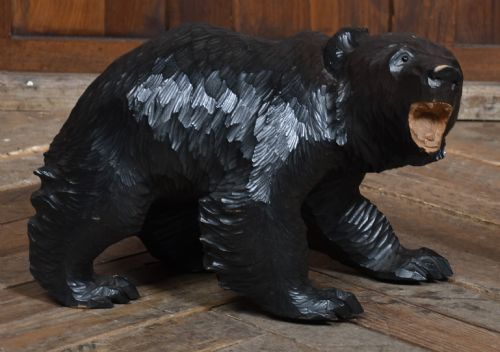


Wooden Bear Carving
When you search for a wooden bear carving, you meet animal figures spanning utility and display, rooted in European and Asian folk traditions.
Wooden Bear Carving
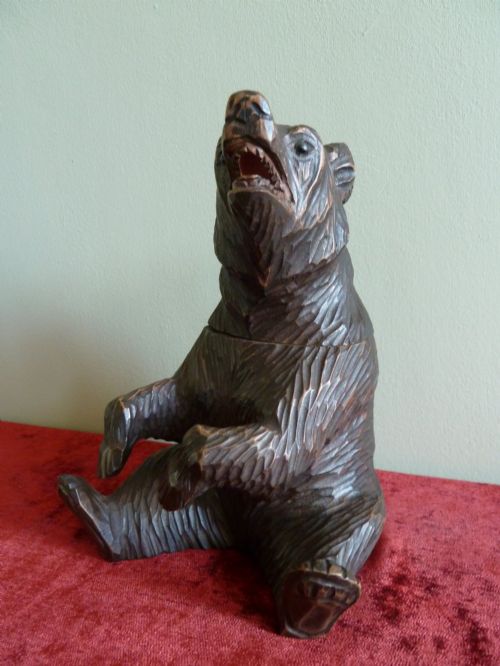
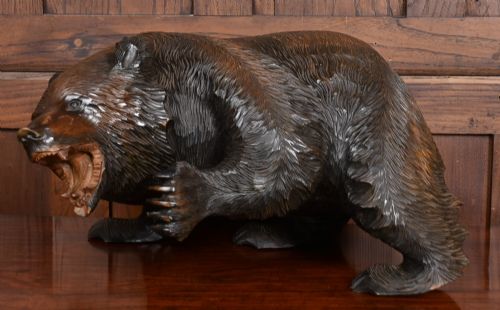
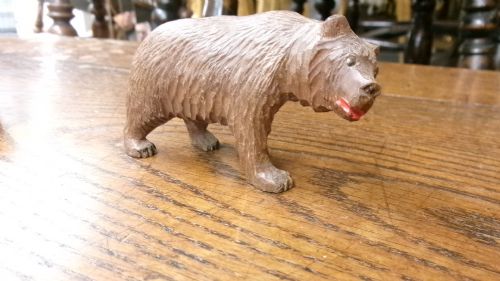
A wooden bear carving encompasses both functional household objects and pure display pieces, originating primarily from the nineteenth and early twentieth centuries. The selection on this page relies heavily on the European Black Forest tradition and Japanese folk art, manifesting as everything from small desk accessories to large furniture items.
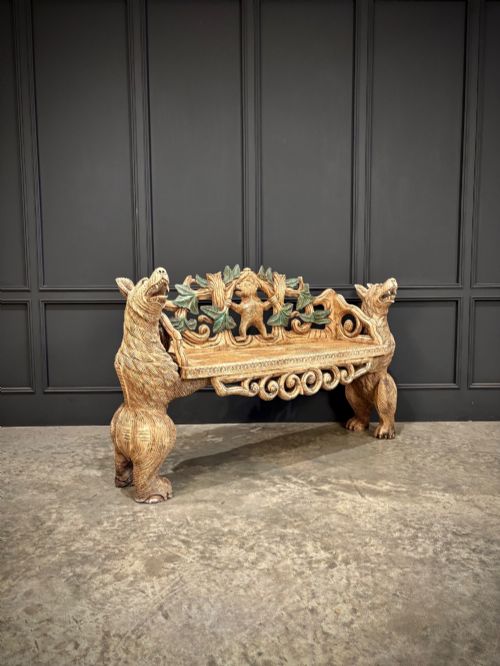
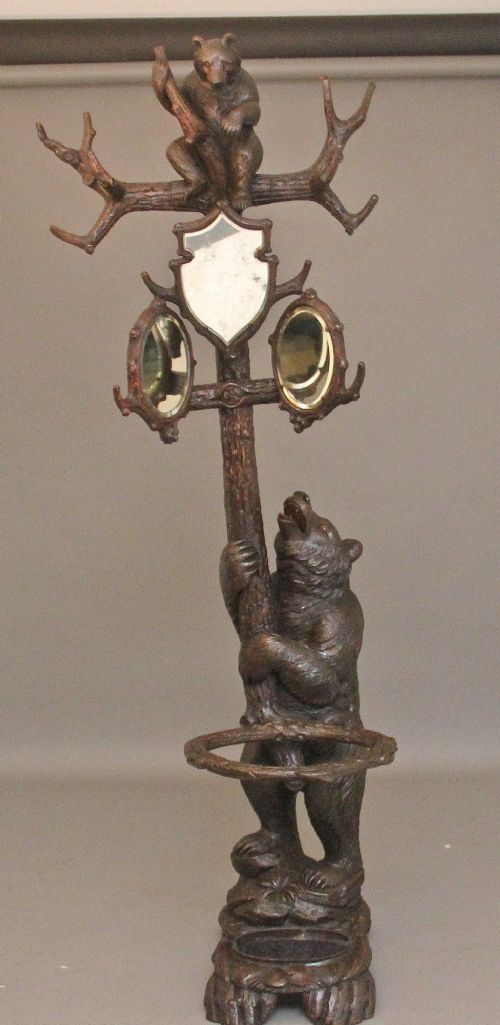
You will encounter bears configured as hall stands, benches, tobacco holders, table lamps, bookends, and inkwells alongside standalone sculptures. Many of these date from the Victorian and Edwardian eras, reflecting a sustained domestic appetite for animal carvings.
The objects bridge practical utility and imaginative novelty, utilising the bear's form to hold umbrellas, illuminate rooms, or contain matches and tobacco. These dual-purpose pieces dominate the available selection, though straightforward sculptural figures and miniature groups also appear.
How They Were Made
Carvers utilised regional timbers, predominantly linden wood, walnut, hardwood, and general carved wood, selected for their responsiveness to detailed chisel work. Linden wood offered a fine grain suited to capturing fur texture and facial expressions without splitting.
Makers integrated secondary components such as glass or metal for eyes, hinges, and structural brackets on functional items like inkstands and hall stands. These mixed-media elements served both decorative and structural purposes in pieces subjected to daily handling.
Listings feature items spanning the nineteenth century through the Edwardian period, utilising linden wood, walnut, and mixed metals.
What Varies in Quality
The success of a piece depends upon the depth of the carving and the fidelity of the anatomy, separating lifelike or characterful depictions from stiff, generic output. Master carvers captured tension in the limbs and naturalistic weight in the torso.
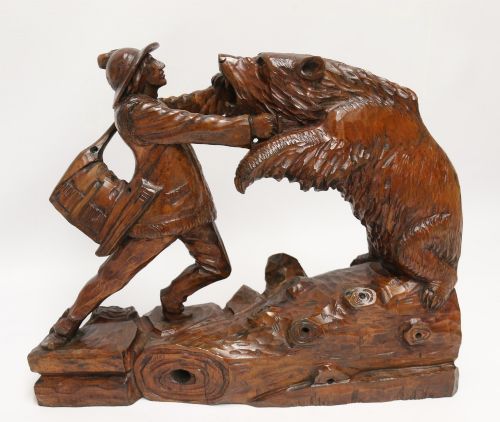
Scale and complexity dictate the upper tier of the range, where monumental hall stands or elaborate figure groups demonstrate greater technical ambition than standard tabletop novelties or simple bookends.
The Wooden Bear Carving Glossary
- Black Forest
- A regional style of wood carving originating in Central Europe, known for naturalistic animal subjects and furniture incorporating bears. Pieces often utilised local linden wood and dark stains.
- Kibori Kuma
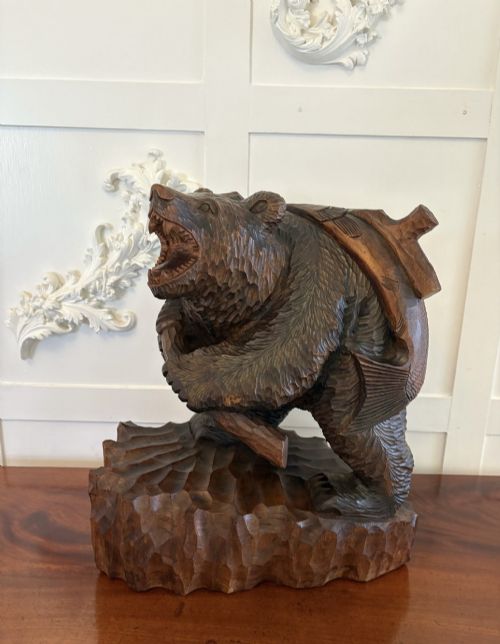
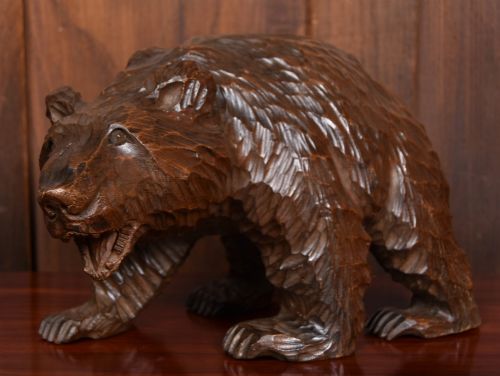
- A traditional style of Japanese wood-carved bear originating from Hokkaido, often characterised by faceted knife cuts or realistic fur rendering. These carvings frequently depict bears holding fish.
- Linden wood
- A pale, fine-grained timber favoured by carvers for its consistent density and lack of prominent grain interference. It allowed for intricate undercutting and detailed facial work.
- Humidor
- A specialised box or container designed to keep tobacco moist, frequently rendered in the form of a carved bear in nineteenth-century workshops. These objects combined practical airtight storage with novelty display.
- Hall stand
- A tall piece of hallway furniture integrating umbrella racks, coat hooks, and occasionally a carved bear figure or seat. They formed substantial statements in Victorian and Edwardian entrance halls.
Wooden Bear Carving: Frequently Asked Questions
What is a Kibori Kuma?
Kibori Kuma refers to traditional wooden bear carvings originating from the Hokkaido region of Japan. These pieces often feature faceted cuts and typically show the bear carrying a fish.
They represent a distinct regional craft tradition separate from European woodcarving styles while sharing a similar period of popularity.
How were bear hall stands used?
Hall stands served as functional entryway furniture designed to hold walking sticks, umbrellas, and coats. The carved bear acted as both a decorative support and a thematic anchor for the piece.
Owners relied on them daily upon entering the home, combining utility with domestic display.
How do I date a carving?
Dating relies on stylistic markers, construction methods, and period indicators associated with Victorian and Edwardian craftsmanship. Objects from the nineteenth century often show distinct patination and tool marks.
Documentation, historical formats like tobacco holders, and regional design traits help narrow the period of origin.