




Dark Wood Bear
A dark wood bear brings woodland character indoors through carved linden wood, hardwood, and detailed folk art.
Dark Wood Bear
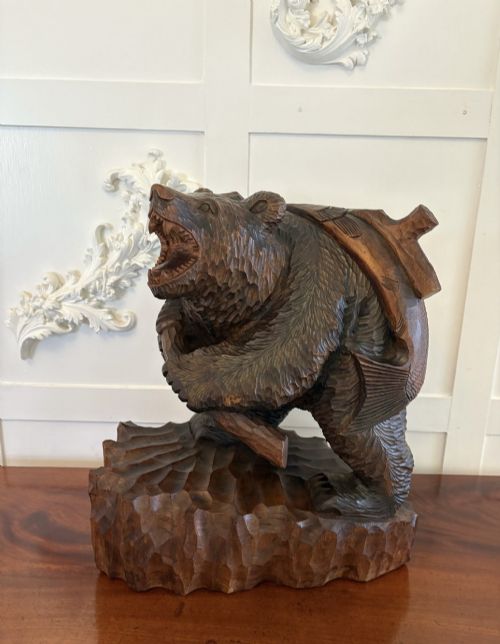
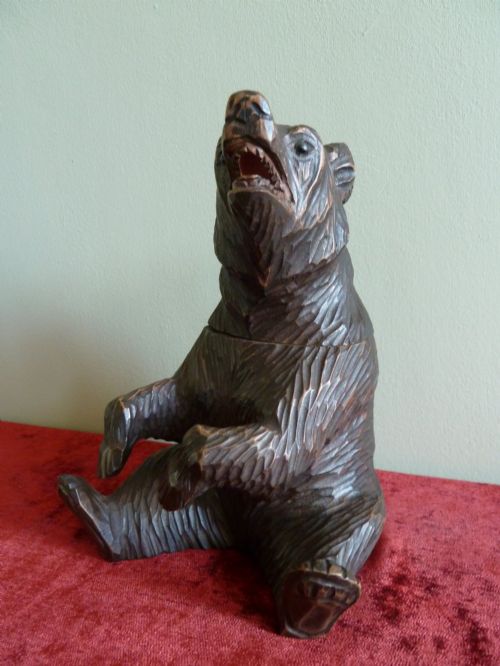
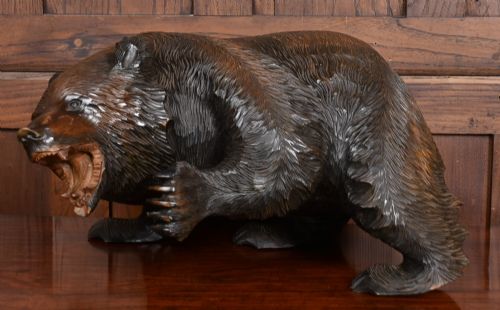
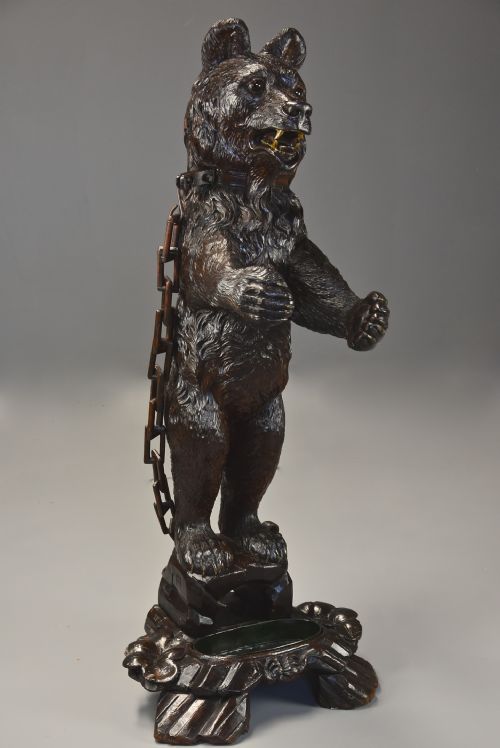
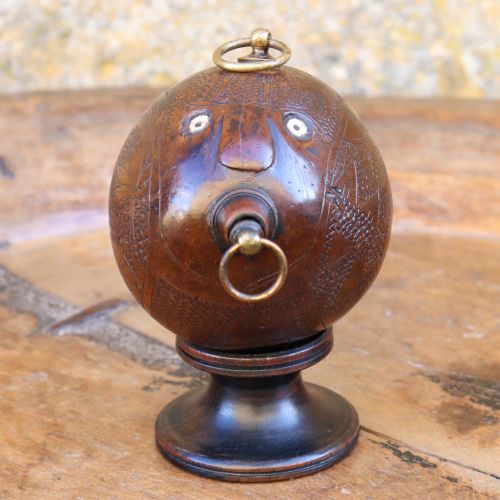
A dark wood bear encompasses carved sculptures, hall stands, umbrella stands, tobacco jars, and table lamps originating from the nineteenth and early twentieth centuries. These pieces emerge primarily from European Black Forest workshops and Japanese folk art traditions, capturing the animal in realistic or playful poses.
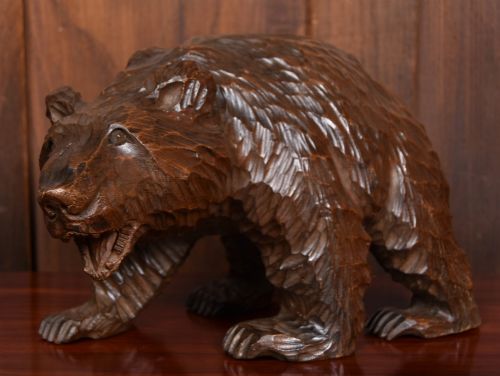
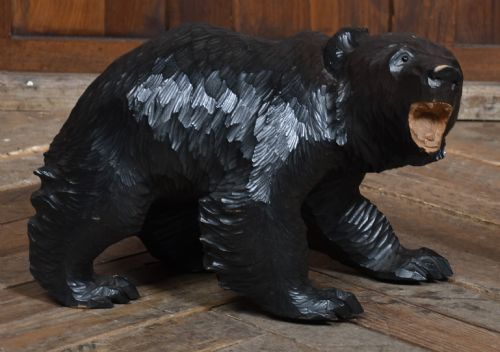
The version most commonly met on this page is the Black Forest carving, often rendered in linden wood and functioning as practical hall furniture, small containers, or lighting. Alongside these, Japanese Kibori Kuma carvings appear frequently, showing distinct faceted cuts and tactile patinas.
Collectors encounter figures ranging from miniature tabletop condiments and inkwells to large exhibition hall stands and umbrella holders. Each piece combines practical utility with animalier sculpture, reflecting nineteenth-century domestic tastes for rustic decorative arts.
What varies in quality
The fidelity of the anatomy and the depth of the carving separate standard workshop pieces from exhibition-grade works. Master carvers captured tension in the muscles and expression in the glass eyes, whereas simpler items relied on repetitive texturing.
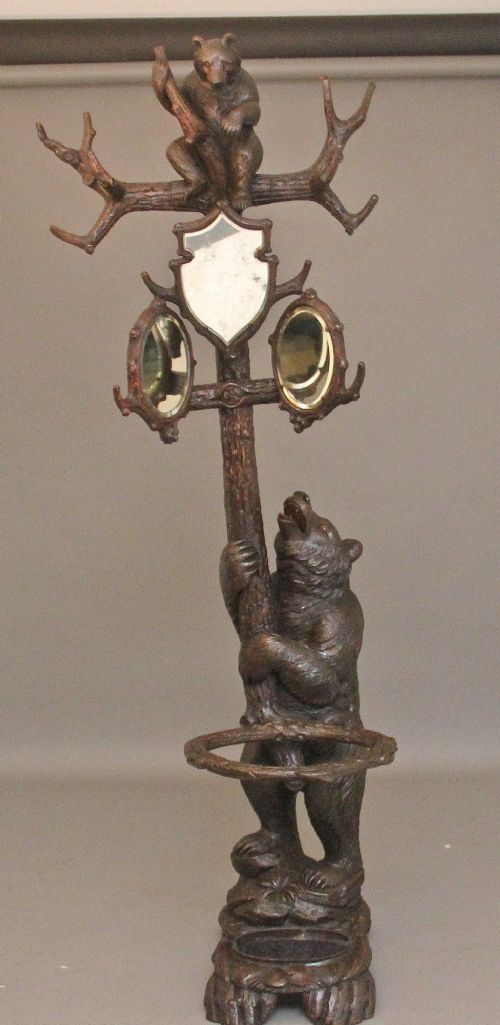
Proportion and scale dictate the success of functional forms, particularly when a bear supports a heavy oak tree hall stand or holds a stick-stand basin. The preservation of original surface finishes and patinas without excessive restoration maintains the integrity of the object.
One tiny nineteenth-century set crams fifteen miniature carved bears into a single gathering.
The Dark Wood Bear Glossary
- Black Forest
- A style of wood carving originating from the mountain region overlapping Switzerland and Germany. It is recognised for realistically rendered fauna and flora, particularly bears.
- Kibori Kuma
- A traditional style of Japanese wooden bear carving originating from Hokkaido. These pieces often display visible, faceted chisel marks.
- Linden wood
- A pale, fine-grained timber favoured by European carvers for its softness and lack of splintering. It accepts dark stains readily.
- Humidor
- A specialised box or jar designed to keep tobacco moist. In these listings, they are frequently carved in the form of seated brown bears.
- Animalier
- A nineteenth-century artistic genre dedicated to the realistic portrayal of animals. It spans both bronze casting and wood carving.
Dark Wood Bear: Frequently Asked Questions
What are Black Forest bears made from?
Most carved bears from this tradition utilise linden wood, chosen for its cooperative grain and suitability for detailed sculptural work. Makers often applied dark stains to create the deep brown coloration characteristic of the style.
Secondary materials occasionally include glass for inset eyes and brass or metal for fitted hardware on tobacco jars, inkwells, and umbrella stands.
How do I care for a wooden bear carving?
Keep wooden sculptures away from direct heat sources and strong sunlight to prevent the timber from drying out and splitting over time. Dust gently with a soft, dry cloth rather than using liquid polishes.
Application of a microcrystalline wax can help nourish the antique surface periodically, provided the original finish is stable and sound.
Are Japanese and European bear carvings different?
Japanese carvings, often known as Kibori Kuma, typically feature strong, faceted chisel cuts that leave a highly textured surface across the timber. European Black Forest pieces generally aim for smooth, naturalistic fur representation and anatomical realism.
Both traditions flourished during the nineteenth century, producing decorative and functional objects ranging from small desk accessories to large hall furniture.
How were bear hall stands used?
Hall stands served as functional entranceway furniture where visitors could leave walking sticks, umbrellas, and coats. The carved bear figure often held a branch or stood beside a hollowed log basin designed to catch rainwater.
These substantial pieces combined practical domestic utility with the dramatic aesthetic of nineteenth-century animalier art.