


Carved Timber Bear
These carved timber bear sculptures and functional items bring character into a room through regional skill and varied forms.
Carved Timber Bear
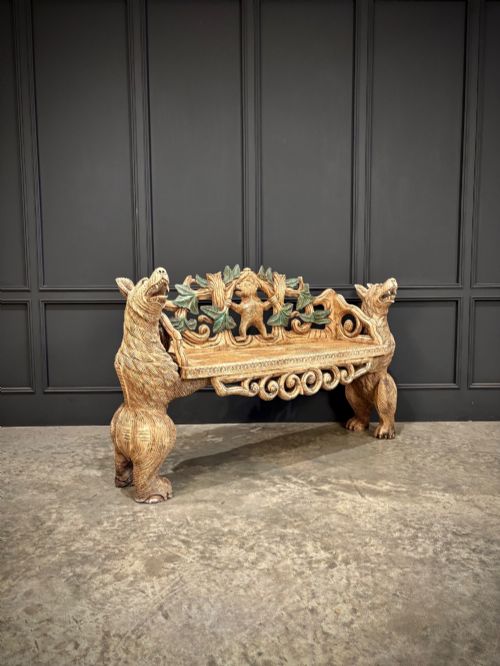
When you search for carved timber bear, you encounter a range of sculptural and practical objects spanning the nineteenth and early twentieth centuries. These pieces encompass everything from miniature table ornaments and inkwells to large hall stands and benches.
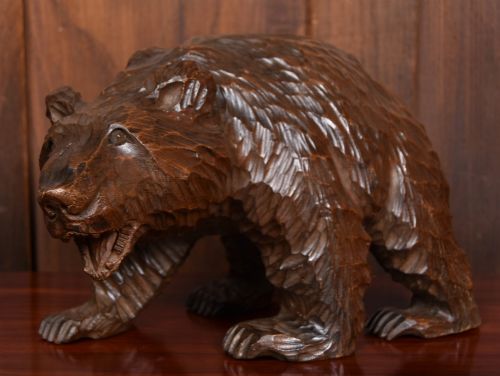
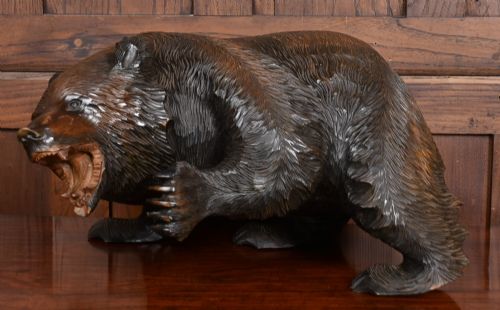
The selection on this page relies heavily on Black Forest traditions alongside Japanese folk art styles. European workshops produced walnut and linden wood figures, while Japanese carvers created traditional Kibori Kuma sculptures.
Forms vary significantly in scale, ranging from individual animal figures to practical furniture like hall seats and benches. Some items incorporate metal elements or stud eyes, while others remain purely carved wood.
How they were made
Carvers shaped these figures from various woods, most notably linden wood and walnut, selected for their grain and workability. Artisans utilised hand-carving techniques to render fur textures, facial expressions, and naturalistic postures.
Certain items feature surface treatments including paint, stain, or polished natural finishes to highlight the carved details. Metal components appear on specific pieces such as lamps and inkwells, while stud eyes provide added realism to smaller sculptures.
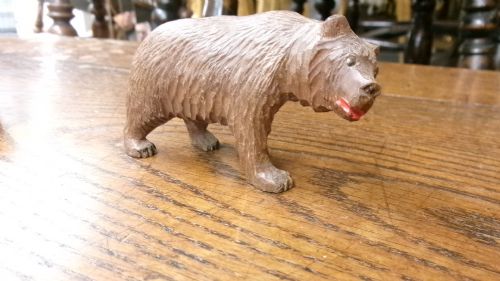
One miniature bear keeps watch with tiny stud eyes.
What varies in quality
The distinction between standard examples and exceptional items lies in the anatomical precision and depth of the carving. Master carvers achieved lifelike movement and intricate textural detail in the fur, whereas lesser pieces display simpler, blockier execution.
Scale and complexity also dictate the character of the object, with large furniture pieces and multi-figure groups demonstrating greater ambition than miniature figurines. The choice of timber, from ordinary wood to fine walnut and linden wood, further distinguishes individual pieces.
The Carved Timber Bear Glossary
- Black Forest
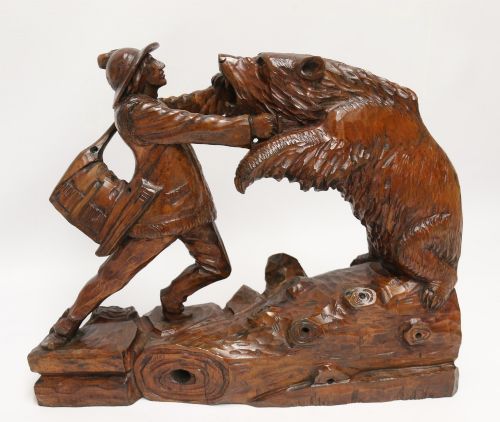
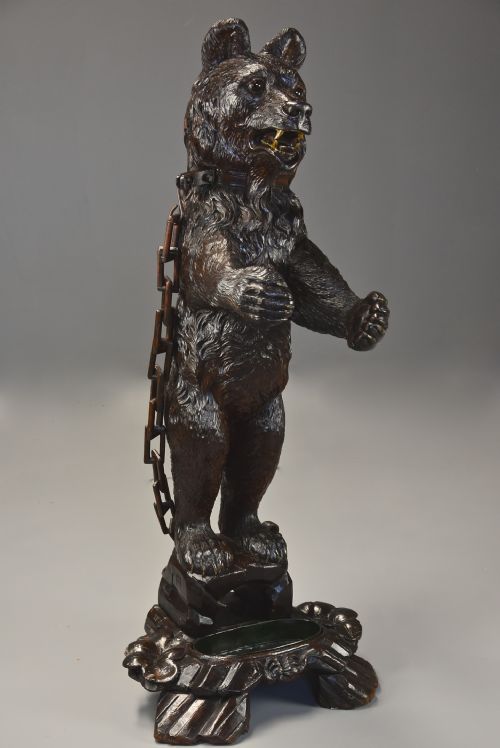
- A style of wood carving originating from the European mountain region, famous for naturalistic animal figures and hall furniture. These pieces frequently depict bears engaged in human activities or resting on logs.
- Kibori Kuma
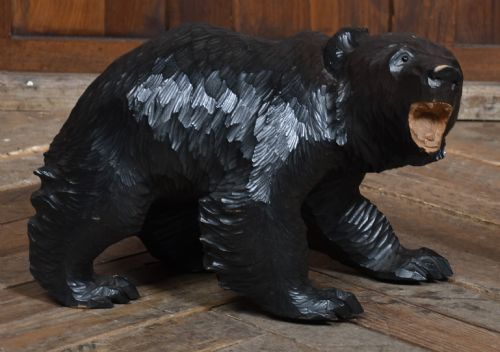
- A traditional style of Japanese wooden bear carving originating from Hokkaido. These hand-carved pieces often feature distinct texturing to represent the animal's coat.
- Linden Wood
- A pale, fine-grained timber frequently utilised by European carvers for detailed sculptural work. Its softness allows for intricate tool marks without splitting.
- Hall Stand
- A large piece of entrance hall furniture designed to hold coats, umbrellas, and hats. In this category, bears often form the structural supports or decorative figures of the stand.
- Figure Group
- A composition consisting of multiple carved subjects interacting within a single scene. These sculptures display greater narrative complexity than single-figure items.
Carved Timber Bear: Frequently Asked Questions
What periods do these carved bears come from?
The pieces span the nineteenth and early twentieth centuries, including Victorian, Edwardian, and Georgian examples.
Craftsmen produced these sculptures across distinct eras, with many pieces originating from the late nineteenth century and the 1920s.
How were these carved bear objects used?
Many items served practical domestic functions alongside their decorative appeal, appearing as hall stands, benches, and chair seats.
Smaller objects functioned as bookends, table lamps, and inkwells, integrating animal carvings into everyday items.
What types of wood are commonly found?
Makers utilised various timbers, with linden wood and walnut appearing frequently across European workshops.
General hardwoods and standard wood types also form the basis of many traditional carvings.
How do Black Forest and Japanese pieces differ?
Black Forest items often take the form of functional furniture or detailed figures holding objects like logs and hearts. Japanese Kibori Kuma carvings focus specifically on the form of the bear in regional folk art styles.
Both traditions employ hand-carving techniques but originate from distinct cultural backgrounds.
Can I find matching sets or pairs?
Some listings include pairs of items, such as bookends, alongside larger sets of miniature carvings.
Individual sculptures remain common, but multi-piece groupings occasionally appear.