
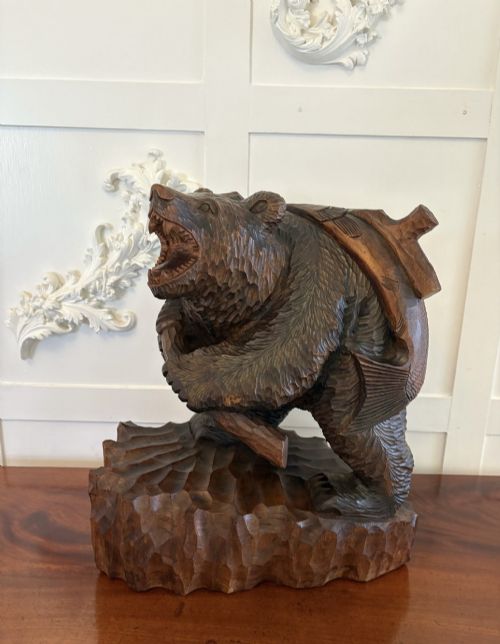
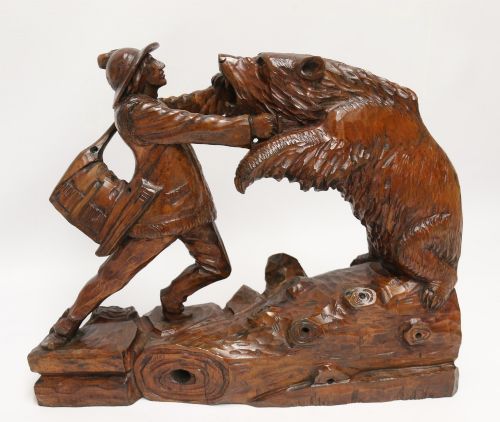
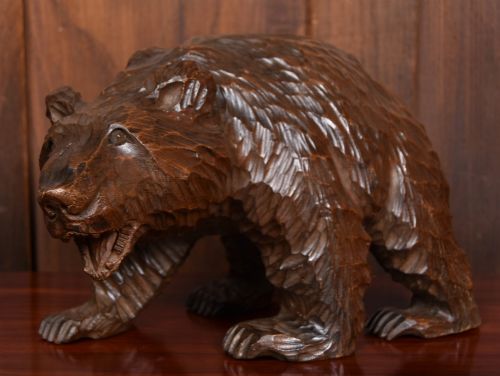
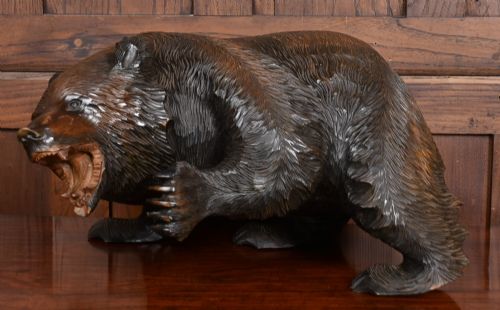
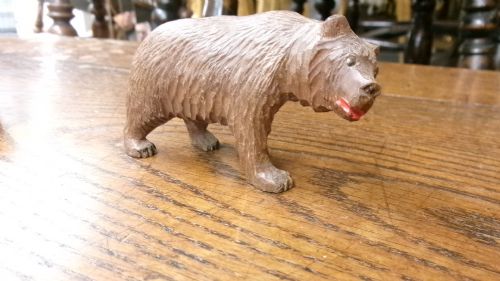


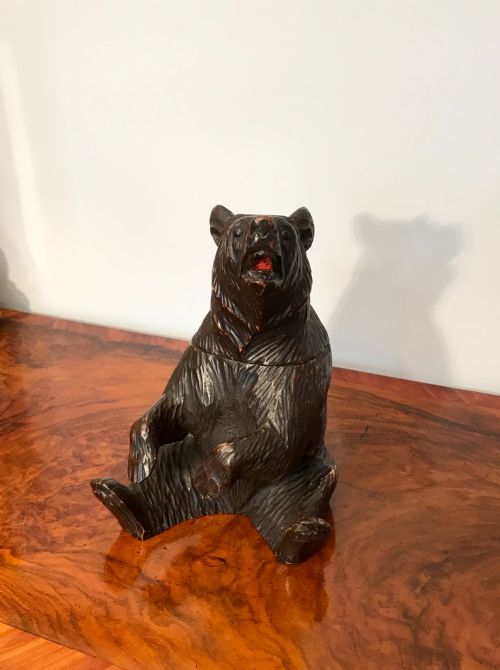
Antique Wooden Bear Figure
An antique wooden bear figure brings rustic charm into a room, offering character through masterly carving from the nineteenth century.
Antique Wooden Bear Figure
An antique wooden bear figure is a carved sculpture representing bears, often associated with Black Forest and Swiss folk art traditions from the nineteenth century. These pieces range from solitary standing animals to complex figure groups, miniature carvings and functional objects such as inkstands and condiment sets.
Buyers are most likely to meet pieces carved from linden wood and walnut, spanning periods from the Georgian era through Victorian times and the Edwardian period. The forms vary from large decorative sculptures down to sets of fifteen miniature bears.
Many examples reveal regional stylistic influences, including Japanese folk art interpretations alongside traditional European woodland carving. Such diversity means collectors encounter both fierce naturalistic poses and whimsical novelty subjects.
Materials and construction methods
Carvers utilised soft and hard timbers, most notably linden wood, lindenwood and walnut, selected for their grain and response to hand tools. Artisans shaped these blocks using chisels and gouges to define thick fur textures and anatomical details.
One set packs fifteen miniature bears into a single collection, proving that grand presence needs very little space.
Assessing quality in carved bears
Quality rests on the depth of the carving and the vitality of the posture, distinguishing master carvers from commercial workshops. Expressive facial detailing and convincing muscle tension elevate a sculpture above stiff or generic production pieces.
The choice of material and condition of the timber grain dictate longevity, with tight-grained linden wood holding crisp edges better than softer alternatives. Integrated functional elements, such as inkwells within a carved base, demand higher precision in construction.
The Antique Wooden Bear Figure Glossary
- Black Forest
- A regional style of wood carving originating in the mountainous areas of central Europe. Pieces typically depict animals and foliage with rustic realism.
- Linden wood
- A pale timber commonly used by carvers for its fine, even grain. It permits intricate detail without splitting.
- Inkstand
- A desk accessory holding inkwells and pen trays, sometimes incorporated into figural animal carvings. These served functional roles in period studies.
- Novelty figure
- An object designed with a humorous or unusual twist, such as bears engaged in human activities. These pieces were popular conversation items in Victorian interiors.
- Figure group
- A composition featuring multiple carved subjects interacting within a single scene. They require greater skill to balance proportions and spatial harmony.
Antique Wooden Bear Figure: Frequently Asked Questions
What periods do these bear carvings date from?
The available evidence shows these figures span the Georgian era, Victorian period, Edwardian period and general nineteenth century dates. Pieces from around 1880 to 1900 appear frequently among the listings.
Craftsmen produced them across several decades, resulting in distinct regional characteristics and stylistic variations depending on the workshop origin.
How were these wooden bear carvings used historically?
Many acted purely as decorative sculptures and mantelpiece ornaments in period homes. Others served practical domestic functions, including desk inkstands and table condiment sets.
Smaller examples formed part of miniature sets or novelty pieces designed to amuse guests. Their dual nature as art and utility made them popular household items.
What woods were commonly used by carvers?
Carvers relied primarily on linden wood, lindenwood and walnut for their projects. These timbers provided the right balance of workability and durability for detailed animal fur.
Additional pieces simply note general hardwood or carved wood without specifying the exact species. Surface treatments typically involved wax or stain to enrich the timber.
How do Black Forest and Swiss styles differ?
Both traditions share a focus on rustic animal subjects, particularly bears rendered in linden wood and walnut. Black Forest carvings often emphasise dramatic poses and integration into furniture or desk accessories.
Swiss folk art shares similar woodland motifs and hand-carved execution techniques from the same nineteenth-century period. Both categories value deep texture and anatomical realism.
How can I care for an antique wooden bear figure?
Keep the sculpture away from direct sunlight and sudden temperature shifts to prevent the wood from drying out or splitting. Gentle dusting with a soft, dry cloth is sufficient for routine maintenance.
Avoid using modern liquid polishes or moisture, which can degrade historic wax finishes. Maintaining stable room humidity preserves the integrity of the carved surface.