


Swiss Table Clock
These Swiss table clock examples range from ornate Black Forest carved wood to mid-century gilt brass timepieces designed for desks and mantels.
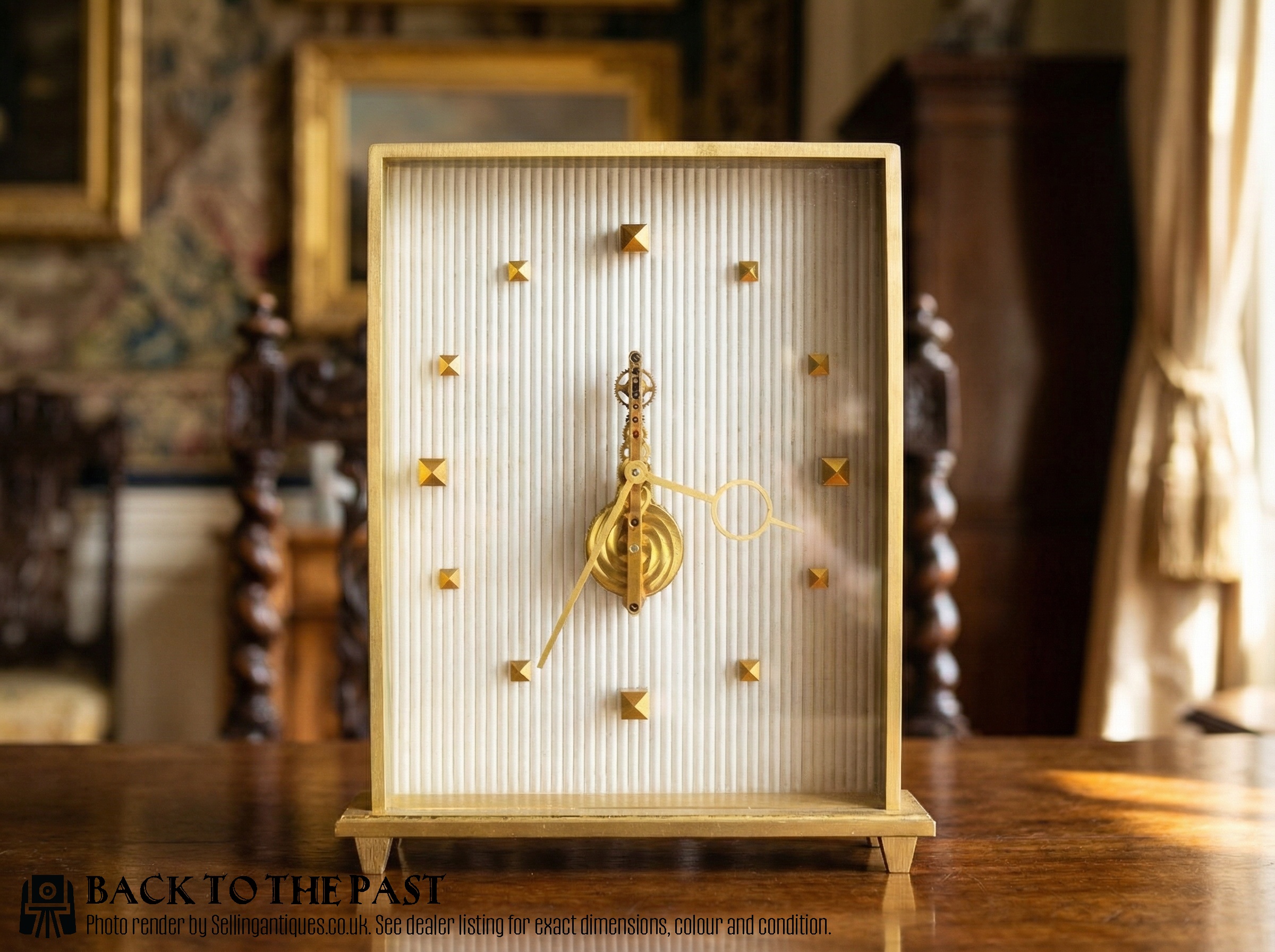
Swiss Table Clock
When you search for a swiss table clock, you encounter domestic horology spanning the nineteenth century through the mid-twentieth century. The selection encompasses desk clocks, carriage clocks, mantel clocks, and specialised perpetual motion timepieces.
Black Forest examples reflect nineteenth-century carved linden wood traditions, often styled in French Rococo or regional motifs. Later twentieth-century items lean towards Art Deco chromium, mid-century luxury, and minimalist skeleton timepieces.
Most pieces serve as portable or desktop timekeepers, housing movements produced by established Swiss workshops and luxury retailers. Buyers find both travel-sized alarm clocks and substantial mantel pieces sharing this geographic origin.
How They Were Made
Casings utilise a broad mix of traditional and industrial materials, combining carved wood, glass, leather, and cast brass. Gilt brass, rhodium plating, and chrome-plated metals dominate the twentieth-century pieces.
Enamel work, particularly champlevé, decorates Edwardian strut easel clocks, while woodcarvers utilised linden wood and walnut for Black Forest models. Movements incorporate jewelled pivots, mechanical alarm systems, and complex perpetual motion torsion pendulums.
Some timepieces even let you watch the air do the winding.
What Varies In Quality
The standard of a swiss table clock rests on the precision of its movement, the complexity of its mechanism, and the integrity of its exterior case. Pieces with higher jewel counts and refined escapements represent elevated watchmaking capabilities.
Material execution dictates much of the physical distinction, separating standard brass housings from heavily rhodium-plated finishes or hand-carved linden wood casings. Complete original components, such as leather travel cases and glass bell-jars, elevate the integrity of a piece.
Bergen And Co·Harrods Of London·Imhof·Jaeger LeCoultre·Van Cleef And Arpels·Asprey·Luxor
The Swiss Table Clock Glossary
- Atmos clock
- A mechanical timepiece created by Jaeger-LeCoultre that runs using atmospheric pressure changes to wind the mainspring. This system removes the need for manual winding.
- Champlevé
- An enamelling technique where troughs are dug into a metal surface and filled with vitreous enamel powder before firing. The resulting design sits flush with the surrounding metal borders.
- Strut clock
- A timepiece supported by a hinged prop or stand attached to the rear of the case. This format allows the dial to sit upright on desks and tables.
- Skeleton timepiece
- A clock designed with transparent or open plates that expose the gear train and escapement to view. This layout reveals the mechanical operation from the sides and dial.
- Carriage clock
- A small spring-driven timekeeper originally built for travelling in horse-drawn vehicles. They typically feature a glass-panelled brass case and a folding handle on top.
Swiss Table Clock: Frequently Asked Questions
How do Atmos clocks work?
Atmos clocks operate by sensing temperature fluctuations in the surrounding air. A sealed chamber expands and contracts with these shifts, winding the mainspring continuously without human intervention.
This mechanism allows the timepiece to run indefinitely under normal indoor conditions. It represents a significant departure from traditional manual or battery-powered clocks.
Where were Black Forest clocks made?
Black Forest clocks originated in a mountainous region overlapping Germany and Switzerland. Local artisans specialised in hand-carving linden wood and walnut cases featuring foliage and animal motifs.
These pieces often housed mechanical movements intended for mantel or wall placement. The regional style remained popular throughout the nineteenth century.
What is a skeleton clock?
A skeleton clock exposes its internal gears and escapement by omitting a traditional solid dial plate. Viewers can observe the movement of the wheels and springs directly from the front or sides.
Swiss makers produced inline and circular variations of this layout during the mid-twentieth century. The design highlights the mechanical complexity of the inner workings.
How do I date a desk clock?
Dating a desk clock involves examining the materials, case styling, and movement signatures. Art Deco pieces utilise chromium plating and geometric skyscraper forms typical of the interwar period, whereas mid-century examples feature minimalist dials and rhodium plating.
Maker signatures and hallmarks stamped on the movement plates or cases provide additional chronological clues. Original boxes and dated papers also confirm the production era.