


Swiss Carved Wood Bear
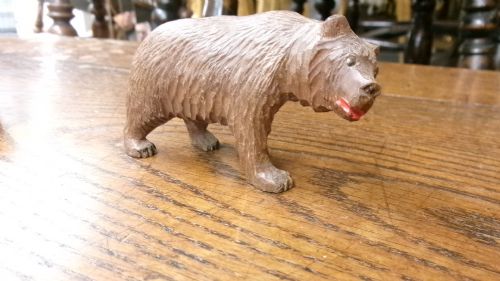
These Swiss carved wood bear items bring robust Black Forest animal sculpture into daily domestic life through utilitarian forms and expressive figures.
Swiss Carved Wood Bear
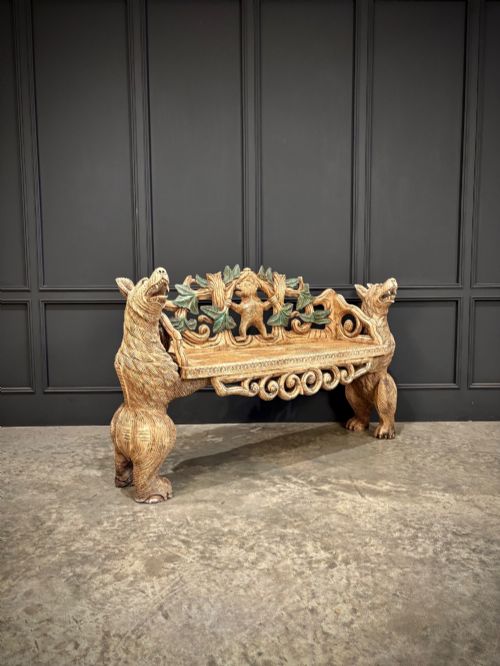
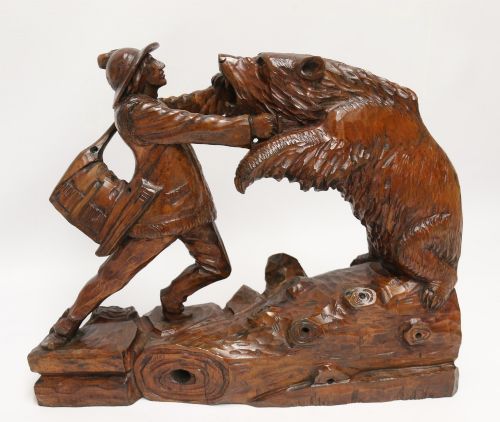
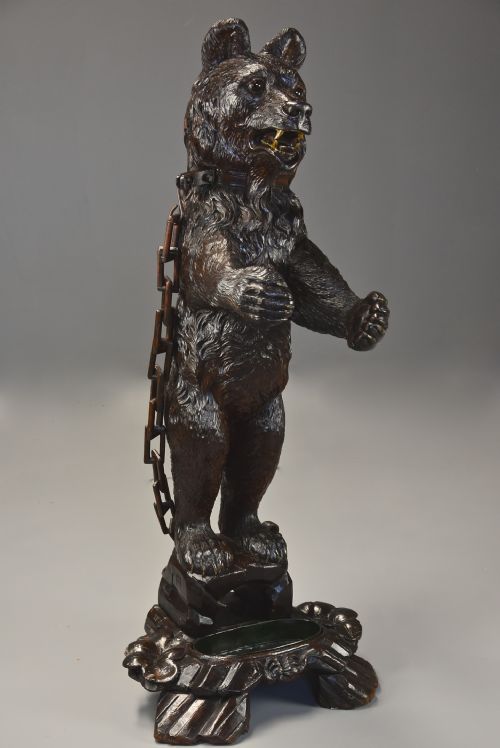
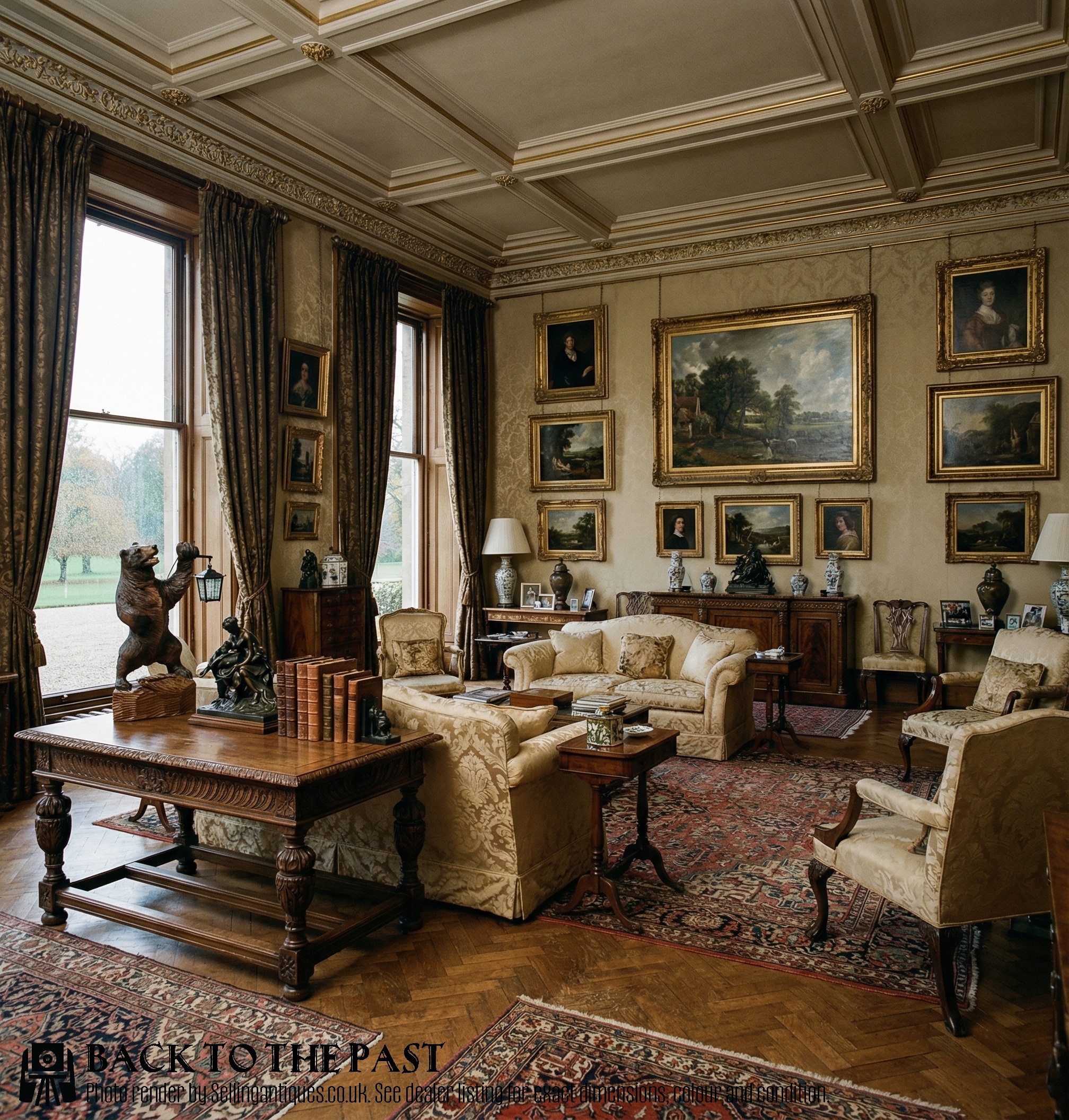
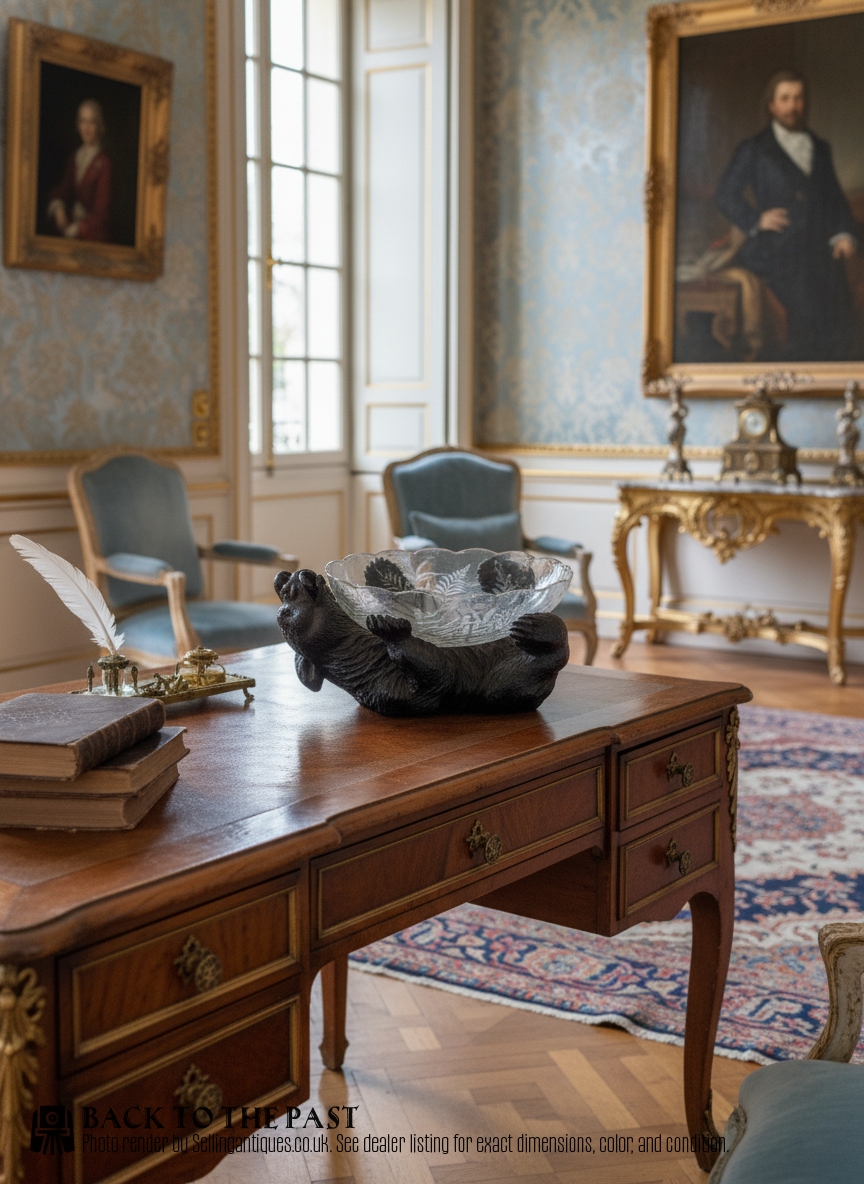
A swiss carved wood bear takes many practical and decorative shapes, spanning large hall stands, umbrella holders, and benches alongside smaller figures, bookends, and inkwells. Most examples belong to the nineteenth century and the early twentieth century, carrying the distinct aesthetic of Black Forest folk art production.
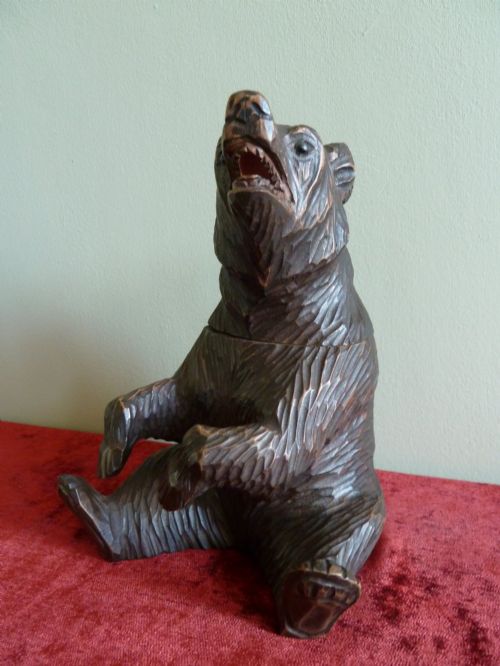
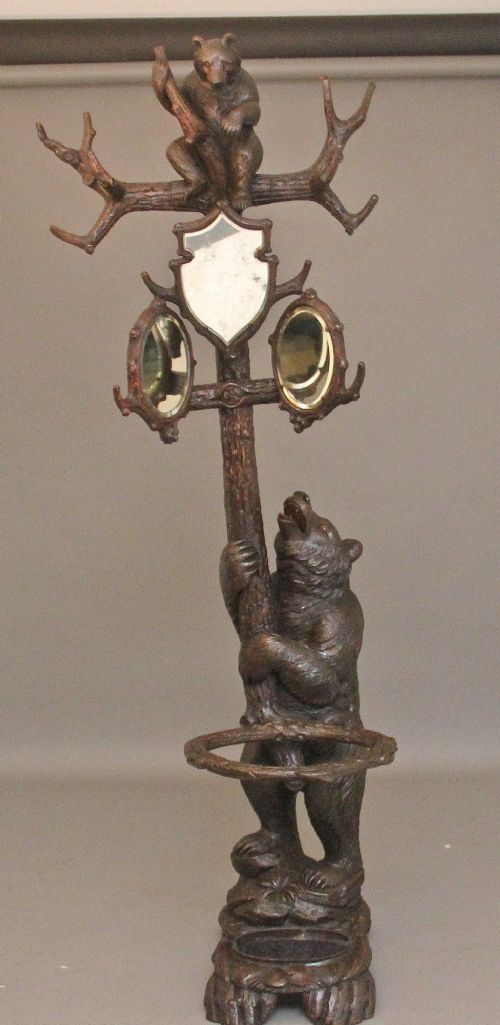
The larger furniture pieces, including stick stands and hall seats, dominate the domestic interior with substantial carved animal forms holding trays or branches. Smaller novelty items, such as tobacco jars, condiment figures, and miniature sets, demonstrate the same detailed animal carving on a domestic tabletop scale.

Materials and carving techniques
Carvers predominantly utilised linden wood, lime wood, and walnut to shape these ursine figures, benefiting from the fine grain of these timbers for intricate fur and facial detailing. Glass frequently provided the material for inset eyes, adding a lifelike glimmer to the finished sculptures.
Metal components appear in structural hardware, inkwell inserts, and functional fixtures attached to the carved wooden bodies. Occasional painted finishes or dark stains heightened the naturalistic appearance of the wood grain across the animal forms.
Swiss Carved Wood Bear Retail Price Guide 2026
Typical asking prices for swiss carved wood bear among the pieces listed under this phrase on Sellingantiques today, from the lower quarter to the upper quarter. They describe what is for sale here now, not the wider market.
Listings feature items spanning the nineteenth century, Edwardian period, and the nineteen-twenties, constructed mainly in linden wood and walnut.
Judging the standard of carving
Scale and ambition also separate categories, as massive hall stands and intricate multi-figure groups demanded far greater technical skill than miniature figures or basic bookends. The integration of functional elements, such as umbrella troughs and seat structures, into the organic shape of a tree or bear distinguishes superior design.
The Swiss Carved Wood Bear Glossary
- Black Forest
- A regional style of nineteenth century wood carving originating from central Europe, known for naturalistic animal and forest motifs. This designation covers everything from large hall furniture to small desk accessories.
- Linden wood
- A pale, fine-grained timber frequently utilised by carvers for its soft texture and steady working properties. It allowed artisans to create deep undercut fur and detailed facial expressions without splintering.
- Hall stand
- A large hallway furniture piece incorporating hooks, trays, and stick holders within a carved bear or tree design. These items served a practical purpose for incoming visitors while displaying sculptural skill.
- Humidor
- A specialised box or jar designed to keep tobacco moist, often carved here as a seated brown bear holding a log or barrel. The lid typically lifts to reveal the storage compartment.
- Stud eyes
- Small glass or metal pins inserted into the carved wooden head to represent the eyes of the animal. They give a bright, reflective focal point to the otherwise matte wooden surface.
Swiss Carved Wood Bear: Frequently Asked Questions
What rooms suit a bear hall stand?
These large furniture pieces function well in spacious entrance halls and corridors where their size and practical umbrella storage can be fully appreciated. They anchor a hallway with distinct historical character.
Positioning them away from direct heat sources protects the timber from drying out and splitting over time. They require adequate floor space to let the sculptural details stand clear of walls.
How are smaller bear carvings used?
Small figures, inkstands, and bookends sit comfortably on desks, mantelpieces, and bookshelves as decorative accents. They bring the traditional aesthetic into rooms without demanding the floor space of larger furniture.
Grouping miniature sets together on a tabletop creates a strong visual display of nineteenth century craftsmanship. They pair well with wooden shelving and traditional study interiors.
How can I tell the period?
Nineteenth century examples generally display deeper hand-carved texturing and heavier timber construction compared to later twentieth century pieces. Structural wear and the specific type of metal hardware also offer clues to the date of manufacture.
Examining the underside and hidden joints reveals tool marks that indicate hand working methods. Stylistic shifts towards simpler forms often point towards the Edwardian era and the nineteen-twenties.
Are these items made of solid wood?
Most pieces are carved from solid blocks of linden, lime, or walnut timber rather than veneered construction. This solid medium allowed artisans to carve deep fur and limbs directly from the main body.
Checking the grain continuity across joints helps confirm the solid nature of the timber. Natural movement and minor shrinkage cracks over the decades further evidence genuine solid wood construction.