





Victorian Novelty Salt Cellar
These Victorian novelty salt cellar designs bring miniature animals, vehicles, and musical instruments to the table in sterling silver, silver plate, and cut glass.

Victorian Novelty Salt Cellar
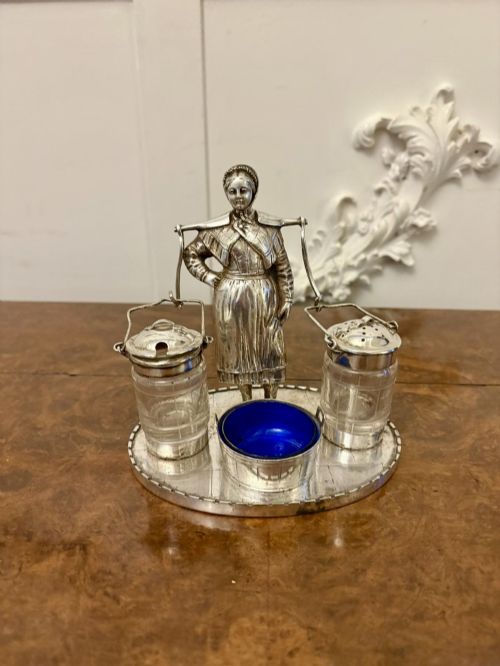
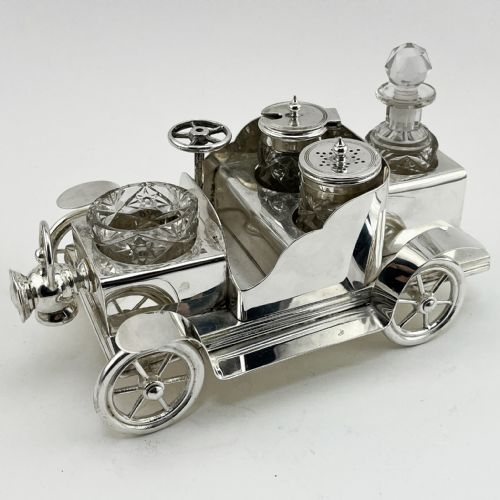
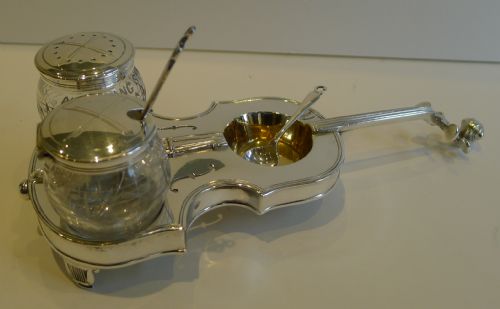
A victorian novelty salt cellar takes the form of animals, carriages, and everyday objects rather than traditional vessels, often appearing as chicks, swans, bears, and vehicles.
Most examples date from the nineteenth century, spanning periods from the eighteen-seventies through the Edwardian era.
These pieces function as salt cellars, condiment sets, and salt and pepper shakers, designed to sit on the dining table as conversation pieces.
Materials and construction methods
Silversmiths shaped sterling silver and silver plate into figurative forms, frequently combining metalwork with cut glass inserts.
Carvers shaped organic materials like ebonised wood to create detailed Black Forest bear condiment figures, while others utilised gilt and silver gilt finishes.
Victorian Novelty Salt Cellar Retail Price Guide 2026
Typical asking prices for victorian novelty salt cellar among the pieces listed under this phrase on Sellingantiques today, from the lower quarter to the upper quarter. They describe what is for sale here now, not the wider market.
Dinners featured miniature violins and double-headed swans holding your salt.
Assessing quality in figurative tableware
Fine craftsmanship shows in the realistic modelling of animal feathers, vehicle wheels, and musical instruments, whereas lower tiers display rigid casting and flat surface detail.
The weight of the silver and the precision of the joints determine the durability of hinged lids and moving parts.
Sampson Mordan·Thomas Johnson·Wilson and Davis
The Victorian Novelty Salt Cellar Glossary
- Cruet set
- A matched group of condiment containers holding salt, pepper, mustard, and vinegar for the dining table.
- Silver gilt
- Silver that has been coated with a thin layer of gold on its surface.
- Black Forest
- A style of wood carving originating in Germany, known for realistic animal figures such as bears.
- Condiment set
- A collection of small vessels designed to hold various table sauces and seasonings.
Victorian Novelty Salt Cellar: Frequently Asked Questions
How were these salt cellars used?
Dinners in the period featured open salt cellars where guests used small spoons to take salt, unlike modern shakers.
Novelty versions sat beside each place setting or at the centre of the table to amuse diners.
What materials are most common?
Silver plate and sterling silver dominate the surviving pieces, often paired with clear cut glass liners.
Wooden carvings and gilt finishes also appear among the animal and figurative designs.
How do I date a piece?
Makers' marks, registration numbers, and hallmarks stamped into the metal provide the most reliable dating evidence.
Stylistic details, such as Victorian aesthetic preferences or Edwardian production methods, also help narrow the decade.
Are replacement glass liners available?
Original glass liners were custom-fitted to each metal frame, making exact replacements difficult to source.
Collectors often search for period glass inserts that match the dimensions of the specific salt cellar.