


Swedish Upholstered Bench
A Swedish upholstered bench brings restrained Nordic elegance and practical seating to an interior, drawing on centuries of skilled craftsmanship.
Swedish Upholstered Bench
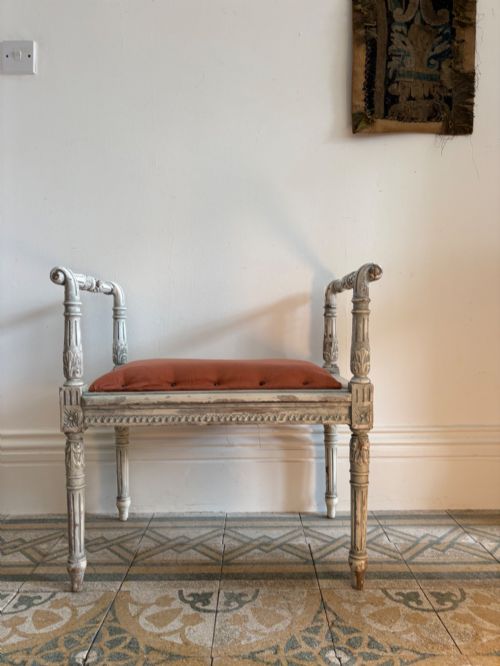
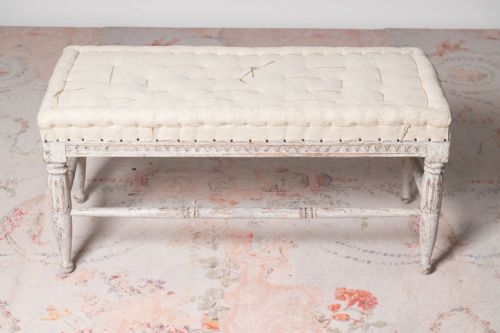
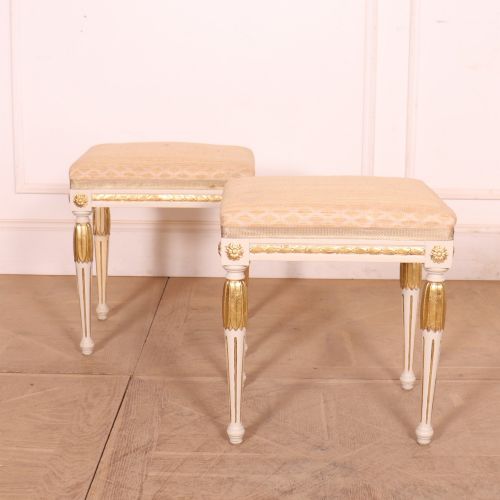
When searching for a swedish upholstered bench, buyers encounter a diverse selection of seating forms spanning several distinct historical periods. The listings include a variety of stools, settle benches, sofas, and settees originating from Sweden.
The pieces on this page range from the refined symmetry of the eighteenth century through the nineteenth century to early twentieth century examples. Styles encompass Gustavian, Swedish Empire, Biedermeier, Rococo, and Swedish Grace iterations.
Stools and smaller bedroom benches appear frequently alongside larger settees and sofas. Material combinations feature painted wood, birch, pine, and giltwood paired with textiles like linen, silk, and hessian.
How they were made
Construction relies heavily on traditional timber framing using native woods such as birch and pine, alongside selected hardwoods for carved details. Frames are frequently finished with painted surfaces or giltwood applications to achieve the desired aesthetic.
Upholstery techniques utilise traditional padding materials secured beneath practical coverings like linen, hessian, and silk. Structural elements range from simple joined frames to intricately carved decorative woodwork.
Listings feature periods from the 18th century through 1900, incorporating materials such as birch, pine, giltwood, linen, and silk.
What varies in quality
The refinement of the carved woodwork and the crispness of the painted or gilt finishes distinguish finer examples from simpler provincial pieces. Detail in the joinery and the integrity of the original timber frame dictate the structural standing of each item.
The choice of upholstery fabric, whether simple hessian or luxurious silk, alongside the precision of the padding, reflects the intended status and original placement of the seating.
John Tesch
The Swedish Upholstered Bench Glossary
- Gustavian
- The Swedish interpretation of neoclassical style, characterised by restrained ornamentation and clean lines. It draws direct inspiration from French Louis XVI design.
- Biedermeier
- A Central European style popular during the nineteenth century, adopted in Sweden with an emphasis on clean utilitarian forms and striking wood grains. Satin birch is frequently utilised in these pieces.
- Giltwood
- Timber treated with gold leaf or a gold-coloured metallic finish to simulate solid gold. This technique highlights carved decorative elements on formal seating.
- Settle bench
- A traditional wooden seat featuring a high back to block drafts and enclosed sides or under-seat storage. It served as a functional household staple in earlier centuries.
- Birch
- A pale, dense hardwood native to northern Europe, prized for its durability and attractive grain patterns. It forms the structural base for many Scandinavian items.
Swedish Upholstered Bench: Frequently Asked Questions
How do I identify a Gustavian piece?
Look for neoclassical motifs such as fluted legs, restrained carved rosettes, and light painted finishes. These design elements reflect the late eighteenth-century French influence filtered through Scandinavian taste.
Proportions remain balanced and geometric, avoiding the heavier ornamentation seen in later Victorian furniture.
Where should I place a bench in my home?
Smaller stools and long bedroom benches fit easily at the foot of a bed or along a narrow hallway. Settees and larger sofas suit living areas as statement seating.
Consider the scale of the piece relative to the room to maintain clear pathways and visual balance.
What woods are commonly found in these pieces?
Birch and pine form the core structural materials for the majority of these listings. Native pine often appears beneath painted surfaces, while birch is frequently left exposed to showcase its grain.
Giltwood and general hardwoods also appear on formal empire and neoclassical items.
How do Biedermeier and Empire styles differ?
Empire pieces lean towards classical antiquity with giltwood accents and formal grandeur. Biedermeier focuses on domestic comfort and clean lines, highlighting the natural figure of satin birch timber.
Both styles date primarily to the nineteenth century but serve different aesthetic roles in an interior.