
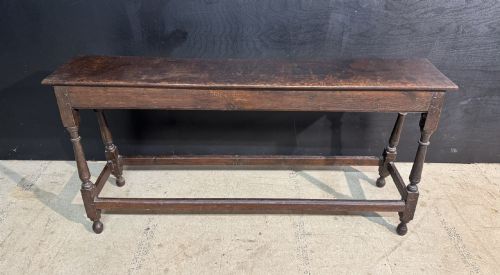
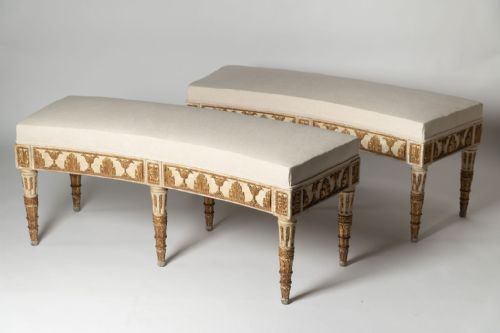


Wooden Long Stool
A wooden long stool brings low, linear seating and traditional craftsmanship into a hallway, at the foot of a bed, or before a hearth.
Wooden Long Stool
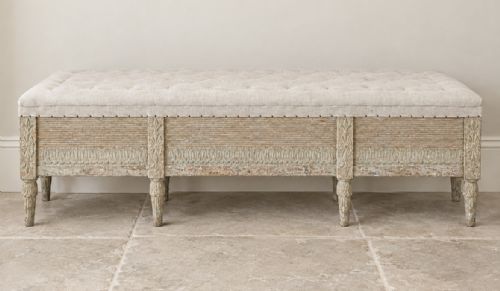
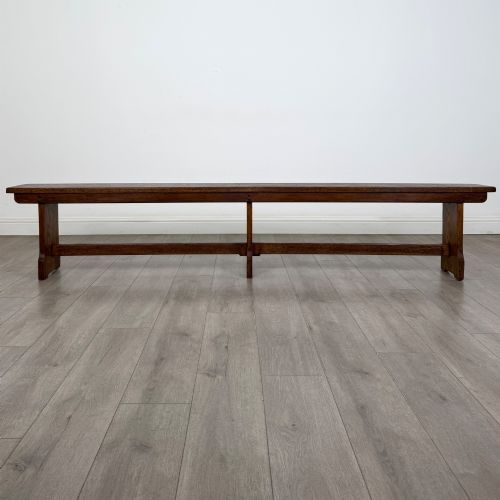
A wooden long stool is an elongated seat or bench designed for hallways, windowsides, and firesides, appearing frequently in oak, walnut, and mahogany. These pieces span from the Georgian and Victorian eras through the early twentieth century, offering narrow profiles that fit easily into circulation spaces and living rooms.
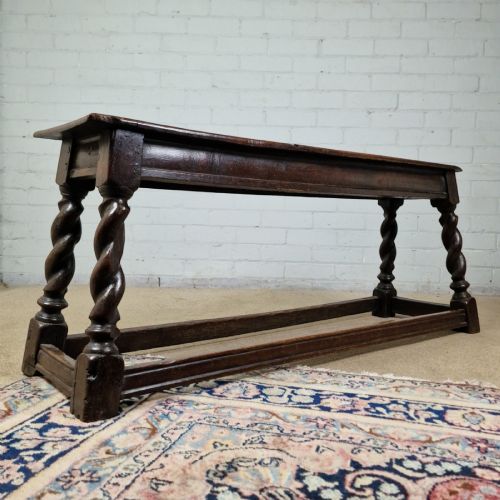
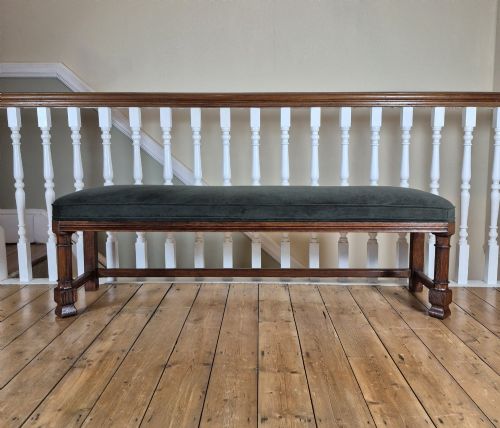
The selection here includes sturdy joint stools, heavy oak tavern benches, and upholstered window seats finished in linen, tweed, or kilim. Makers from various periods drew upon Gothic Revival, Jacobean Revival, and French styles to shape these long timber frames.
How they were made
Makers constructed the primary frames of these long stools using solid hardwoods such as oak, walnut, mahogany, and cherry, joined with traditional timber methods. Structural strength relied on sturdy mortise and tenon joints or turned supports that could bear the weight of multiple sitters.
Upholstered versions incorporate webbing and horsehair stuffing beneath top layers of fabric, leather, or cane seating panels. Decorative touches include carved details, gilded accents, and brass fittings applied directly to the wooden rails.
Several long stools double neatly as impromptu magazine tables, proving that tired feet and Sunday papers share remarkably similar tastes.
What varies in quality
Quality rests in the selection of the timber and the depth of the carving across the frame, distinguishing standard utility seating from high-style artisan pieces. Dense hardwoods with rich, natural grain patterns command attention for their longevity and weight.
The integrity of the structural joints and the fidelity of historical revival styles dictate the overall standard of the piece. Superior examples retain their original timber frames without excessive replacement wood or compromised joinery.
The Wooden Long Stool Glossary
- Joint stool
- A sturdy wooden stool constructed with mortise and tenon joints rather than traditional turned legs. These pieces date back to early periods and served various domestic functions.
- Fender stool
- A low, elongated seat designed to sit directly in front of the hearth or fireplace fender. They often feature upholstered tops supported on short wooden feet.
- Cane seat
- A seating surface woven from peeled rattan or cane strips to create a flexible, breathable panel. This technique appears frequently on eighteenth and nineteenth-century frames.
- Giltwood
- Timber that has been coated with a thin layer of gold leaf or metallic gilt pigment. This finish is typical on formal French and neoclassical decorative seating.
Wooden Long Stool: Frequently Asked Questions
Where should I place a long wooden stool?
These versatile benches fit well at the foot of a bedroom bed, along a narrow hallway, or positioned beneath a window for extra seating. Their slender proportions allow them to occupy circulation spaces without blocking pathways.
In living areas, low versions function comfortably as coffee tables when topped with a flat tray, or serve as fireside rests for warming feet.
How do I care for the wooden frame?
Maintain the timber by dusting regularly with a soft, dry cloth and applying a traditional beeswax polish sparingly to nourish the grain. Keep the wood away from direct heat sources and sudden humidity shifts to prevent the timber from splitting.
Avoid commercial liquid cleaners containing silicone, which can build up on antique finishes and dull the natural sheen over time.
Can I reupholster an antique long stool?
Many examples accept new fabric easily, allowing you to update textiles like linen, tweed, or kilim to match modern interiors. Professional upholsterers can replace internal webbing and padding while preserving the underlying wooden frame.
Retaining the original covering material is sometimes preferred by collectors if the historic textile remains intact and stable.
How do I distinguish a Georgian stool from a Victorian one?
Georgian pieces often display simpler, heavier structural lines in solid oak or mahogany, reflecting earlier utilitarian or formal domestic requirements. Victorian examples frequently embrace revival styles, incorporating ebonised finishes, walnut, and intricate machine or hand-carved ornamentation.
Examining the tool marks on the underside and the nature of the joinery helps clarify the manufacturing period of the frame.