


Swedish Painted Pine Trunk
A Swedish painted pine trunk brings the bold hues and honest utility of Scandinavian country interiors straight into a modern home.
Swedish Painted Pine Trunk
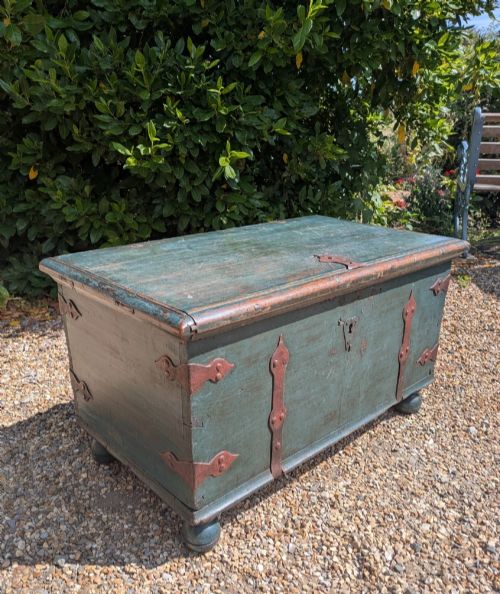
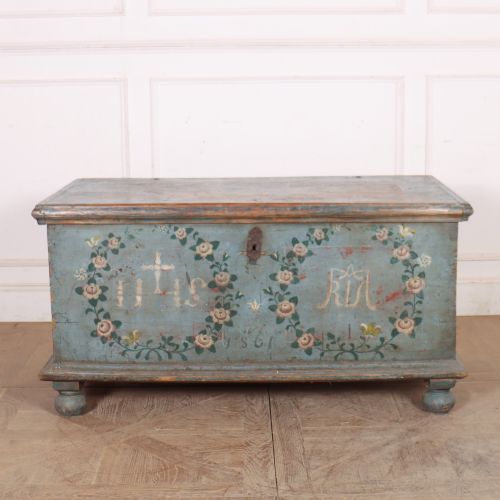
A swedish painted pine trunk encompasses storage chests, coffers, and marriage boxes originating from the eighteenth and nineteenth centuries. These pieces were built for practical household storage, often given as wedding gifts to hold a bride's linens and dowry.
The version most commonly met on this page is the nineteenth century pine chest or strong box, often finished with folk art ornamentation. Alongside larger blanket boxes and dome top coffers, smaller log bins and shaped boxes appear regularly.
The aesthetic falls firmly within rustic country and Scandinavian folk art traditions. Surfaces display hand applied pigment paint alongside iron strapwork, reflecting rural craftsmanship from across Sweden.
What varies in quality
The distinction between ordinary utility items and exceptional pieces rests upon the survival of the original painted surface. Trunks that retain their untouched pigment and early folk art decoration command greater interest than those stripped or heavily repainted over time.
Construction details also separate the tiers of quality, visible in the fineness of the hand forged iron strapwork and the complexity of the box form. Dome top coffers with shaped brackets and intact interior tills represent a higher standard of regional carpentry.
One mid eighteenth century pine chest hides a secret geometric labyrinth painted directly onto the wood.
The Swedish Painted Pine Trunk Glossary
- Coffer
- A heavy wooden chest traditionally used for storing valuables or dry goods. These sturdy containers often feature reinforced lids and iron strapwork.
- Scumble paint
- A decorative glazing technique involving translucent layers of pigment brushed over a lighter base colour. This method creates mottled or textured patterns mimicking wood grain or stone.
- Marriage chest
- A specially commissioned storage piece given to a bride to hold her dowry linens. They frequently bear painted initials, dates, or symbolic folk art motifs.
- Strapwork
- Flat bands of wrought iron fastened across the exterior of a chest to reinforce the corners and hinges. This metalwork provides both structural strength and linear visual contrast.
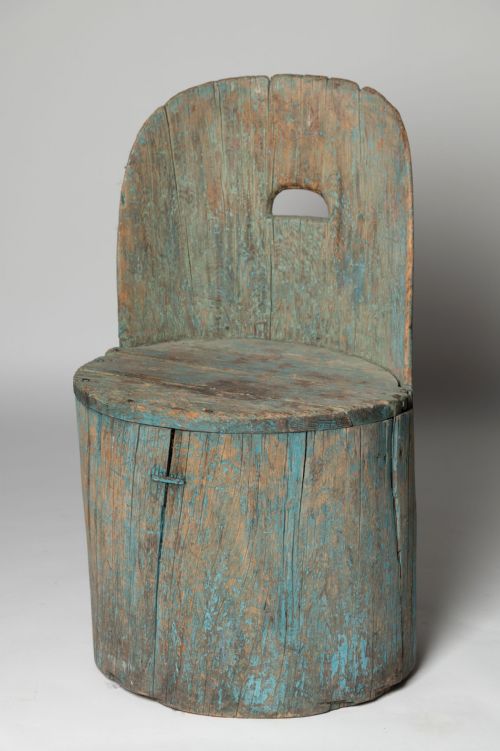
- Dug out chair
- A primitive form of seating carved directly from a single solid log of pine. This rustic method predates standard joined furniture construction.
Swedish Painted Pine Trunk: Frequently Asked Questions
How are these trunks dated?
Dating relies on a combination of construction methods, lock types, and the composition of the paint layers. Regional stylistic clues and occasionally painted dates inscribed on the exterior provide further chronological context.
Examination of the timber fixings and ironwork helps confirm whether a piece belongs to the eighteenth or nineteenth century.
Where were these boxes used?
These pieces served practical storage functions within rural Swedish farmhouses and homesteads. They held textiles, blankets, provisions, and personal valuables.
Larger coffers stood in bedrooms or halls, while smaller strong boxes kept important documents secure.
How do I care for the painted surface?
Protect the original pigment by keeping the pine chest away from direct sunlight and steady moisture sources. Dust gently with a dry, soft cloth rather than using liquid polishes.
Maintaining a stable indoor room climate prevents the historic pine timber from expanding or contracting.
Are these pieces entirely original?
Many items preserve their original nineteenth or eighteenth century paint and ironwork throughout. Listings note specific details regarding surface originality and structural components.
Buyers examine the patination of the pine and the wear on the pigment to assess how much time has altered the piece.