


Swedish Centre Table
A Swedish centre table brings timber warmth and classical proportion to a room, anchoring the space with functional elegance.
Swedish Centre Table
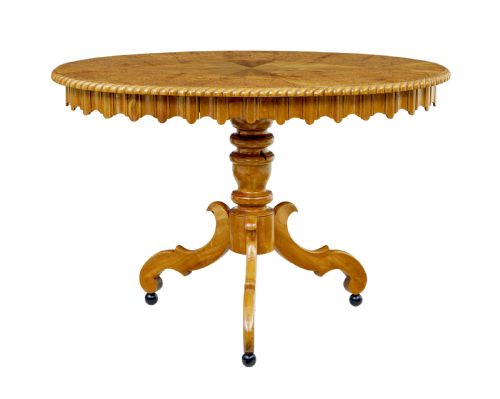
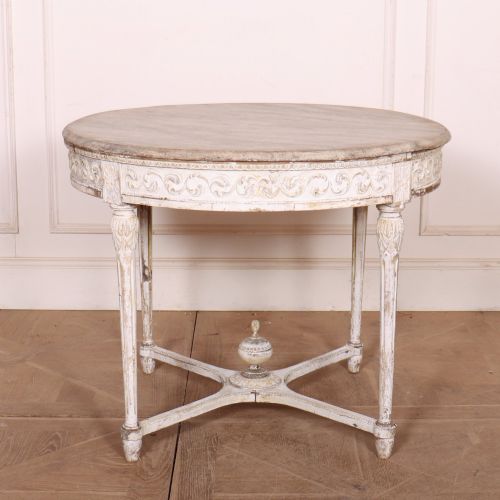
A swedish centre table is a freestanding piece designed to sit in the middle of a room rather than against a wall. The selection spans the nineteenth century through to the early decades of the twentieth century, encompassing styles from Gustavian restraint to Biedermeier warmth.
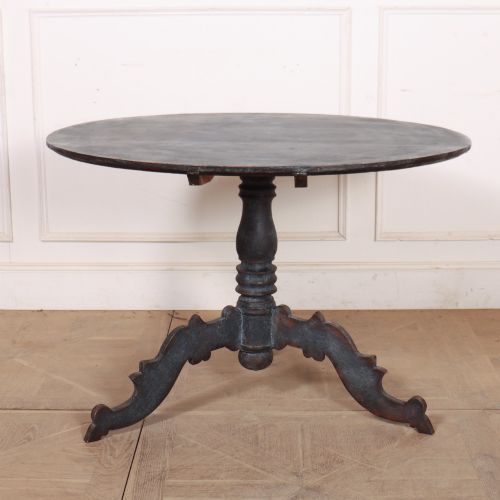
Forms vary from circular and oval occasional tables to larger dining and centre tables, along with coffee tables and side tables. Pine, birch, burr birch, and painted timber dominate the offerings, occasionally paired with marble tops.
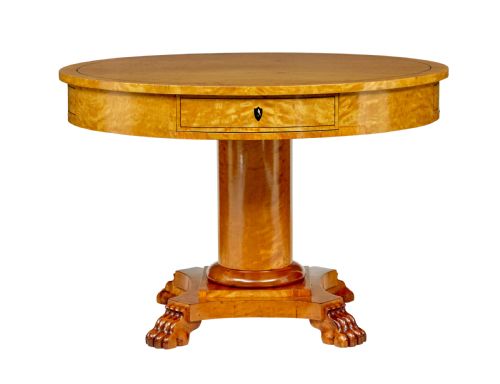
The aesthetic shifts between painted country surfaces and richly figured veneers. Buyers encounter both utilitarian painted pine and highly decorative satin birch pieces created for formal interiors.
What varies in quality
Quality rests in the selection of the timber and the mastery of the veneer work. Burr birch and satin birch display complex, lively grain patterns that elevate the visual weight of the piece.
Proportion and structural integrity separate standard examples from finer works. The crispness of carved details and the careful matching of wood veneers distinguish the output of skilled cabinetmakers from simpler provincial pieces.
Listings feature pieces spanning the nineteenth century and the Art Deco period, constructed from birch, pine, and marble.
The Swedish Centre Table Glossary
- Biedermeier
- A central European style of the nineteenth century prioritising clean lines and warm veneers without excessive ornamentation. Swedish interpretations favoured native birch.
- Burr birch
- Timber taken from the warted growths on birch trees, yielding a swirling, highly decorative grain pattern. Cabinetmakers prized it for table tops.
- Centre table
- A freestanding table finished on all sides for placement in the middle of a room. These pieces functioned variously for dining, writing, or display.
- Satin birch
- A timber featuring a natural sheen and smooth grain. It served as a favoured veneer for high-status nineteenth-century furniture.
Swedish Centre Table: Frequently Asked Questions
Where should I place a centre table?
These tables are designed to stand free in the middle of a room, accessible from all sides. They function well in large hallways, libraries, or as the focal point of a living space.
Ensure there is enough clearance around the piece for movement. Placing a lamp or decorative object on top creates a balanced display.
How do I care for birch veneer?
Keep nineteenth-century birch furniture away from direct sunlight and heat sources to prevent the veneer from drying and cracking. Dust regularly with a soft, dry cloth.
Avoid liquid polishes and silicone sprays, which can damage historic finishes. Wax can be applied sparingly to nourish the timber.
What is the difference between Biedermeier and Gustavian styles?
Gustavian pieces originate in the late eighteenth and early nineteenth centuries, characterised by pale painted timber and neoclassical restraint. Biedermeier furniture dates from the nineteenth century and emphasises polished wood veneers like birch.
Gustavian forms often feature fluted legs and carved swags, while Biedermeier pieces rely on smooth, curved surfaces that showcase the wood grain.
Can these tables be used for everyday dining?
Many historical centre tables were built for multiple domestic uses, including supper and dining. However, delicate veneer surfaces require protection from moisture and heat.
Using placemats and coasters preserves the antique finish during daily use. Heavier dining and centre tables offer robust construction for regular seating.