

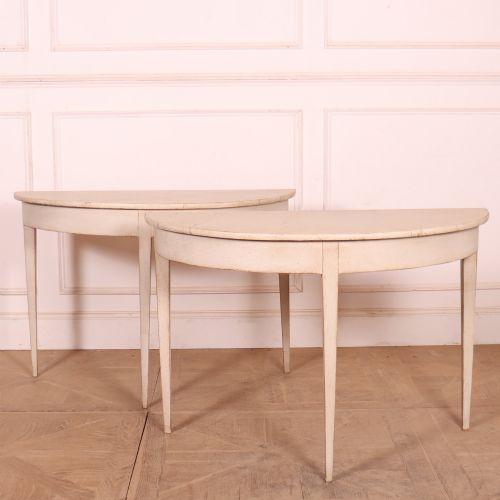


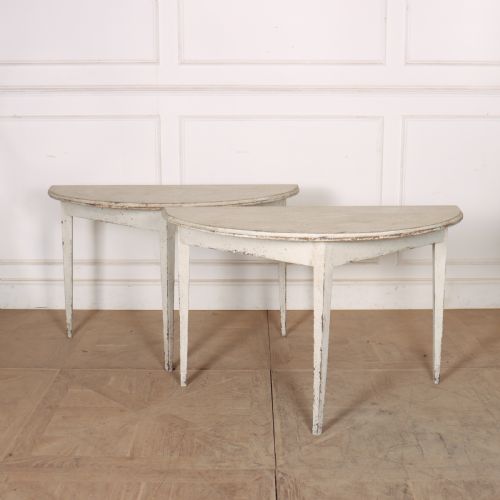


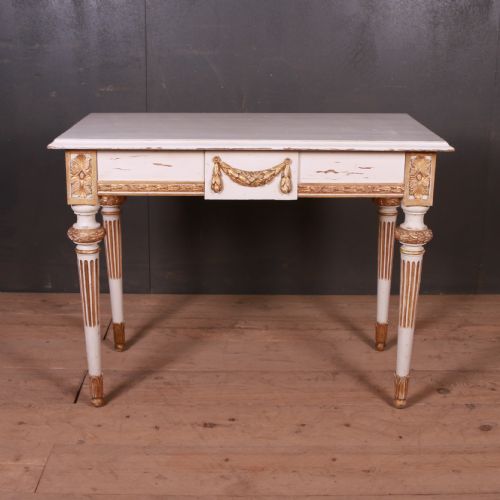

Gustavian Style Console Table
These gustavian style console table examples bring restrained Scandinavian symmetry and painted surfaces into a room.

Gustavian Style Console Table
A gustavian style console table embodies the pale elegance and neoclassical restraint of eighteenth and nineteenth-century Scandinavian design. Buyers seeking this aesthetic will find pieces that serve as functional side furniture, writing desks, and lamp tables.
The inventory on this page consists predominantly of nineteenth-century pieces alongside eighteenth-century examples and later revivals from the Edwardian era and the nineteen-twenties. Common forms include demi-lune shapes, D-end designs, and narrow side tables originating primarily from Sweden.
Makers and craftsmen applied traditional painted finishes to pine and other woods, creating light-reflecting surfaces suited to formal rooms and country houses alike.
How they were made
Makers constructed these tables chiefly from pine and other solid timbers, often applying layers of paint, lime wash, or gesso to the wooden surfaces. Over generations, craftsmen built these pieces with traditional joinery methods suited to demi-lune and rectangular frames.
Surfaces received specialised treatments, including scraped pine finishes and bleached wood preparations alongside traditional painted coats. Details sometimes incorporated giltwood highlights or brass fittings to complement the primary timber structure.
Gustavian Style Console Table Retail Price Guide 2026
Typical asking prices for gustavian style console table among the pieces listed under this phrase on Sellingantiques today, from the lower quarter to the upper quarter. They describe what is for sale here now, not the wider market.
Listings feature pine, painted wood, marble, and giltwood across nineteenth and eighteenth-century periods.
What varies in quality
Distinction across these tables rests in the depth and age of the painted surface, ranging from original layered pigments to later decorative coats. The crispness of carved neoclassical details and the integrity of the underlying pine frame also separate standard examples from finer pieces.
Proportions dictate visual success, with narrower demi-lune profiles and balanced D-end constructions commanding particular attention. The relationship between the top surface, whether wood, marble, or painted pine, and the supporting legs determines the overall structural harmony.
The Gustavian Style Console Table Glossary
- Demi-lune
- A half-moon shape used for console tables designed to stand flat against a wall. This form allows the furniture to occupy minimal floor space while providing a useful display surface.
- Gesso
- A plaster-like mixture applied to wood as a smooth base for paint or giltwood. It creates a refined finish before final decoration.
- Lime wash
- A traditional coating made from slaked lime and water, frequently applied to pine furniture in Scandinavian interiors. It provides a breathable, matte finish that lightens the wood.
- D-end
- A table configuration formed of sections with straight edges and semicircular ends. When arranged together, they create extended console or dining surfaces.
Gustavian Style Console Table: Frequently Asked Questions
Where should I place a console table?
These tables find natural placement in hallways, living rooms, and dining spaces against flat walls. Their shallow depth makes them suitable for narrow circulation areas where standard furniture protrudes too far.
Pairing a console with a lamp or placing it beneath a mirror creates a balanced focal point in an interior. Smaller demi-lune versions also function effectively as bedside tables.
How do I care for painted wood surfaces?
Painted and lime-washed pine requires gentle maintenance using a soft, dry cloth for regular dusting. Avoid harsh chemical cleaners and excessive moisture that might compromise the historic paint layers.
Keeping the furniture away from direct heat sources prevents the timber from drying out and protects the integrity of the gesso and paint.
What defines Gustavian style furniture?
Gustavian design draws inspiration from French neoclassical forms introduced to Sweden during the reign of King Gustav III. It is characterised by restrained carved details, straight tapered legs, and pale painted finishes.
This aesthetic prioritized light and symmetry, offering a northern interpretation of continental European luxury.
How can I tell an older table apart?
Examining the construction methods, tool marks, and the composition of the paint layers helps indicate the age of a piece. Eighteenth and nineteenth-century examples often display hand-planed timbers and worn patination accumulated over generations of use.
Later Edwardian and twentieth-century interpretations typically show more uniformity in their construction and surface treatments.