
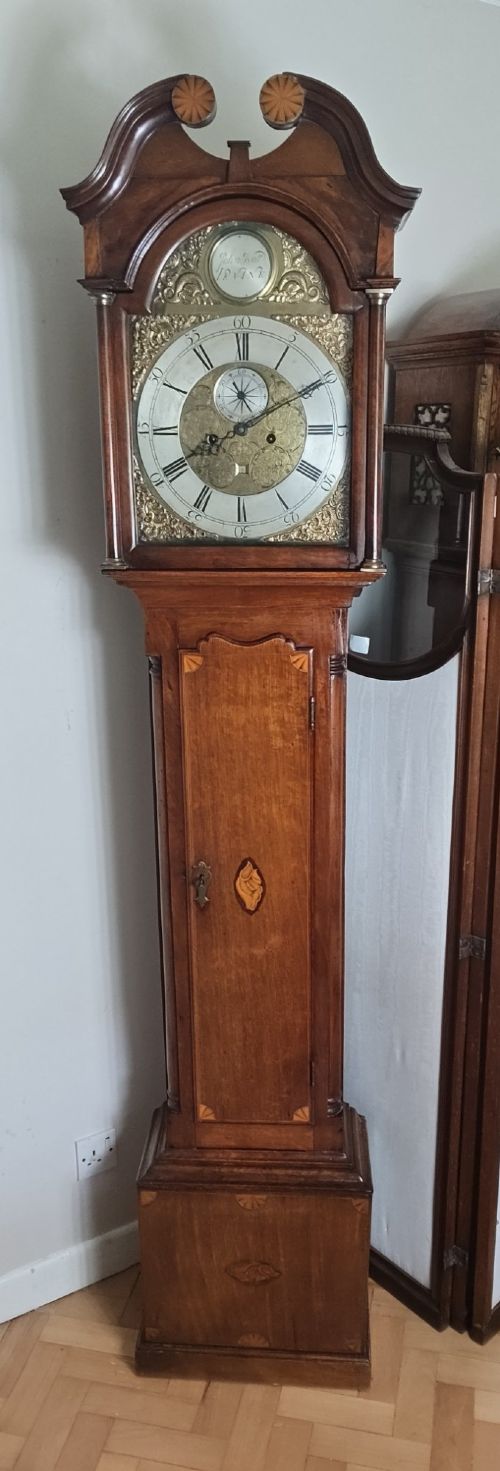
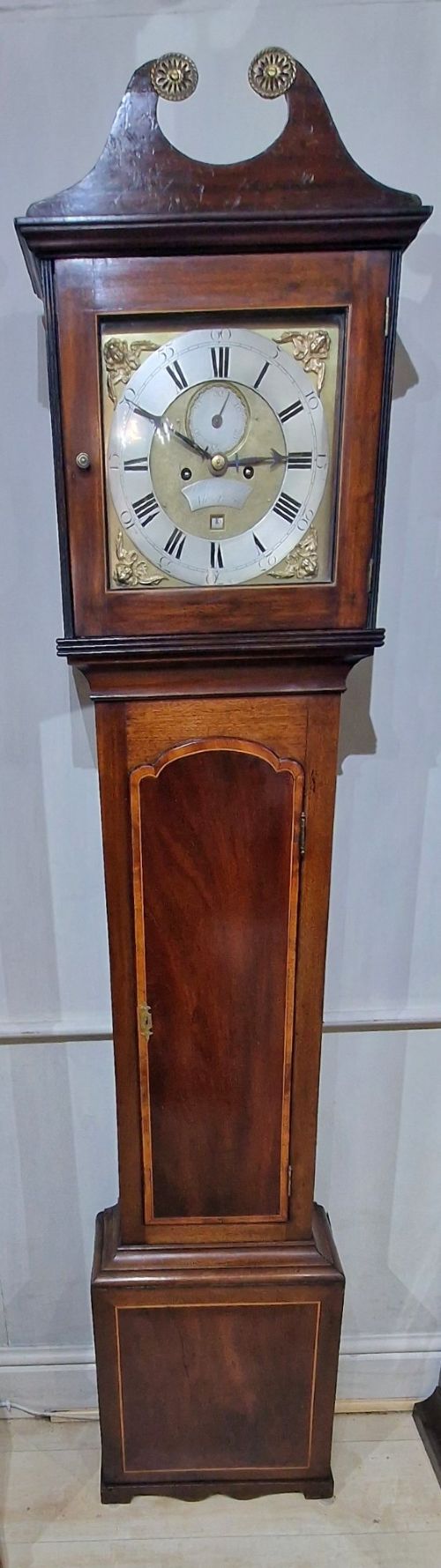
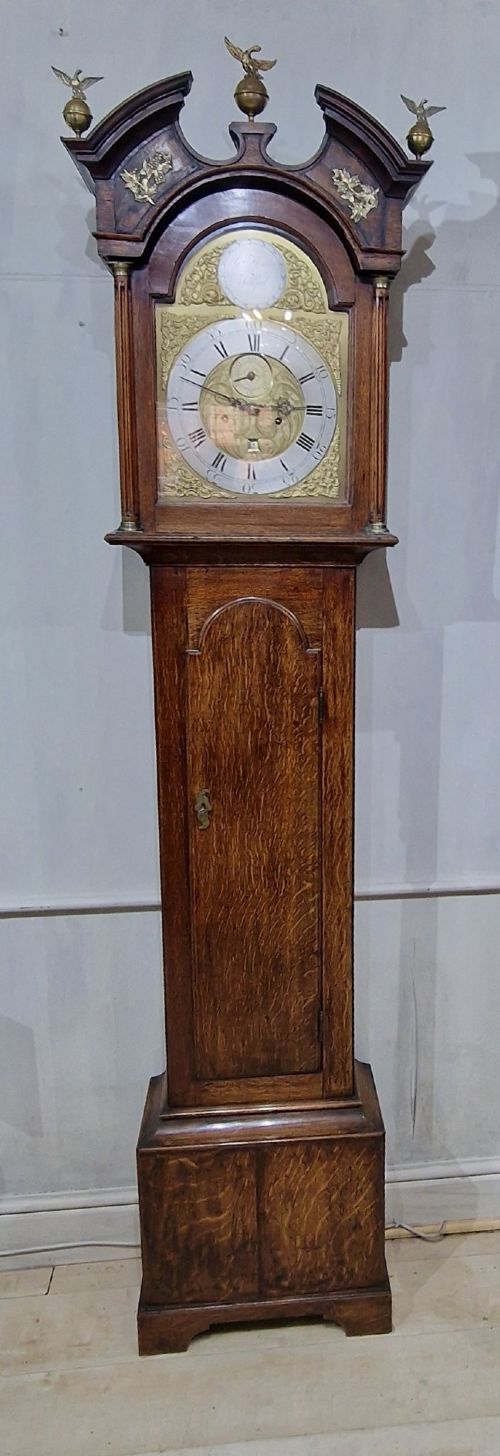
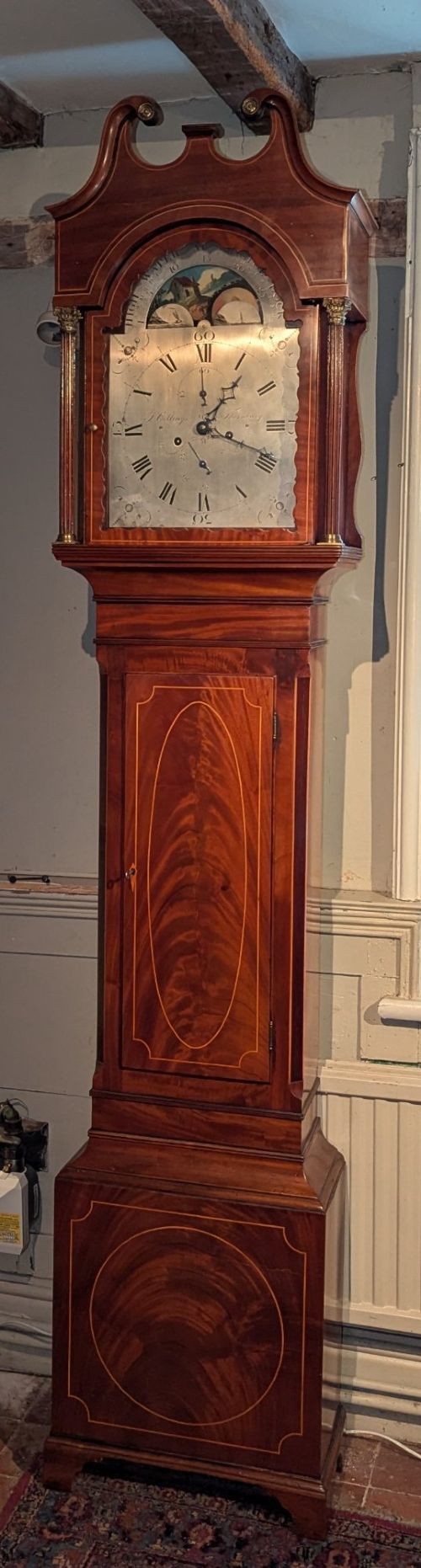
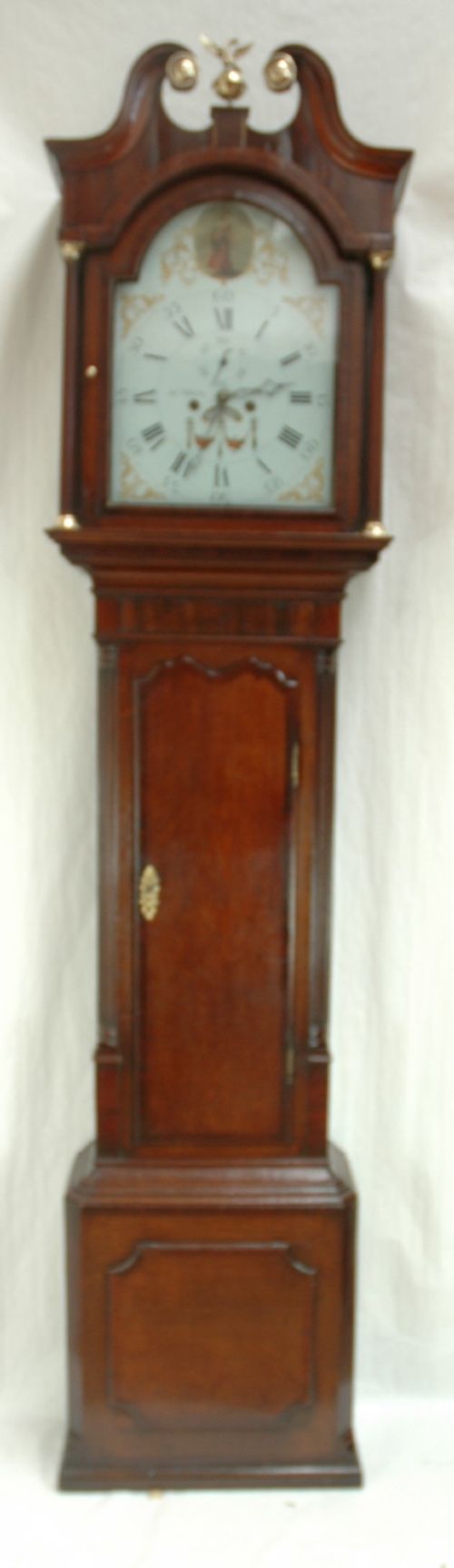
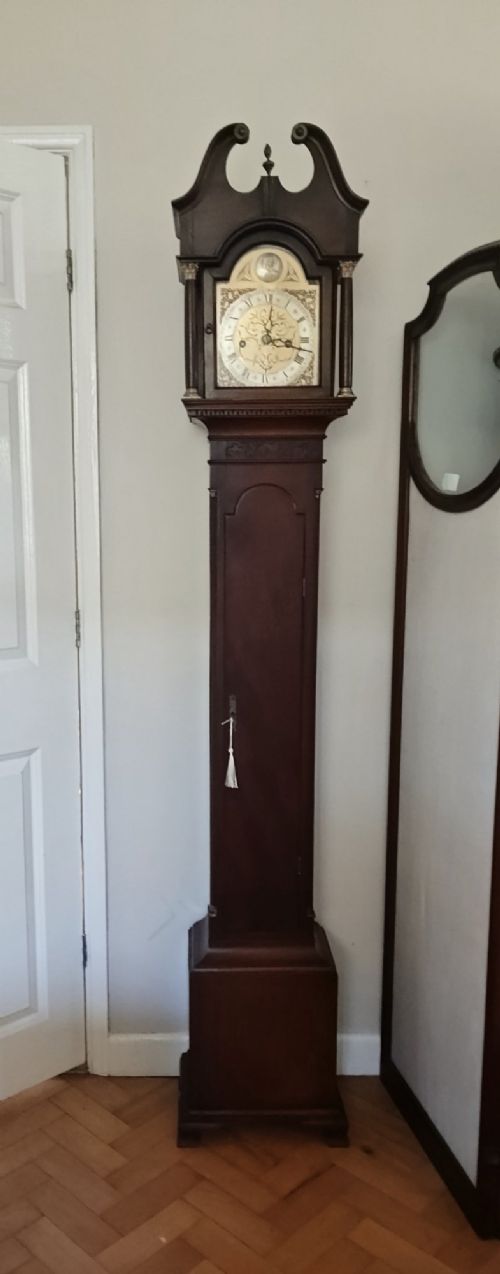
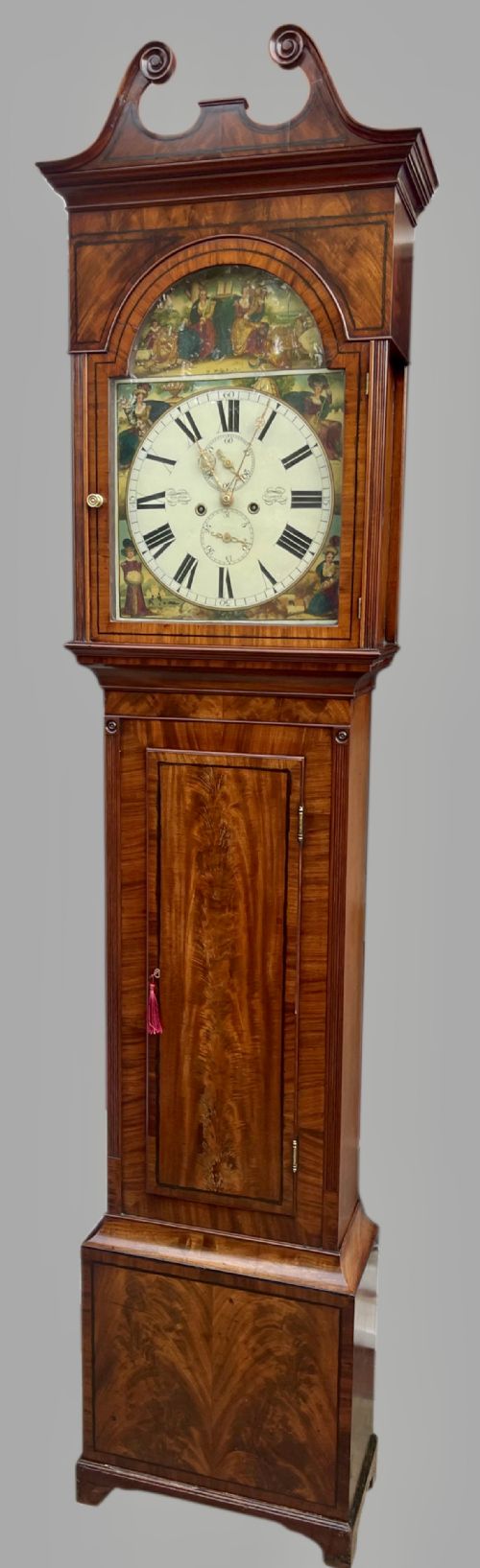
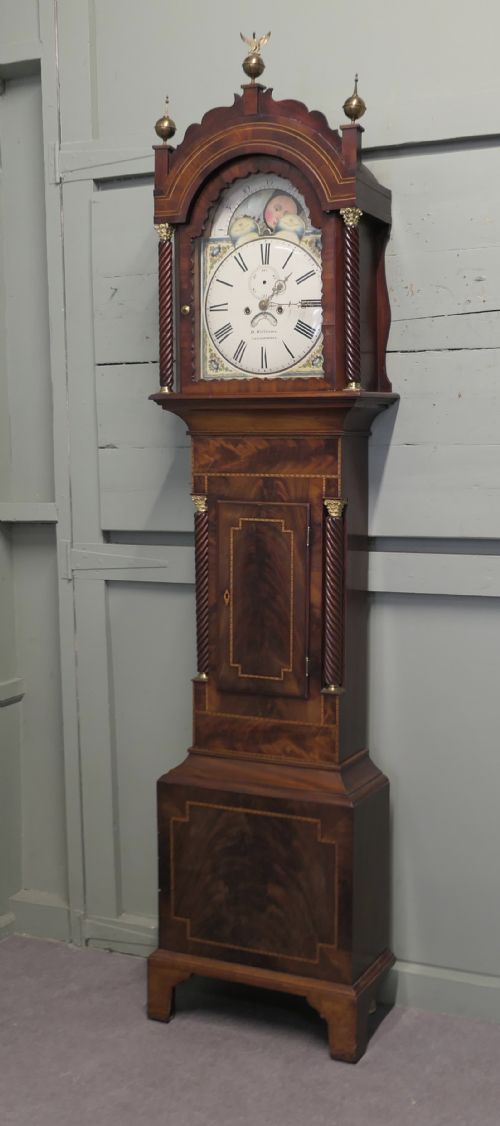
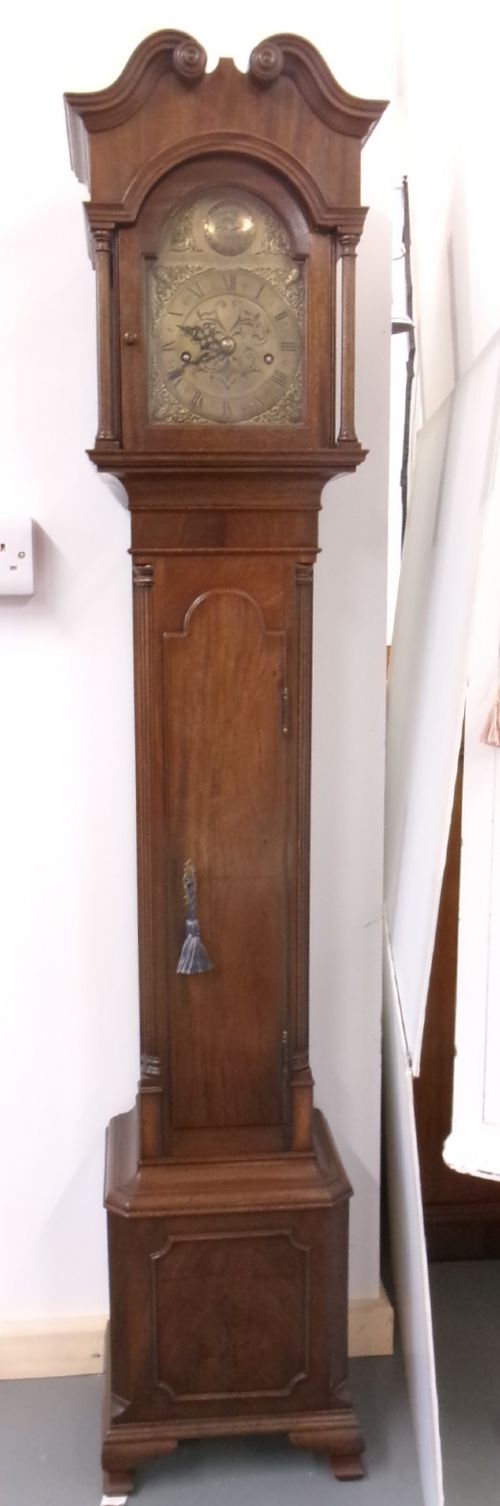

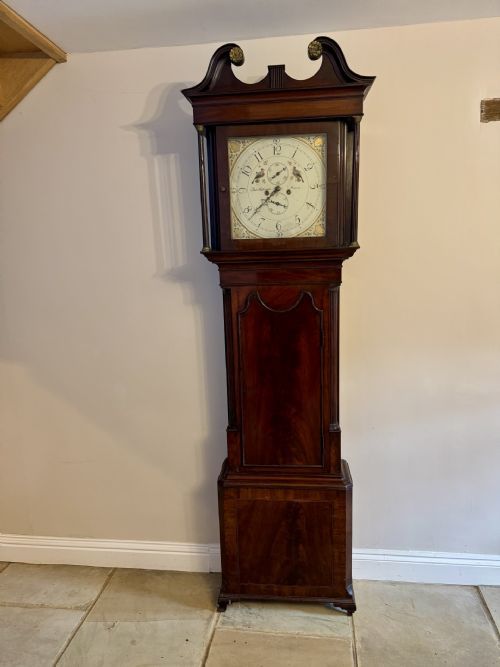
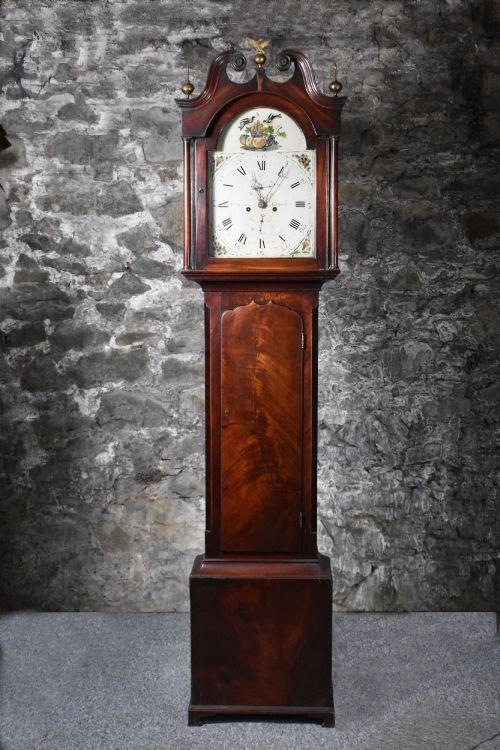
Swan Neck Clock
A swan neck clock brings tall vertical presence and measured timekeeping to a room through traditional case construction.
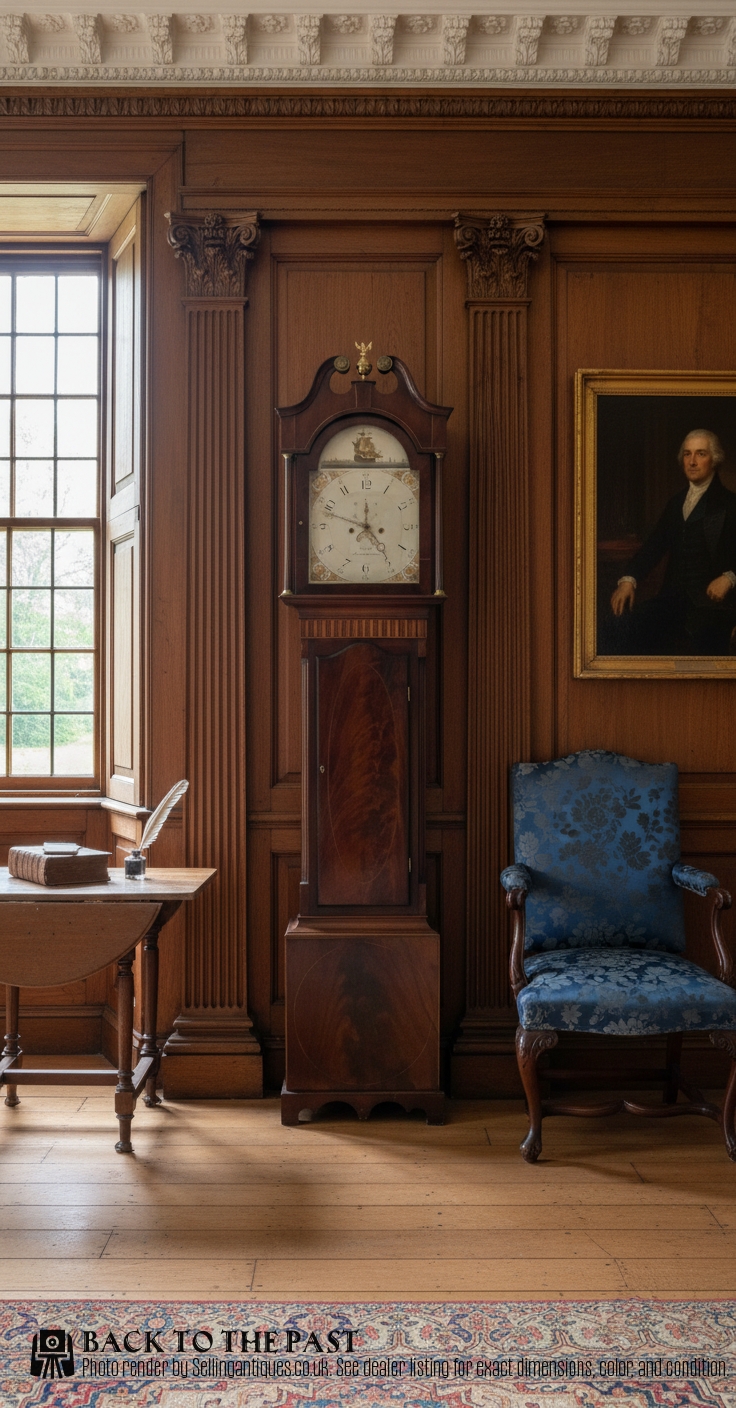
Swan Neck Clock
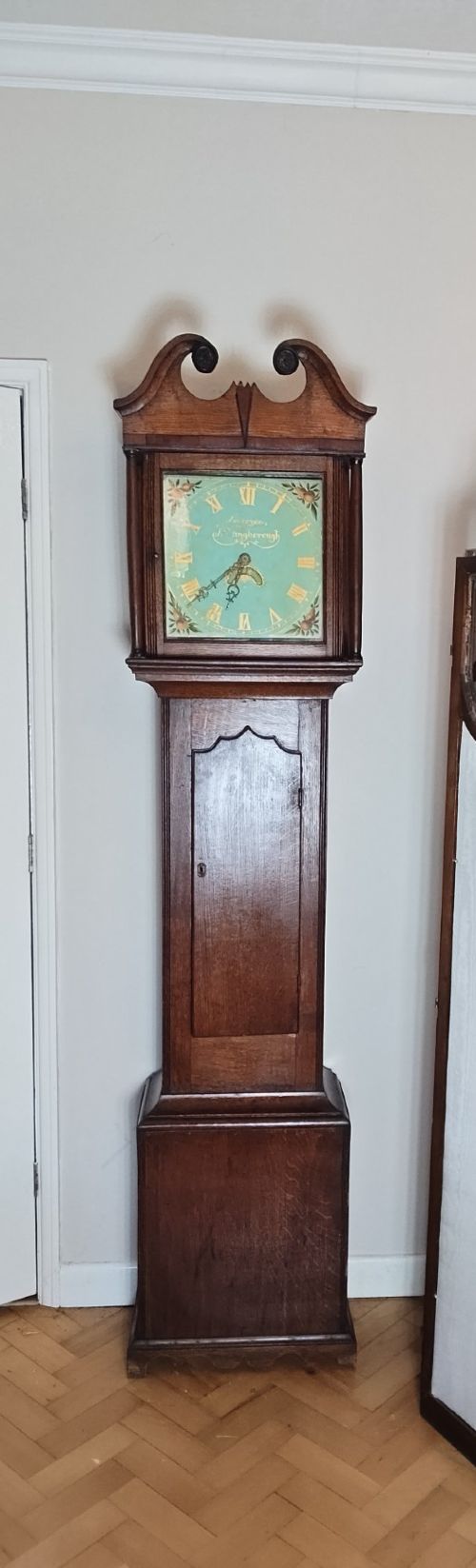
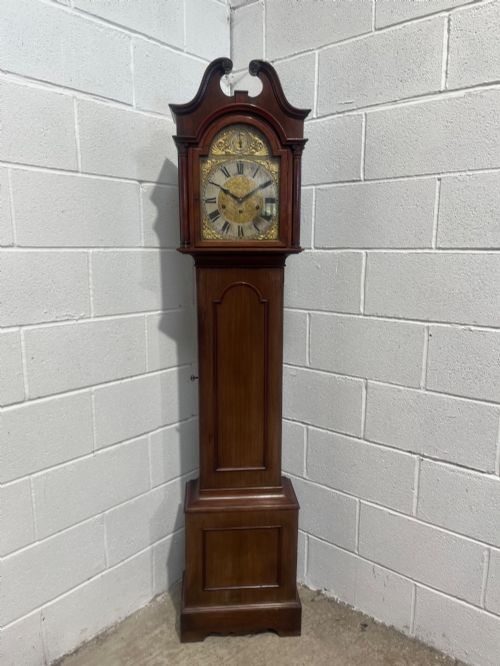
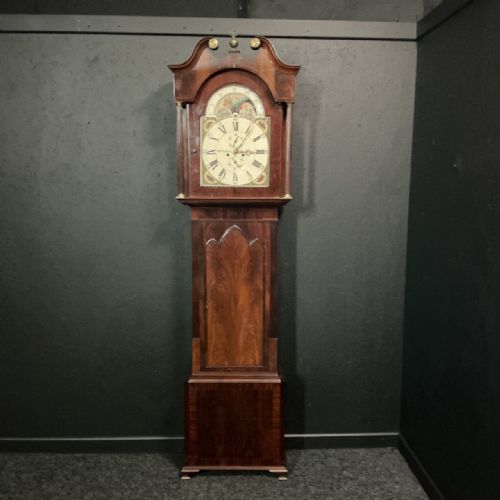
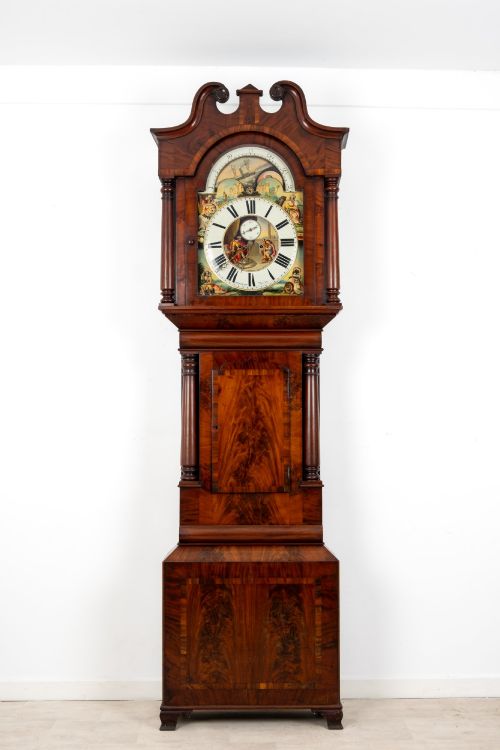
A swan neck clock typically refers to a tall floor-standing timekeeper housing a dial within an architectural wooden case. When you examine a swan neck clock on this page, you encounter forms spanning the Georgian, Victorian, and Edwardian periods.
The evidence shows these tall timepieces appearing as grandfathers, grandmothers, and longcase clocks created in regional British workshops. Mahogany and oak dominate the construction, often enhanced by painted iron or brass dials.
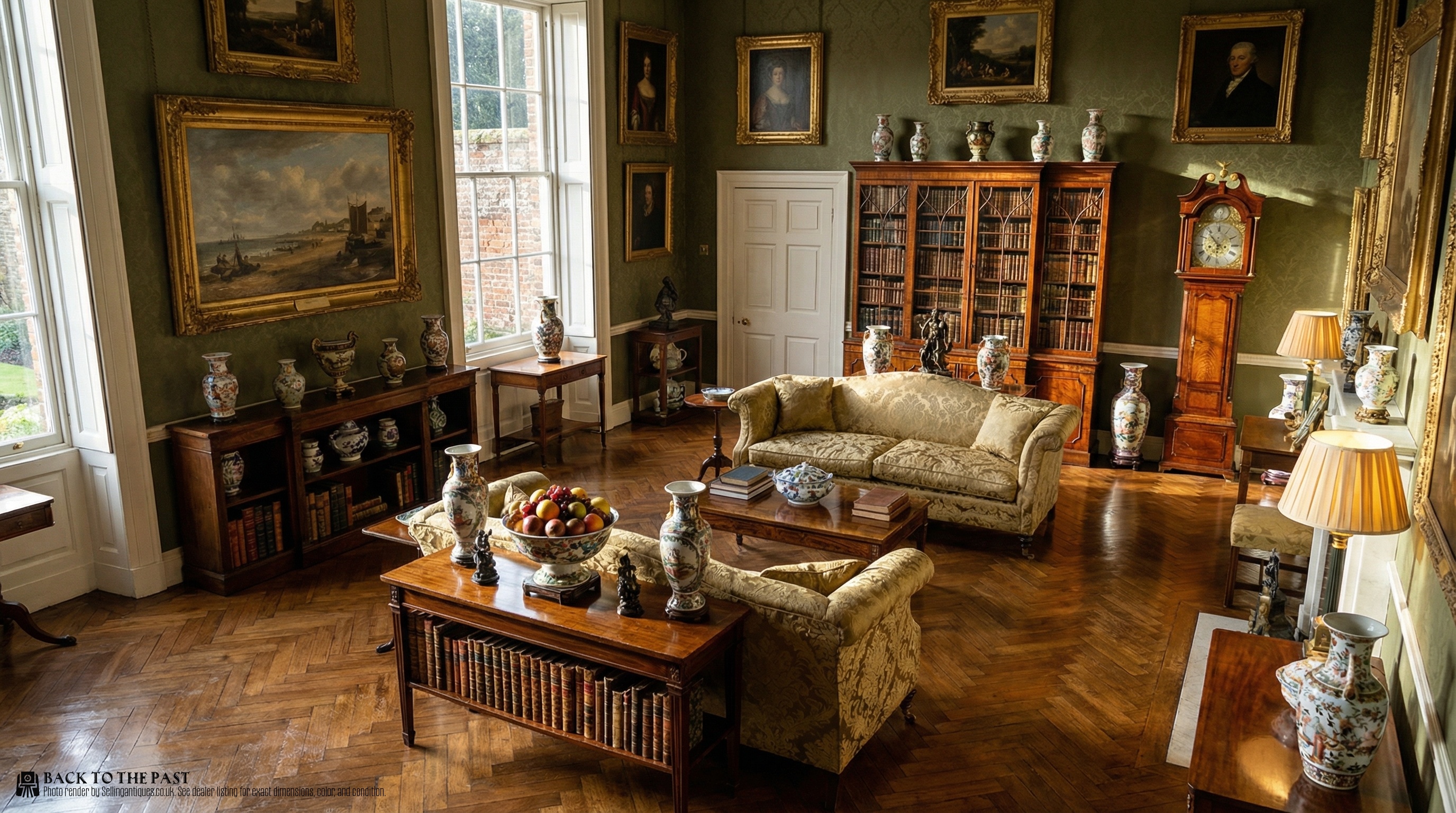
Materials and construction
Cabinet makers utilised dense hardwoods like mahogany and oak to build the tall vertical trunks and hood structures. Brass and painted iron were shaped for the visible dials, while glass protected the dial face.
Movements incorporate iron and steel components designed for eight-day or single-handed operation. Dial faces frequently display enamel details and moon phases driven by intricate gear trains.
Swan Neck Clock Retail Price Guide 2026
Typical asking prices for swan neck clock among the pieces listed under this phrase on Sellingantiques today, from the lower quarter to the upper quarter. They describe what is for sale here now, not the wider market.
Listings feature oak and mahogany woods alongside brass, enamel, and painted iron materials across Georgian and Victorian periods.
Distinctions in craftsmanship
The refinement of the timber casework and the precision of the dial painting separate standard examples from finer works. Cabinet proportions, crossbanding, and the crispness of brass detailing reveal the skill of the original maker.
Movement complexity also dictates standing, with eight-day mechanical systems and moon phase complications representing higher tiers of horological ambition compared to simpler single-handed movements.
Robb, Montrose·James Hendrie, Falkirk·Parkinson Bros, Batley·D Williams of Crickhowell·Edward Shepley of Manchester·Thomas Webbe of New Quay·Joseph Gibson Ecclefechan·Richard Sharkey Birmingham·David Craig Ford Path head
The Swan Neck Clock Glossary
- Swan neck
- A broken arch pediment on a clock hood featuring opposing curved scrolls resembling a bird's neck. This decorative top often houses a central brass finial.
- Longcase clock
- A tall pendulum clock enclosed in a wooden case consisting of a hood, trunk, and base. These pieces are frequently referred to as grandfather clocks.
- Moon phase
- A dial mechanism tracking the lunar cycle through a rotating painted disc showing the phases of the moon. It appears within the arch of the clock face.
- Paterae
- Small circular decorative ornaments carved or applied onto furniture surfaces. They appear frequently on neoclassical and Georgian clock cases.
- Crossbanding
- A strip of veneer laid across the grain of the primary wood panel to form a decorative border. This technique highlights the edge of clock doors and plinths.
Swan Neck Clock: Frequently Asked Questions
What is a swan neck clock?
A swan neck clock is a tall floor-standing timepiece featuring a broken arch hood with curved scrolls. These tall cases house mechanical movements and traditional dials.
They represent generations of regional clockmaking across British workshops, utilising woods like mahogany and oak.
How do I wind an eight day clock?
An eight day clock requires winding the weights or springs using a key inserted into holes on the dial face. This process is typically performed once a week to maintain accurate timekeeping.
Careful handling ensures the internal brass train and pendulum remain undisturbed during winding.
Where should I place a longcase clock?
A longcase clock requires a stable, level floor away from direct sunlight and damp environments to protect the wooden case and movement. Placement against an interior wall prevents excessive vibration from passing traffic.
Adequate ceiling height is essential, as these tall cases often exceed six feet.
How do I date an antique clock?
Dating an antique clock involves examining the wood species, dial construction, and stylistic clues on the hood and trunk. Maker signatures inscribed on the dial provide direct historical records.
Georgian and Victorian pieces exhibit distinct structural traits and finishing techniques unique to their eras.