




Moon Phase Floor Clock
A moon phase floor clock brings the quiet rhythm of the tides and skies into a room through elaborate painted dials.
Moon Phase Floor Clock
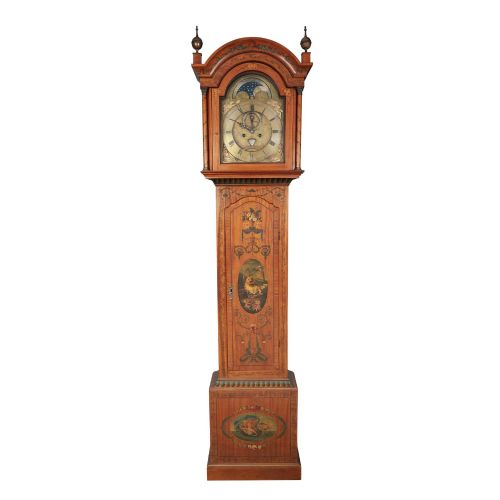
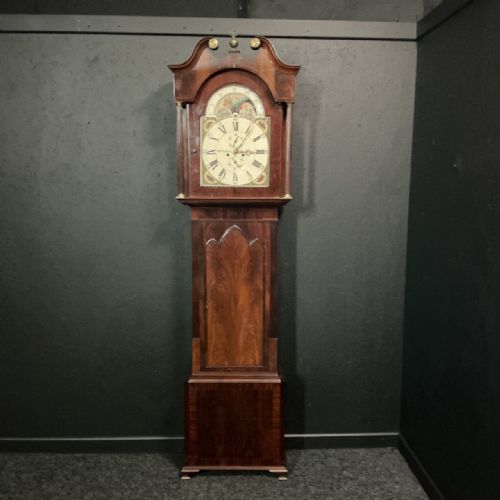
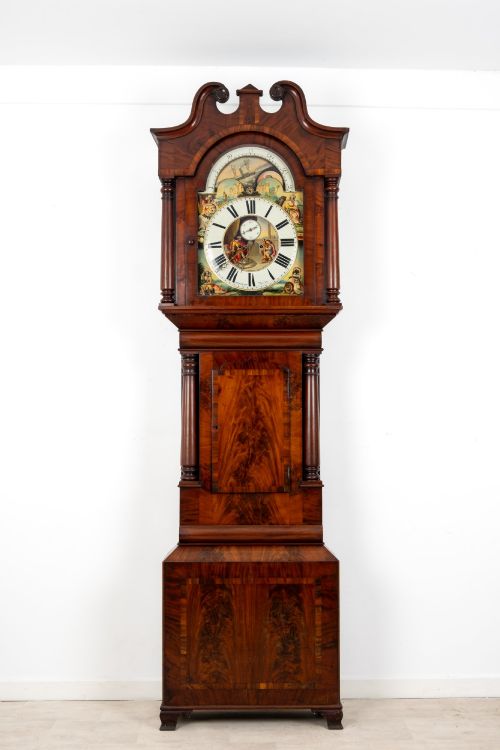
A moon phase floor clock is a tall timepiece, often called a longcase or grandfather clock, designed to track both the time of day and the cycle of the moon. These standing clocks appear in various forms across the eighteenth and nineteenth centuries, spanning Georgian, Regency and Victorian periods.
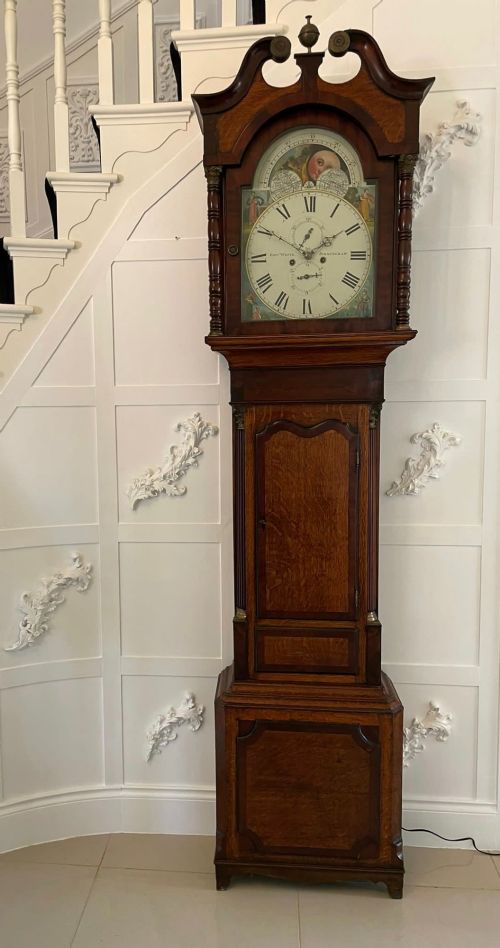
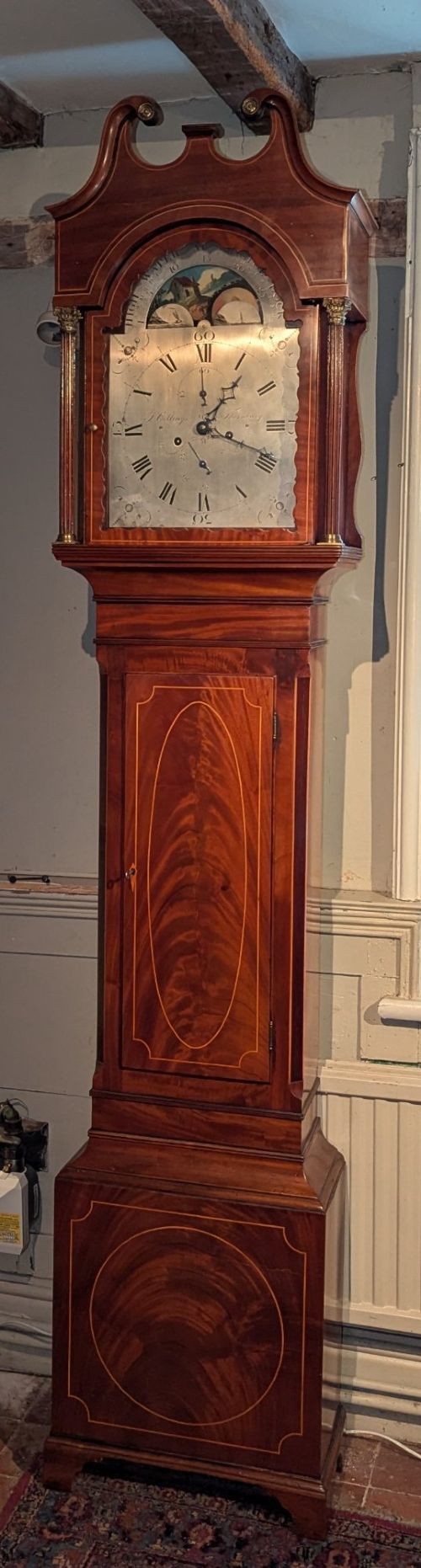
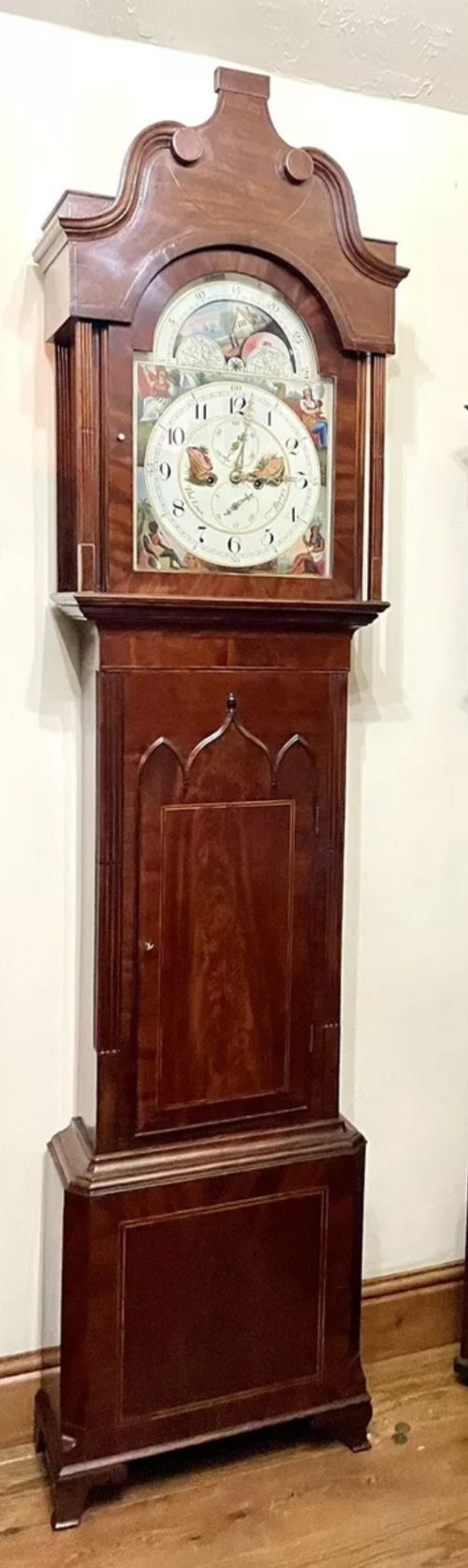
The most common version met here uses a mahogany case, sometimes inlaid, housing an eight-day movement and a painted iron dial featuring a rotating moon roller. Oak also appears frequently, particularly in earlier examples from the seventeen-fifties through the George III era.
Dial variations include penny moons and rolling moon mechanisms that track the lunar month behind an arched opening. Regional makers signed their work directly onto these painted faces, anchoring each clock to a specific town or workshop.
Materials and construction
Cabinetmakers built these tall cases primarily from solid and figured mahogany or oak, often selecting flame mahogany veneers for richer surface grain. Glass protected the dial face within the hood, while brass and steel formed the complex gear trains of the weight-driven movements.
Dial painters decorated iron sheets with detailed lunar scenes, incorporating miniature painted moons that rotated as the mechanism progressed. Cabinet construction involved traditional joinery methods to support the heavy weights and pendulum safely inside the tall trunk.
Makers painted miniature peasant faces and rustic landscapes right onto the rotating moon disks to keep watchers company through the dark winter nights.
Assessing quality in movement and case
Quality rests in the precision of the clockmaker's movement and the crispness of the cabinetwork. Fine examples feature eight-day movements rather than standard thirty-hour runs, alongside detailed dial painting and substantial timber cases.
Carving depth and timber selection separate standard production from exhibition or monumental pieces. The integration of musical tubes or complex rolling moon mechanisms distinguishes the most ambitious workshop output.
Parkinson Bros Batley·Edward Shepley·Edward White Birmingham·Thomas Lees Bury·Thos Russell Lancaster·Furnival Oldham·Thomas Dean of Leigh·Stanyer Nantwich·R Lawson Leigh·John Wood of Grantham·Edward Glase Bridgnorth·Henry Smith·William Mercer Liverpool·David Griffith Carnarvon
The Moon Phase Floor Clock Glossary
- Moon roller
- A rotating disc behind the clock dial that tracks the phases of the lunar cycle. This mechanical component turns slowly to show whether the moon is waxing or waning.
- Longcase clock
- A tall pendulum clock enclosed in a wooden case that rests directly on the floor. These pieces are frequently referred to as grandfather clocks.
- Penny moon
- A simple form of lunar display showing a single painted moon against a small circular aperture. It offers a clear visual indicator of the moon's position without complex gearing.
- George III
- A British stylistic period spanning the second half of the eighteenth century and the early nineteenth century. Furniture from this era often exhibits balanced proportions and quality mahogany timber.
Moon Phase Floor Clock: Frequently Asked Questions
How do moon phase clocks work?
The mechanical movement uses a specialised gear train connected to the dial to turn a painted moon disc over a lunar month. This cycle tracks the roughly twenty-nine and a half days it takes the moon to orbit the earth.
Weights suspended inside the trunk drive both the timekeeping and the calendar mechanisms, requiring periodic winding via the dial face.
What is the difference between a longcase and a grandfather clock?
Longcase clock and grandfather clock describe the exact same tall standing timepiece. Longcase is the traditional trade term, while grandfather clock became popular later through common usage.
Both terms apply interchangeably to the floor-standing clocks housed in wooden cases with pendulum movements.
How do I date an antique floor clock?
Dating relies on stylistic clues in the wooden case, the materials used for the dial, and the signature of the maker inscribed on the face. Painted iron dials typically point toward the late eighteenth and nineteenth centuries.
Cabinet woods also provide context, as flame mahogany and specific inlay patterns align with Georgian and Victorian manufacturing periods.
Where should I place a floor clock at home?
Floor clocks require a stable, level surface on a ground floor or sturdy foundation to keep the pendulum swinging evenly. Placing the case away from direct sunlight and heavy foot traffic helps protect the antique wood and glass.
Sufficient clearance above the case is necessary to accommodate the full height of the tall wooden body.