

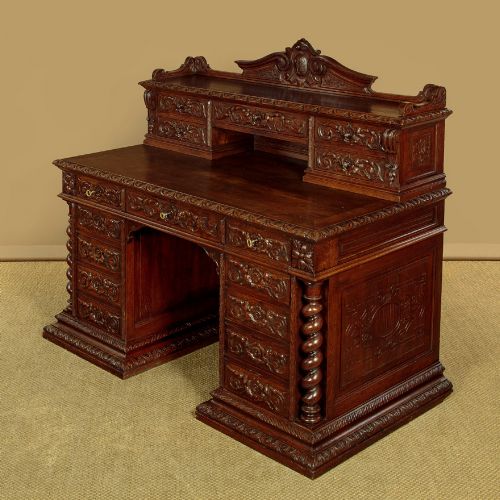


Superstructure Writing Desk
A superstructure writing desk is a practical workspace elevated with galleries, cabinets, or drawers, offering an organised writing surface with built-in storage.
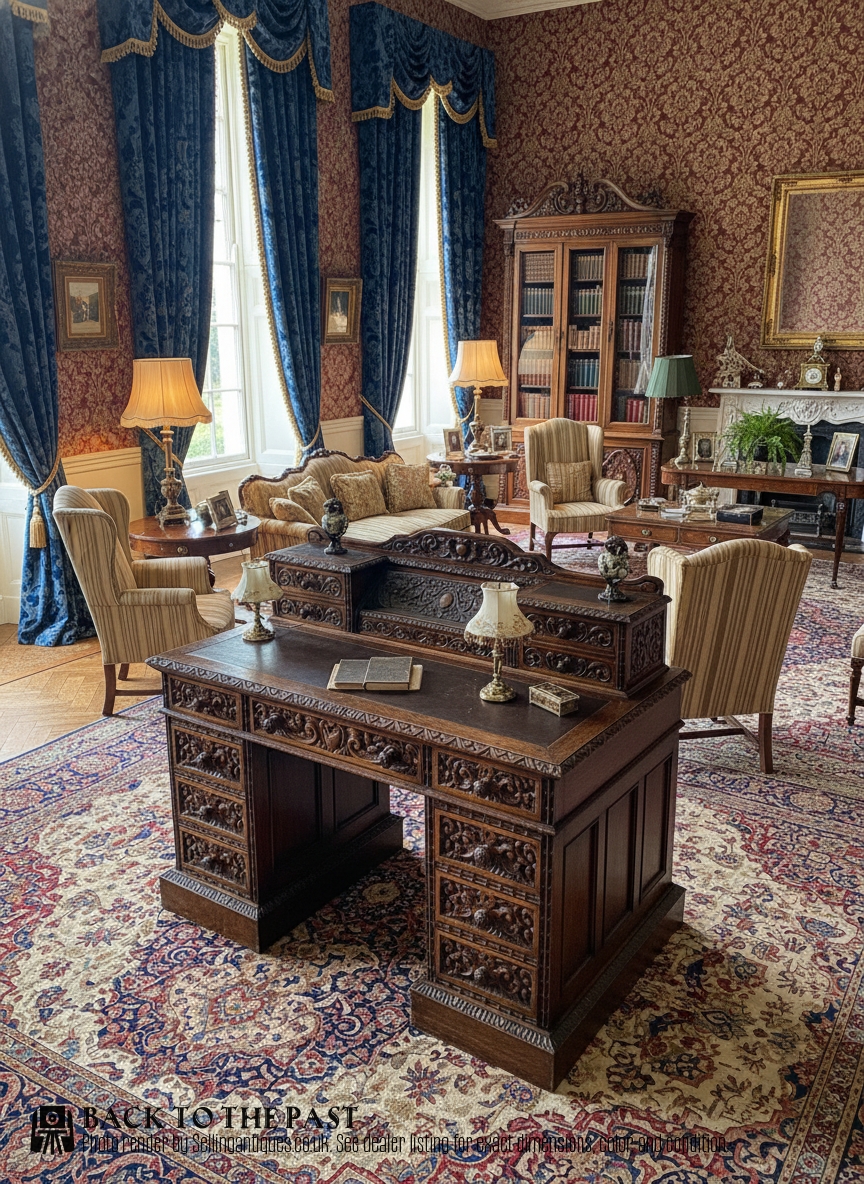
Superstructure Writing Desk
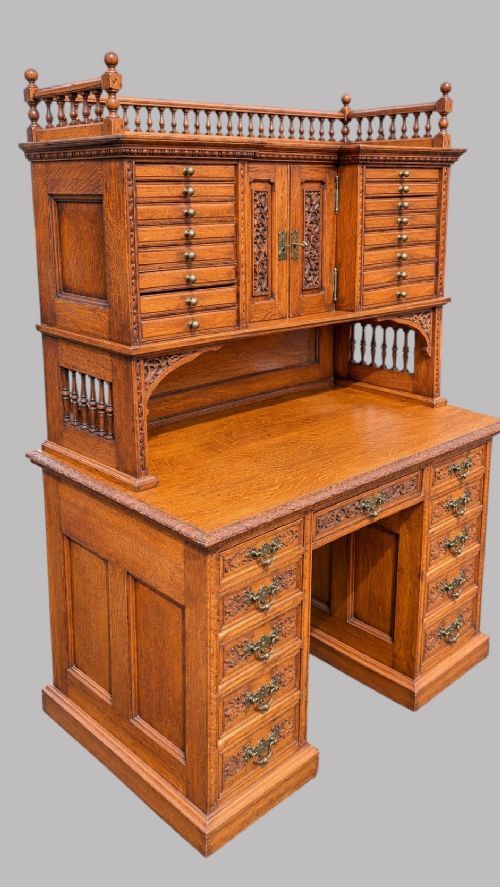
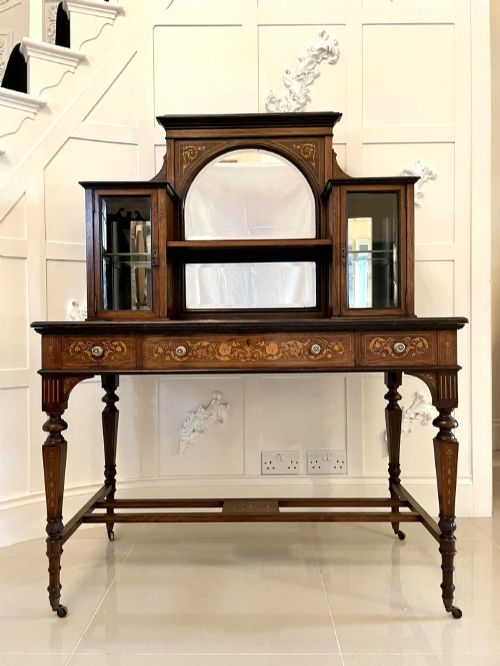
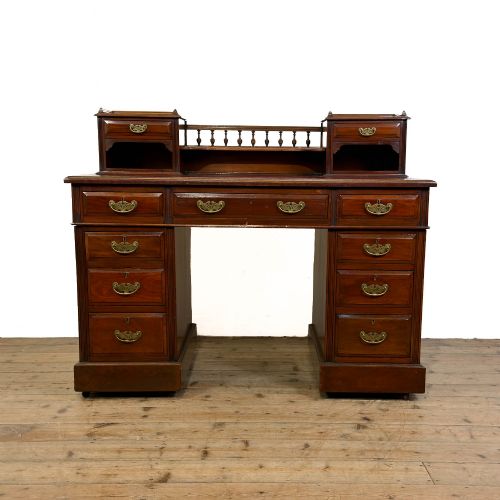
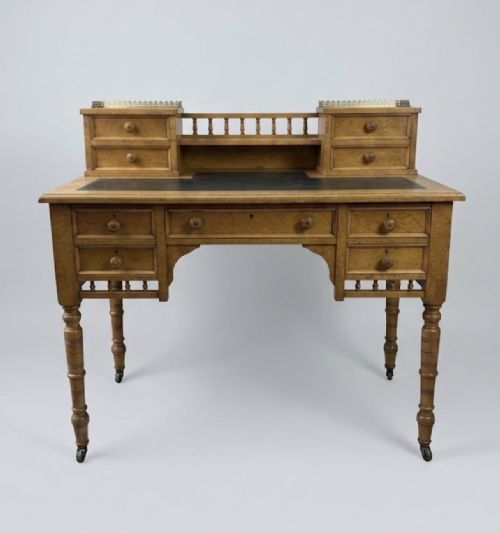
A superstructure writing desk combines a conventional writing surface with an upper tiered arrangement of compartments, drawers, or mirrors. These pieces date principally from the Victorian and Edwardian eras, spanning the mid-nineteenth century to the early twentieth century.
The format appears in several distinct guises across the inventory, ranging from substantial pedestal desks with cabinet tops to delicate ladies' writing tables. Mahogany and oak dominate the timber choices, frequently enhanced by decorative marquetry, burr walnut, or satinwood.
Makers such as Hobbs & Co., George Faulkner Armitage, Thomas Turner, Howard & Son, and James Lamb produced notable examples during this period. Stylistic influences vary widely, encompassing French Empire, Aesthetic Movement, Edwardian Sheraton Revival, and Victorian Renaissance Revival.
Assessing quality and craftsmanship
The standard of a superstructure writing desk depends on the selection of figured timber veneers and the precision of the joinery within the upper compartments and drawers. Exhibition quality pieces demonstrate superior carving, meticulous marquetry, and substantial secondary woods.
Attribution to documented makers and the integration of specialised hardware elevate the standing of a desk. The harmony between the primary writing surface and the architectural superstructure governs the visual balance of the piece.
Superstructure Writing Desk Retail Price Guide 2026
Typical asking prices for superstructure writing desk among the pieces listed under this phrase on Sellingantiques today, from the lower quarter to the upper quarter. They describe what is for sale here now, not the wider market.
Some nineteenth-century desk drawers still harbour stray nibs and dried ink stains left by Victorian estate managers.
Hobbs & Co.·George Faulkner Armitage·Thomas Turner·Howard & Son·James Lamb
The Superstructure Writing Desk Glossary
- Superstructure
- An upper structure built upon the main writing surface, containing compartments, drawers, shelves, or mirrors.
- Marquetry
- Decorative patterns formed by the insertion of pieces of wood, shell, or ivory into a veneer to form geometric or floral designs.
- Ormolu
- Gilded bronze ornamentation mounted onto furniture pieces, popular during the nineteenth century.
- Pedestal desk
- A heavy freestanding desk consisting of two independent pedestals of drawers with a central desktop spanning across.
- Satinwood
- A durable, lustrous yellowish-wood used extensively for fine cabinet-making and decorative veneers during the Edwardian period.
Superstructure Writing Desk: Frequently Asked Questions
What is a superstructure writing desk?
A superstructure writing desk is a traditional form of furniture that incorporates raised cabinets, shelving, or small drawers directly above the main writing surface. This design maximises storage capacity while maintaining a compact footprint for correspondence and administrative tasks.
Such desks emerged prominently during the Victorian and Edwardian eras, reflecting an increased demand for organised stationery storage in domestic and estate settings.
How do I use one today?
These desks suit modern home offices or studies as functional workspaces that accommodate laptops and writing materials on the primary surface. The upper compartments and drawers provide natural organisation for letters, notebooks, and small stationery items.
Positioning the desk away from direct sunlight helps preserve the polished timber surfaces, leather inserts, and delicate marquetry work over time.
How are Victorian and Edwardian desks different?
Victorian examples tend to employ heavier timbers like oak, rosewood, and mahogany, often featuring substantial pedestals, carved details, and deep colour tones. Their superstructures frequently include enclosed cabinets or structural galleries designed for serious administrative work.
Edwardian pieces often display lighter woods such as satinwood, simpler painted decorations, and mirrored elements. These designs favour a more delicate aesthetic suited to drawing rooms and ladies' writing chambers.
What woods were used?
Cabinet makers relied primarily on mahogany and oak for the main construction and structural integrity of these desks. Decorative elements and secondary surfaces frequently incorporated burr walnut, rosewood, satinwood, and birds eye maple.
Exotic and domestic timbers were selected for their grain patterns and colour richness, often highlighted through French polishing or intricate marquetry.