






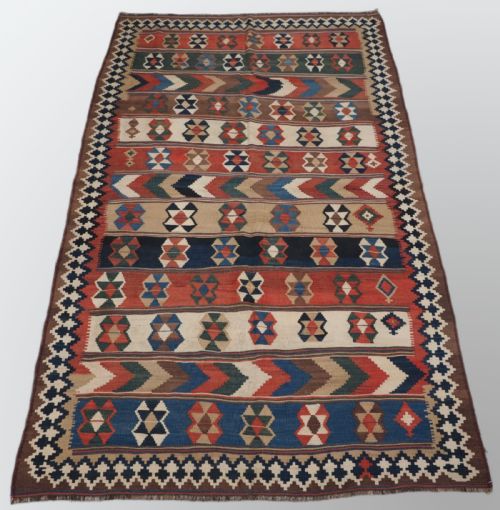
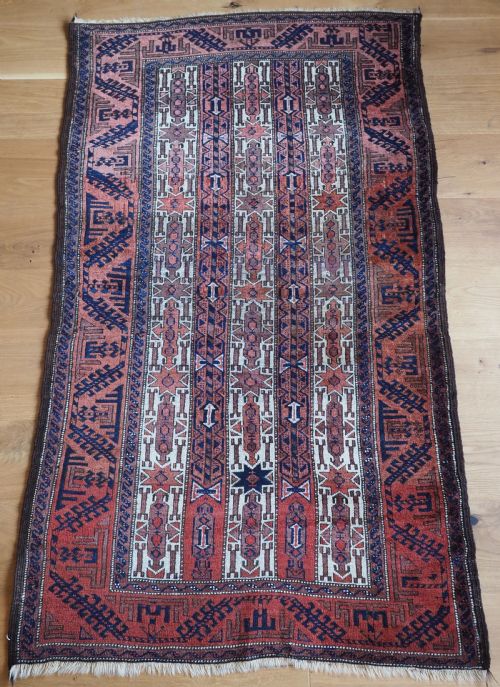

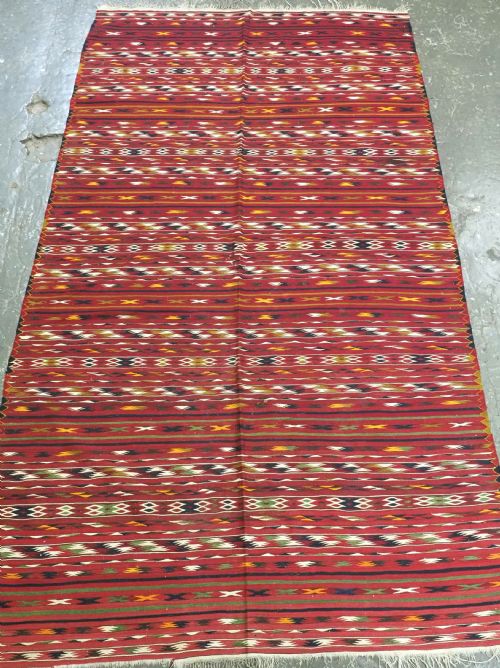

Striped Tribal Runner Rug
A striped tribal runner rug brings bold linear geometry and nomadic history directly into a narrow hallway or passage.
Striped Tribal Runner Rug
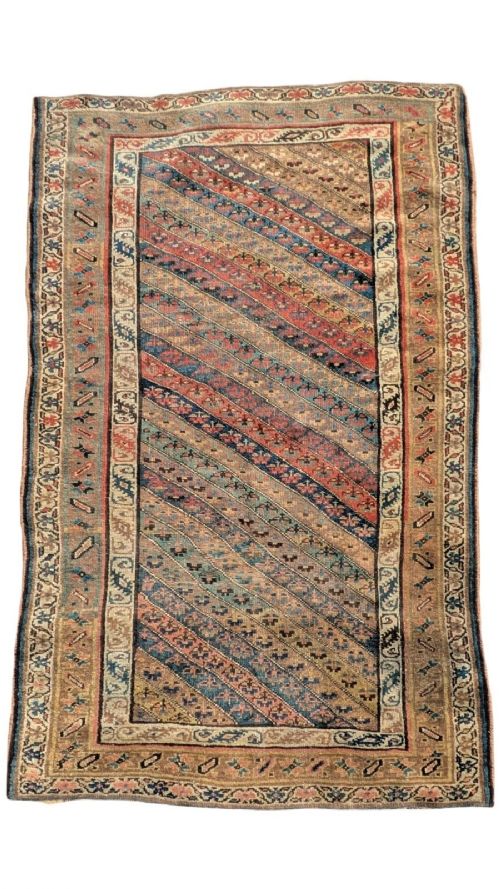
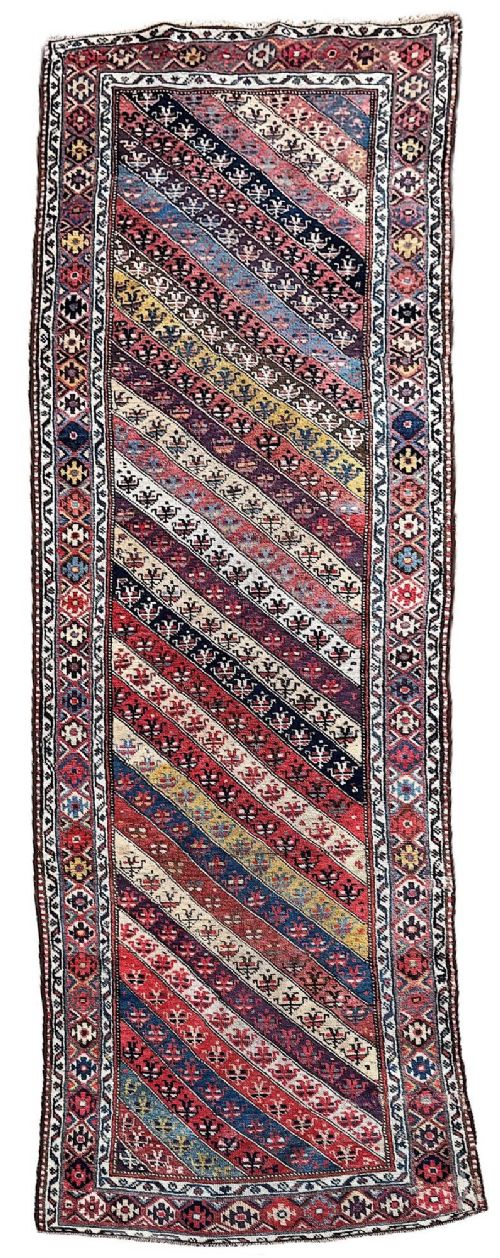
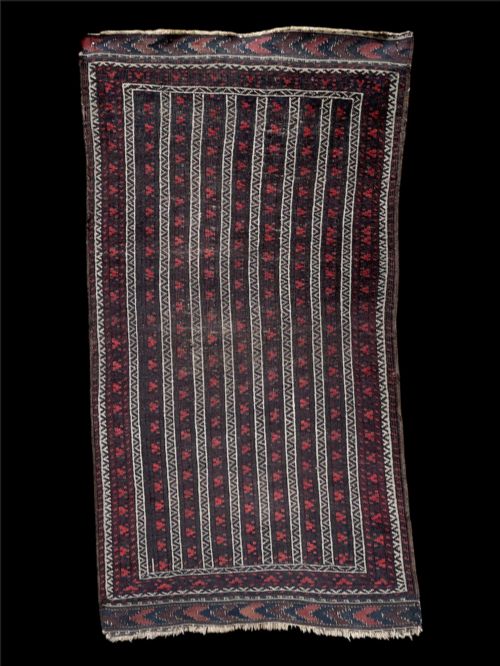
A striped tribal runner rug brings linear geometry into narrow spaces through long formats and banded motifs. These textiles originate from nineteenth-century weaving traditions across the Caucasus, Persia, and Central Asia.
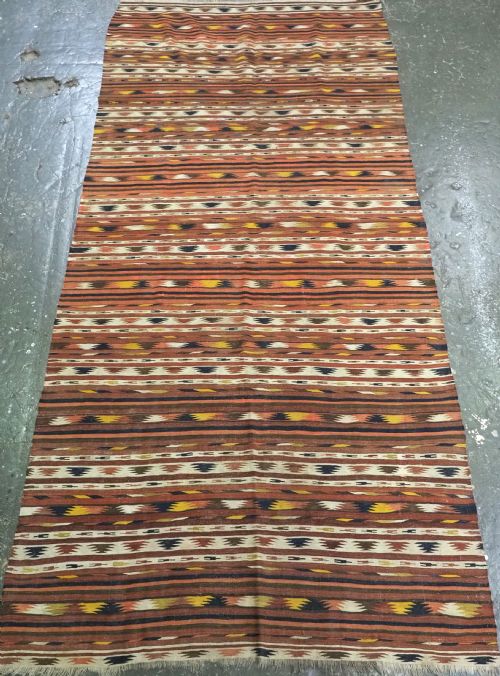
The inventory on this page consists primarily of runner rugs, kilims, and flat-woven panels produced by nomadic and village groups. Examples include Caucasian Gendje runners, Turkmen dali kilims, and Uzbek gajeri textiles featuring distinct striped arrangements.
Makers utilised traditional formats suited for nomadic life or floor coverings in village homes. Buyers encounter pieces spanning from the late nineteenth century into the early twentieth century, reflecting diverse regional aesthetics.
Materials and technique
Weavers relied principally on wool and hand-spun wool for the foundation and pile of these textiles, occasionally incorporating camel hair. Natural dyes provided the deep colour palettes seen across Caucasian and Central Asian workshops.
Construction methods vary between pile-woven carpets and flat-woven kilim or palas structures. Techniques such as the cicim supplementary weft float method created textured geometric bands across the surface.
Striped Tribal Runner Rug Retail Price Guide 2026
Typical asking prices for striped tribal runner rug among the pieces listed under this phrase on Sellingantiques today, from the lower quarter to the upper quarter. They describe what is for sale here now, not the wider market.
Listings span from the 1870s through the 1920s, showcasing wool, hand-spun wool, and camel hair across Caucasian, Persian, and Central Asian tribal origins.
Variations in quality
Quality rests upon the fineness of the weave and the clarity of the graphic design. Tightly structured kilims and finely knotted runner rugs demonstrate greater technical control by the weaver.
The choice of natural dyes and the preservation of balanced proportions distinguish superior examples. Pieces with crisp linear stripes and intact edges maintain stronger visual impact.
The Striped Tribal Runner Rug Glossary
- Kilim
- A flat-woven textile produced without a pile. These pieces rely on interlocking weft threads to form sharp geometric patterns.
- Runner
- A long, narrow carpet format designed specifically for corridors, hallways, and staircases. This shape highlights repeating bands and vertical stripes.
- Mafrash
- A storage bag or panel woven by nomadic tribes such as the Shahsavans. These panels are often repurposed into smaller flat-woven rugs.
- Sofreh
- A dining or ceremonial spread used by tribal groups for sharing meals. They typically feature banded or graphic designs suited for floor use.
- Cicim
- A supplementary weft-float technique applied to flat-woven textiles. This method produces raised decorative patterns across the surface.
Striped Tribal Runner Rug: Frequently Asked Questions
Where should I place a runner rug?
These long rectangular textiles suit narrow corridors, hallways, and bedside placements. Their linear proportions draw the eye along architectural pathways.
Ensure you use an appropriate underlay to prevent sliding on hard timber or stone flooring.
What is the difference between a kilim and a rug?
A kilim is woven flat without a raised pile, relying entirely on visible warp and weft threads. Traditional rugs feature knotted piles that create a softer, thicker surface.
Both forms utilise similar regional motifs and wool materials.
How do I date an antique runner?
Dating relies upon structural analysis, wool consistency, and natural dye characteristics. Pieces from the nineteenth century often show softer transitions and organic colour variation.
Comparing regional styles from Caucasian and Central Asian workshops helps narrow the period of origin.