
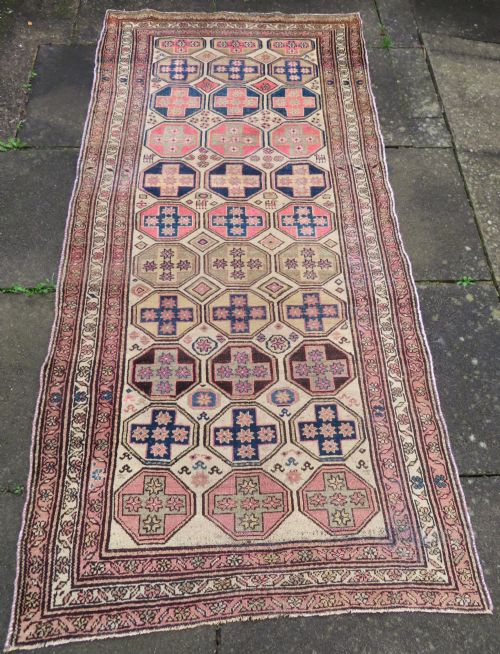
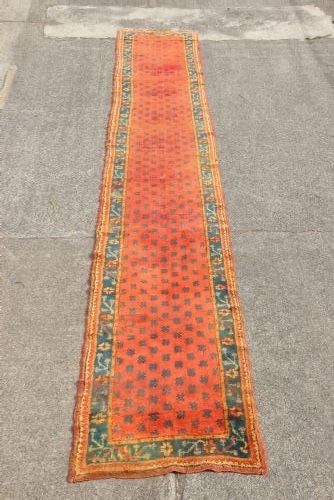


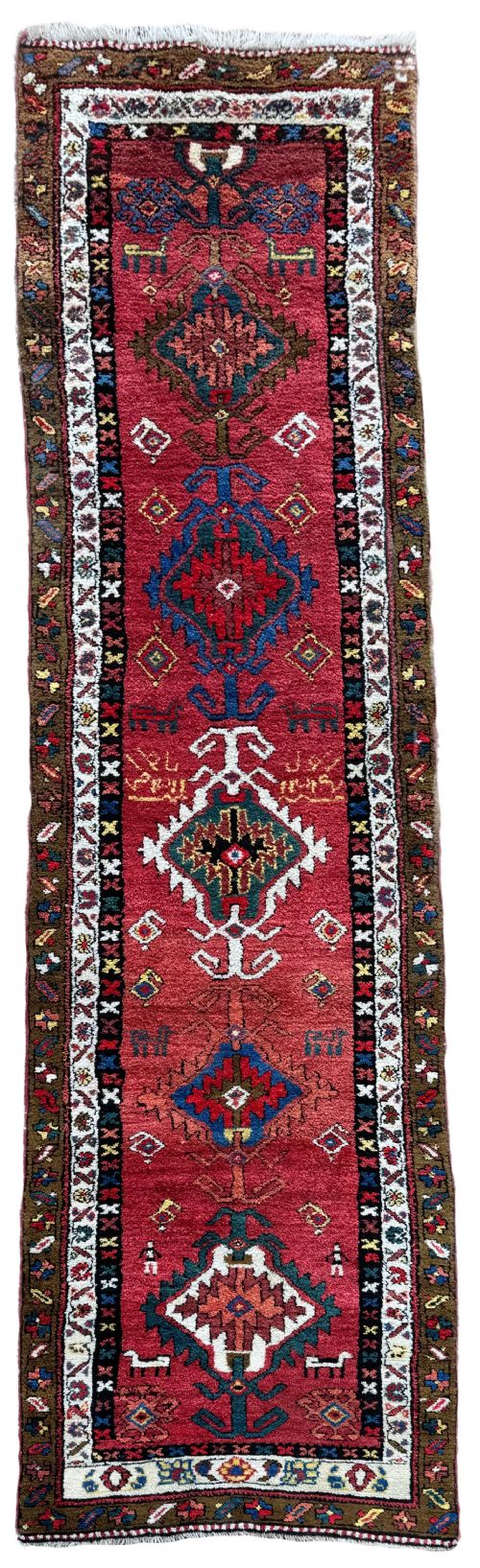
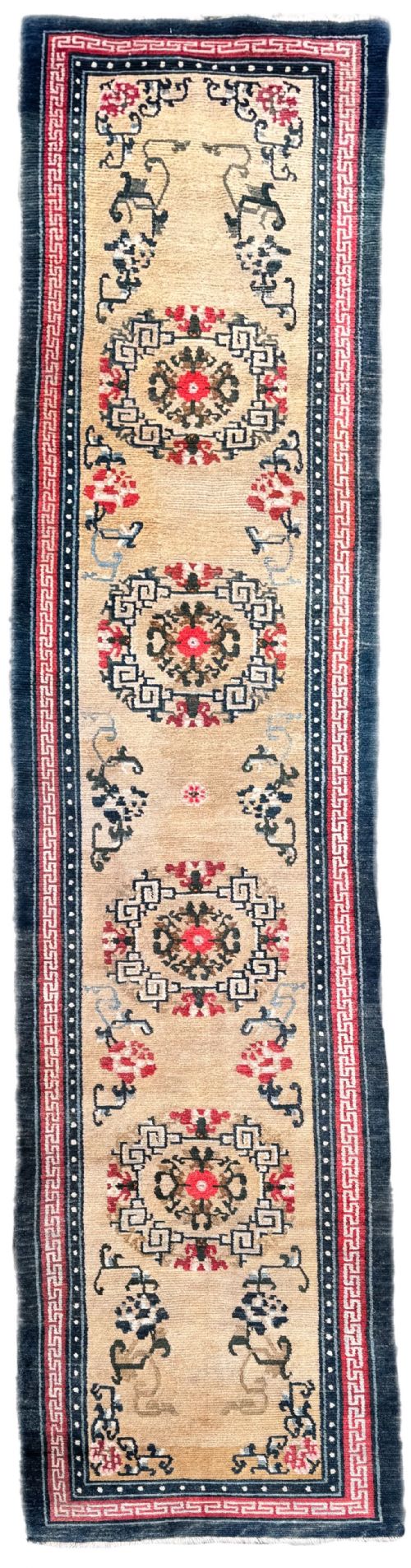
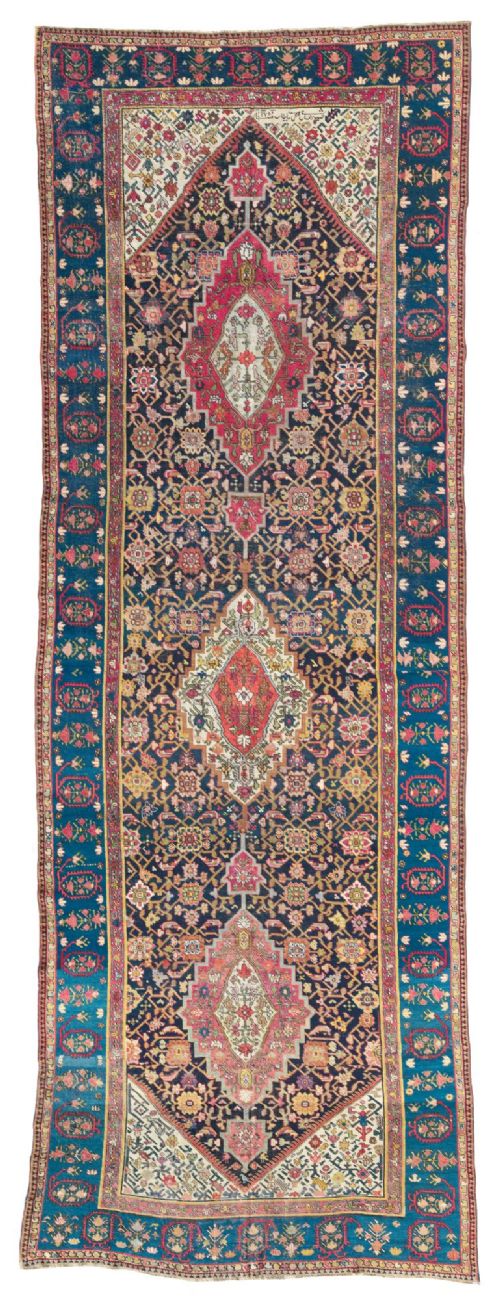

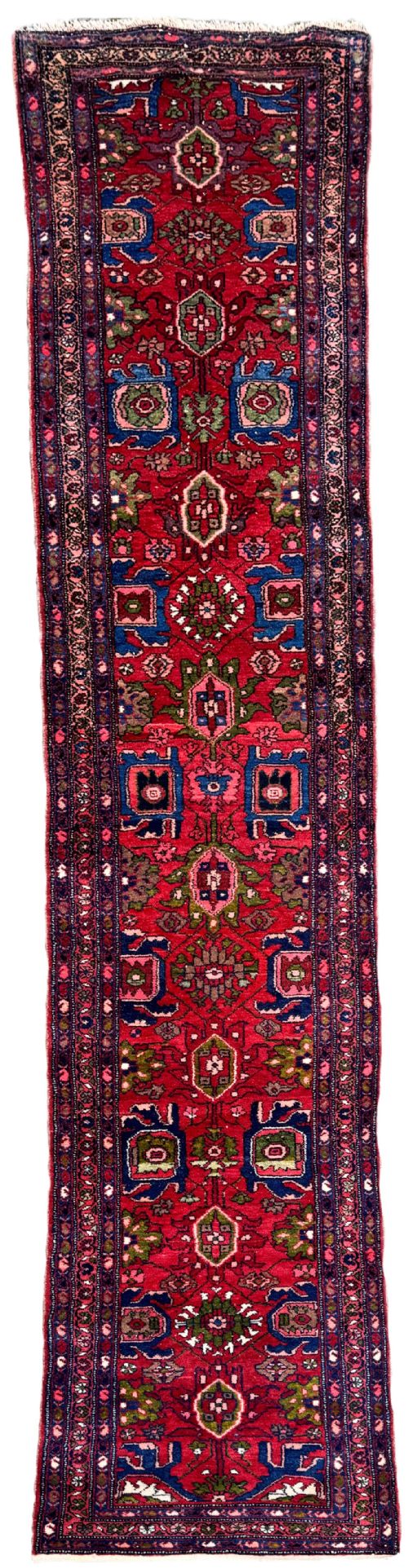
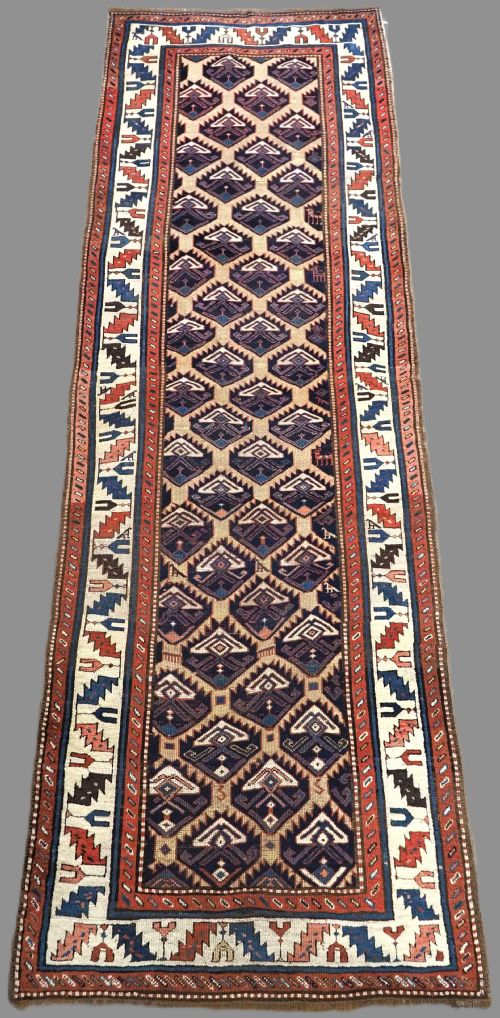
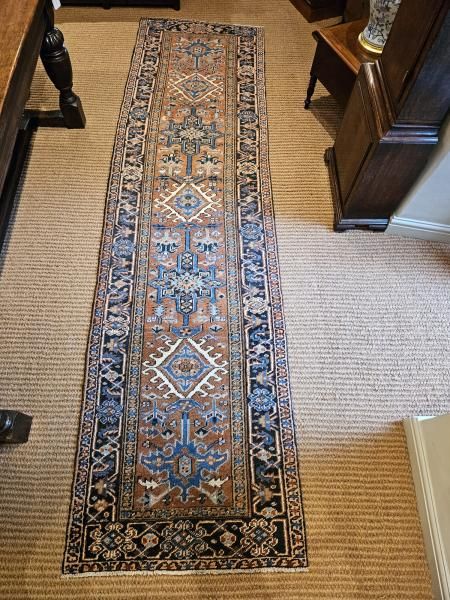

Hand Knotted Corridor Carpet
A hand knotted corridor carpet brings linear structure and tactile warmth to long spaces, offering centuries of regional weaving traditions underfoot.
Hand Knotted Corridor Carpet
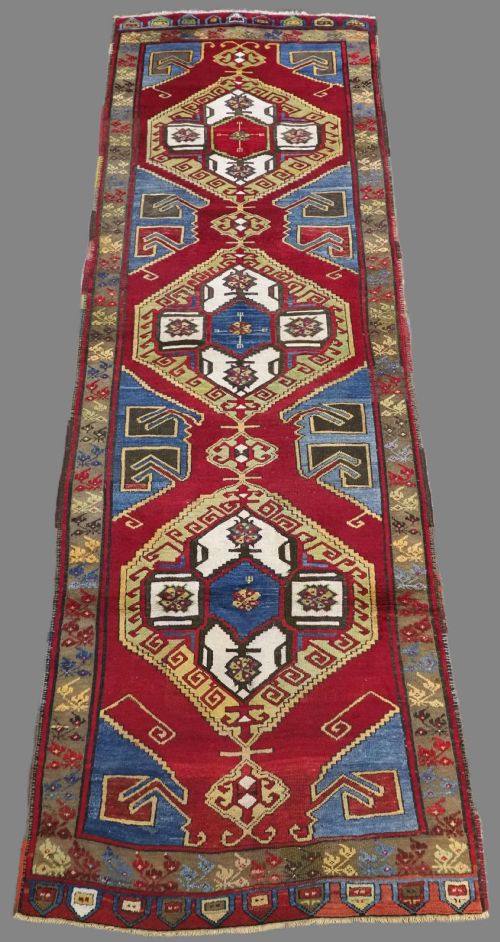
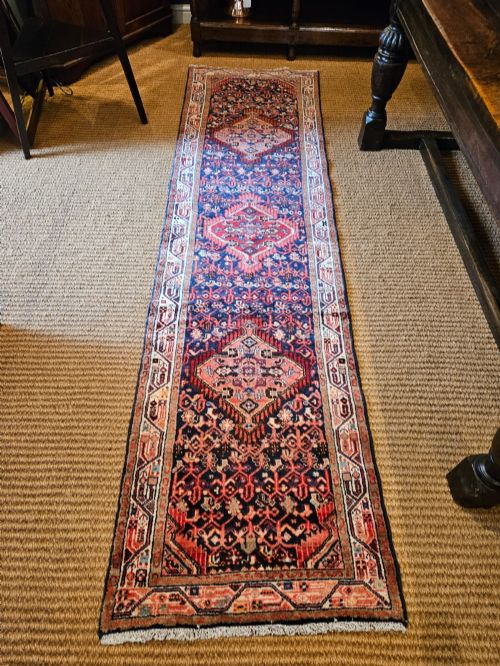
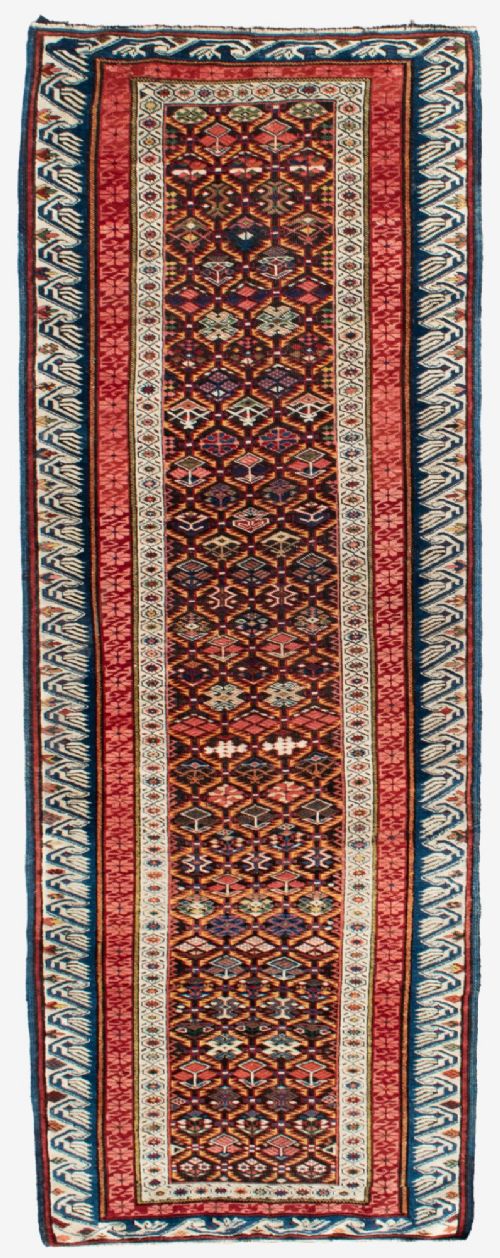
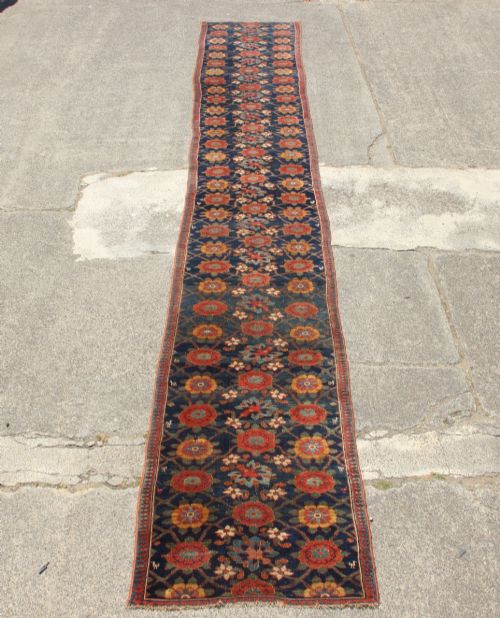
When you search for a hand knotted corridor carpet, you encounter elongated textile formats designed specifically for hallways, landings and narrow rooms. These pieces span production origins from Persian, Caucasian, Anatolian, Tibetan and Moroccan traditions.
You are most likely to meet antique runners and kelleh formats dating from the nineteenth century up through the nineteen-thirties. The selection includes specific regional types such as Kurdish, Heriz, Ushak, Bakshaish and Kazak pieces.
Makers shaped these formats to negotiate architectural transitions in traditional homes. Their narrow proportions frame corridors while displaying distinct tribal and village design vocabularies.
How they were made
Weavers constructed these long carpets using hand-spun wool and cotton foundations, tying individual knots along warp and weft threads. This labour-intensive method produced dense, resilient piles capable of enduring heavy foot traffic over generations.
Dyestuffs sourced from natural materials yielded the varied palettes recorded across these regional styles. Artisans worked on vertical upright looms, translating tribal geometric motifs and lattice designs directly from memory or family tradition.
Some antique runners display a deliberate wobble in their straight lines, recording the moment a weaver shifted position on the loom.
What varies in quality
The distinction between standard examples and the finest pieces lies in the tightness of the knotting and the precision of the drawn linear design. Superior density in the wool pile ensures greater structural longevity and sharper definition in intricate geometric patterns.
Balance in regional proportions and the depth of natural colour saturation further separate exceptional village weavings from simpler utility runners. The handling of secondary borders and the integrity of the original side cords indicate the level of care taken during production.
The Hand Knotted Corridor Carpet Glossary
- Kelleh
- A large format carpet that is longer than it is wide, traditionally serving narrower reception rooms or grand corridors. This rectangular proportion sits between standard room-sized carpets and narrow runners.
- Warp
- The stationary vertical threads stretched onto a loom that form the structural skeleton of the textile. Weavers tie individual pile knots around these foundational cords.
- Weft
- The horizontal threads passed alternately over and under the warp threads to bind the knots in place. Packing these rows tight secures the pile density.
- Mina Khani
- A repeating geometric lattice pattern composed of daisy-like flowers linked by curved stems. This traditional motif appears frequently in Persian and Kurdish village carpets.
- Pile
- The vertical surface of yarn created by the ends of knots standing up from the foundation. The height and material of this wool layer dictate the texture underfoot.
Hand Knotted Corridor Carpet: Frequently Asked Questions
How do I measure for a long corridor carpet?
Measure the clear floor space of your hallway, leaving a uniform margin of exposed floorboards or stone around the edges. Account for door clearance so that the pile thickness does not obstruct interior doors opening along the corridor.
Take measurements at multiple points along the length, as older handmade runners can vary slightly in width from one end to the other. Allow sufficient clearance for skirting boards and radiators when selecting your dimensions.
Where should I place a narrow runner?
These elongated formats suit entrance halls, long upstairs landings and corridors where foot traffic benefits from acoustic softening and warmth. They also function effectively in galley kitchens or alongside large pieces of bedroom furniture.
Position the textile centrally to create a defined pathway through the space. Ensure the surrounding floor treatment complements the regional palette of the weaving.
How do I care for an antique wool runner?
Vacuum the carpet gently using a suction-only attachment without a rotating brush bar to protect the delicate hand-knotted pile. Rotate the piece periodically to distribute foot traffic and sunlight exposure evenly across the surface.
Use an appropriate underlay beneath the textile to prevent slipping and reduce friction between the foundation and the floor. Address any spills immediately by blotting with a clean cloth rather than rubbing the fibres.