




Striped Central Asian Weaving
Striped central asian weaving brings bold graphic rhythm to a room through traditional nomadic textiles crafted with striking linear patterns.
Striped Central Asian Weaving
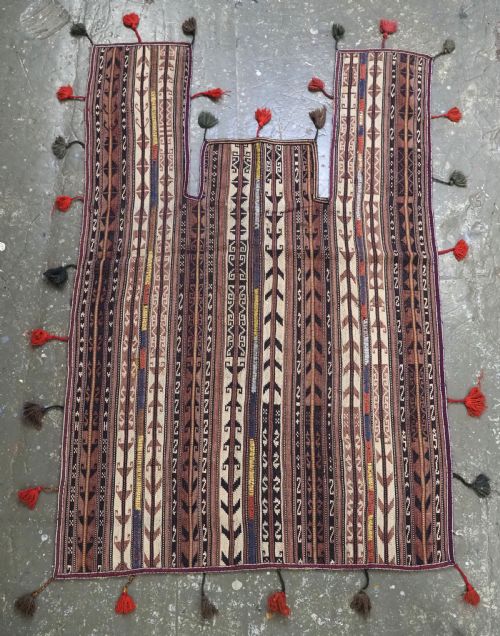
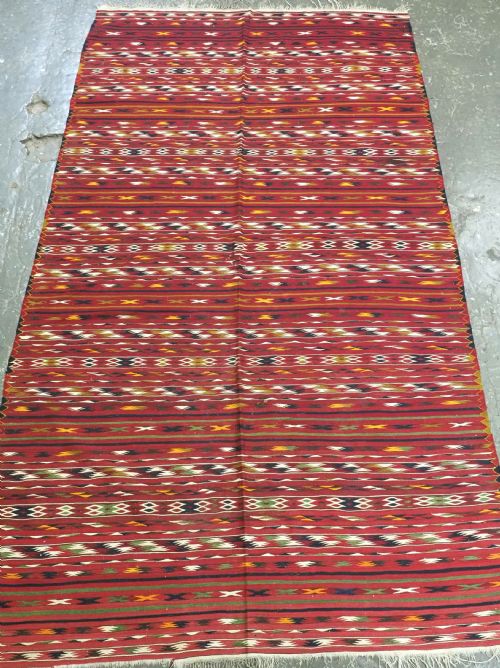
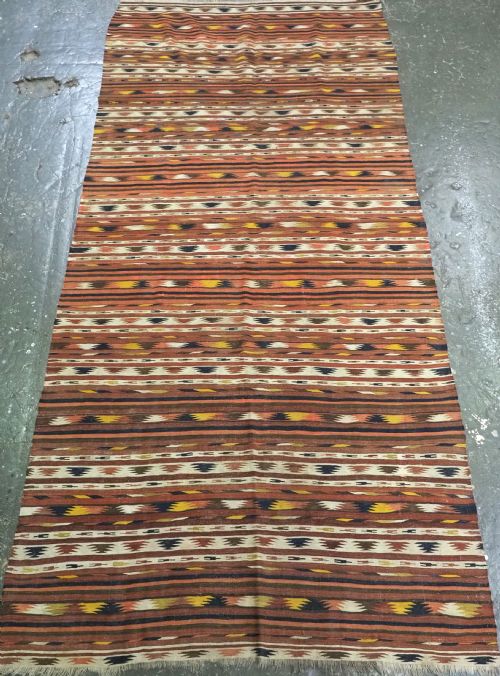
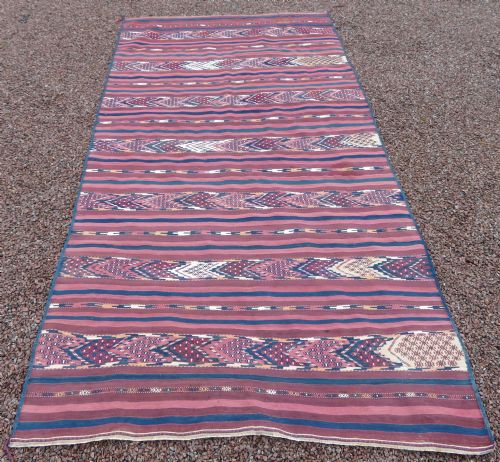
These pieces encompass tribal rugs, horse blankets, saddle rugs, and flatweave kilims originating from Central Asian makers. The selection centres heavily on Yomut and Tekke Turkmen pieces alongside Uzbek gajeri and tartari kilims.
Most examples date from the late nineteenth century and the early decades of the twentieth century, spanning periods from eighteen eighty to nineteen twenty. Buyers encounter various functional tribal forms, including mafrash faces, chuval panels, and ceremonial covers.
The aesthetic relies on repeated linear bands and bold graphic designs executed by nomadic and tribal weavers. Each item reflects the distinct visual vocabulary of specific regional traditions within Central Asia.
What varies in quality
Quality rests in the precision of the weave and the clarity of the graphic band design. Finer weave structures demand greater skill from the maker and produce sharper geometric definition.
The richness and stability of the natural dyes distinguish superior examples from standard work. Surviving structural completeness, such as original backs on chuval faces, also elevates a piece.
Several horse blankets and saddle rugs survived because horses were treated as treasured family members requiring proper ceremonial dress.
The Striped Central Asian Weaving Glossary
- Kilim
- A flatweave textile produced without a pile by interweaving warp and weft threads tightly together. This technique results in a flat surface with crisp geometric patterns visible from both sides.
- Cicim
- A supplementary weft-float technique where decorative patterns are embroidered or brocaded onto the woven ground during creation. It adds texture and raised detail to the flat textile surface.
- Mafrash
- A storage bag face or side panel traditionally used by nomadic groups for bedding and household goods. These panels display dense horizontal banding suited to the container shape.
- Chuval
- A large storage bag made by Turkmen tribes, often featuring multiple guls or banded designs. The face of the bag is preserved as a decorative textile after the piece is retired from active use.
- Gajeri
- A specific type of Uzbek flatweave characterised by bold striped patterns and contrasting colour bands. These textiles demonstrate the linear aesthetic favoured in regional weaving traditions.
- Tartari
- A regional designation for particular flatweave kilims carrying distinctive stripe arrangements and graphic motifs. They represent the specialised weaving output of Central Asian tribal groups.
Striped Central Asian Weaving: Frequently Asked Questions
How were these woven textiles originally used?
Nomadic and tribal groups utilised these pieces for practical storage, animal trappings, and household furnishing.
Items such as horse blankets, saddle rugs, and storage bag faces served daily functional roles within tribal life before later entering the collector market.
How do I care for an antique flatweave?
Protect the textile from direct sunlight to prevent natural dye fading and vacuum gently using low suction without a rotating brush.
Rotate the piece periodically to ensure even wear and place a quality rug underlay beneath flatweaves to prevent slipping on hard floors.
How do I date a striped central asian weaving?
Examine the specific structure, wool characteristics, and natural dye palette to determine the likely period of manufacture.
Most examples on this page date from the late nineteenth century up to nineteen twenty, reflecting traditional tribal methods before synthetic dyes became widespread.
What is the difference between a kilim and a chuval face?
A kilim is a complete flatweave textile produced as a rug or panel without pile, whereas a chuval face is the decorative front of a large Turkmen storage bag.
Chuval faces were cut from larger utilitarian containers and retain distinct structural borders where they once joined the back panel.