
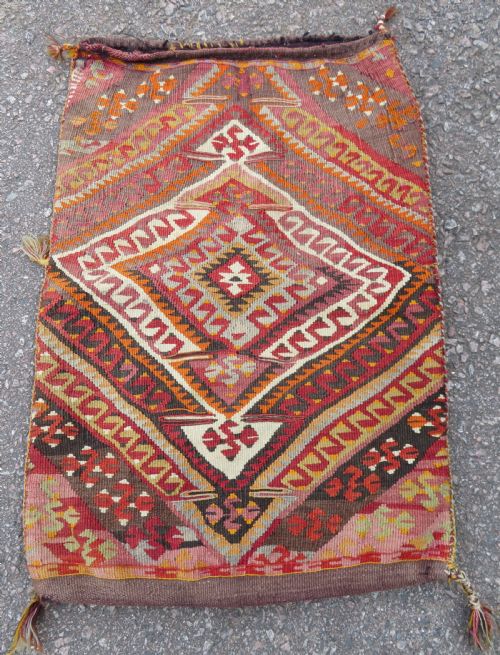


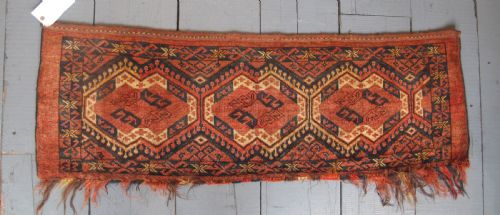

Terracotta Woven Chuval Bag
These terracotta woven chuval bag examples are traditional tribal storage faces, offering collectors rich wool textures and distinct Central Asian motifs.
Terracotta Woven Chuval Bag
A terracotta woven chuval bag is a nomadic storage piece originating from Central Asian and Turkmen tribal traditions. These works function primarily as large storage bags used within tents, with surviving examples frequently presented as decorative bagfaces.
Buyers encountering this group will commonly find pieces associated with the Tekke Turkmen, Yomut, and Ersari Kizil Ayak groups. Dating across these listings spans from the mid nineteenth century into the early twentieth century.
The format typically showcases traditional tribal patterns such as chuval guls, banded designs, or panel tree motifs. Both single bagfaces and pairs complete with original backs appear in the selection.
How they were made
These textiles are constructed primarily from wool, utilising natural dyes to achieve their distinct terracotta and warm colour palettes. Cotton often appears in the foundational structures or supplementary details.
Weavers employed traditional tribal knotting and weaving techniques passed down through generations. The dense construction ensures durability, which explains why these storage faces survived decades of nomadic use.
These durable storage faces outlived the nomadic tents they once lived in, preserved simply because they were too handsome to throw away.
What varies in quality
Quality in these tribal pieces rests upon the precision of the weave and the clarity of the design structure. Finer knot counts and well-defined guls separate superior examples from simpler utilitarian objects.
The depth and preservation of the natural dyes significantly influence the visual impact of each textile. Complete survivals retaining original backs also represent a distinct tier within the category.
The Terracotta Woven Chuval Bag Glossary
- Chuval
- A large tent storage bag produced by nomadic tribes in Central Asia. They were traditionally used for household goods and bedding.
- Gul
- A primary medallion or repeating motif found in Turkmen rug and textile design. Each tribal group utilised specific geometric forms.
- Torba
- A smaller storage bag compared to the chuval, typically hung on the interior walls of a nomad tent. They share similar weaving techniques and wool materials.
- Mafrash
- A rectangular storage bag or panel often associated with tribal transport and bedding storage. Examples display distinctive banded or panel designs.
- Natural Dyes
- Colourants derived from plants, insects, and minerals used before the introduction of synthetic alternatives. They yield the characteristic terracotta and earthy tones seen in these textiles.
Terracotta Woven Chuval Bag: Frequently Asked Questions
What is a terracotta woven chuval bag?
A terracotta woven chuval bag is a nomadic storage textile originating from Central Asian tribal groups. These pieces served as practical household containers inside tents.
Today, collectors prize them for their rich wool pile, natural dye palettes, and traditional geometric guls.
How were chuval bags used originally?
Nomadic families utilised these large bags to store bedding, clothing, and household possessions inside their dwellings. They were often stacked or hung along the tent walls.
Because they doubled as interior decoration, weavers expended great care on their patterning and colour.
How do I date a Turkmen chuval?
Dating relies on examining the wool quality, dye types, and structural characteristics of the weave. Pieces on this page range from the mid nineteenth century to the early twentieth century.
Earlier examples often display a finer handled weave and deeper integration of traditional natural dye palettes.
What is the difference between a torba and a chuval?
A chuval is a larger storage bag format designed for bulk household goods. A torba is smaller in scale and functioned as a wall hanging or smaller container.
Both incorporate the distinctive tribal motifs and wool construction characteristic of Turkmen weaving.