


Tekke Turkmen Woven Panel
These tekke turkmen woven panel examples are tribal weavings from Central Asia created for nomadic utility and domestic storage.
Tekke Turkmen Woven Panel
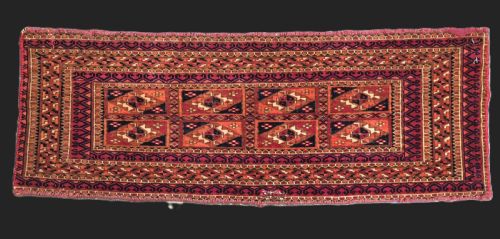
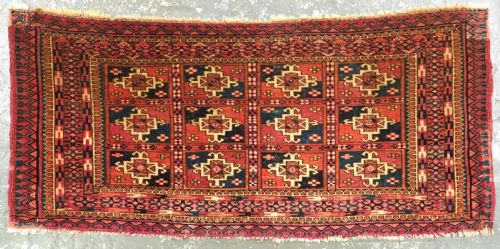
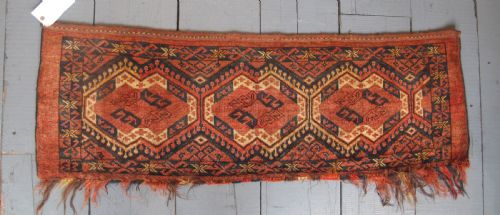
When you search for tekke turkmen woven panel, you examine functional tribal weavings made by the Tekke tribe in Turkmenistan during the eighteenth and nineteenth centuries. These pieces typically take the form of storage bag faces, torbas, chuvals, and mafrashes designed for tent life.
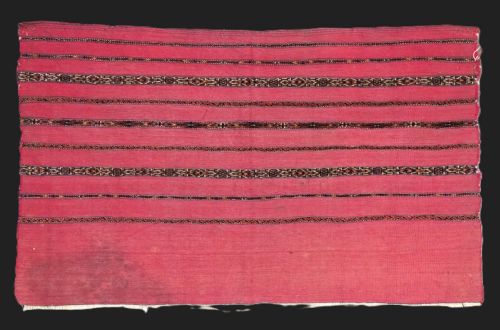
The items seen here span from the mid eighteenth century through to eighteen ninety, capturing nomadic textile art in formats such as fragment pieces, complete bag faces with backs, and paired panels. The most common survivals on this page are chuval faces and torbas featuring tribal guls.
Makers produced these textiles for utilitarian purposes within the Merv Oasis and wider Central Asian regions. They served practical roles as container fronts and bedding storage before entering the antique market as decorative textile art.
What Varies in Quality
Quality diverges according to the precision of the drawing and the density of the weave. Pieces with very fine weave and clear graphic execution demonstrate superior artisan skill.
Nomadic weavers packed these bags with blankets and pillows, turning utility storage into portable tribal galleries.
The Tekke Turkmen Woven Panel Glossary
- Gul
- A primary medallion motif used in Turkmen tribal carpet design. These repeating octagonal guls identify specific tribal groups and weaving traditions.
- Chuval
- A large tent storage bag used by nomadic tribes for bedding and household goods. The face of the bag is often preserved independently as a textile panel.
- Torba
- A smaller storage bag utilised within the yurt for personal items or smaller possessions. They frequently display detailed secondary guls along the face.
- Mafrash
- A rectangular storage container or bedding bag woven in tribal techniques. Surviving fragments and faces show intricate panel tree designs.
- Natural Dyes
- Organic colorants derived from plants and insects utilised before the introduction of synthetic dyes. They produce the stable, muted tones found in nineteenth century pieces.
Tekke Turkmen Woven Panel: Frequently Asked Questions
What is a tekke turkmen woven panel?
These pieces are historical nomadic textiles originating from Central Asia, specifically created by Tekke weavers for storage and tent decoration.
They represent functional items like bag faces that have transitioned into collectible textile art over the centuries.
How were these bags used?
Nomadic families used these woven containers inside yurts to store bedding, clothing, and household possessions.
Faces were attached to sturdy backs to form functional bags, though many survive today as individual decorative panels.
How do I date a tribal panel?
Dating relies on assessing the wool quality, the complexity of the natural dye palette, and structural characteristics like weave density.
Pieces from the eighteenth and early nineteenth centuries often display specific tribal guls and handspun materials distinct from later eras.
Where did these textiles originate?
The pieces hail from Turkmenistan and the broader Central Asian region, with particular association to the Merv Oasis.
Nomadic groups such as the Tekke tribes produced them within tribal encampments for domestic utility.
How do I care for antique textiles?
Protect these wool and cotton panels from direct sunlight to prevent natural dye fading.
Mount them safely on breathable supports if displayed on walls, avoiding heavy tension across the ancient foundation.