

Streamline Moderne Furniture
Streamline moderne furniture brings the aerodynamic curves and horizontal sweep of interwar design directly into your rooms.
Streamline Moderne Furniture
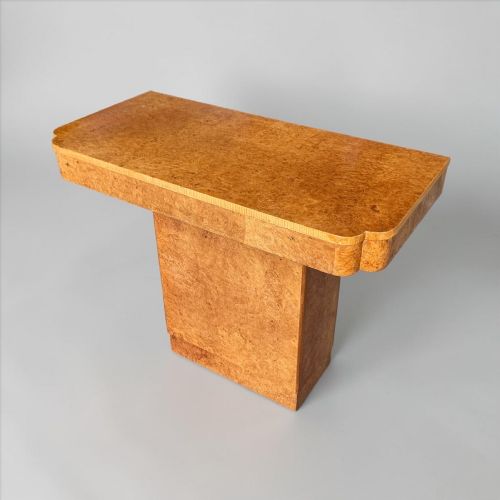
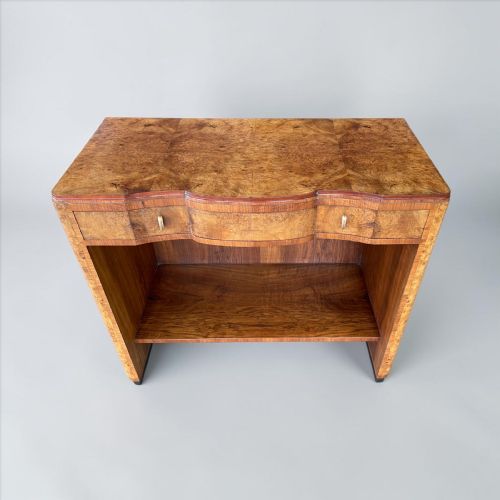
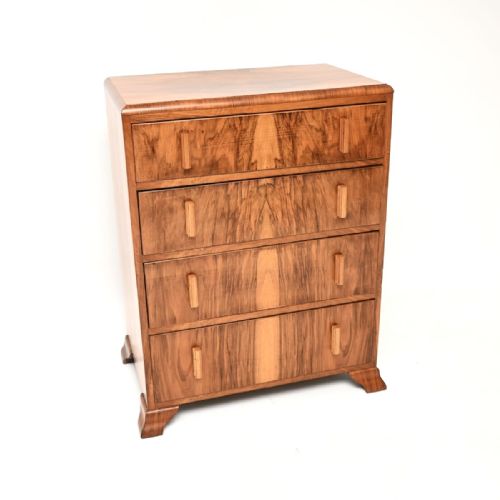
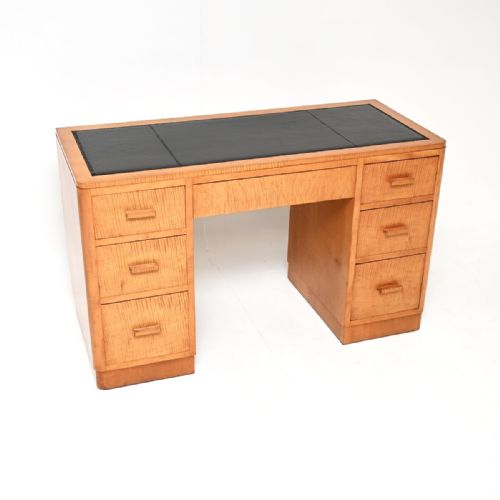
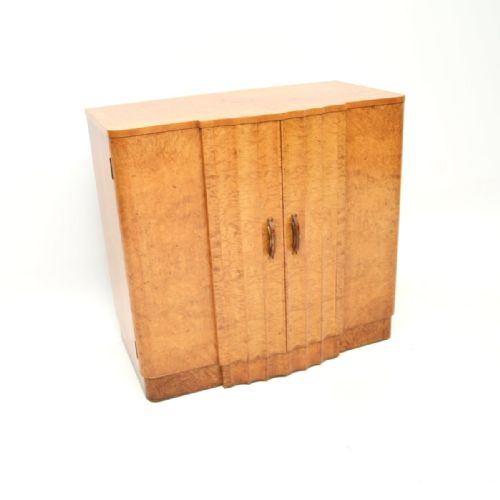
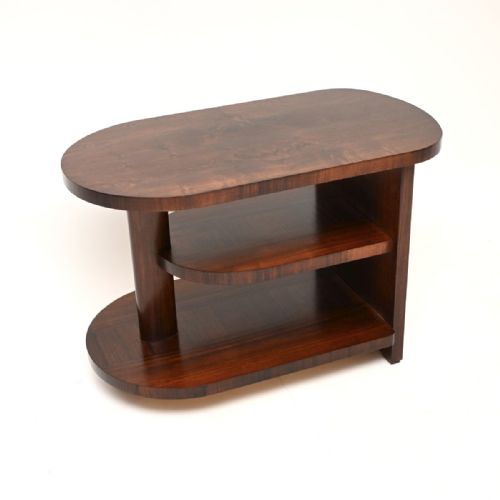
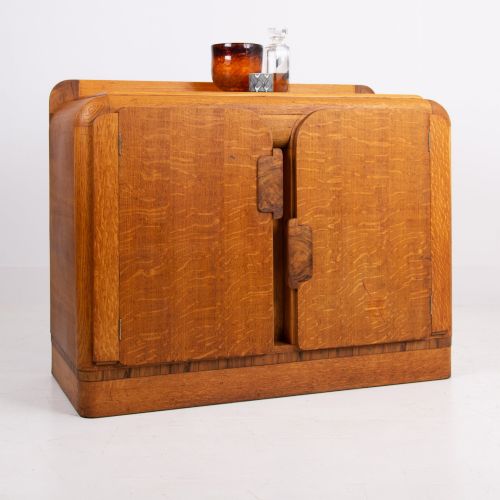
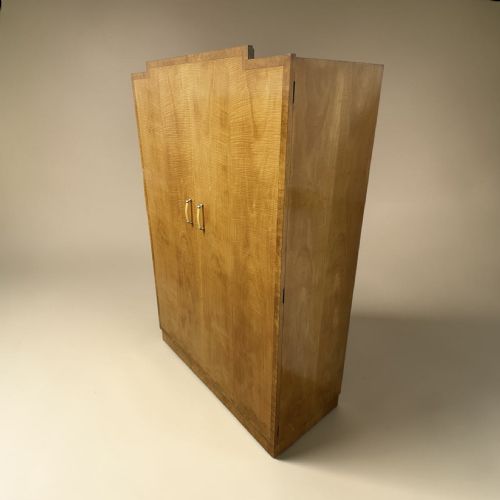
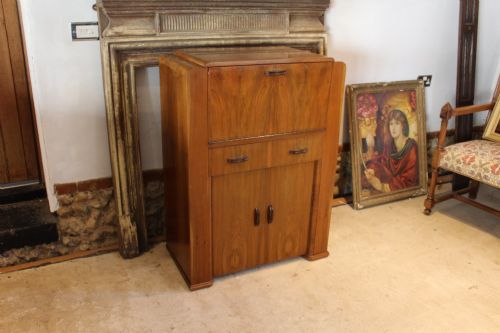
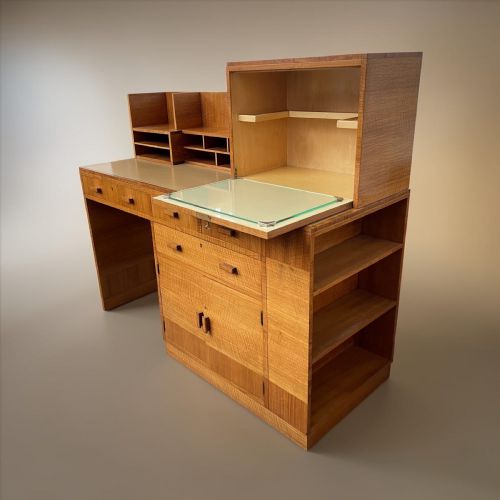
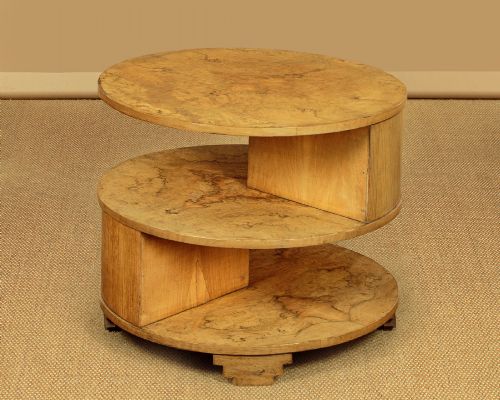
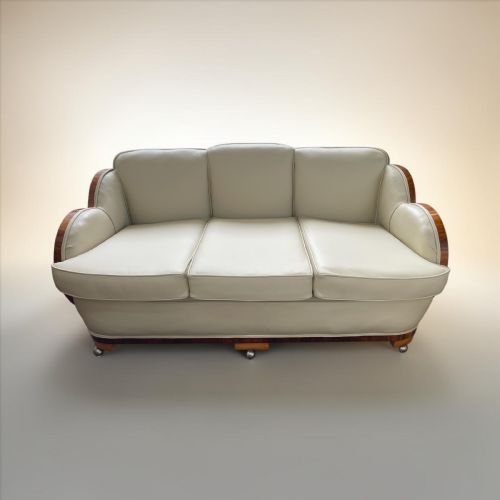
Streamline moderne furniture encompasses desks, console tables, chests of drawers, wardrobes, dressing tables, bedside tables, side tables, and coffee tables originating primarily from the 1930s with occasional pieces from the 1920s and 1940s. These items share a lineage with Art Deco design, translating architectural momentum into domestic forms.
You are most likely to encounter utilitarian and decorative storage pieces alongside workspace furniture produced by notable British firms and London retailers of the period. The selection relies heavily on matching pairs of bedside cabinets, occasional tables, and substantial wardrobes designed to anchor a room.
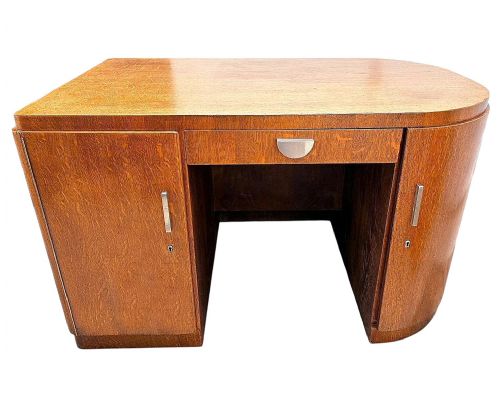
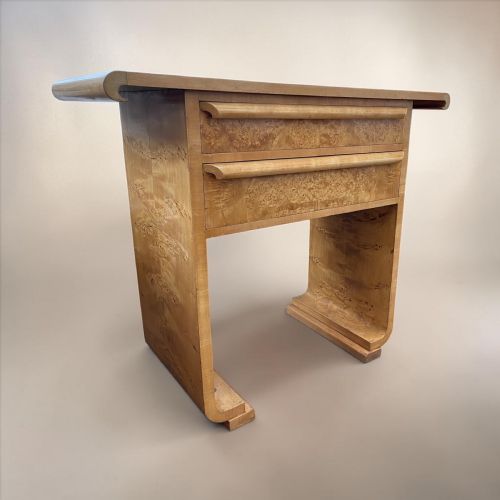
The objects balance geometric rigour with softened edges, manifesting as dual-sided desks, bureau bookcases, cocktail cabinets, and occasional chairs. Their forms prioritise long horizontal lines and continuous curves rather than vertical ornamentation.
What varies in quality
Quality rests upon the ambition of the timber selection and the precision of the veneer matching across curved surfaces. Pieces faced in burr walnut, rosewood, or palisander demand superior skill from the cabinetmaker compared to standard oak or plain walnut variants.
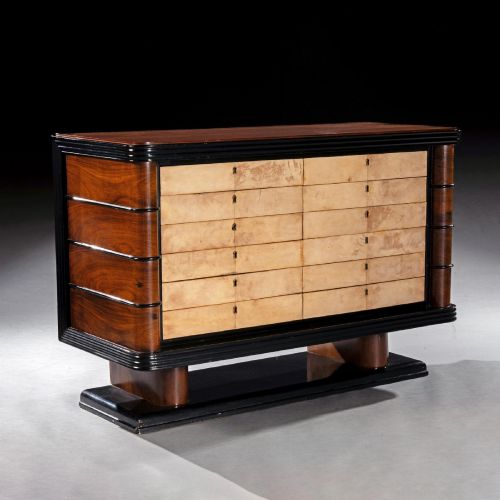
The integration of secondary materials such as parchment drawer coverings, brass details, and fitted leather writing surfaces separates standard production from workshop commissions. Construction integrity is visible in the seamless continuation of grain around radiused corners and the internal fitting of drawers.
One remarkably forward-thinking bar cart trolley manages to bring cocktail hour directly into the slipstream of modern design.
Maurice Adams·Harry and Lou Epstein·Gomme·Hille·Fortnum and Mason·Heal's·Betty Joel·Hamptons of Pall Mall London
The Streamline Moderne Furniture Glossary
- Veneer
- A thin slice of decorative wood applied over a stable timber core. This technique allows makers to display complex grain patterns across large flat or curved surfaces.
- Commode
- A low standing chest of drawers or cabinet. In this period, they often feature unusual geometric forms and specialised surface coverings.
- Tallboy
- A tall upright chest of drawers stacking storage vertically to save floor space. These pieces utilise figured walnut and satinwood veneers.
- Pedestal desk
- A freestanding desk supported by two banks of drawers or columns. They are frequently finished on all sides for central room placement.
Streamline Moderne Furniture: Frequently Asked Questions
How do I identify streamline moderne furniture?
Look for horizontal emphasis, rounded corners, and aerodynamic curves that mimic the motion of ships and trains. These pieces often draw from Art Deco aesthetics while shedding vertical clutter in favour of smooth, continuous surfaces.
Examine the choice of timber and secondary materials such as brass, leather, and parchment. The integration of these elements creates the distinctive sleek silhouette associated with the interwar period.
What rooms suit these desks and tables?
Desks and console tables fit naturally into studies, living rooms, and central hallways where their finished backs and architectural lines remain visible. Occasional side tables and coffee tables provide functional surfaces without dominating smaller spaces.
Matching pairs of bedside cabinets and dressing tables coordinate bedroom interiors with unified grain patterns and consistent tonal warmth. Their compact footprints allow them to sit comfortably alongside modern seating.
Which timbers appear most frequently?
Walnut and burr walnut dominate the selection, offering rich brown tones and swirling grain patterns that catch the light on curved surfaces. Sycamore, satin birch, and blonde birdseye maple provide lighter contrast options for beds and cabinets.
Rosewood, palisander, and oak appear in specific dining and occasional items, while metal and brass serve as structural or decorative accents. Leather and parchment introduce tactile variety to drawer fronts and writing surfaces.
How do these pieces relate to Art Deco?
Streamline moderne represents a later, more fluid phase of the broader Art Deco movement. While early Art Deco often embraced vertical setbacks and theatrical geometry, streamline forms favoured horizontal flow and smoothed aerodynamic shapes.
Both styles share a passion for exotic veneers and high-gloss polished finishes, yet streamline pieces suppress overt ornamentation in favour of pure, uninterrupted contour.